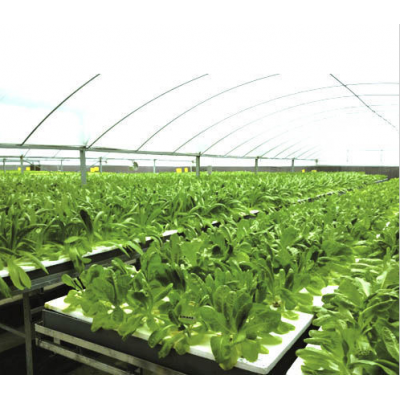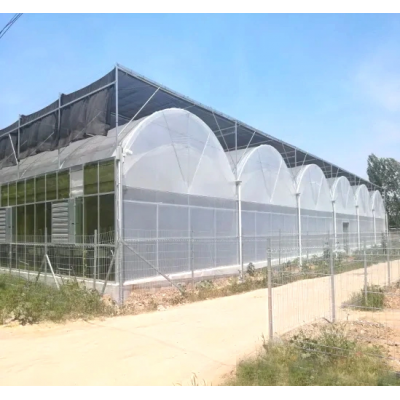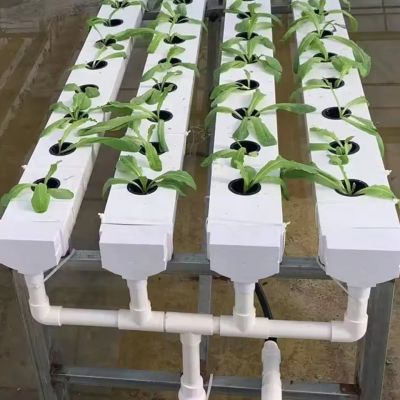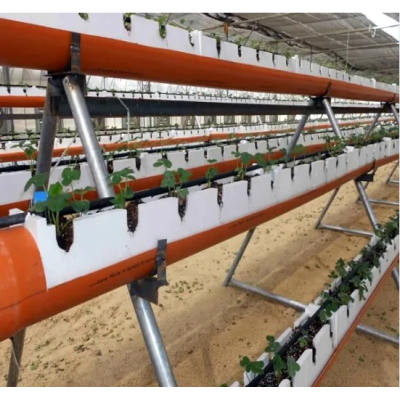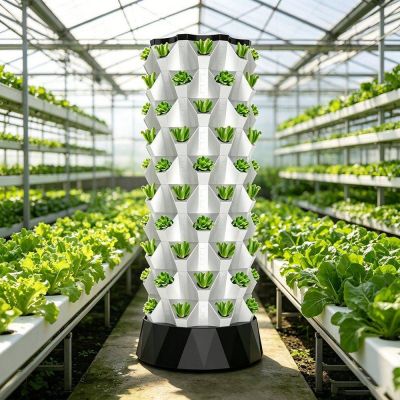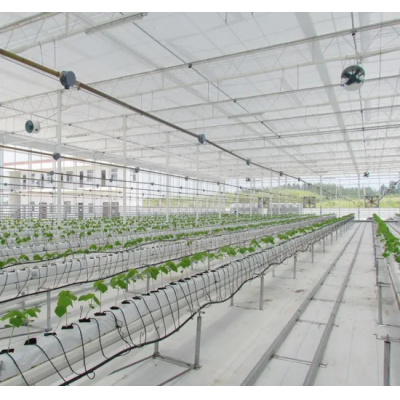
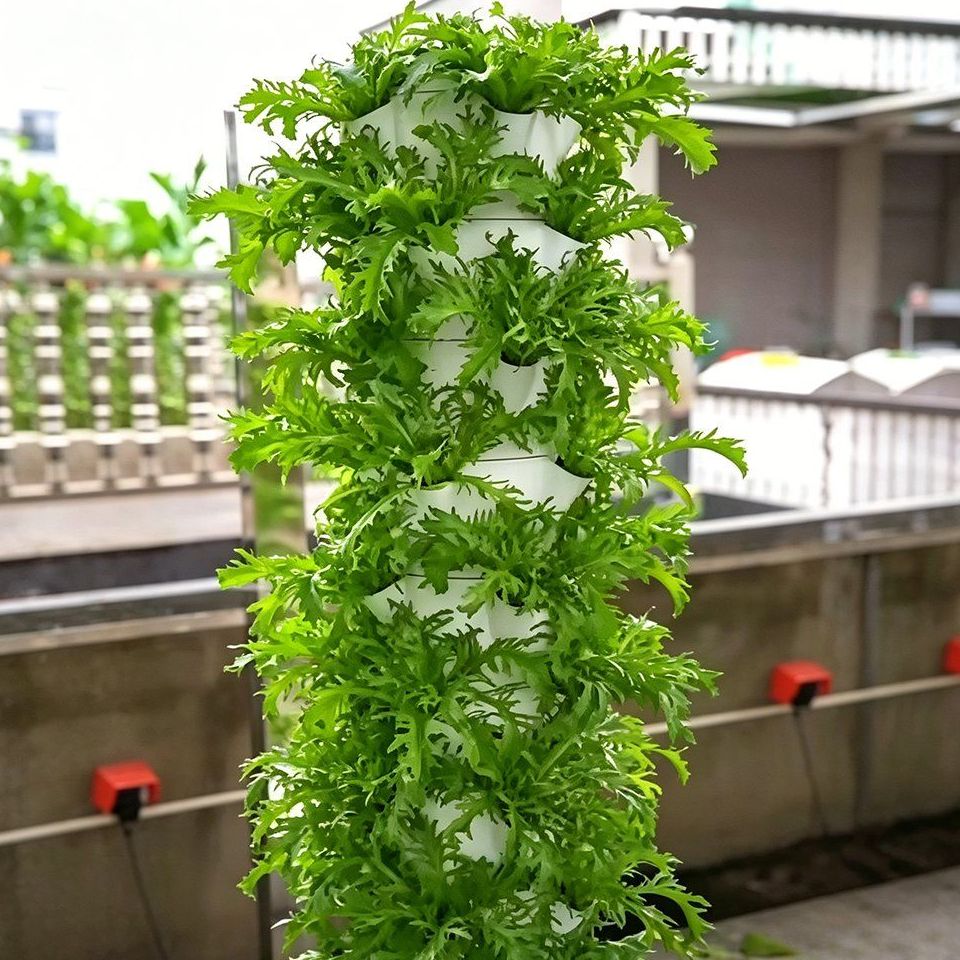
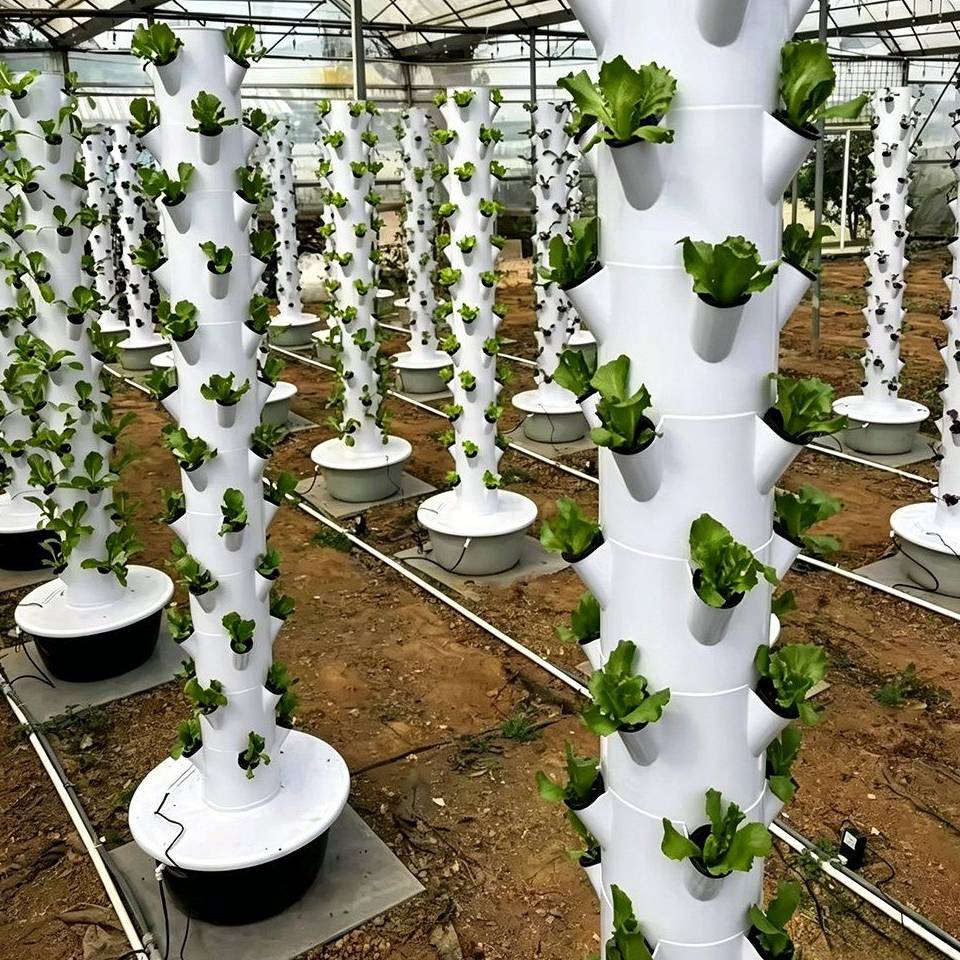
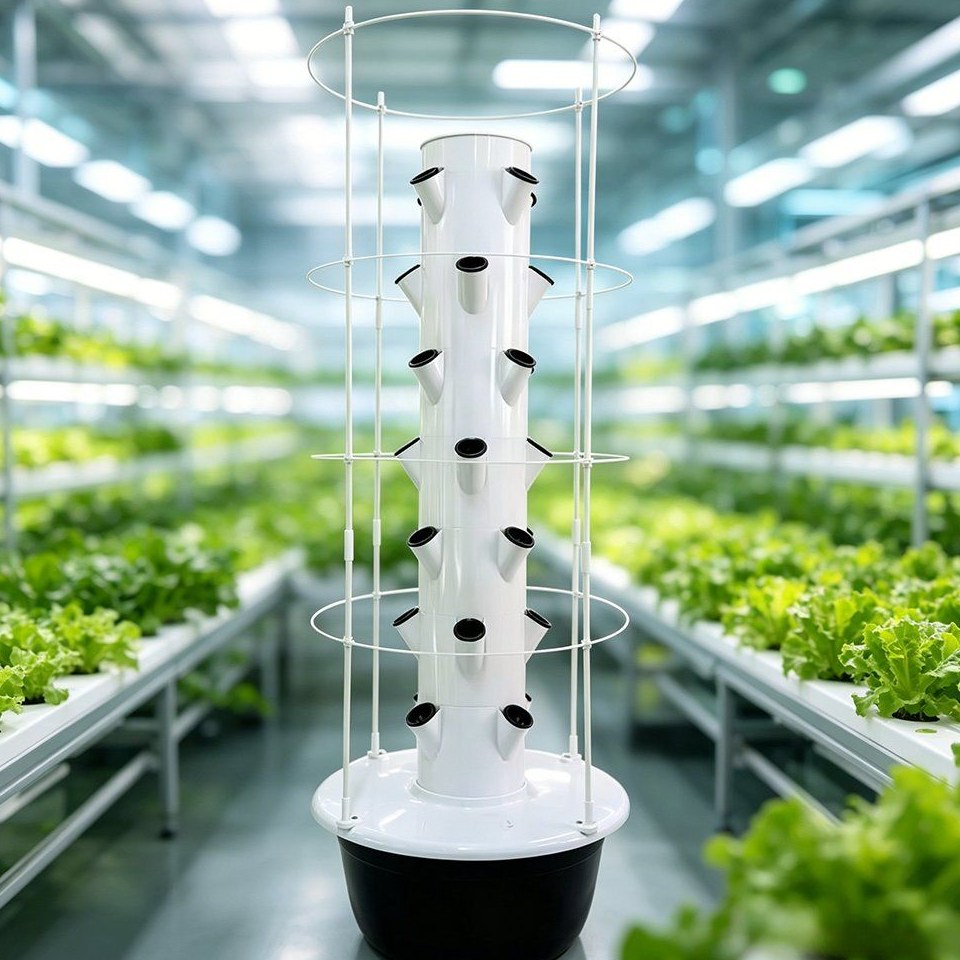
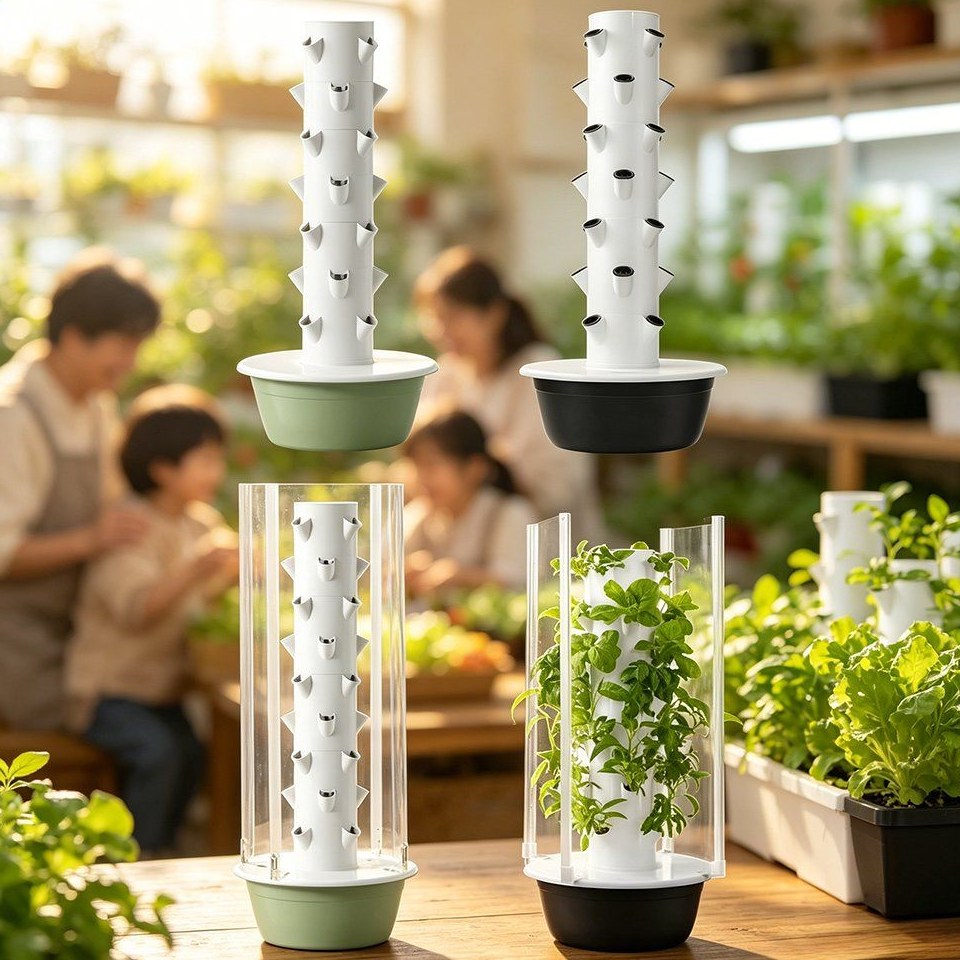
This hydroponic grow tower kit stacks five growing layers on a single column, so one square metre of floor holds several times the plants of a flat bed. The columns are food grade PVC with growing pockets moulded in, carried on galvanized steel support pipes, and water is pumped to the top and runs down through the pockets before returning to the tank. It suits lettuce, herbs and microgreens grown under cover or indoors, and the same columns can be set out in rows in a house or grouped in a smaller room.
Floor area is the cost that never goes away in protected growing, and a tower system attacks it directly. Instead of spreading plants across a bed, the crop is stacked up a column, so the same square metre carries several times the plants and the same irrigation circuit serves all of them. That only works if the water reaches every pocket in the same condition, which is what a tower has to get right before the height is worth anything.
Solution is pumped to the top of each column and runs down through the pockets, passing the roots on the way before draining back to the tank. The roots sit in a moving film rather than in a medium, so they are in contact with water and air at the same time, and the column itself becomes the growing surface. Because the circuit is closed, the water is used again and again, and only what the crop takes up plus what evaporates is topped back.
Stacking changes two things beyond the plant count. The crop occupies the height of the house rather than the floor, which suits crops that finish small, and the plants at each level see a different amount of light, so the layout and the lamps have to be set with the lowest layer in mind. The wider range of systems for protected growing is listed on the hydroponics system range page on this site.
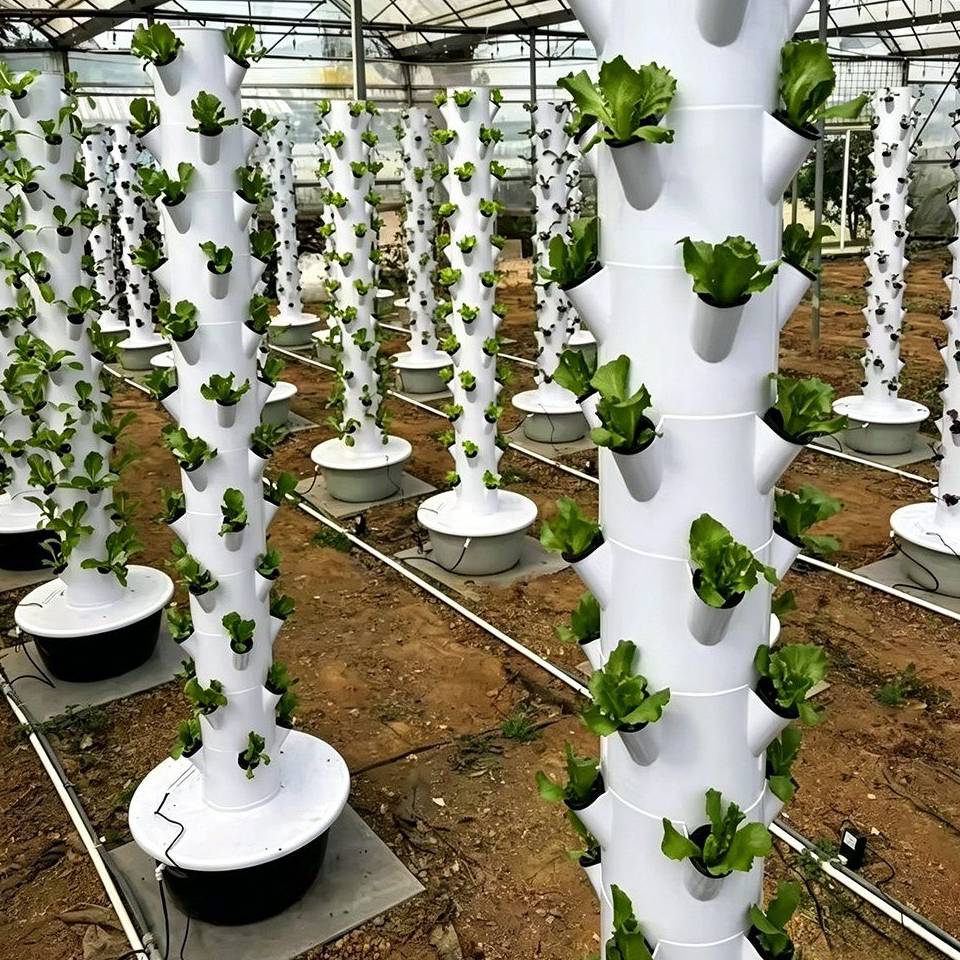
The columns are food grade PVC, which matters because the material is in constant contact with the nutrient solution that ends up in the crop. The growing pockets are moulded into the column rather than clipped on, so a plant sits at a fixed angle and a fixed spacing all the way up, and the crop count per column is known before planting. White PVC reflects light back onto the leaves instead of absorbing it, which is worth having on a tower where the lower pockets already see less light than the top.
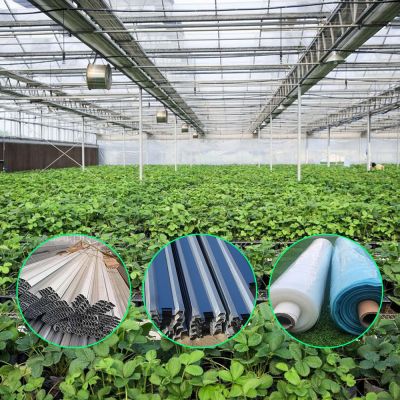
The columns are carried on galvanized steel support pipes, so the frame takes the load of a full crop and a wet column without flexing. Sections are bolted rather than welded, which keeps the columns interchangeable and lets a row be reconfigured without cutting anything. The same channel and gully approach laid out flat is described in the greenhouse hydroponics and, for buyers specifying a whole range, in the wholesale hydroponics system.
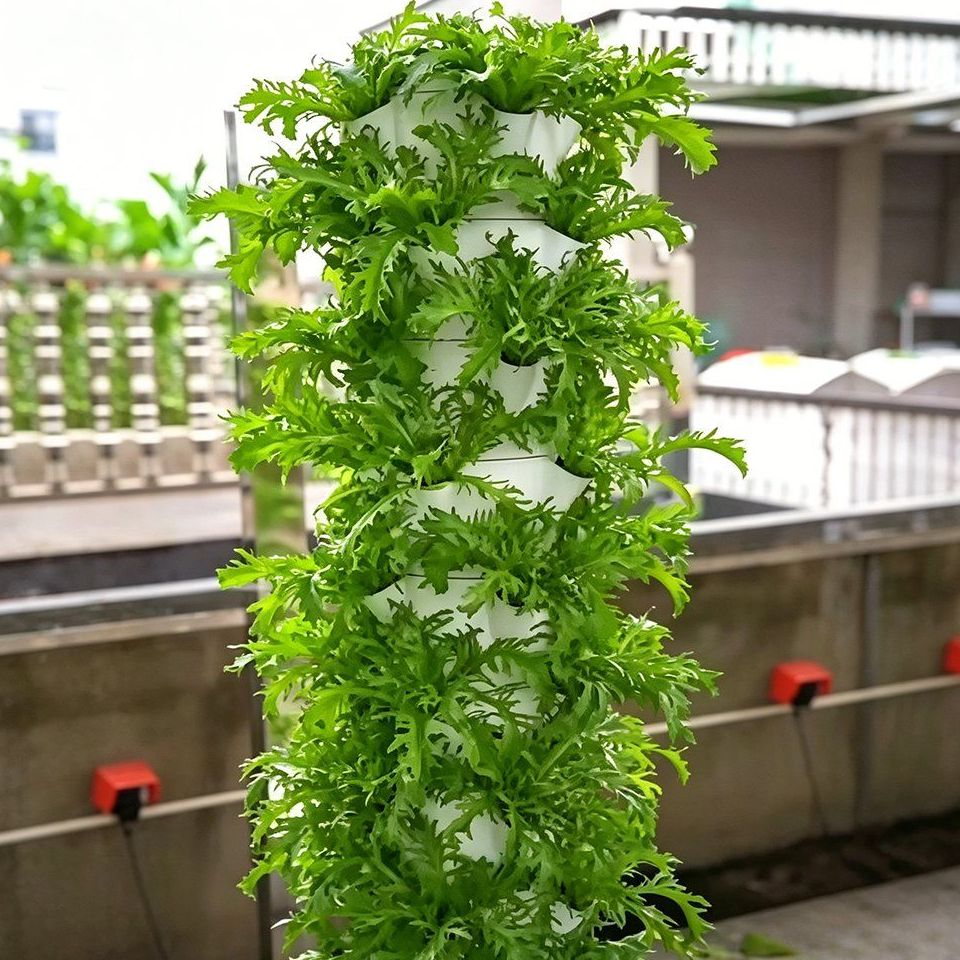
A tower circuit has a small volume relative to the crop it carries, so the solution moves further and faster than it would in a bed of the same plant count. That means the readings are checked more often, and it means the pump has to deliver the same flow to the top of every column rather than to the first few. Getting the manifold right at installation is what decides whether the bottom of the tower behaves like the top.
Light is the other half, and on a tower it is not evenly distributed by nature. Under cover the columns can be spaced so the roof light reaches the sides, and indoors the lamps have to be set against the lowest pocket rather than the highest. Material and pipe standards for irrigation and growing systems are published by ASTM International, so a buyer can ask for a component to be tested against a named grade.
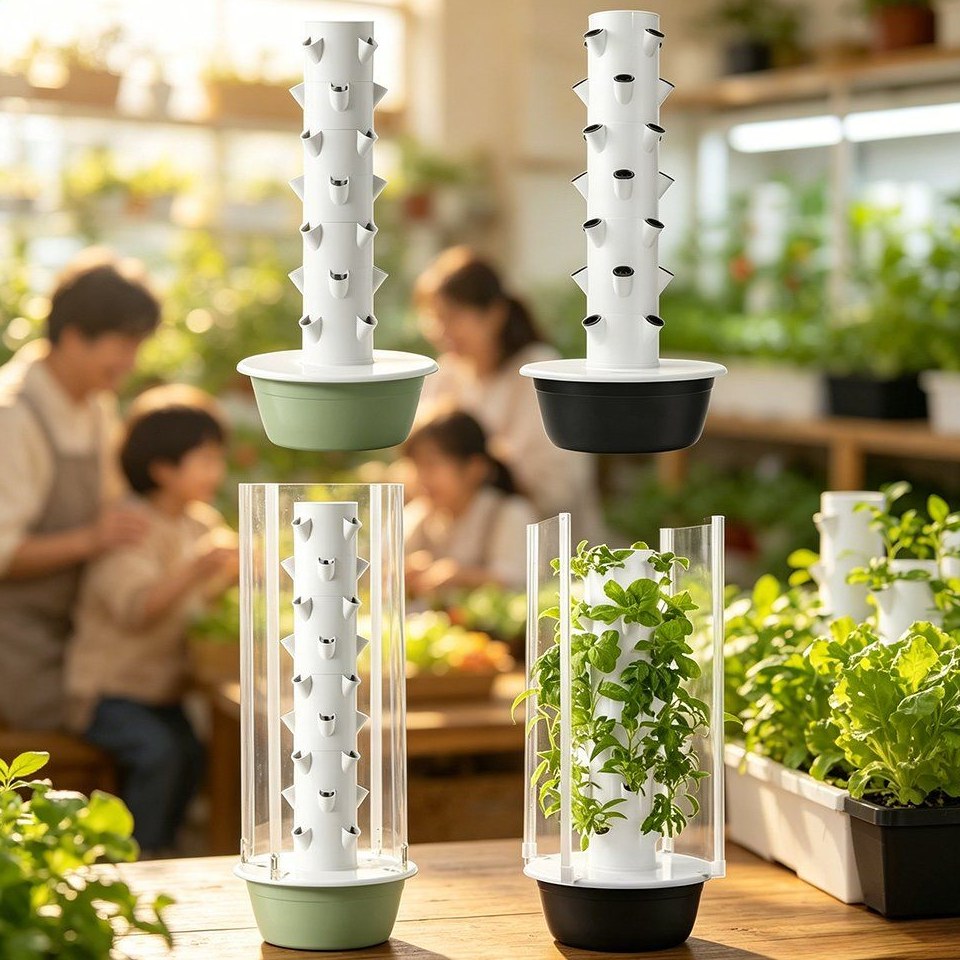
The table below lists the standard kit. Column count, layer height and pump arrangement are set to the house or room it will stand in.
| Column material | Food grade PVC |
| Column colour | White |
| Growing layers | Five layers per column |
| Support pipes | Galvanized steel pipes |
| Water circuit | Pumped to the top, drained back to the tank |
| Crops | Lettuce, herbs, microgreens and flowers |
| Use | Agricultural growing, under cover or indoors |
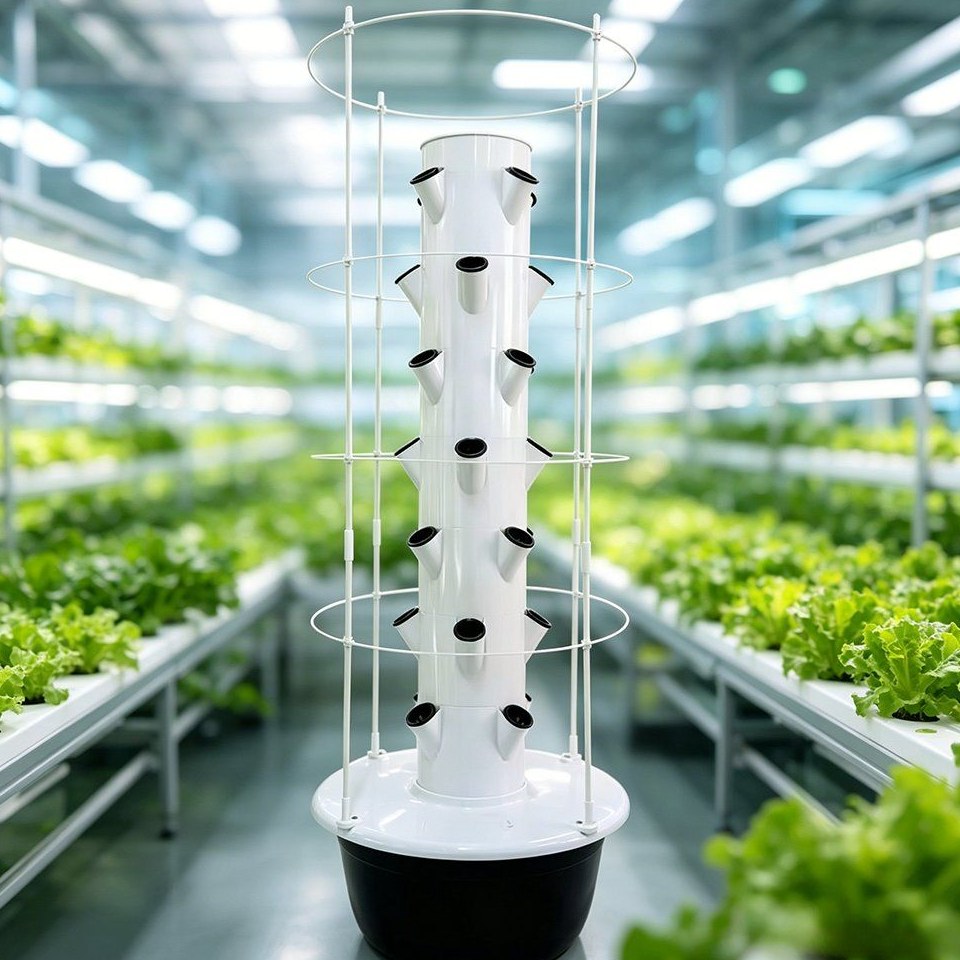
The routine on a tower is water first, then roots, then light. The tank has to be topped up and its strength checked regularly because the volume is small against the plant load, and the pump intake needs clearing so a blocked line does not leave the top pockets dry while the bottom ones still look fine. Between crops the columns are flushed out, since root debris collects at the pockets and slows the film going down the column.
On the growing side the jobs are thinning and positioning. A tower that is over planted at the top shades its own lower layers, so the crop is usually run thinner than a flat bed would suggest, and the lowest layer is the one used to judge whether the light is adequate. Growers planning leafy production around a market calendar follow fresh produce reporting such as FreshPlaza when they decide what to plant and when to cut.
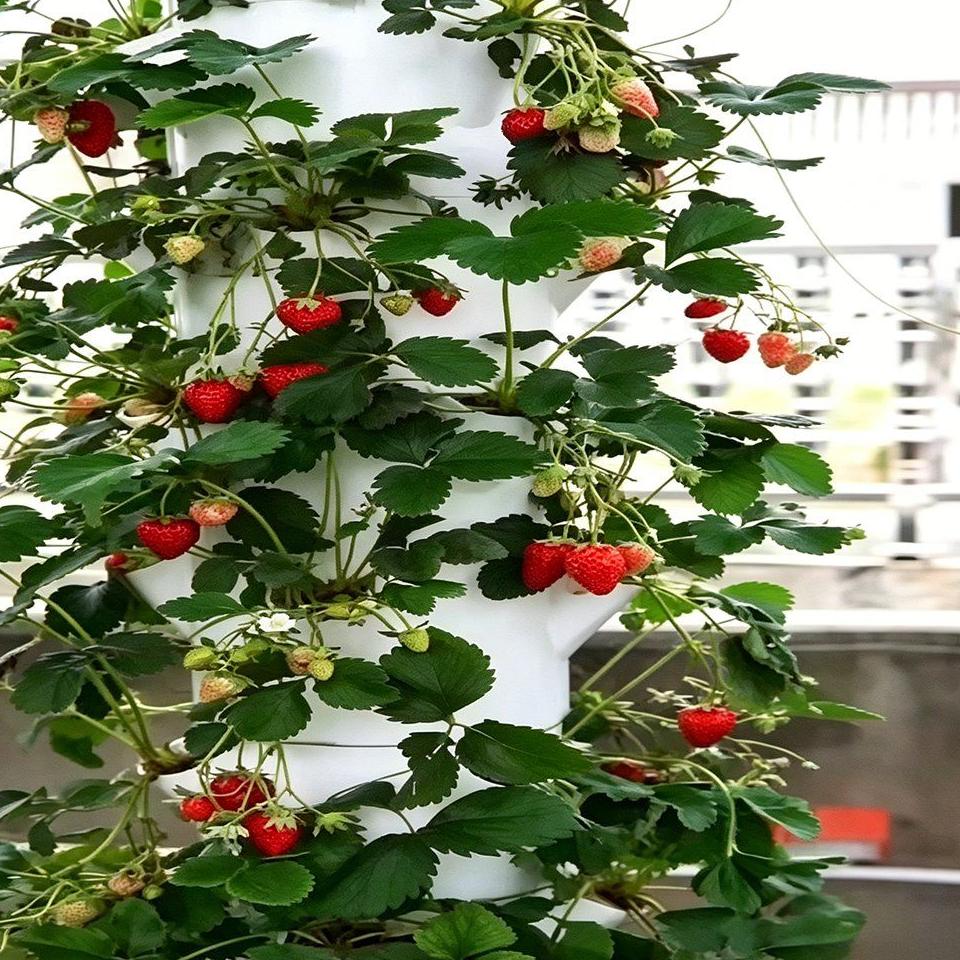
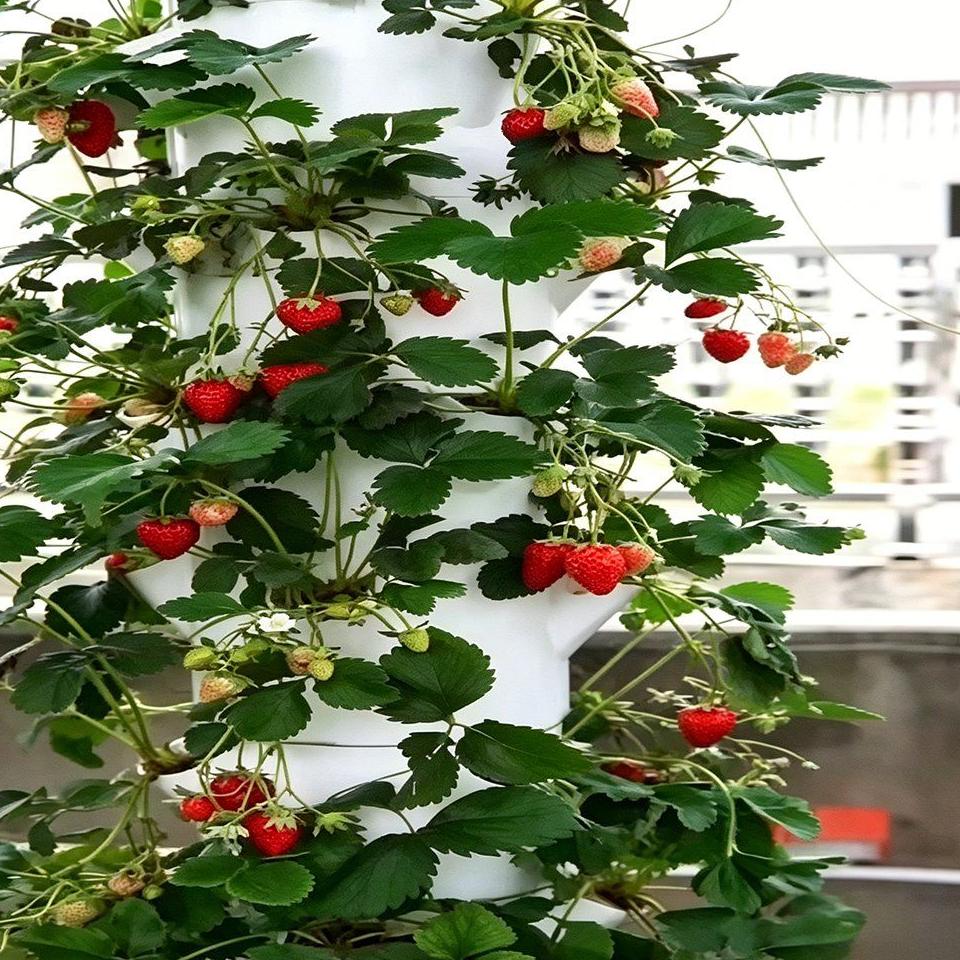
Tower systems are used for lettuce and salad crops grown on a short cycle, for culinary herbs, for microgreens, and for soft fruit such as strawberries where the fruit is held off the ground and picked upright. They are also used where floor space is the constraint rather than volume, which covers both a small growing room and a house where the useful area is limited.
Because the same column works flat out under lamps or in rows under cover, a grower can start with a group of towers indoors and move the same columns into a house as the operation grows. The practical question at specification stage is usually how many plants have to leave per week rather than how much floor is available, since the tower multiplies whatever floor it stands on.
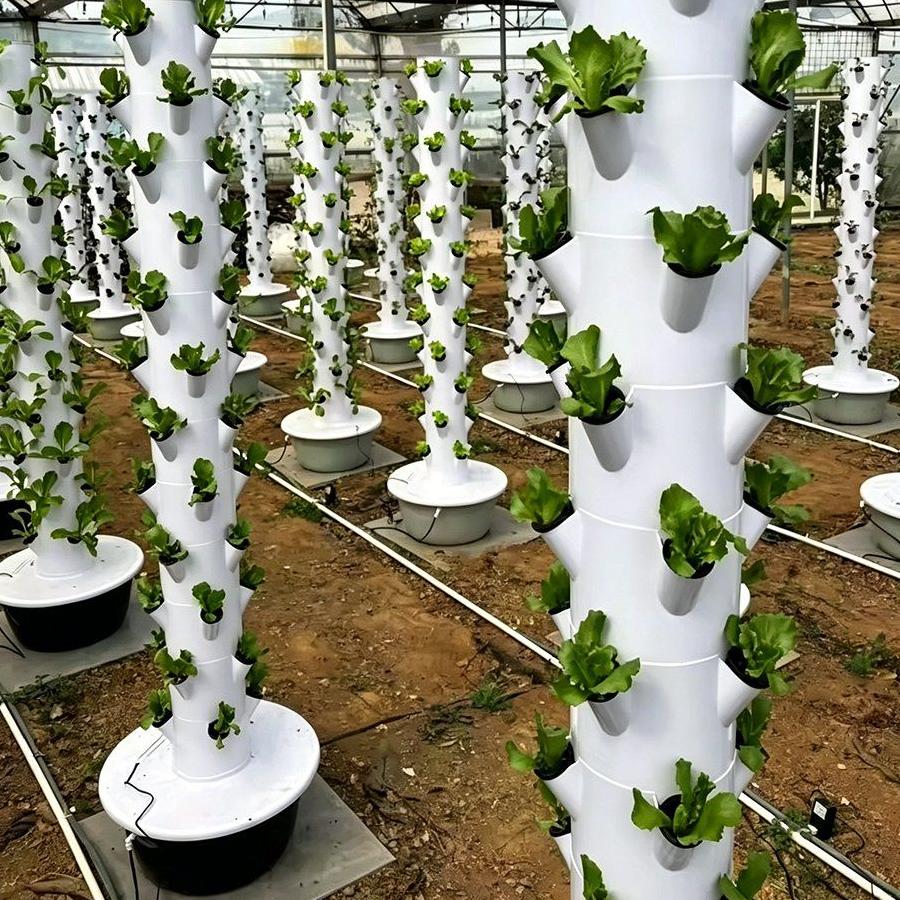
It multiplies the crop held on a given floor area, because the plants occupy the height of the house rather than only the ground. The trade off is light, so the lowest layer sets how many plants each column should carry.
The column is in constant contact with the nutrient solution that the crop takes up, which is why it is made from food grade PVC. The pockets are moulded into the column rather than clipped on, so spacing and angle are fixed all the way up and the plant count is known in advance.
The galvanized steel support pipes are rated for 15 to 20 years under normal growing conditions. PVC columns and the pump are consumable items, replaced as they wear or when the planting pitch changes.
We provide a 10 year structural warranty and a 5 year anti-corrosion warranty on the galvanized frame. Details are set out in the contract for each project.
Send your site dimensions, the crops and bench layout you plan to use and your local wind and snow loads. We reply with a layout drawing and a full quotation.