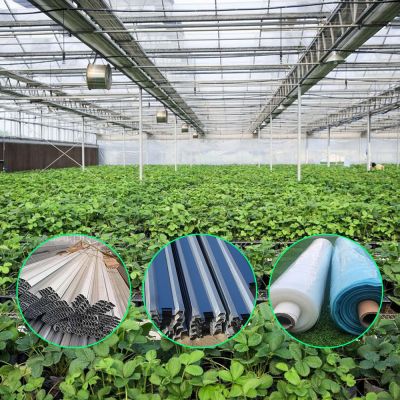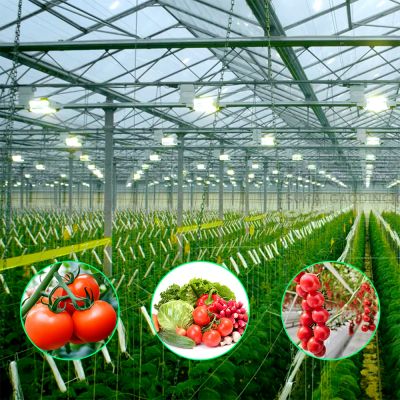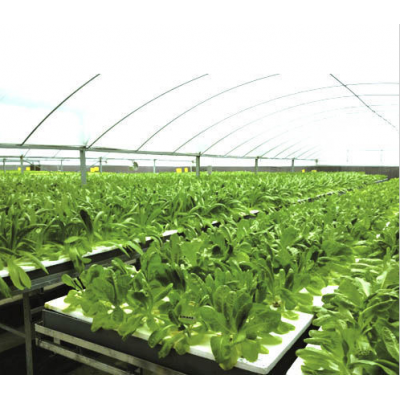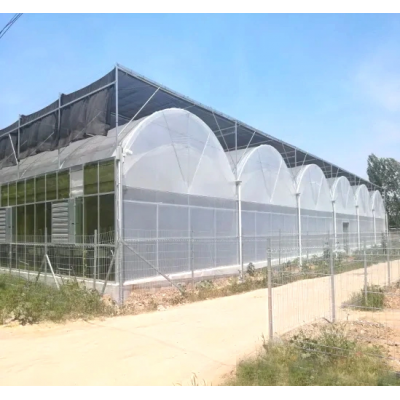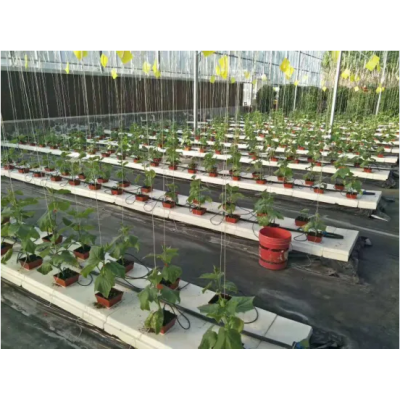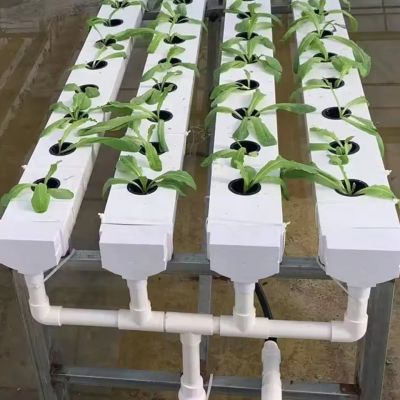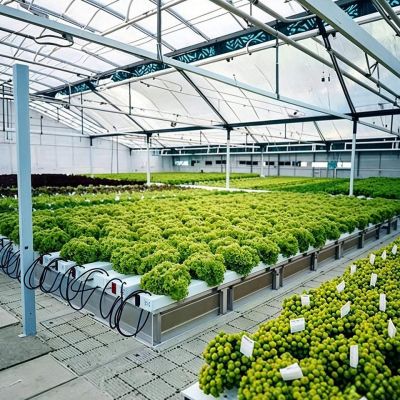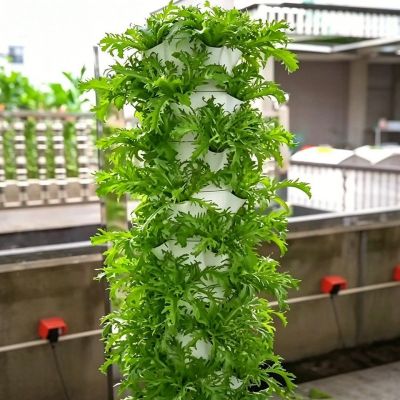
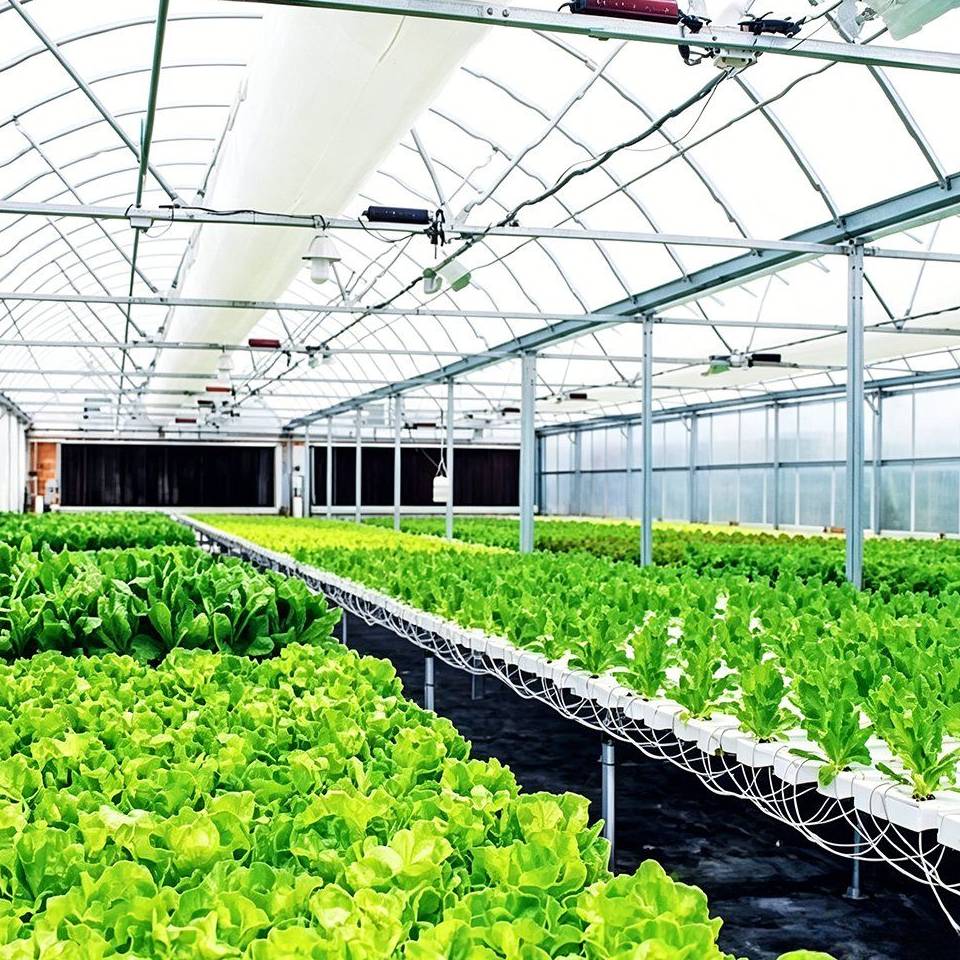
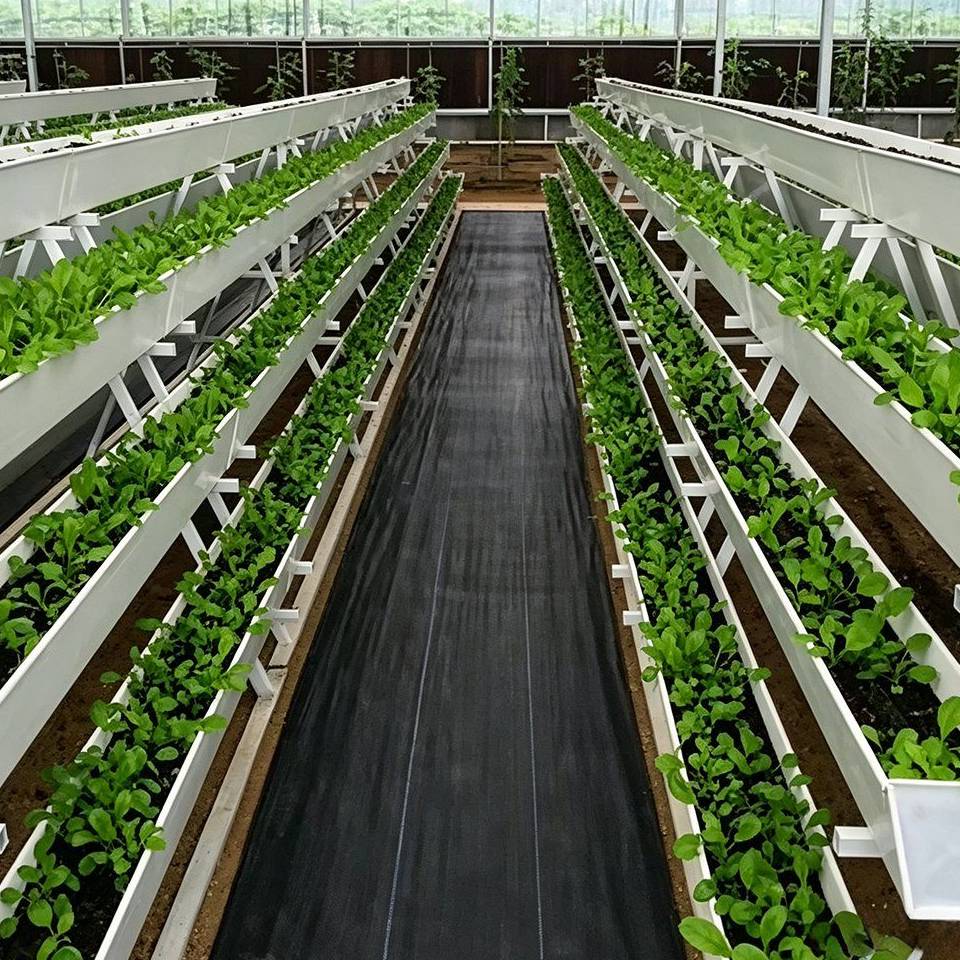
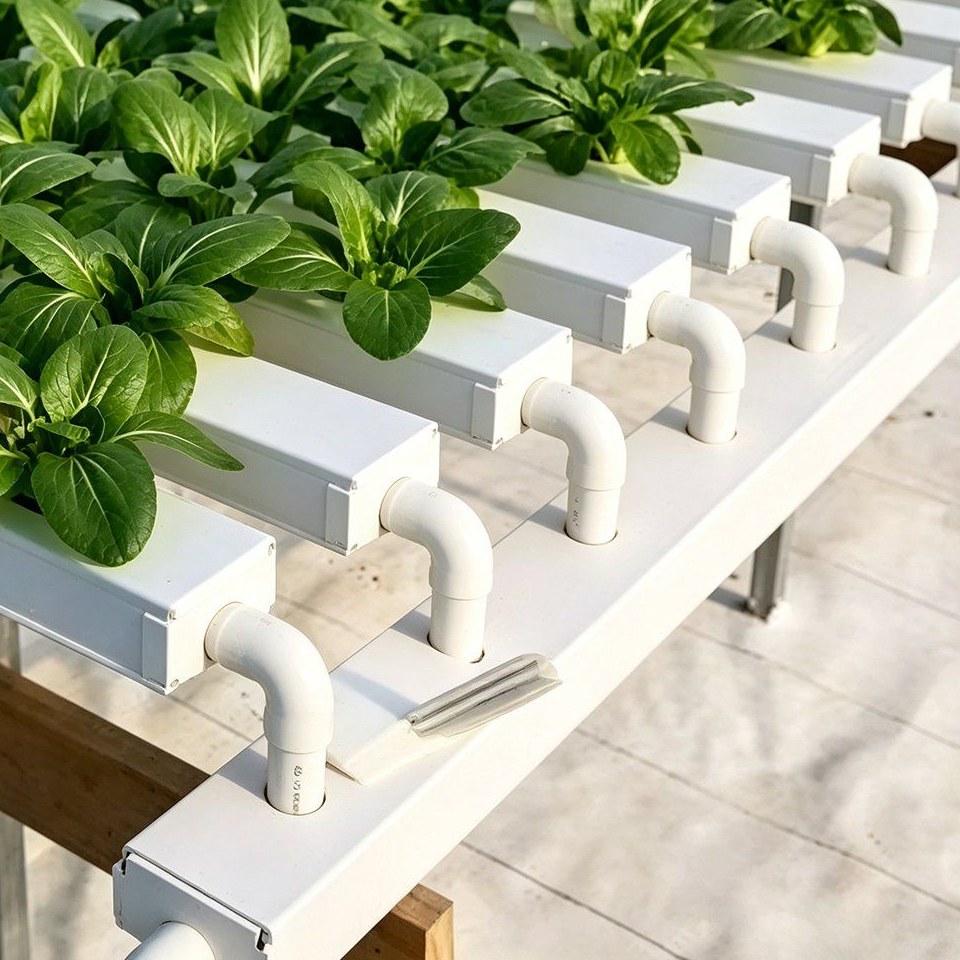
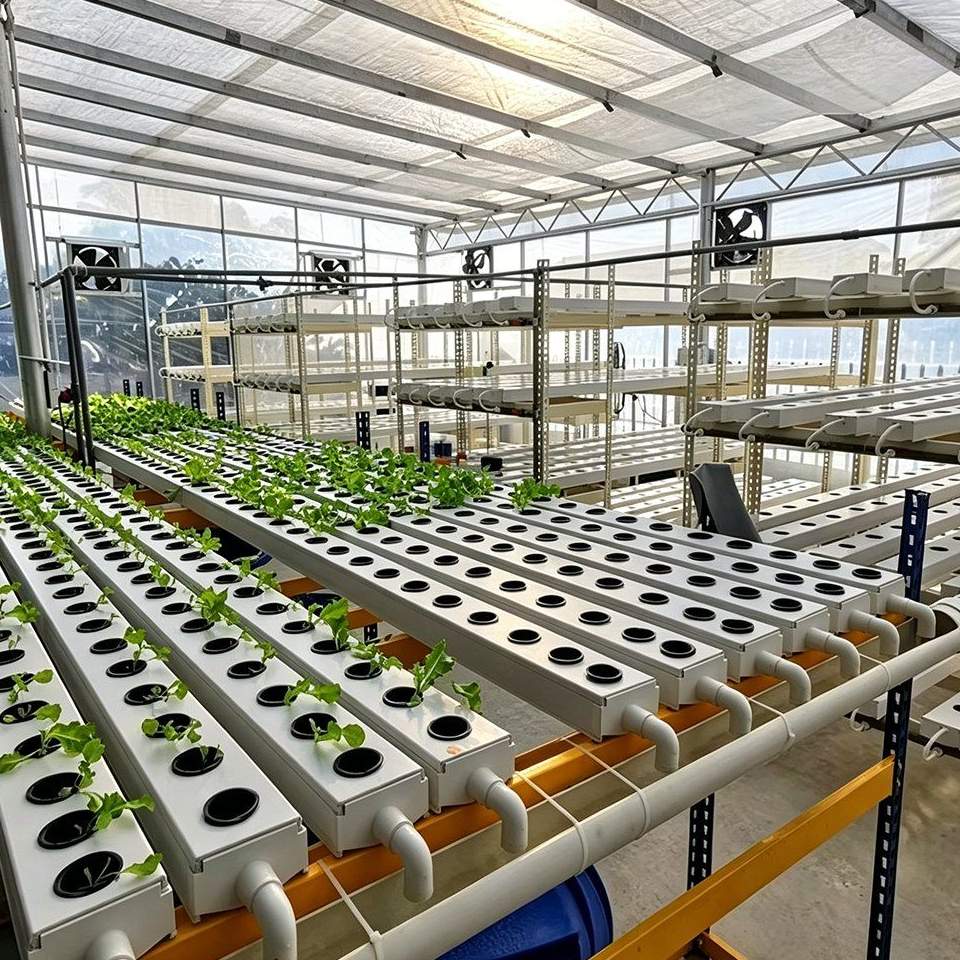
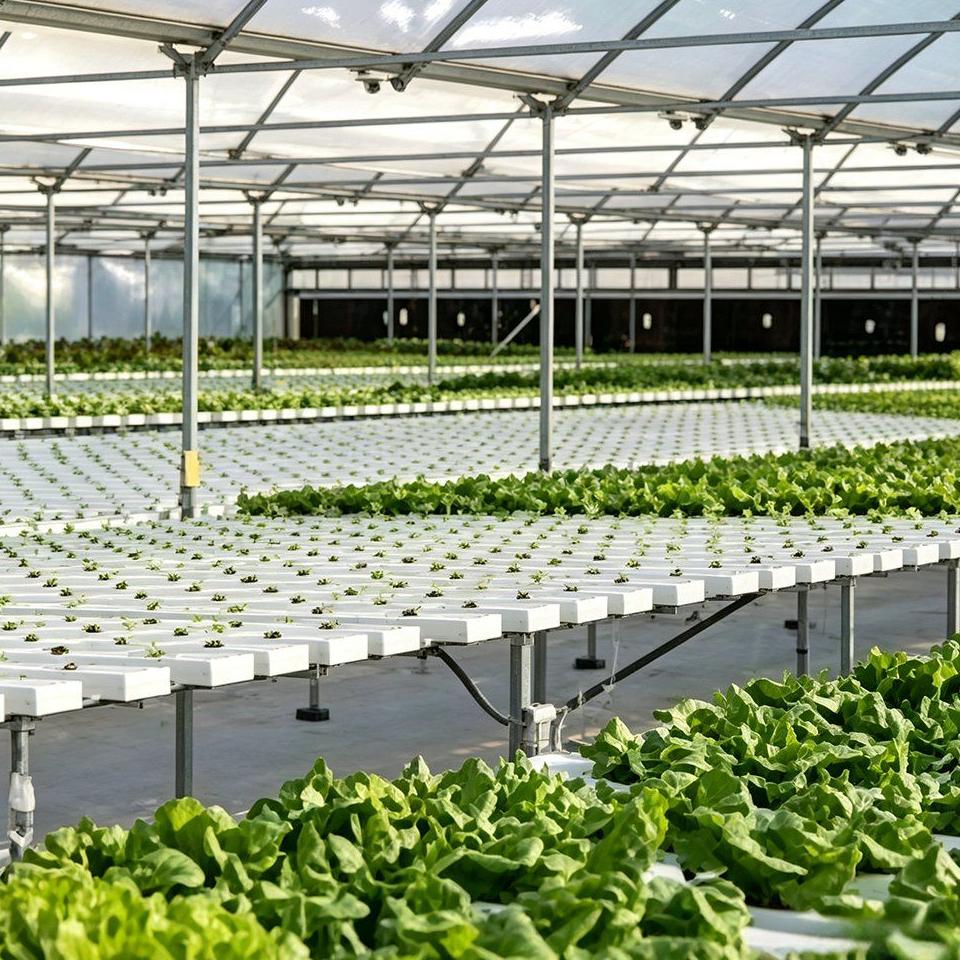
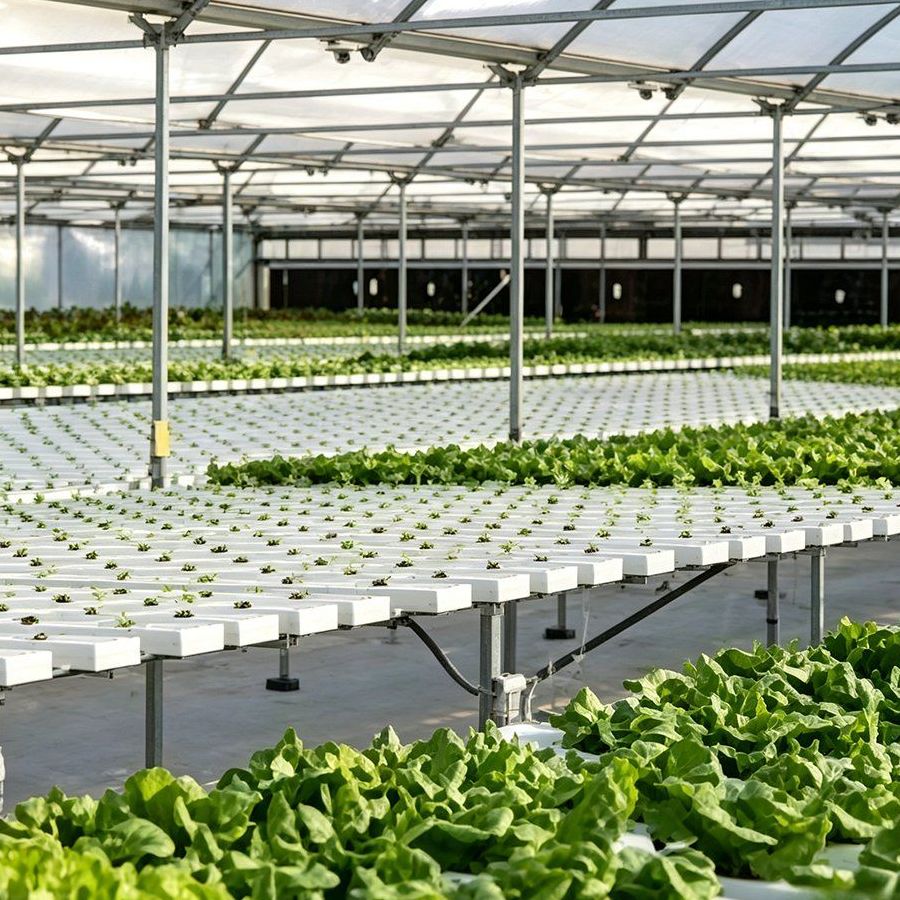
This custom hydroponic system is built around the crop rather than the hardware: the gully spacing, the planting pitch and the support pipes are set to the row width and the training system the grower already uses. Gullies are food grade PVC carried on galvanized steel pipes, with the solution pumped along each run and drained back to the tank. It suits tomato and cucumber grown on a high wire system under cover, and it can be laid out as a full house or as a trial block within an existing range.
A hydroponic system for a fruiting crop is not the same as one for salad. Tomatoes and cucumbers are trained two or three metres up a wire, they carry a heavy fruit load for months, and they are worked on daily, so the layout has to leave room for people as well as roots. That is why this system is specified rather than ordered from a catalogue: the gully spacing, the planting pitch and the support height are all set to the crop and the house.
The layout starts from the training system. On a high wire crop the plants are set out in rows with the wires running above them, and the gullies are spaced so the leaves of one row do not shade the next while still leaving a working aisle. Because the row pitch and the aisle width are set at design stage, the same house can be laid out for a wide row crop or a denser one without changing the frame that carries it.
A system can also be specified to fit part of a house rather than all of it, which is how most growers approach a change of system: one bay is converted, run for a season, and the rest is changed over once the results are in. The wider family of growing systems is listed on the hydroponic systems for greenhouse crops page on this site.
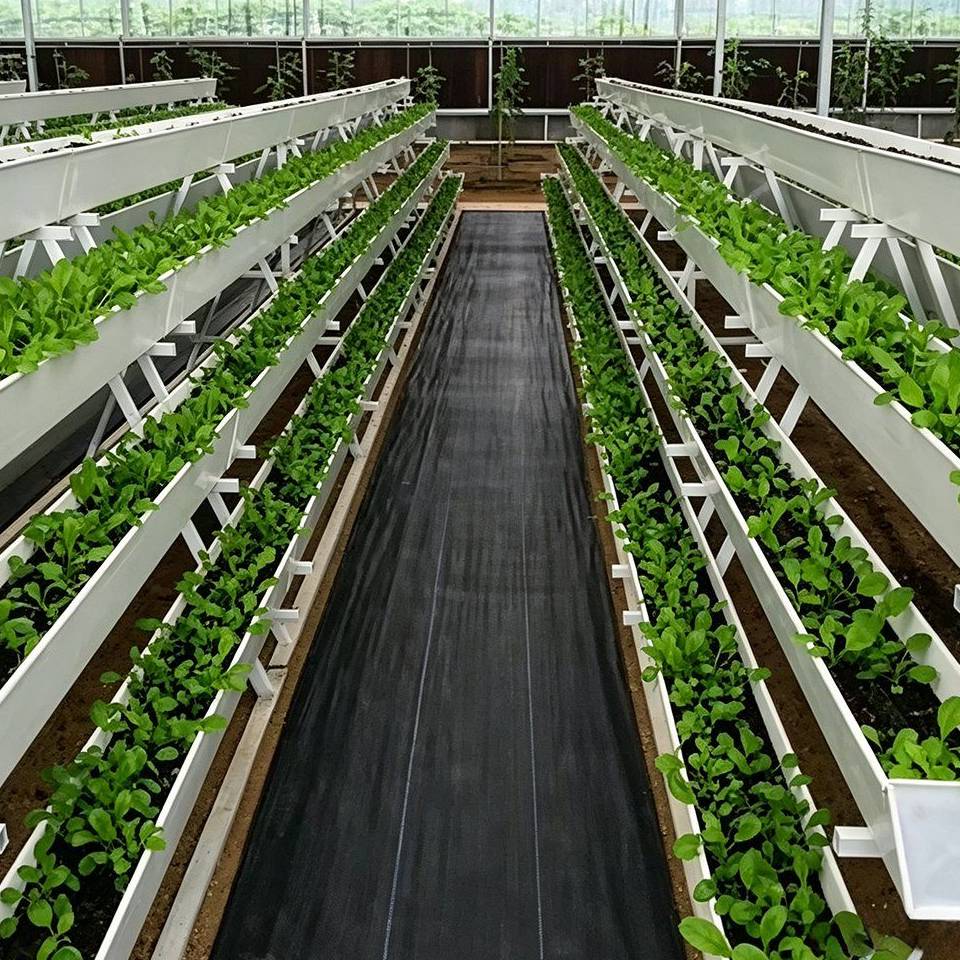
The gullies are food grade PVC, which matters because the material is in constant contact with the solution the crop takes up, and because a fruiting crop runs for months on the same circuit. White PVC also reflects light back onto the lower leaves instead of absorbing it. The gullies are carried on galvanized steel support pipes sized for a full wet crop, so a row does not sag under the weight and the pipe stands up to the humidity of a working house.
Because the crop is heavy, the support structure is designed with the gutter and the trolley rails in mind rather than on its own. Picking tomatoes from a trolley on rails and carrying the fruit out is what most of the daily work looks like, so the pipe spacing has to leave that route clear. A complete turnkey house using the same principle is described in the turnkey hydroponic tomato greenhouse.
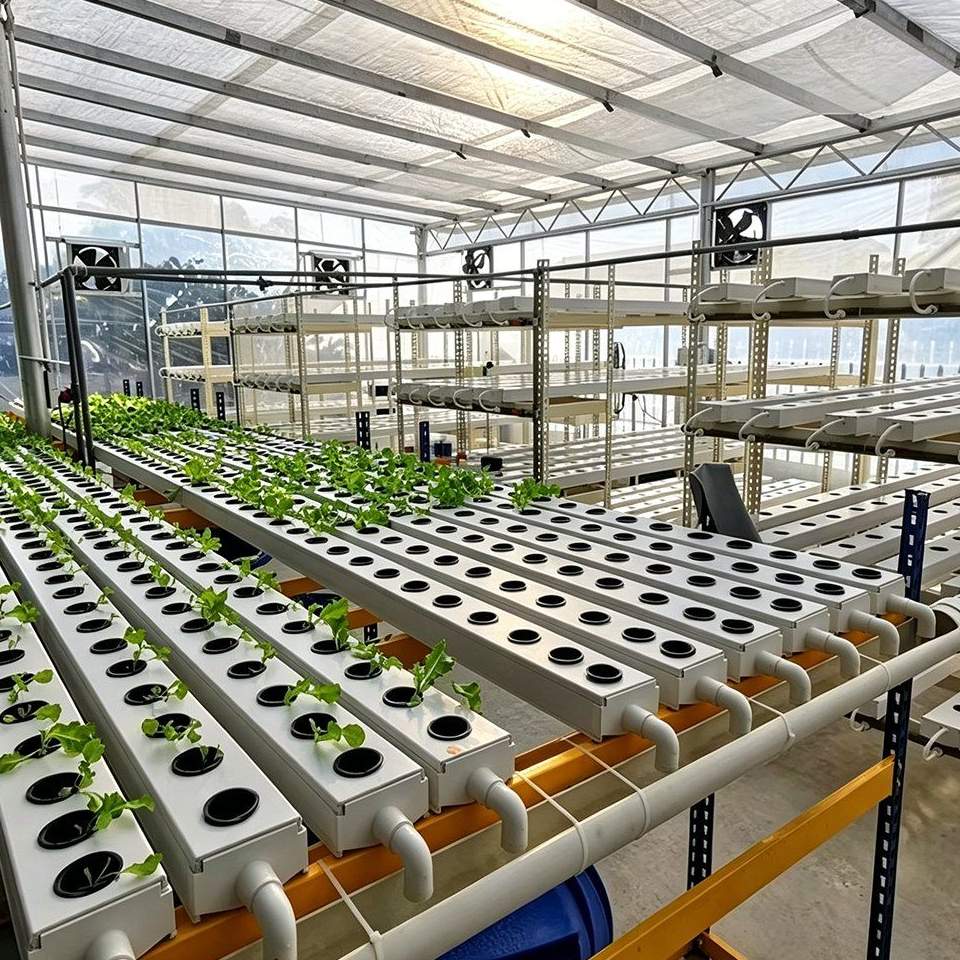
A fruiting crop takes up water and nutrients far faster than salad, so the circuit is sized for that demand rather than for the plant count alone. The tank and header have to deliver the same flow to the far end of a long row as to the first gully, and the drain has to take the return without pooling anywhere, because a fruiting crop left sitting in solution loses roots quickly. Dosing is usually automatic, holding EC and pH against a target rather than reacting to a reading taken by hand.
The drip side of the same water system, used where a crop is grown in a medium rather than in a film, is described in the hydroponic drip irrigation system. Research on nutrient management for fruiting crops in protected growing is published by NC State University, and trade coverage of the flower and plant side of the same sector is carried by FloralDaily.
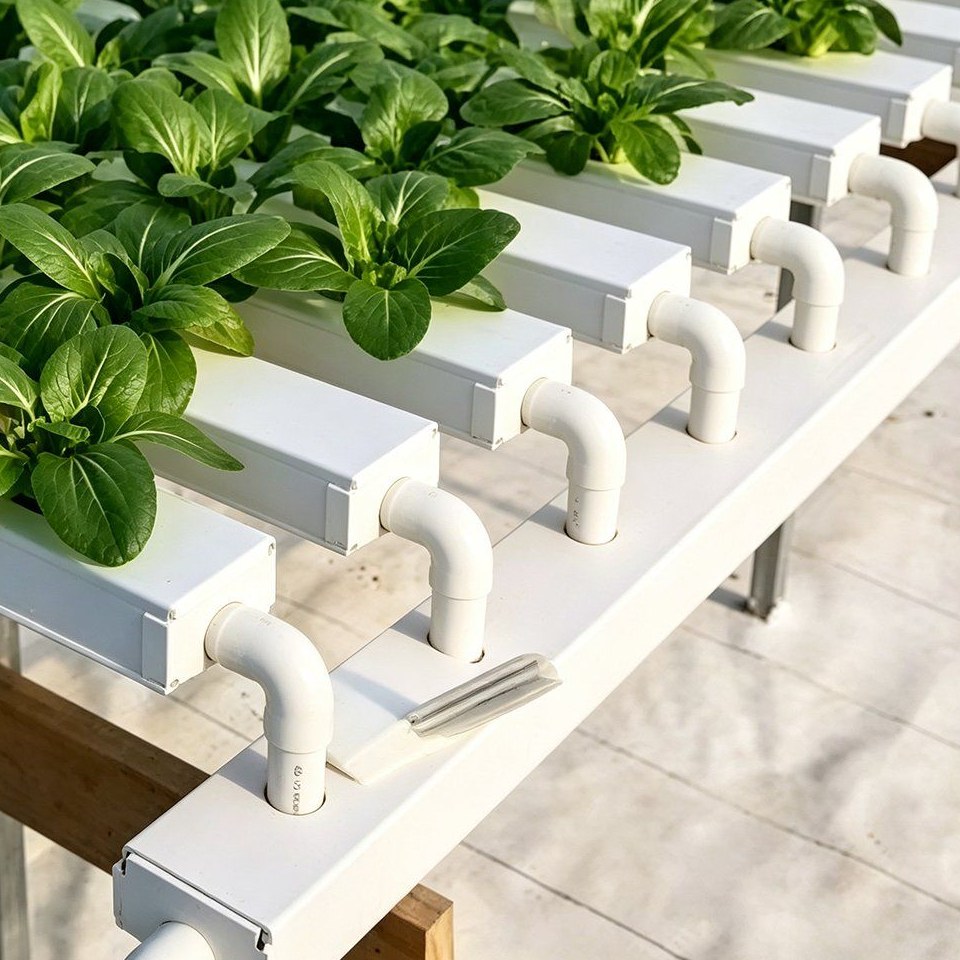
The table below lists the standard build. Row pitch, gully length and support height are set to the crop and to the house.
| Gully material | Food grade PVC |
| Gully colour | White |
| Support pipes | Galvanized steel pipes |
| Layout | Set to the row pitch, aisle width and training system |
| Length | Made to the bay |
| Water circuit | Pumped along each run, drained back to the tank |
| Use | Agricultural growing, under cover |
| Crops | Tomato, cucumber, vegetables and herbs |
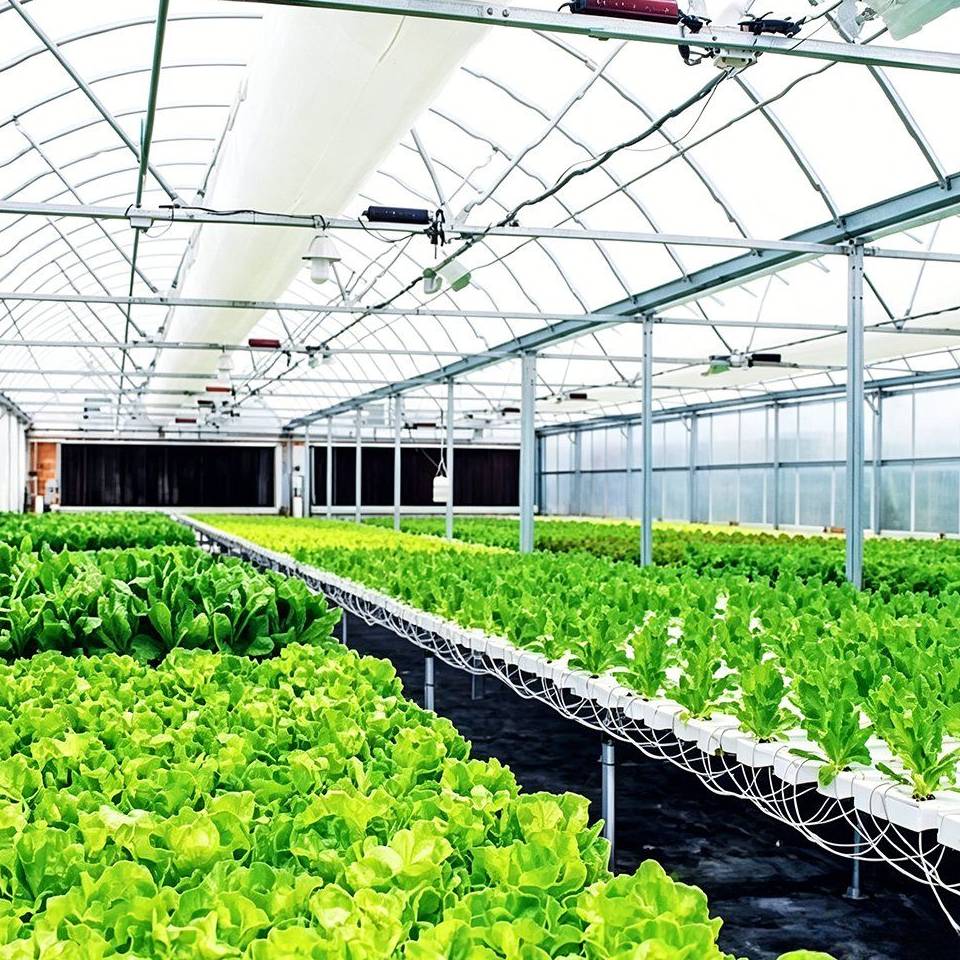
The routine on a fruiting crop is water, roots and plant work. Solution strength is checked against the target rather than by eye, the pump intake and filters are cleared so a blocked line does not leave a row dry while the next one still looks healthy, and the gullies are cleaned between crops because root debris collects where the fruit has been standing. On a long run the far end is the one to check, since that is where flow problems show up first.
On the crop side the work is training, pruning and picking, and the layout is what makes those practical: the aisle has to take a trolley, the wire height has to suit the variety, and the gullies have to be low enough that the fruit can be reached without bending. A system that is specified against the crop plan rather than against a standard kit is what keeps that workable as the variety changes.
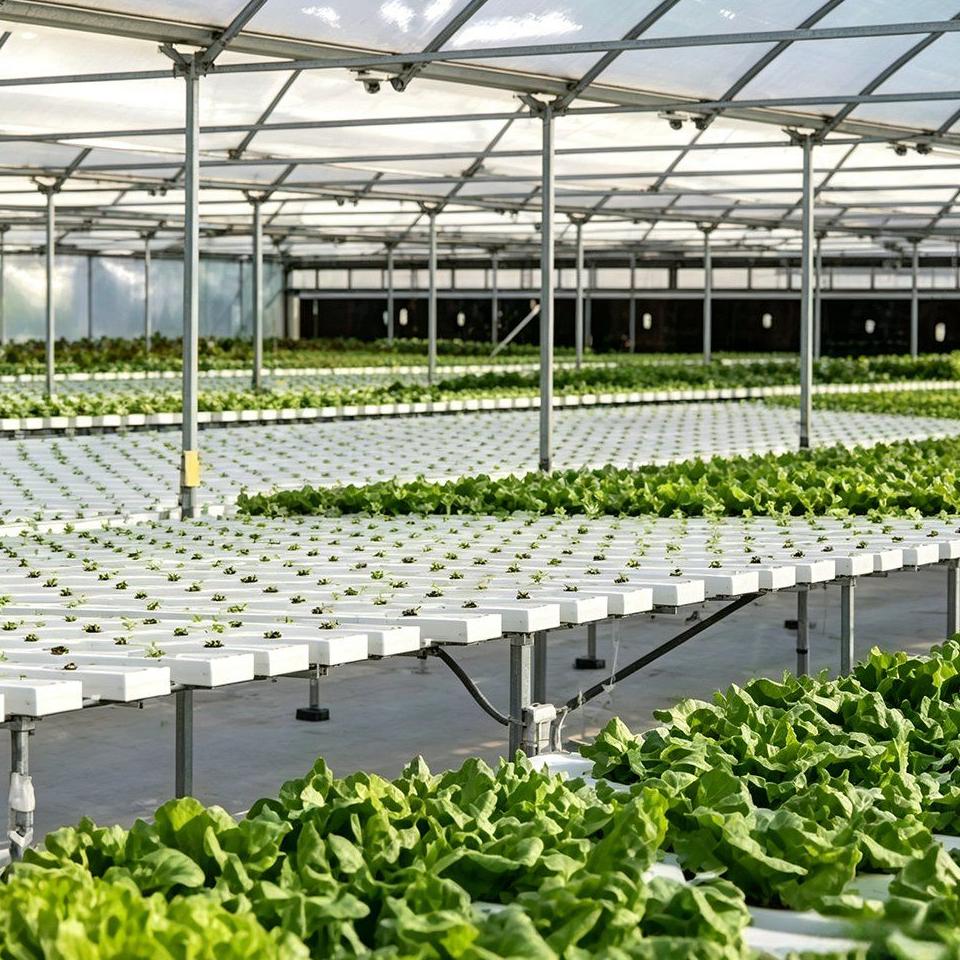
Systems of this type are used for tomato and cucumber grown on a high wire system under glass or panel, for other fruiting vegetables, and for herbs and leafy crops in the same circuit. They are also used where a grower wants to convert part of an existing range rather than build new, in which case the layout is set to the bay that is being changed.
Because the system is specified rather than bought off a list, the first question at quotation stage is what the crop and the training system will be in five years, not what fits the house today. A wider row pitch and a higher wire cost very little at design stage and are awkward to change once the gullies and rails are in.
Because the row pitch, aisle width and support height follow the crop and the training system. A tomato crop on a high wire needs a different layout from a salad crop, and a layout that does not leave room for trolleys and picking makes the daily work harder for the whole season.
Yes. Most growers convert one bay first and run it for a season before changing the rest, so the layout is set to the bay being converted rather than to the whole range. The water circuit is usually sized for the whole house at the start.
The galvanized steel support pipes are rated for 15 to 20 years under normal growing conditions. PVC gullies, the pump and the probes are consumable items, replaced as they wear.
We provide a 10 year structural warranty and a 5 year anti-corrosion warranty on the galvanized frame. Details are set out in the contract for each project.
Send your site dimensions, the crops and bench layout you plan to use and your local wind and snow loads. We reply with a layout drawing and a full quotation.