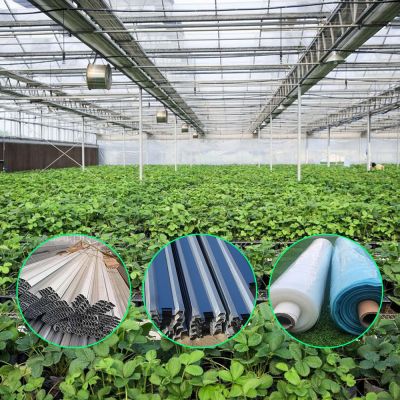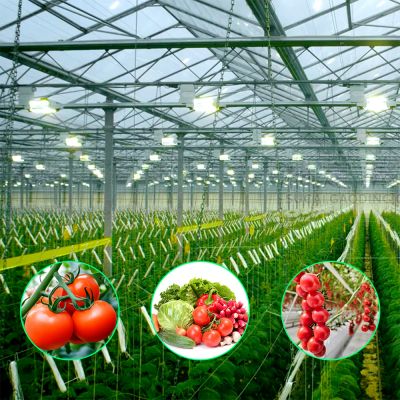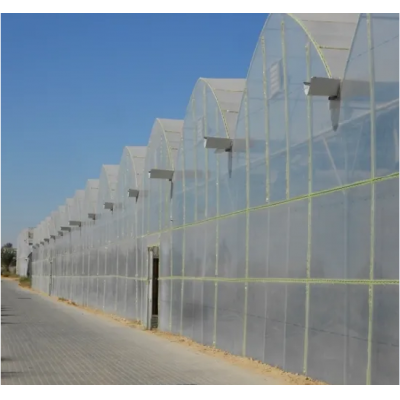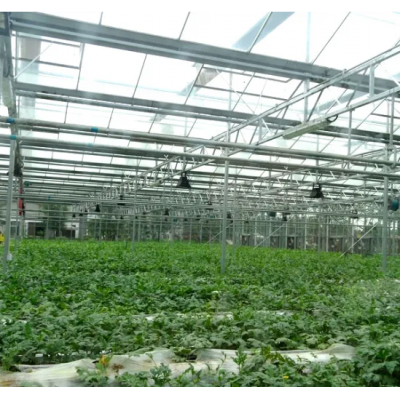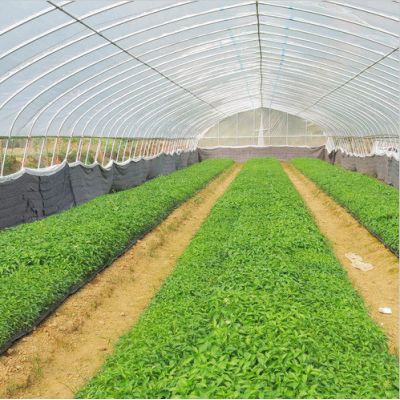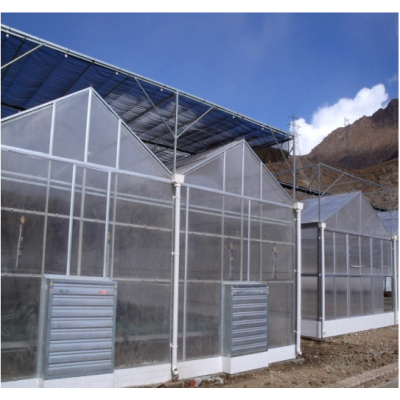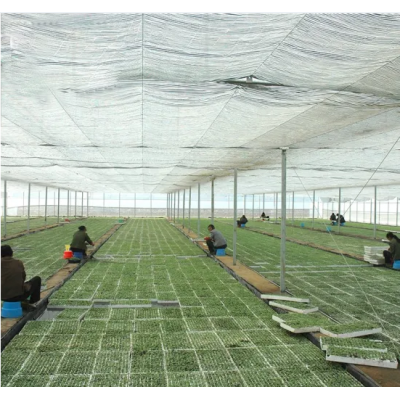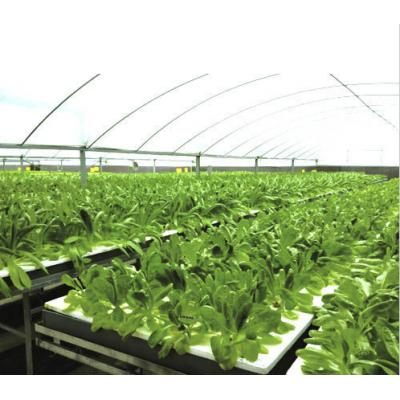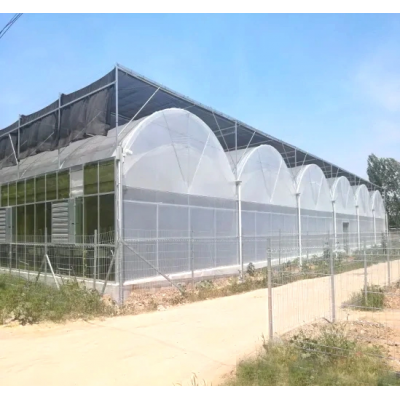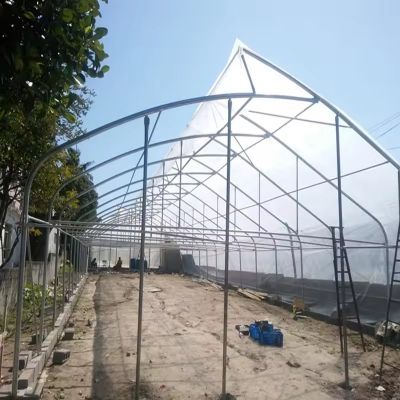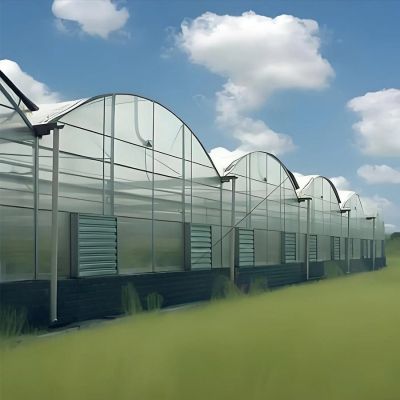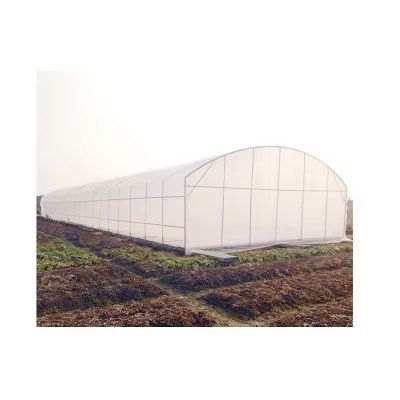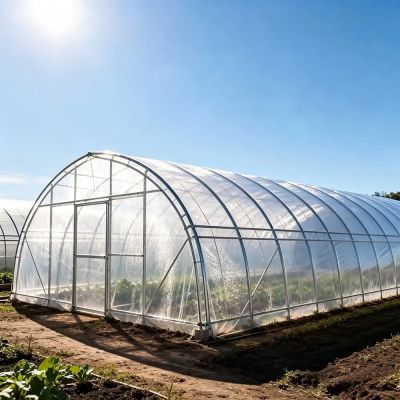
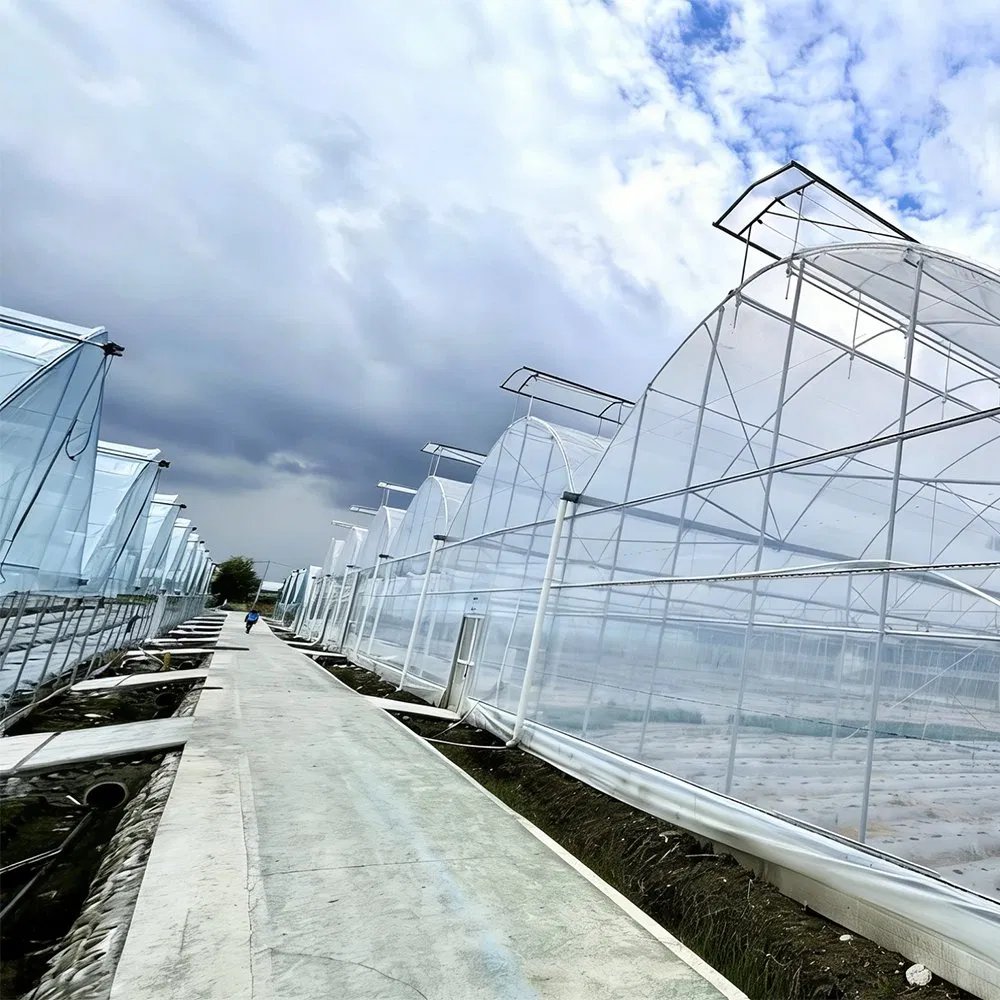
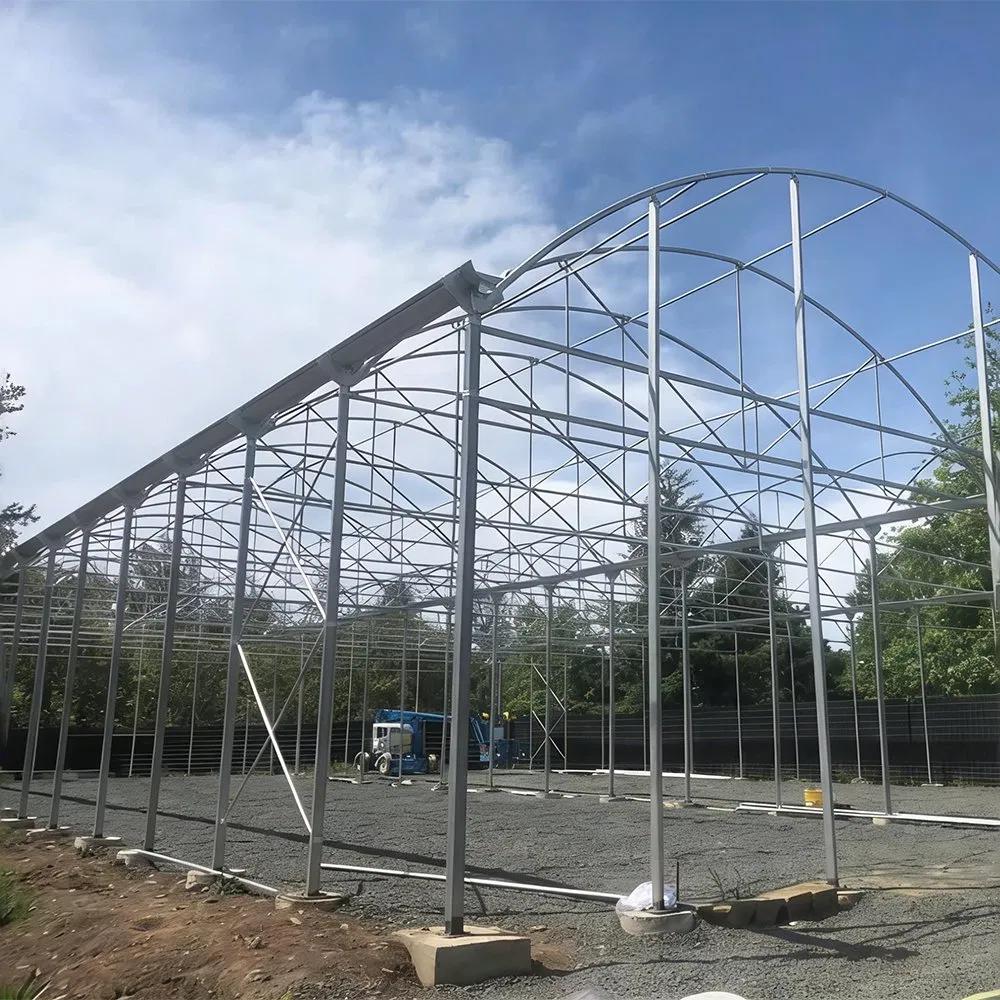
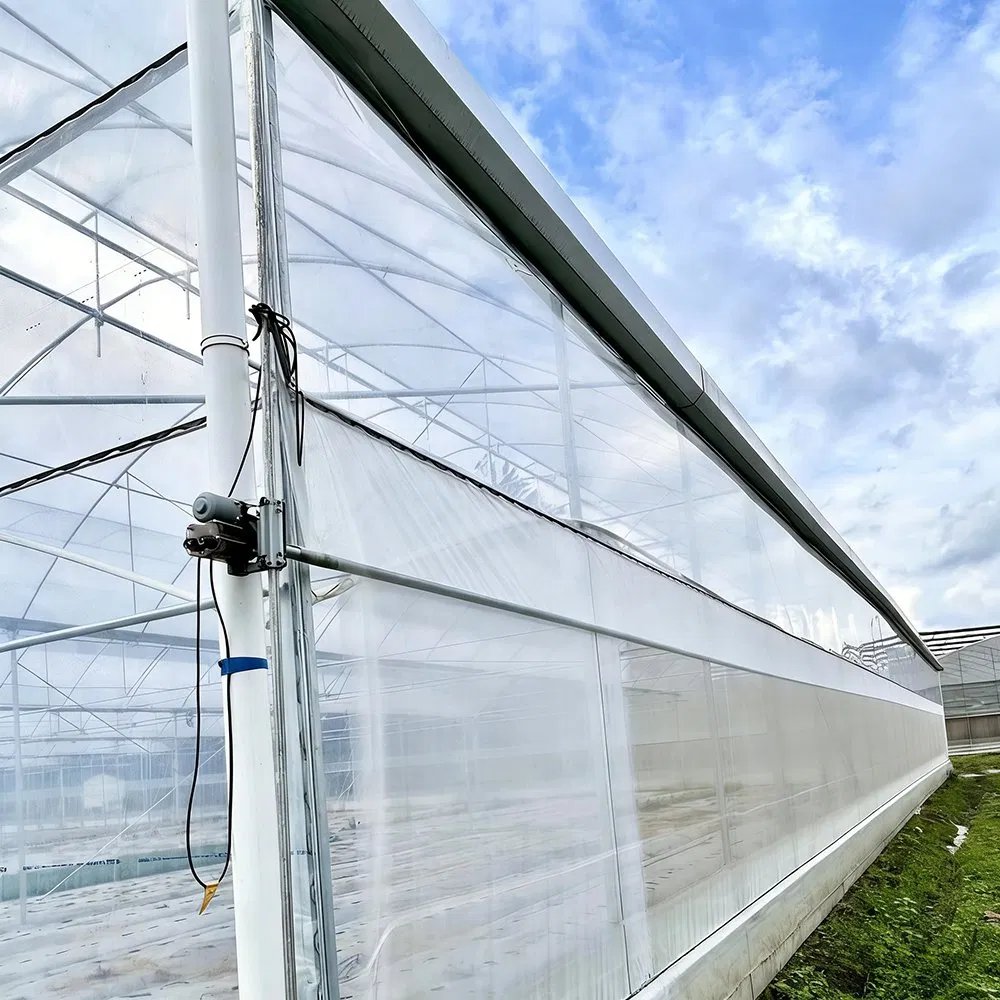
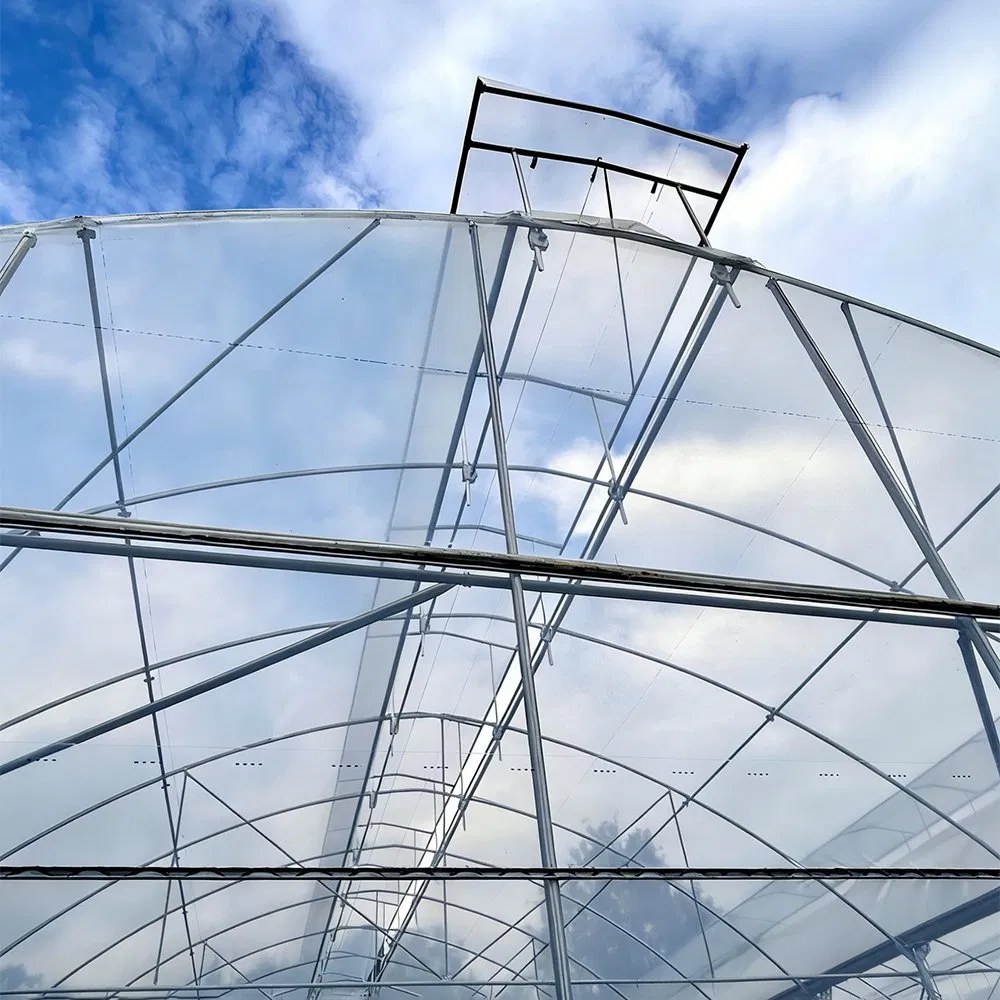
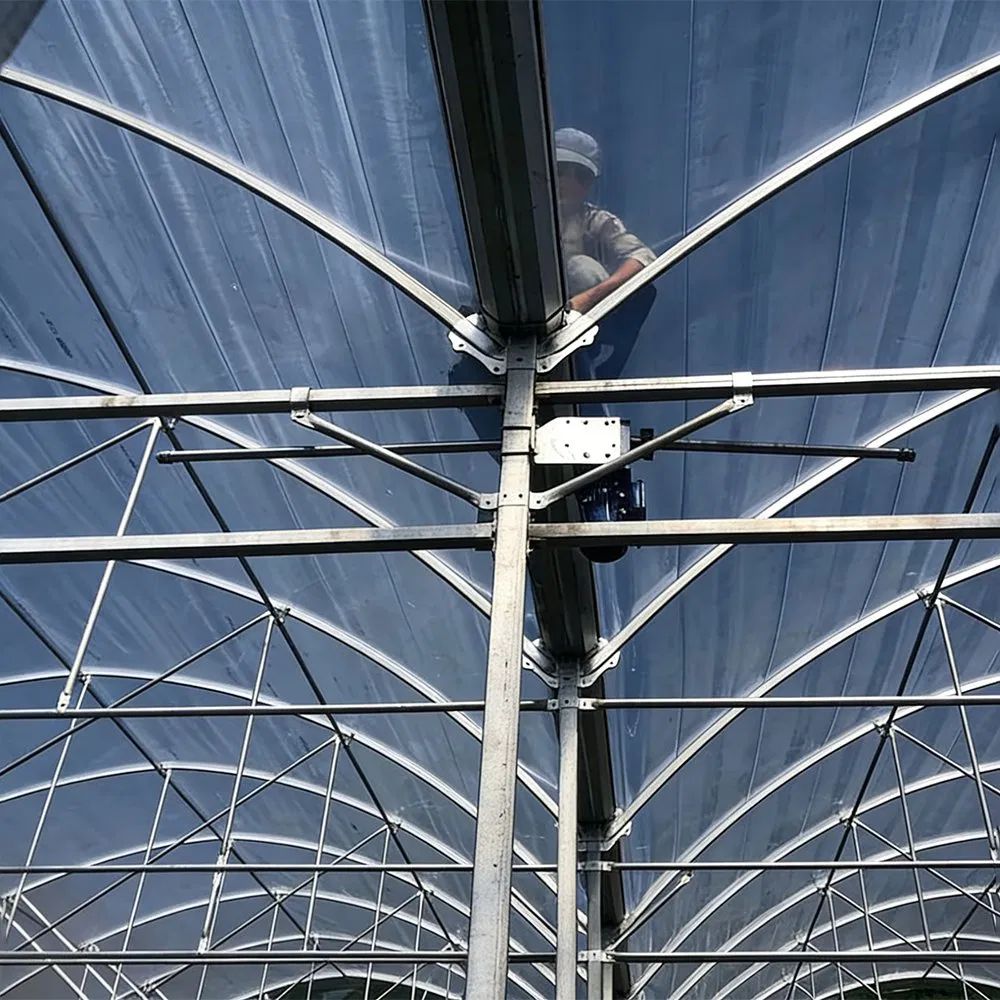
One house, two jobs: trays on benches in spring, strawberry on the floor afterwards. That sequence is what this kit is laid out for, with roll-up sides, an inflated double layer for the cold nights, top vents and a pad and fan wall for the hot ones. Spans run from 6.4 to 16 metres, and the reference house is thirty by a hundred feet. The two crops want very different air, and the vents are what let one house serve both a month apart.
A propagation house earns its keep twice if it can be turned over: trays in late winter, fruit on the floor from spring. That changeover is mostly about ventilation and floor space, and both are decided when the kit is ordered rather than when the crop changes. This one is laid out for it, and it belongs to the tunnel greenhouse range on this site.
Seedling trays want a warm, humid, still house with light coming in low. Strawberry wants air moving through the canopy and a dry leaf by evening. The same structure serves both if the vents are generous and the floor can be cleared, which is why this kit is specified with sides that roll the full height and a ridge vent rather than a fixed roof.
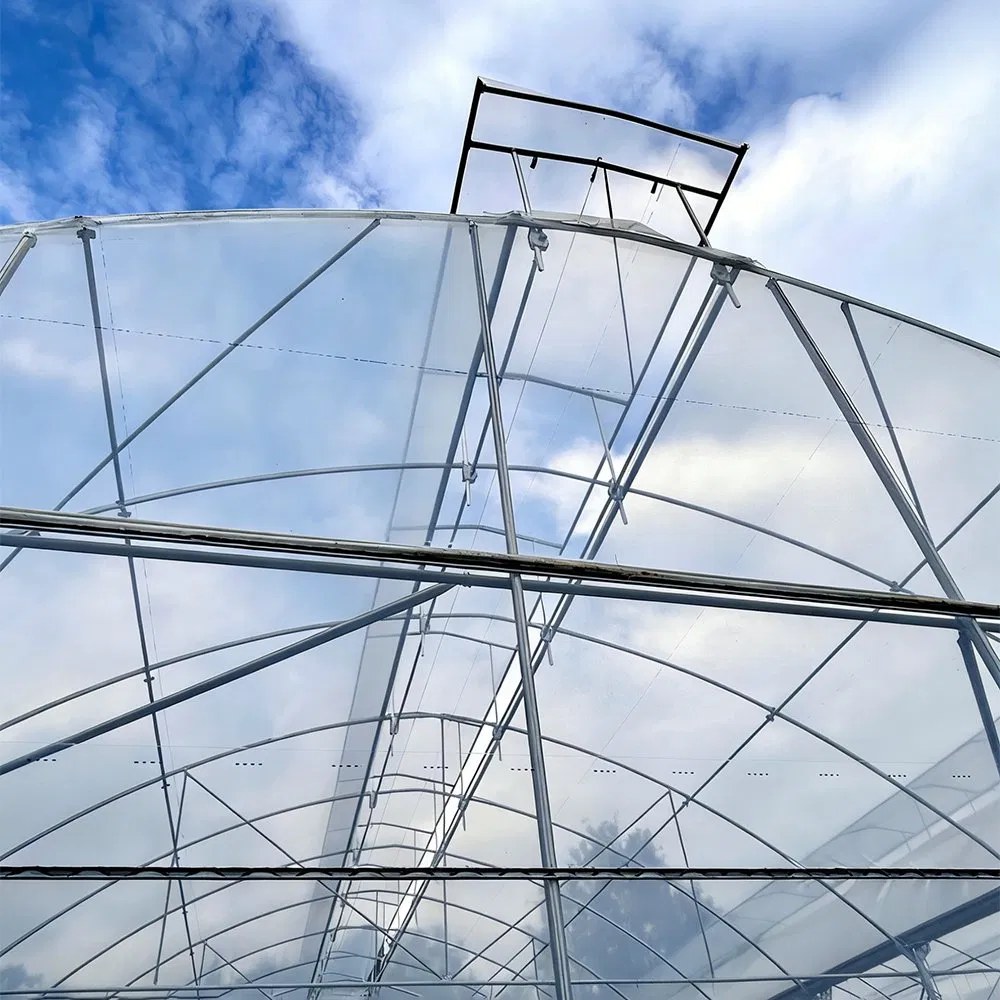
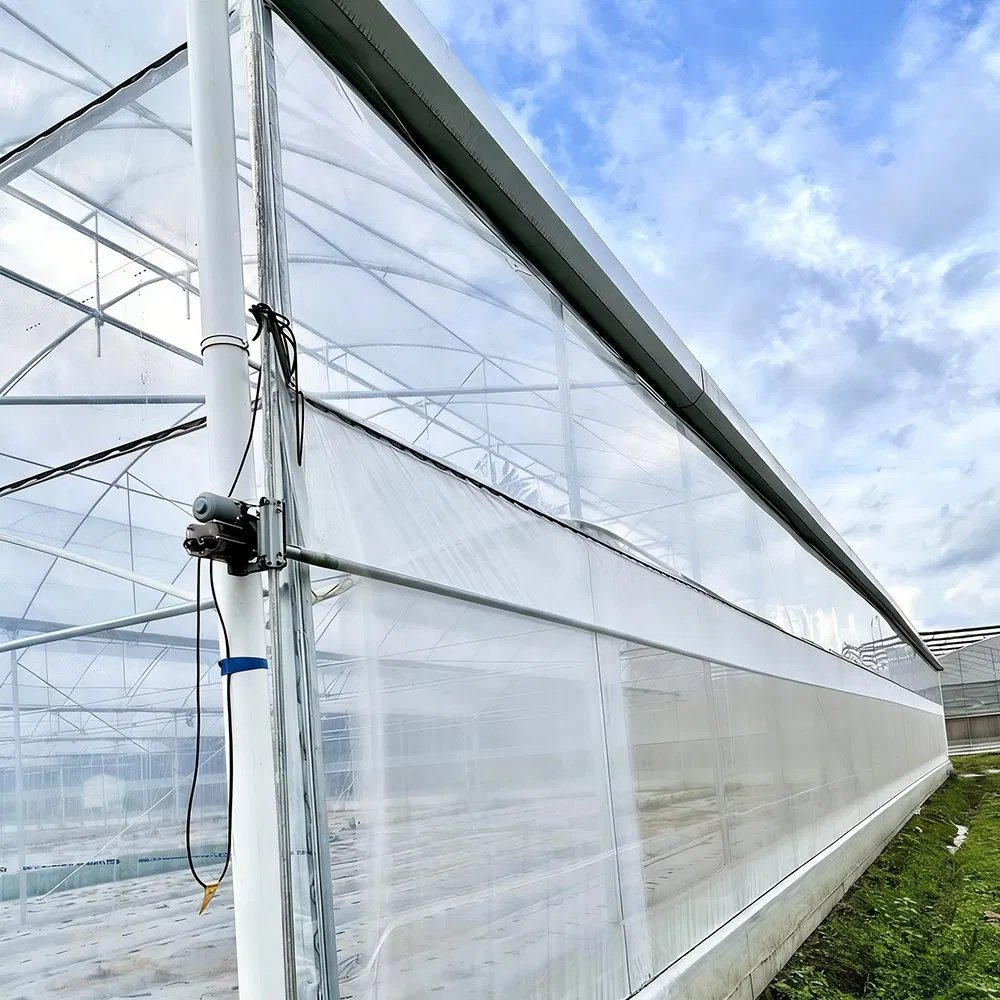
The double layer is two films with an air gap between them, held by a small blower. Still air is an insulator, so the gap slows heat loss overnight without a heater being lit. It is the least expensive way to take the edge off a cold night, and it costs some light, which is the trade to weigh on a winter crop.
The sides roll up on a geared drum at the base rail on both walls. On a house used for two crops, that matters: the trays in spring need a closed house, the strawberry in May needs it open by eight in the morning. A crank that one person can work is the difference between the two happening on time.

| Type | Single span film tunnel, kit form |
| Span | 6.4 / 8.0 / 9 / 9.6 / 10.8 / 12 / 16 m |
| Reference size | 30 ft by 100 ft, about 9.1 m by 30.5 m |
| Structure | Steel frame construction |
| Cover | Plastic film, double layer with air gap |
| Ventilation | Top ventilation and side ventilation, roll up walls |
| Cooling | Cooling pad and fan system |
| Heating | Optional system |
| Packing | Packed for container shipment |
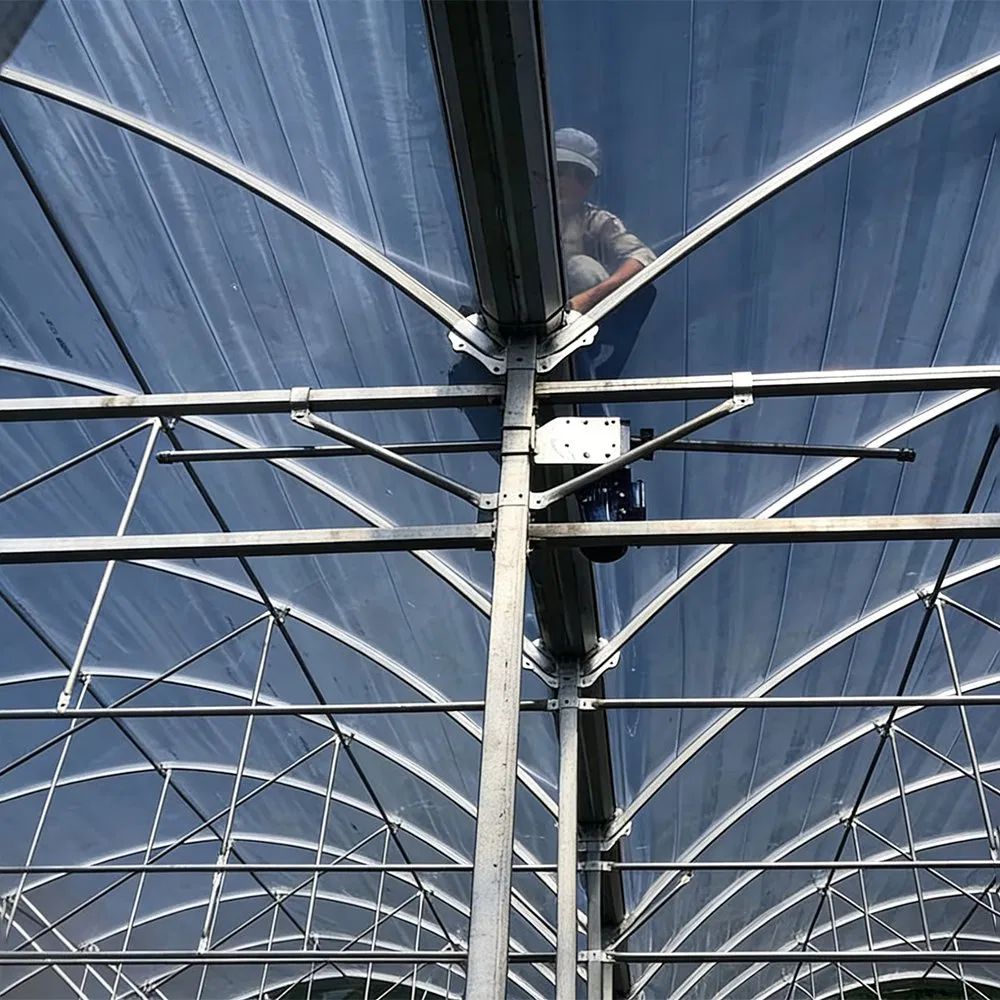
In propagation mode the house runs warm and close: vents cracked, blower on, trays on benches with air moving underneath. The anti-drip film matters most here, because a dripping cover over seedlings is how damping off starts. Moving to strawberry, the benches come out, the floor is bedded, and the vents are opened earlier each week as the canopy fills.
A house of the same family specified for nursery work is described on the nursery propagation tunnel page.
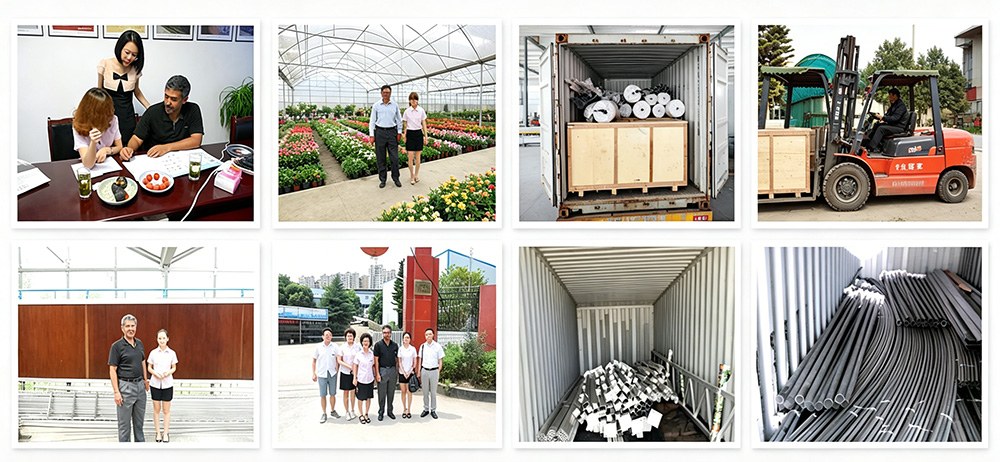
The pad and fan wall pulls outside air through wet pads under negative pressure, and the top vent lets the hottest air out at the ridge. Run together they hold a more even temperature than either alone, and on a wide span that matters because the middle of the house is a long way from either wall.
How far the pad can pull the temperature down depends on the water source and the pad area, which is why both are quoted rather than assumed. Protected cropping research and industry reporting is published by GreenTech Amsterdam and AgFunderNews.
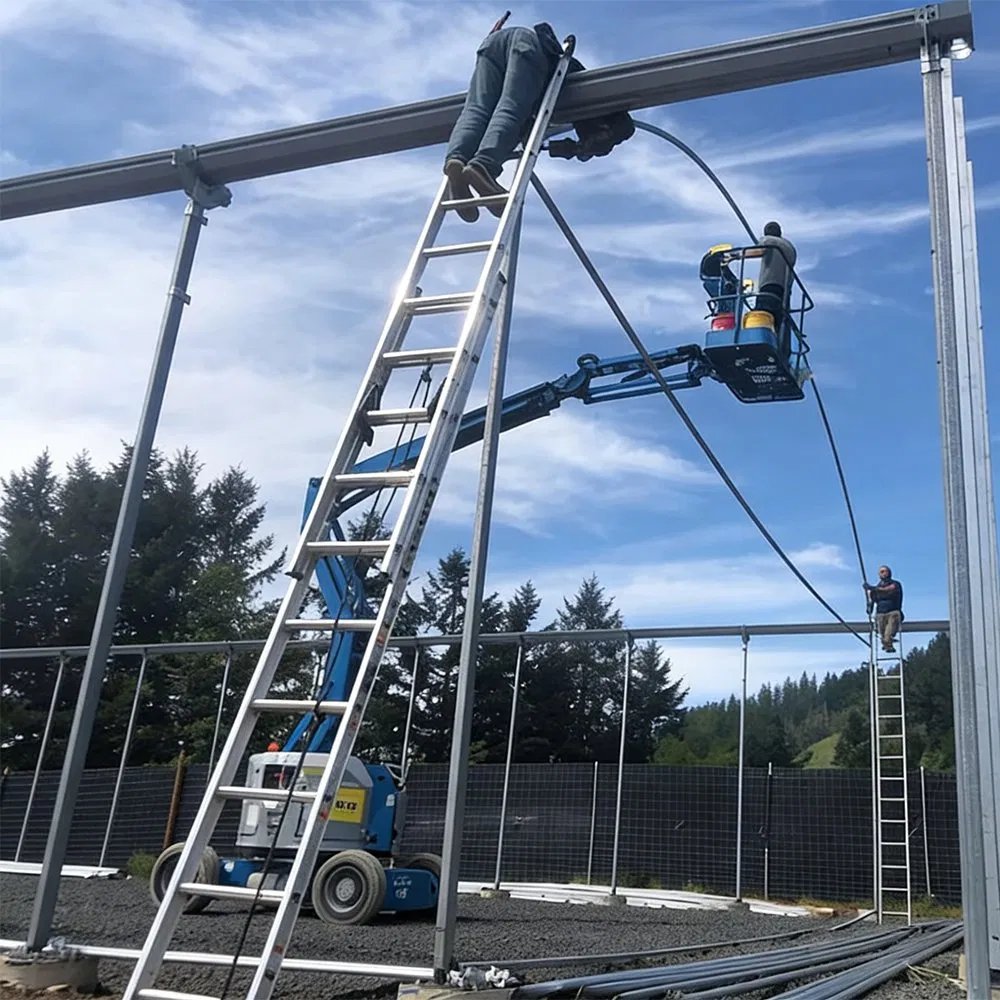
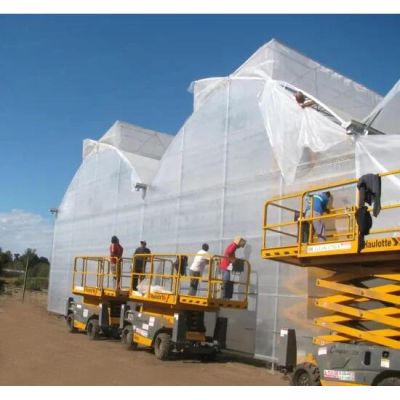
The kit ships as arches, purlins, base rail, film, blower and fixings, with the drawing set. What it does not include is the crew and the base line. On a double-layer house the film goes on in two passes, and the second one is easier before the first is tensioned.
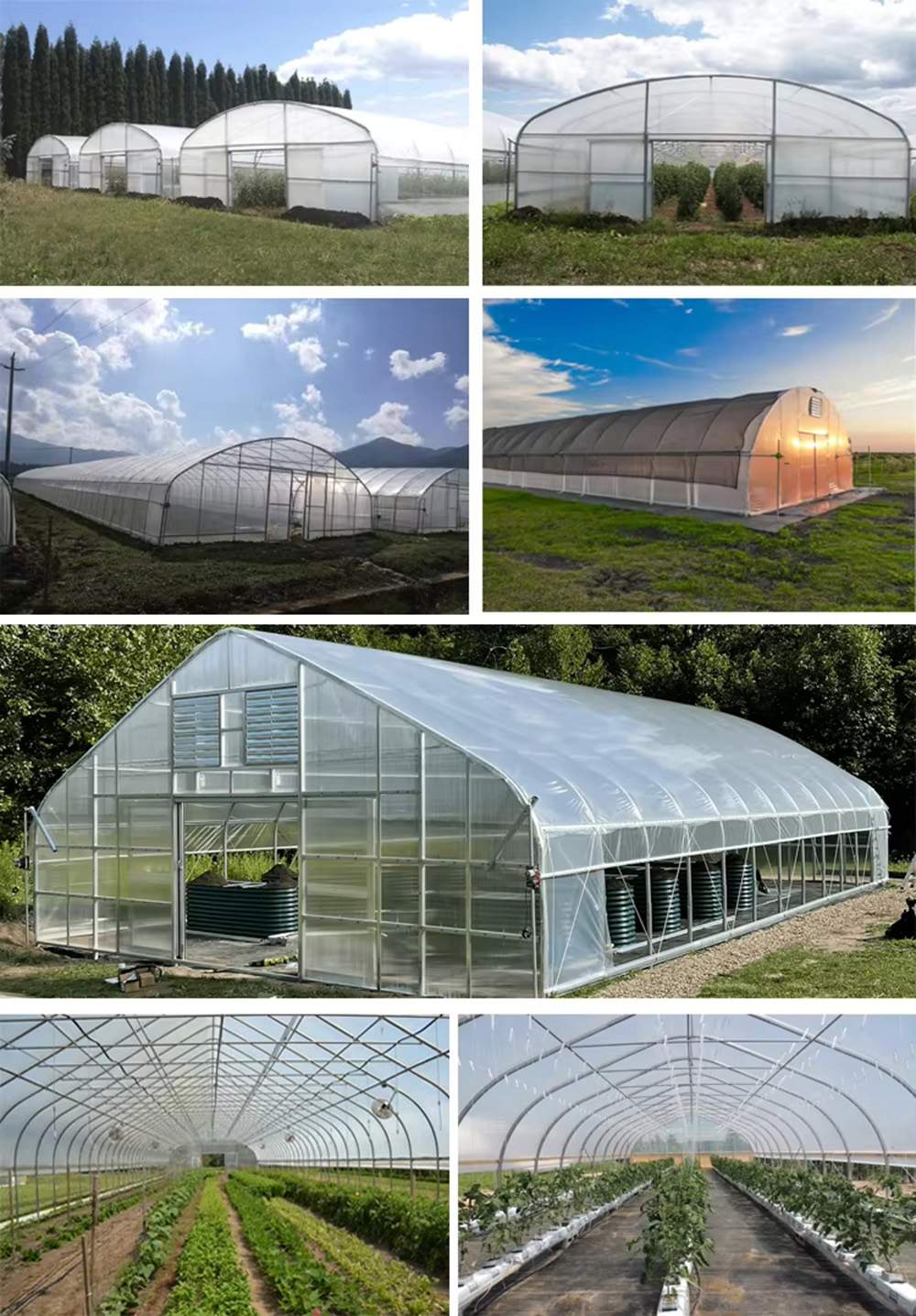
A heavier house on 2.5 mm arches is described on the single arch galvanized tunnel page.
Film suits low-cost tunnels on 3-5 year replacement cycles. Glass delivers the highest light transmission and the longest lifespan, at the highest cost. PC sheet insulates better than film and suits cold or high-humidity climates. The right choice depends on climate, crop and budget.
Ziyang Bozong Greenhouse Industry Co., Ltd. is a manufacturer based in Ziyang, Sichuan, China. We produce the hot-dip galvanized steel frame in-house, cutting and drilling to drawing, and supply covering materials, ventilation, cooling and irrigation systems as one coordinated package.
Send your growing area, span and length, crop type and local climate. If you already have a layout drawing, that is enough to start. Our engineers then return a quotation with a structure drawing and a bill of materials.
The hot-dip galvanized steel frame is designed for a 15-20 year service life in normal agricultural environments, with a double-sided zinc coating of 200-275 g/m². Film covers are replaced every 3-5 years, while glass and PC panels carry their own manufacturer warranties.
It holds a layer of still air between two films, and still air insulates. That slows heat loss overnight without a heater running. It costs a little light, so on a winter crop it is a trade rather than a free gain, and the blower needs power.
Thirty by a hundred feet, about 9.1 by 30.5 metres, sits in the middle of the useful range. Spans from 6.4 up to 16 metres are quoted on the same details, and the span changes the arch section more than the length does.