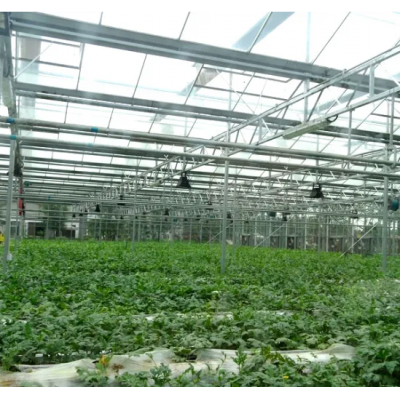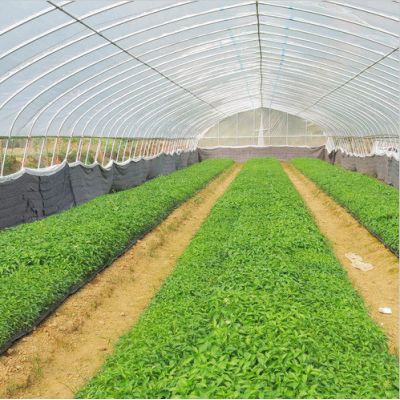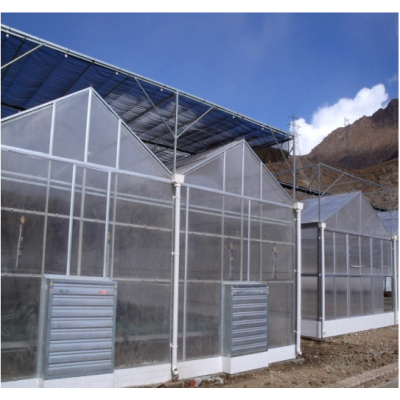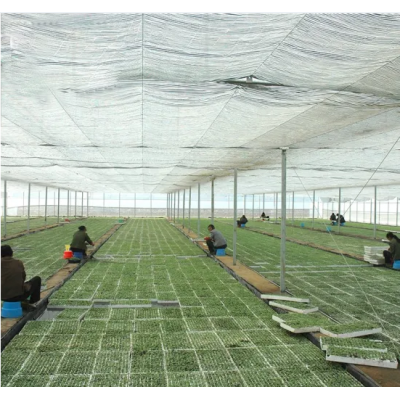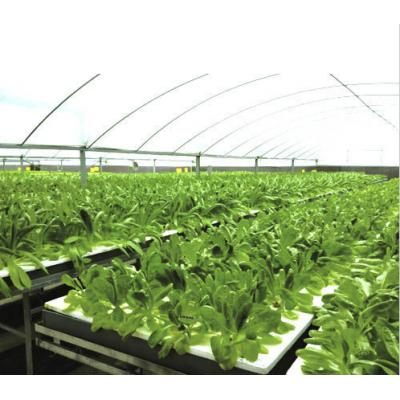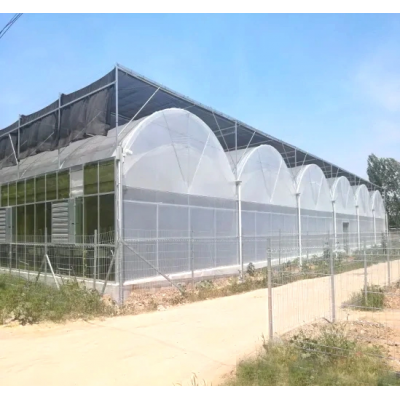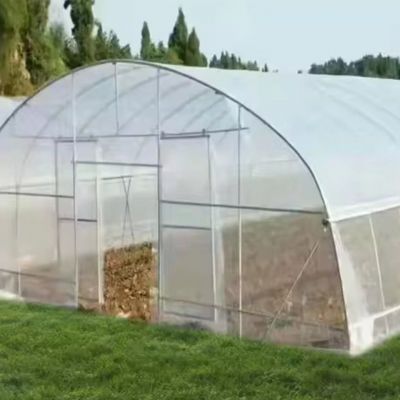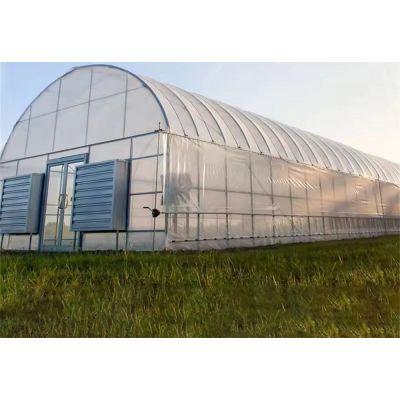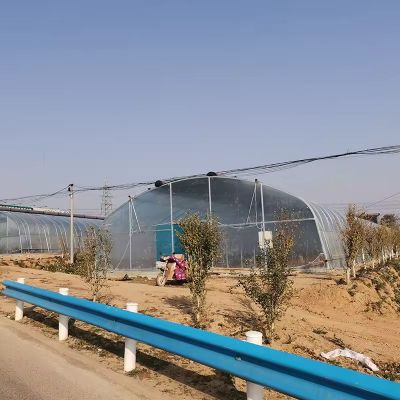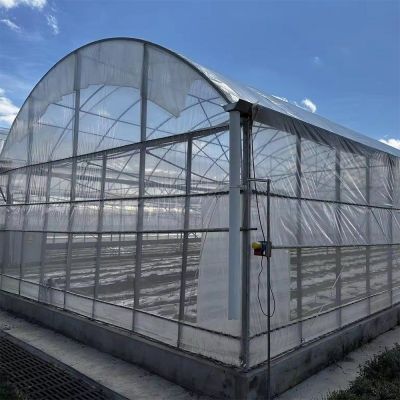
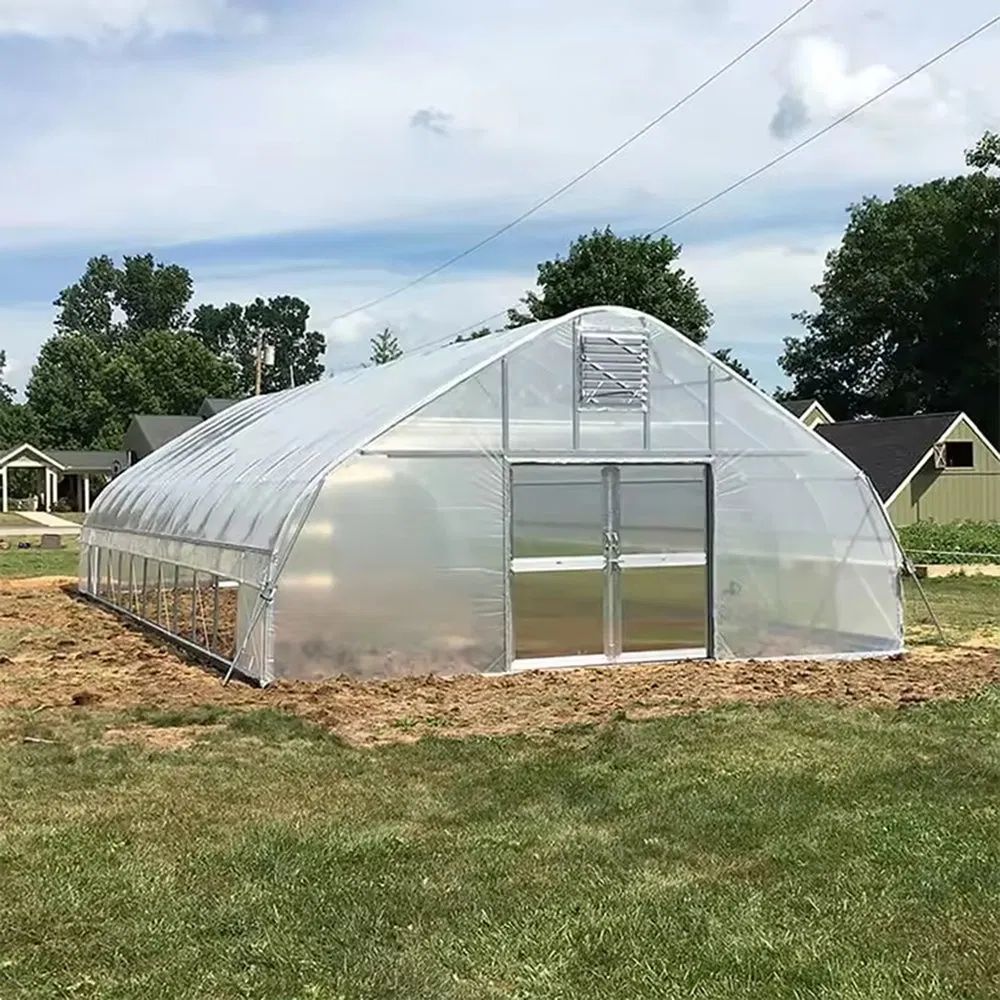
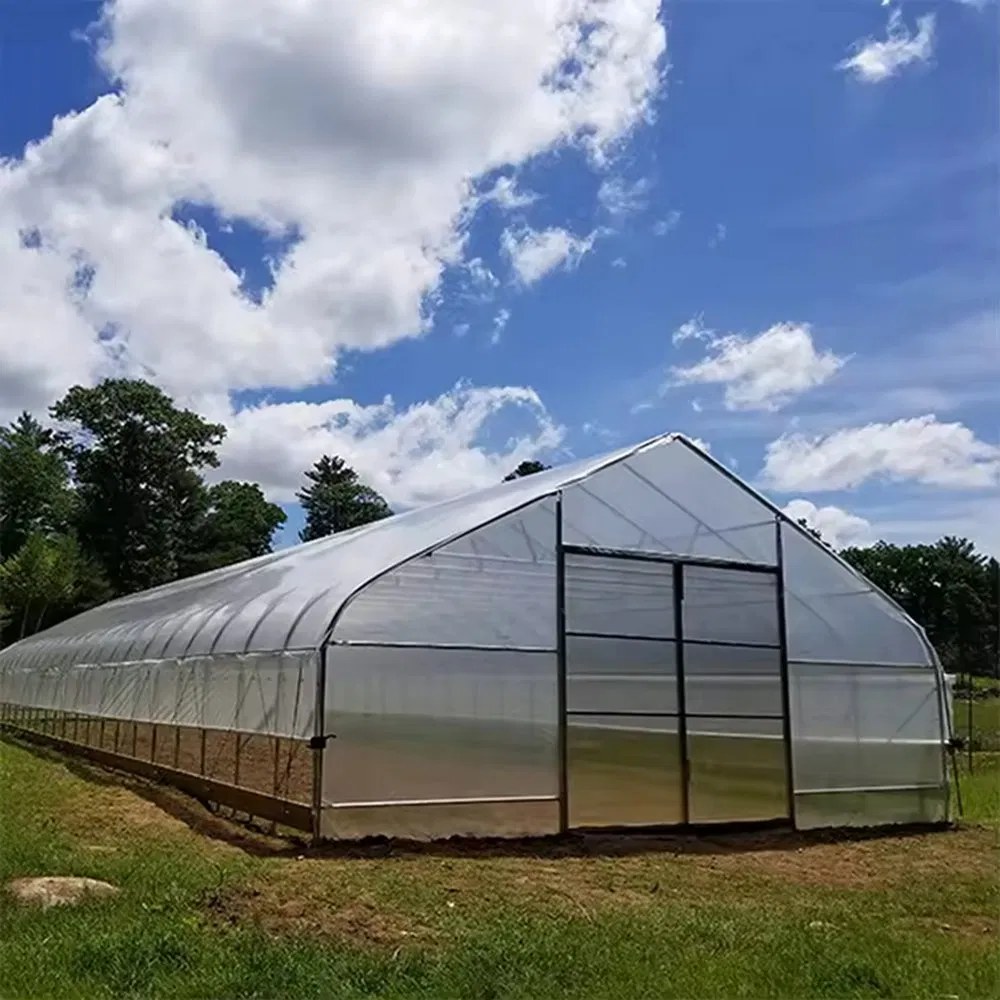
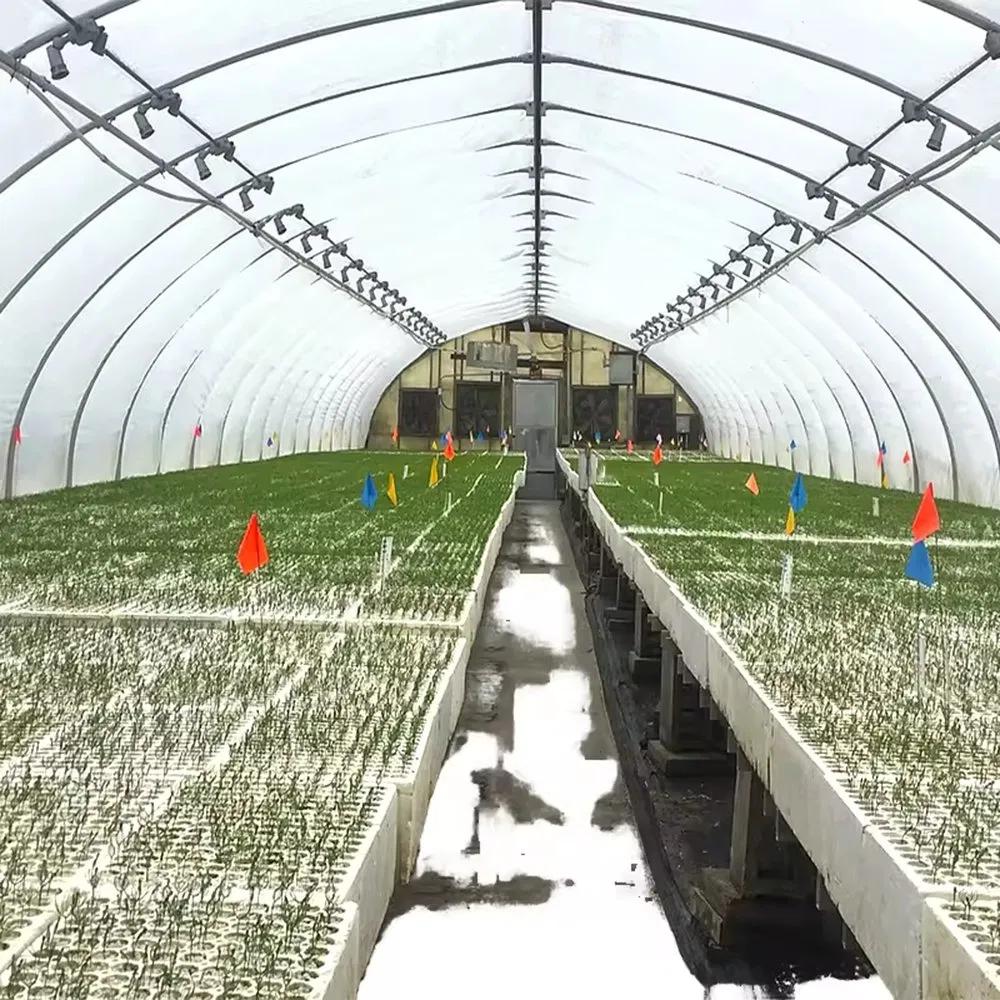
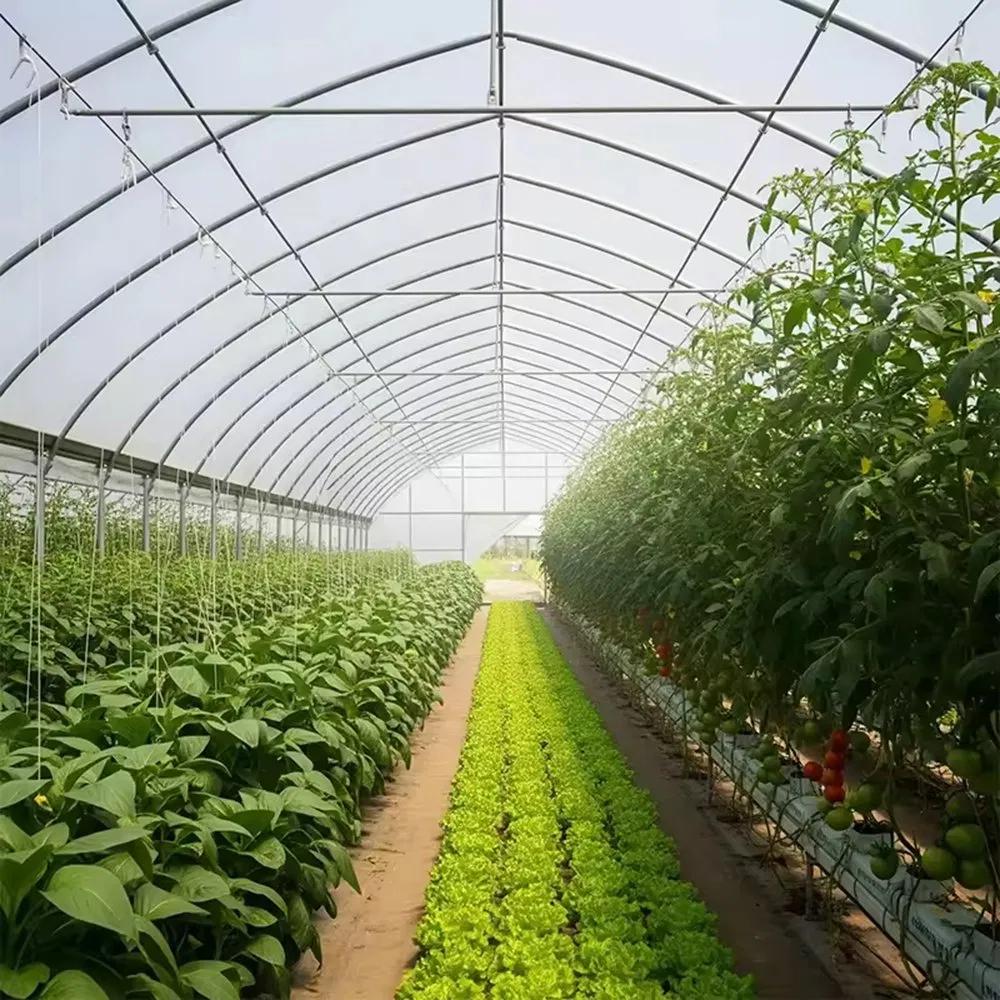
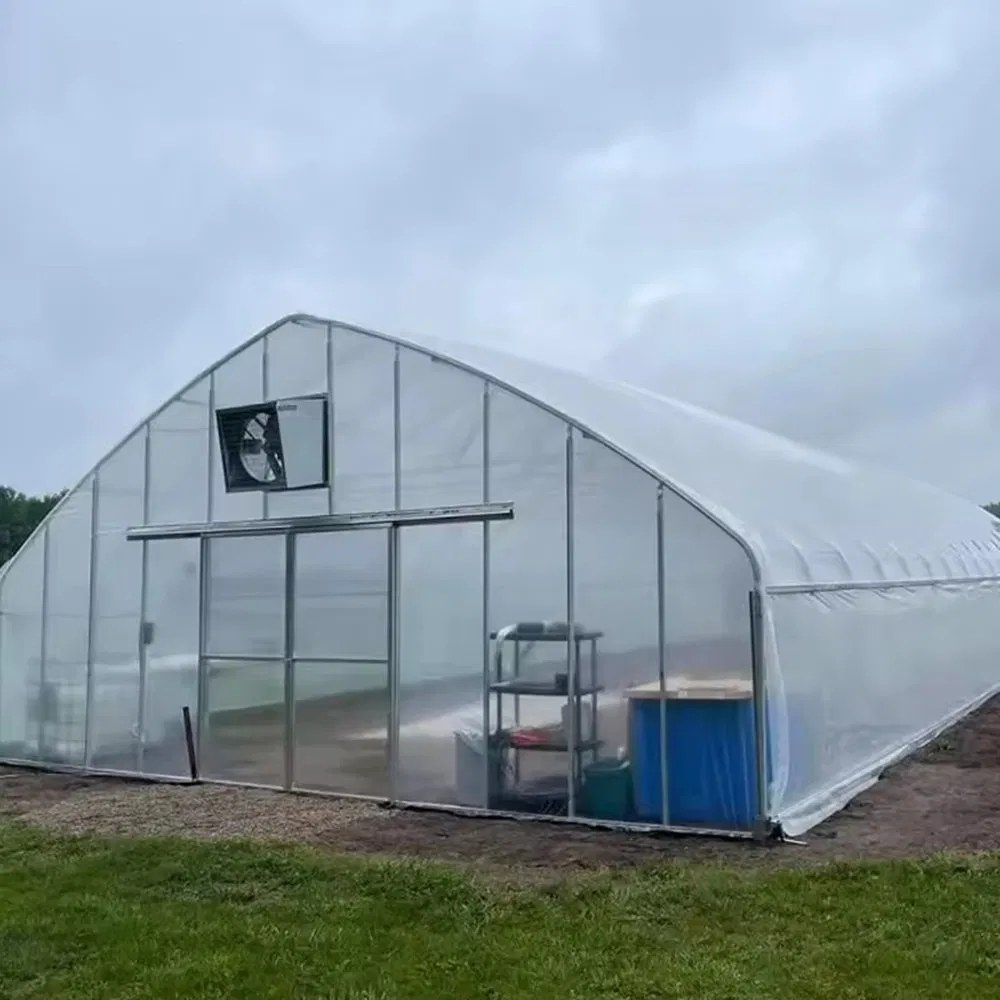
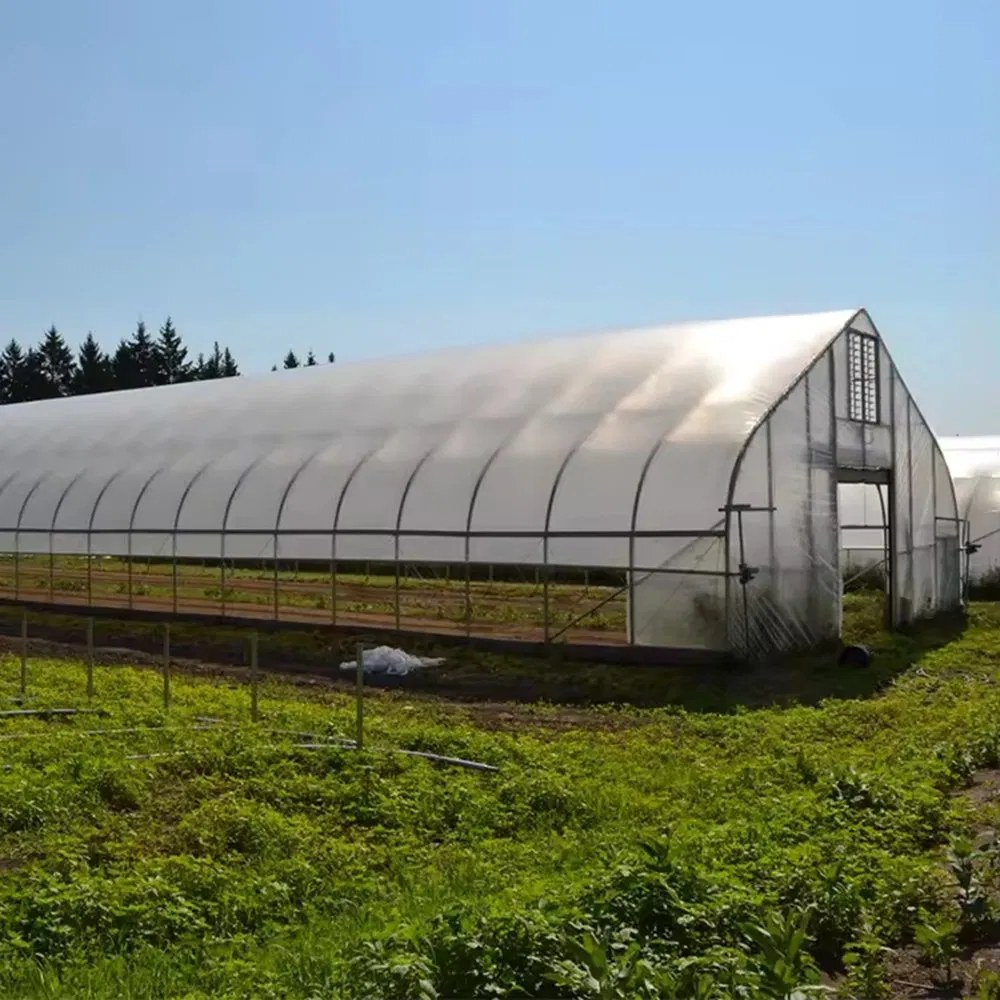
A film house loses most of its heat through the roof after dark, which is where a thermal curtain earns its keep: a screen drawn across under the cover traps a layer of air and slows that loss. This house is built around that sequence, with an eight metre bay, roll-up sides, drip irrigation hooks and a screen that runs on the same frame rather than as an afterthought. The screen is the reason the house exists; the rest is the standard tunnel frame.
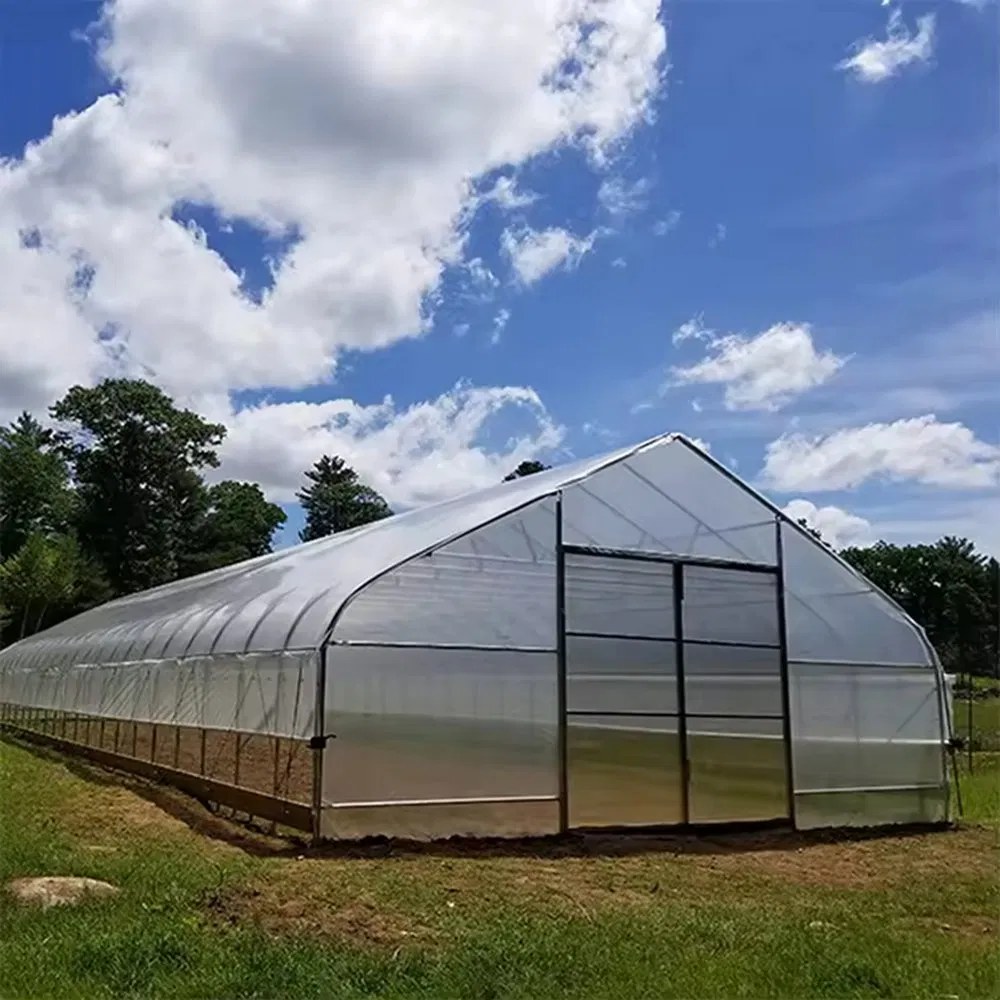
Heat leaves a film house in two ways: through the cover and through the air that changes when the vents open. A thermal curtain deals with the first, and it does it without a heater, which is why it is the first thing to add on a house that runs into winter. This one is a single span film tunnel with the screen built in from the start. It sits in the tunnel greenhouse range on this site.
The screen is drawn across the house under the film at dusk and pulled back in the morning. Between the screen and the cover there is a layer of still air, and still air insulates. The crop below is not heated; it simply loses heat more slowly, which on a clear calm night is the difference between a crop that finishes and one that stops.
It also changes the humidity story. A screened house holds moisture at canopy level, so the morning routine is to open the screen and the side walls together rather than one after the other.
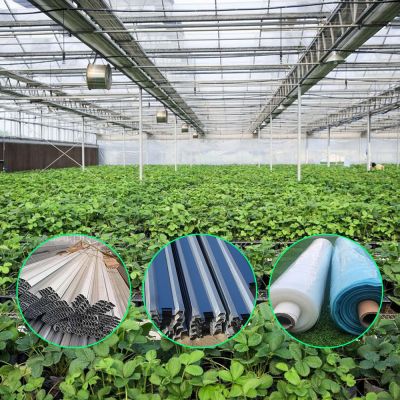
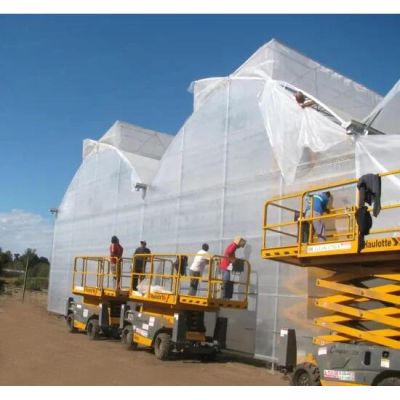
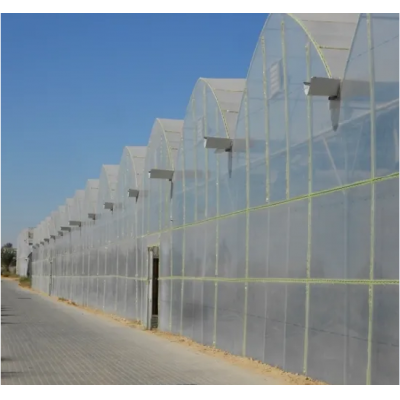
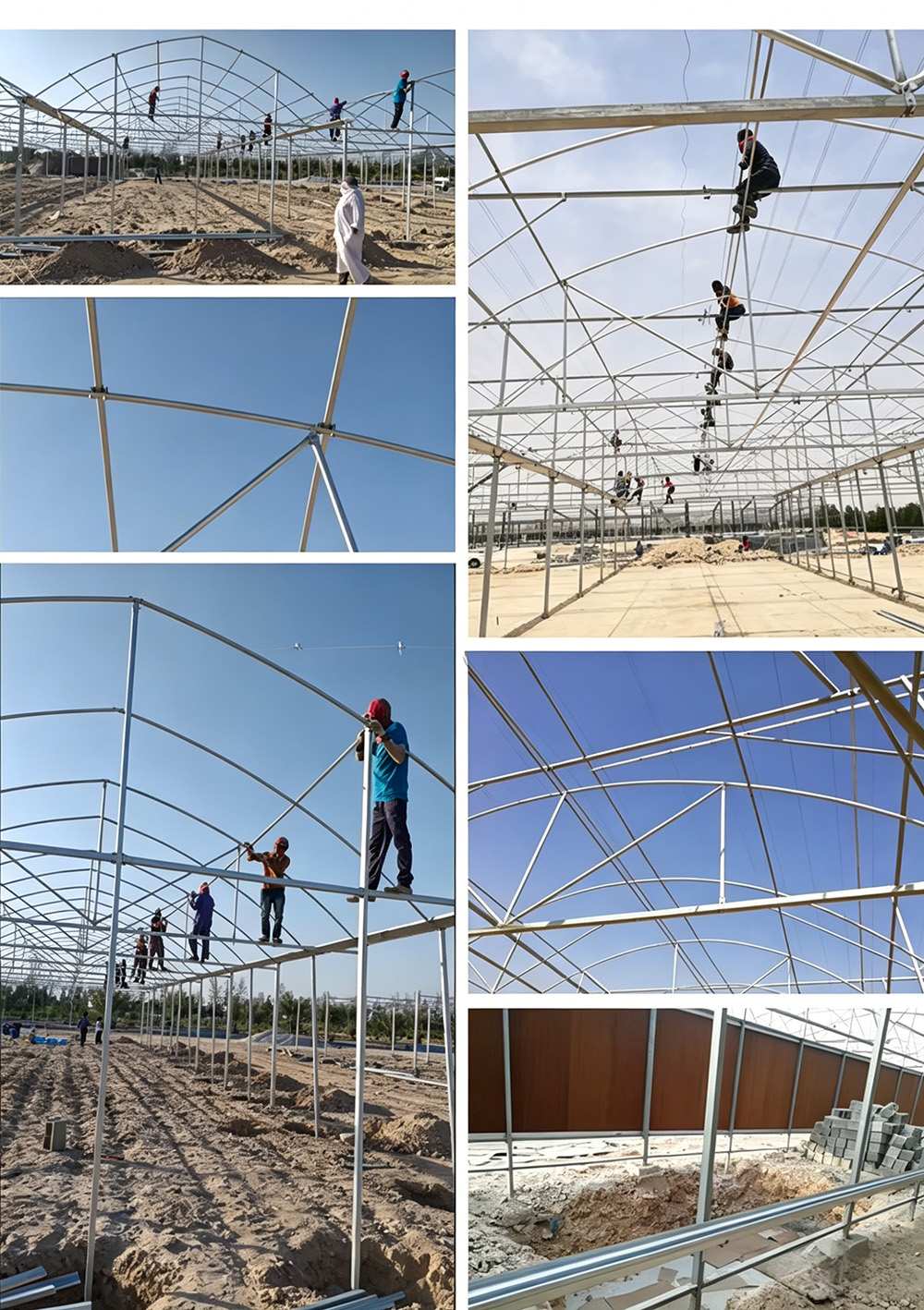
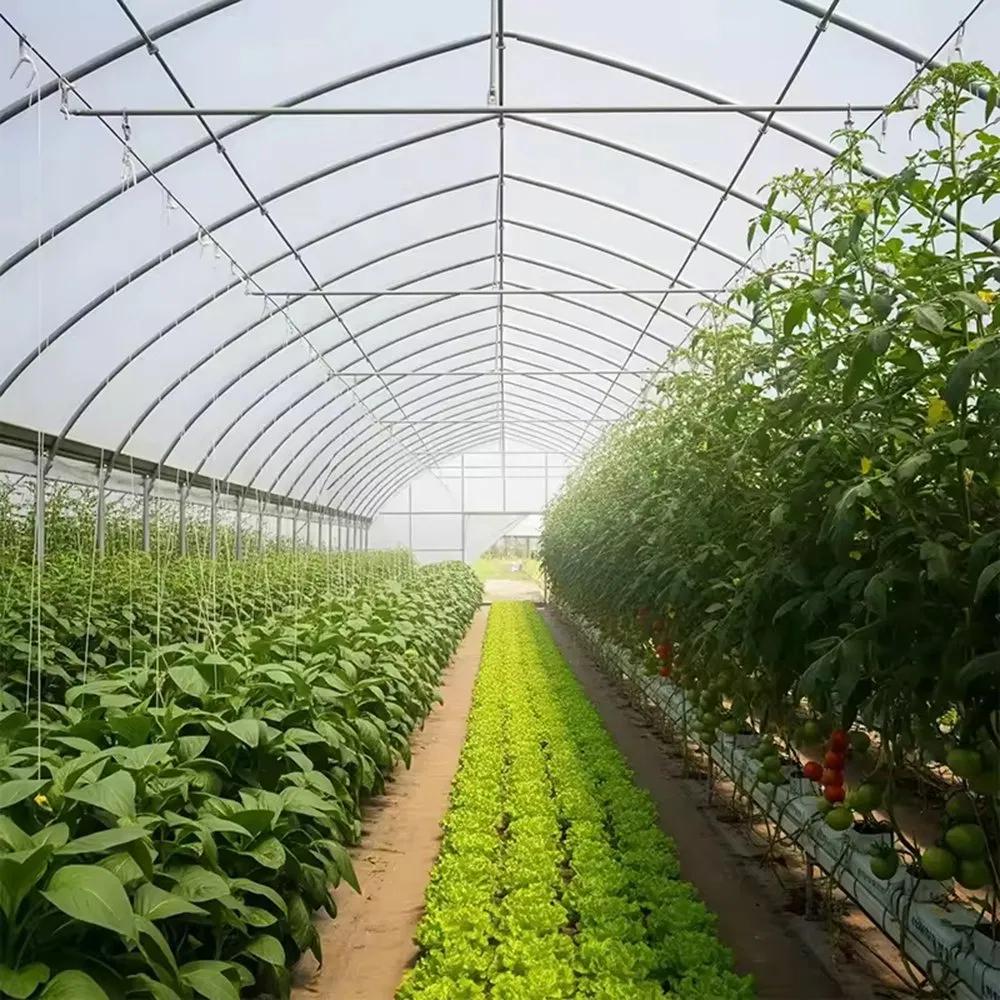
The frame is hot galvanized steel pipe with an eight metre standard bay, and 6, 7, 9 and 10 metre widths on the same details. Shoulder height is 1.3 or 2 metres, roof height 3.3 or 3.5. The cover is PE or PO film at 120 to 200 micron, or polycarbonate board at 6 or 8 mm where the climate asks for it.
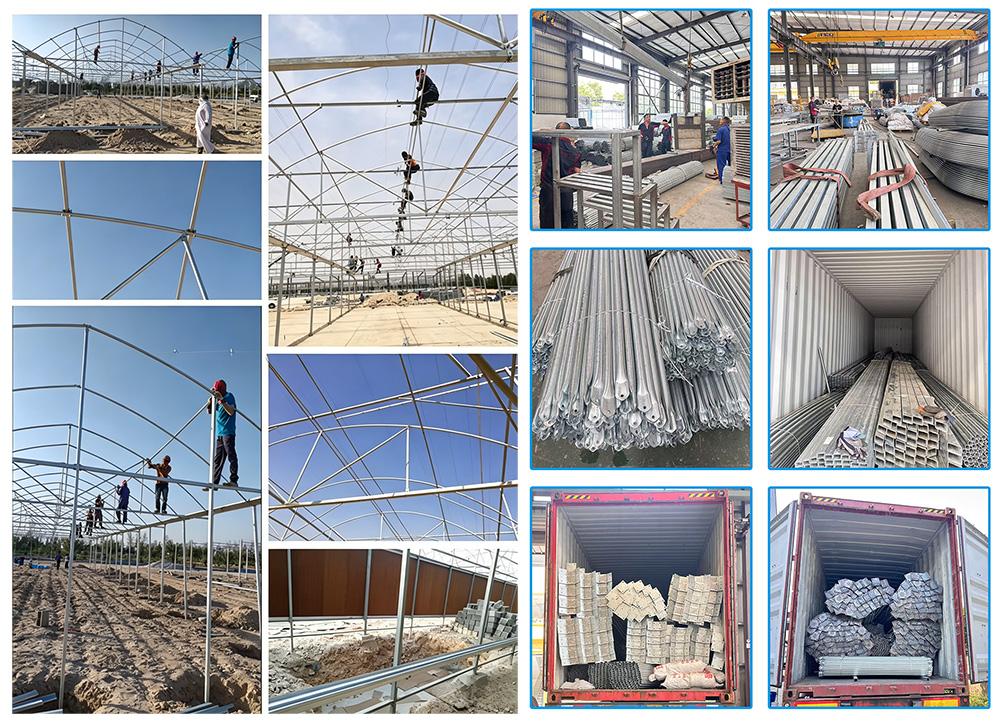
| Product | Tunnel single span film greenhouse with thermal screen |
| Steel structure | Hot galvanized steel pipe |
| Width | 8 m standard, also 6 / 7 / 9 / 10 m, custom |
| Length | 10 m to 100 m |
| Shoulder height | 1.3 m or 2 m, custom |
| Roof height | 3.3 m or 3.5 m, custom |
| Common sizes | 30x8, 40x8, 50x8, 60x8, 100x8 m |
| PE film | 120 / 150 / 180 / 200 micron |
| PO film | 120 / 150 / 180 / 200 micron |
| PC board option | 6 mm or 8 mm |
| Insect net | 40 mesh standard, custom available |
| Fittings | Roll up side walls, drip irrigation hooks, thermal screen |
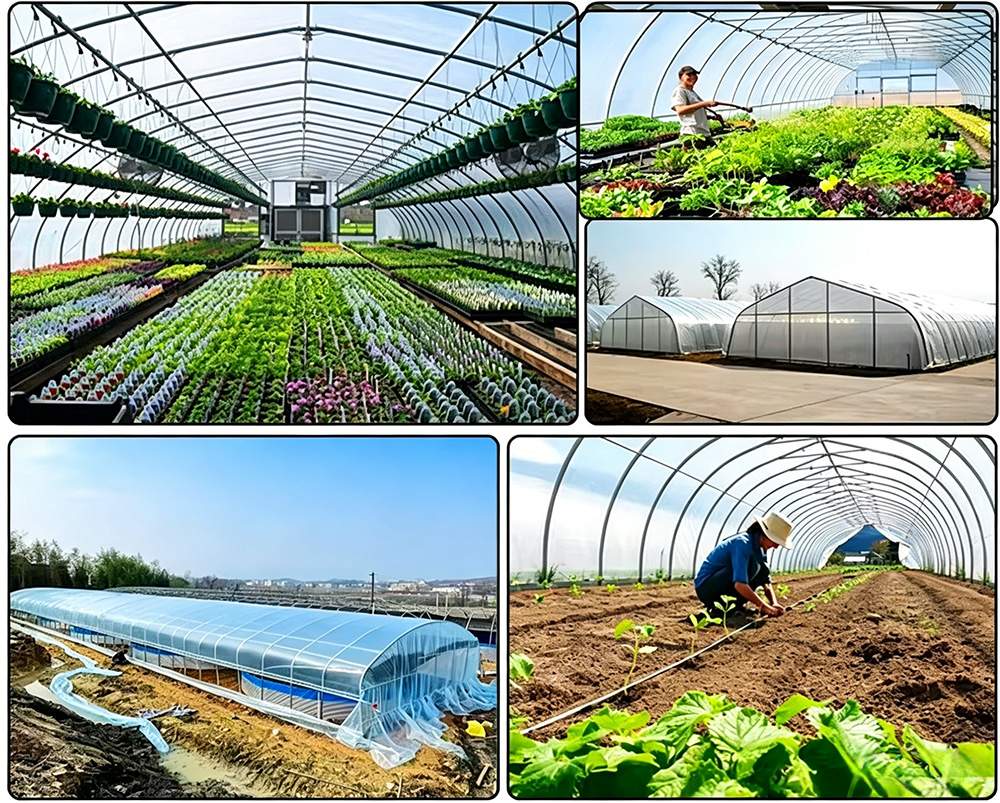
The sequence matters more than the hardware. Screen in at dusk with the vents closed, screen out and sides up in the morning once the outside air is warmer than the inside. On a sunny winter day that is usually an hour after sunrise; on a still overcast day it may be nearer ten.
Insect net at 40 mesh fits the same side openings, which turns the vents into filtered air. The trade is airflow, so the vent area is usually increased when netting is specified, and the screen and the net have to be planned together or they foul each other.
Spring is a screening house used lightly: seed trays, an early crop, the screen only on cold nights. Summer is the opposite, with the screen parked and the sides fully open. Autumn is where the house pays for itself, holding warmth around a crop that would otherwise be finishing. Winter is the test, and it is the season the curtain was bought for.
Protected cropping research and horticultural trade coverage is published by the Controlled Environment Agriculture Center and FloralDaily.

Two things: light and headroom. A screen under the film cuts some transmission even when it is parked, and the mechanism sits below the gutter, so a low-shouldered house loses working height. Both are worth costing before the order rather than discovering in the first winter.
A house that solves the same problem with a second film skin instead of a screen is described on the double film frost protection tunnel page, and a plain kit version on the plastic film tunnel kit page.
Ziyang Bozong Greenhouse Industry Co., Ltd. is a manufacturer based in Ziyang, Sichuan, China. We produce the hot-dip galvanized steel frame in-house, cutting and drilling to drawing, and supply covering materials, ventilation, cooling and irrigation systems as one coordinated package.
Send your growing area, span and length, crop type and local climate. If you already have a layout drawing, that is enough to start. Our engineers then return a quotation with a structure drawing and a bill of materials.
The hot-dip galvanized steel frame is designed for a 15-20 year service life in normal agricultural environments, with a double-sided zinc coating of 200-275 g/m². Film covers are replaced every 3-5 years, while glass and PC panels carry their own manufacturer warranties.
Yes. We customize span width, bay length, gutter height, covering material (film, PC sheet or glass) and ventilation configuration. Share your crop type, local climate and growing area, and our engineers will size the structure to match.
It is a screen drawn across the house under the cover at dusk and pulled back in the morning. The air trapped between screen and film insulates, so the crop loses heat more slowly overnight without a heater running.
PE or PO film at 120 to 200 micron, or polycarbonate board at 6 or 8 mm. Insect net at 40 mesh fits the side openings. Screen and net both need planning together, because they share the headroom under the gutter.