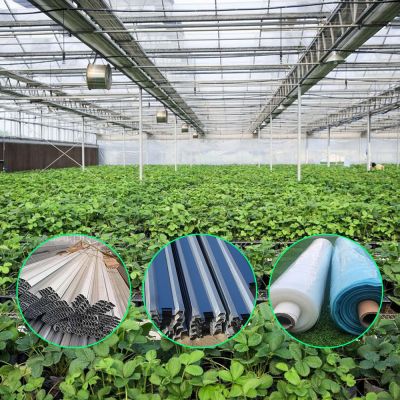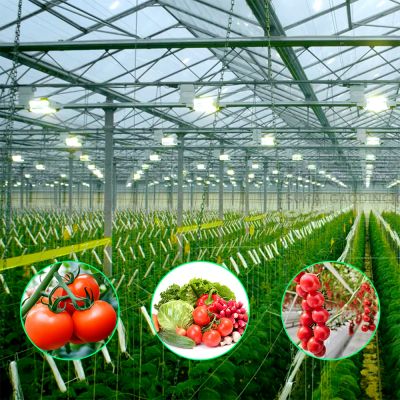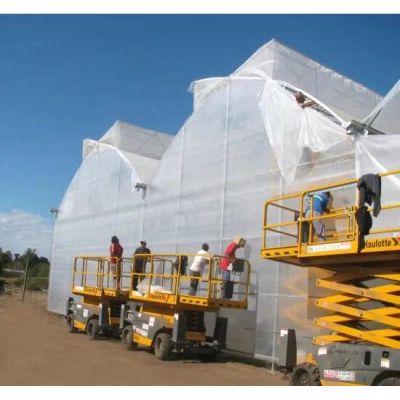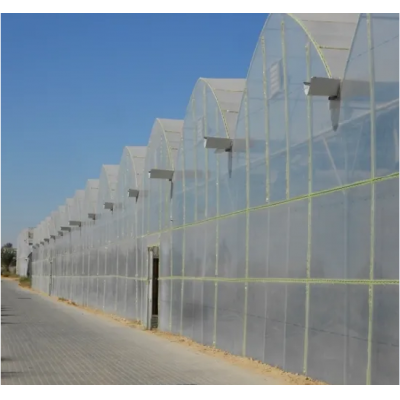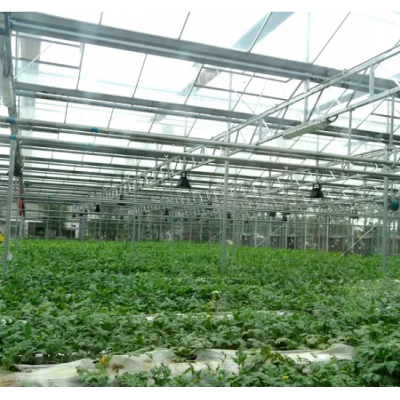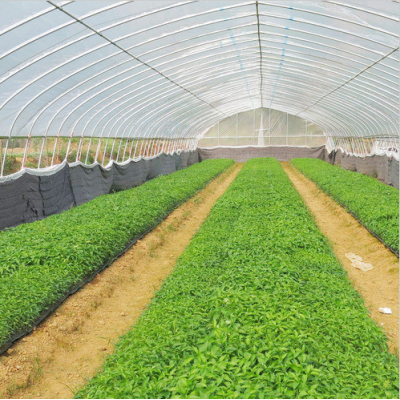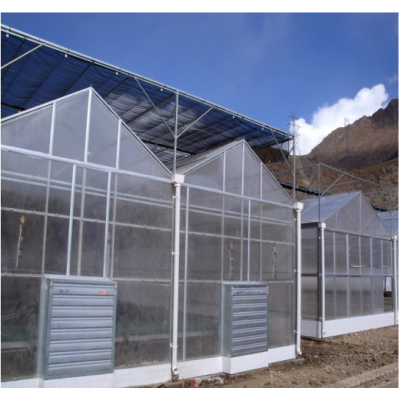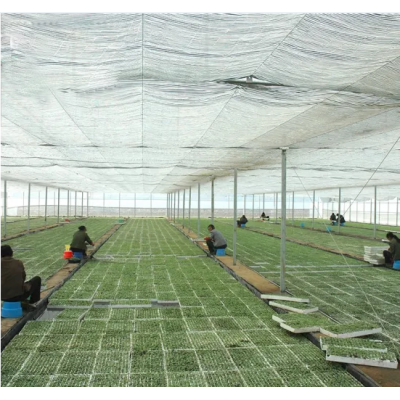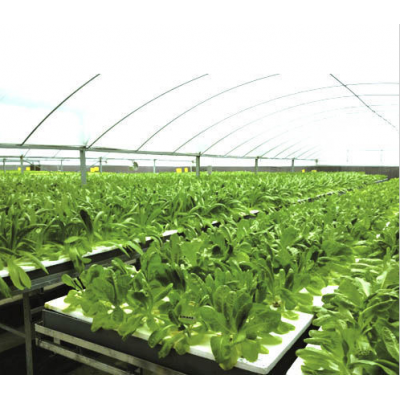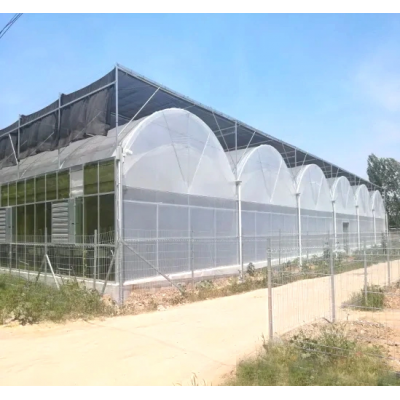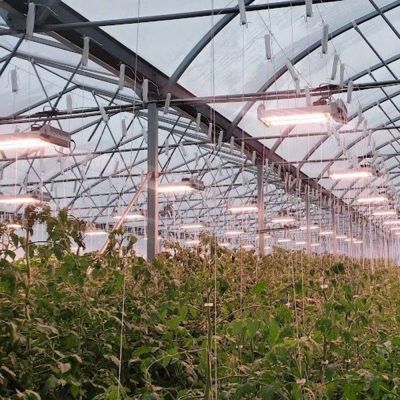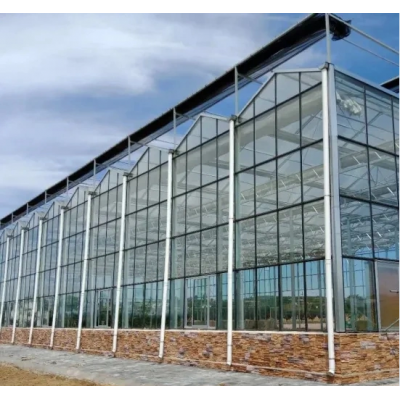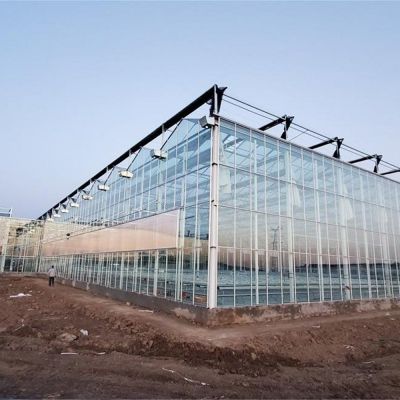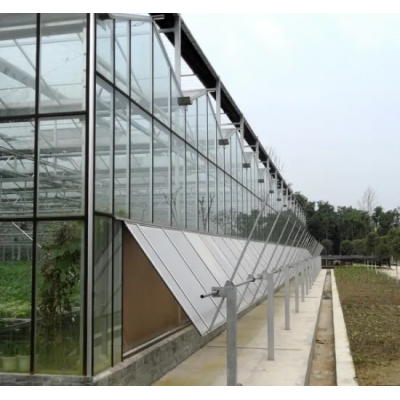
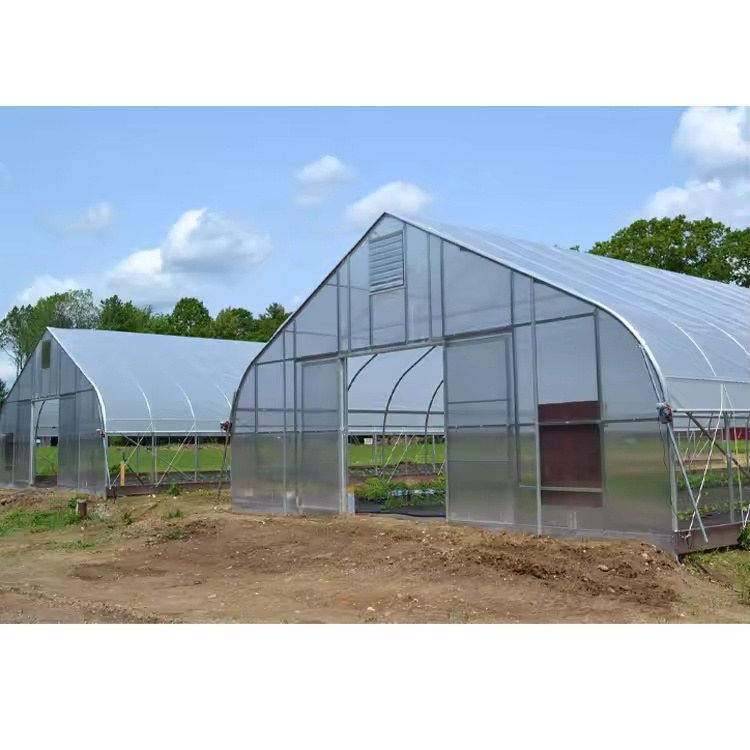
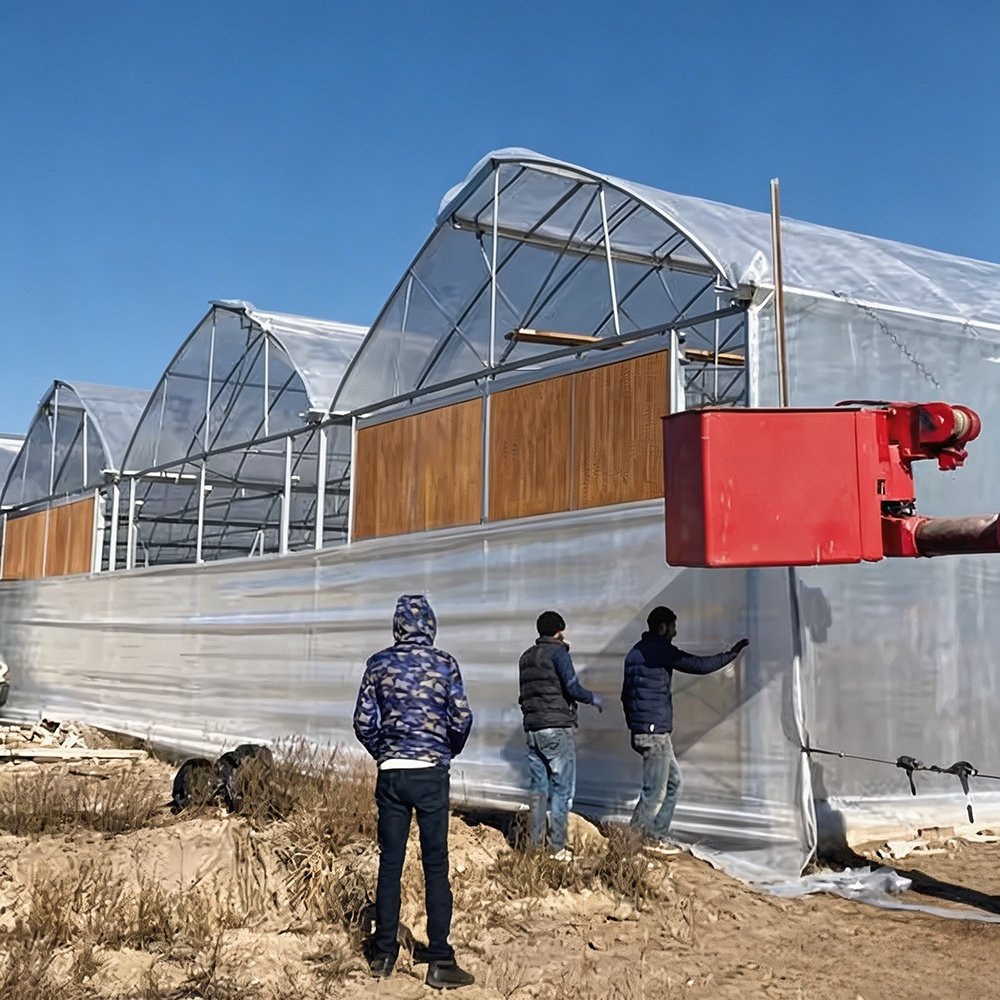
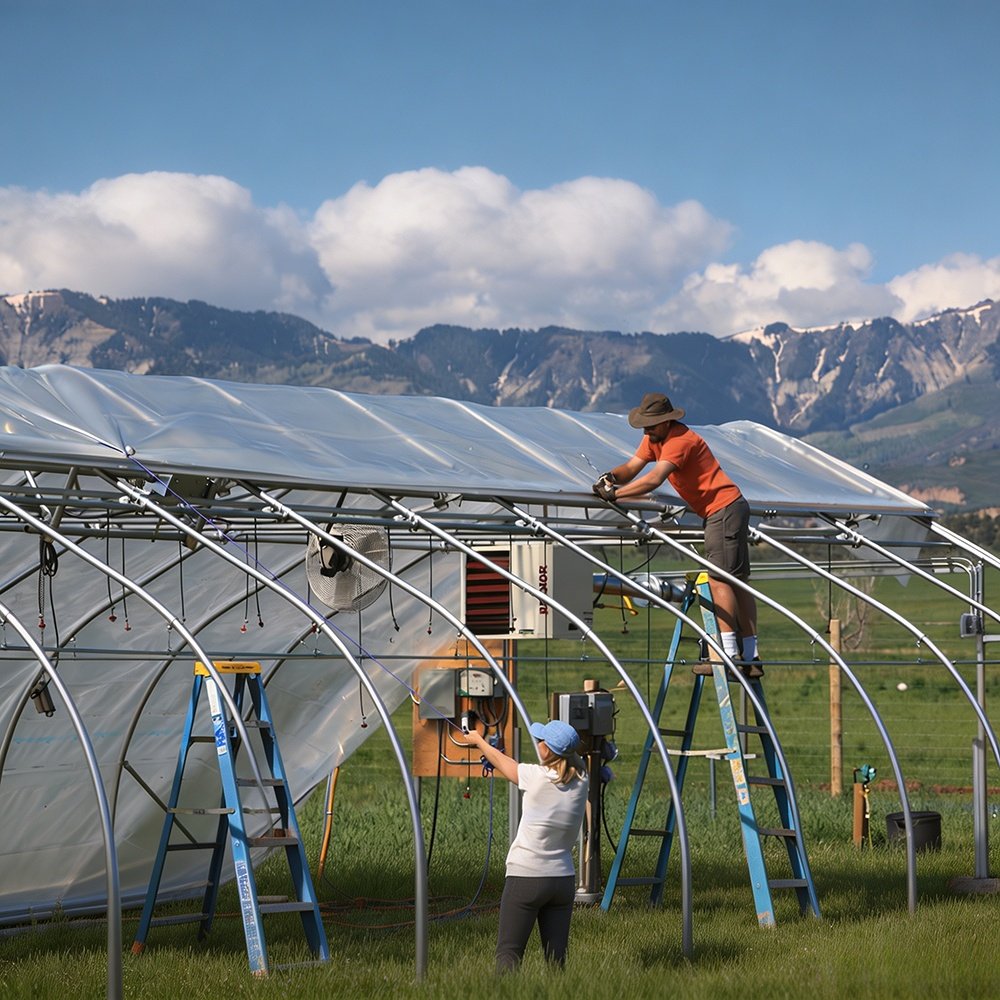
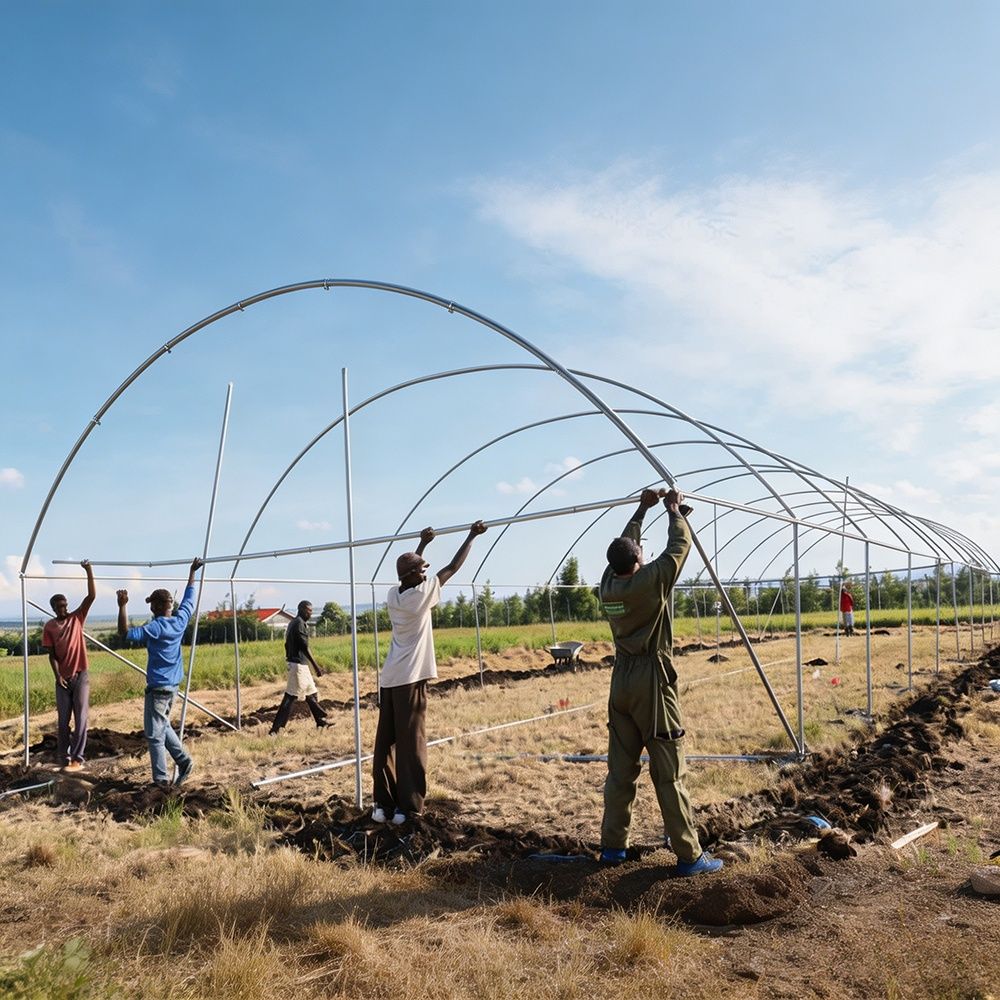
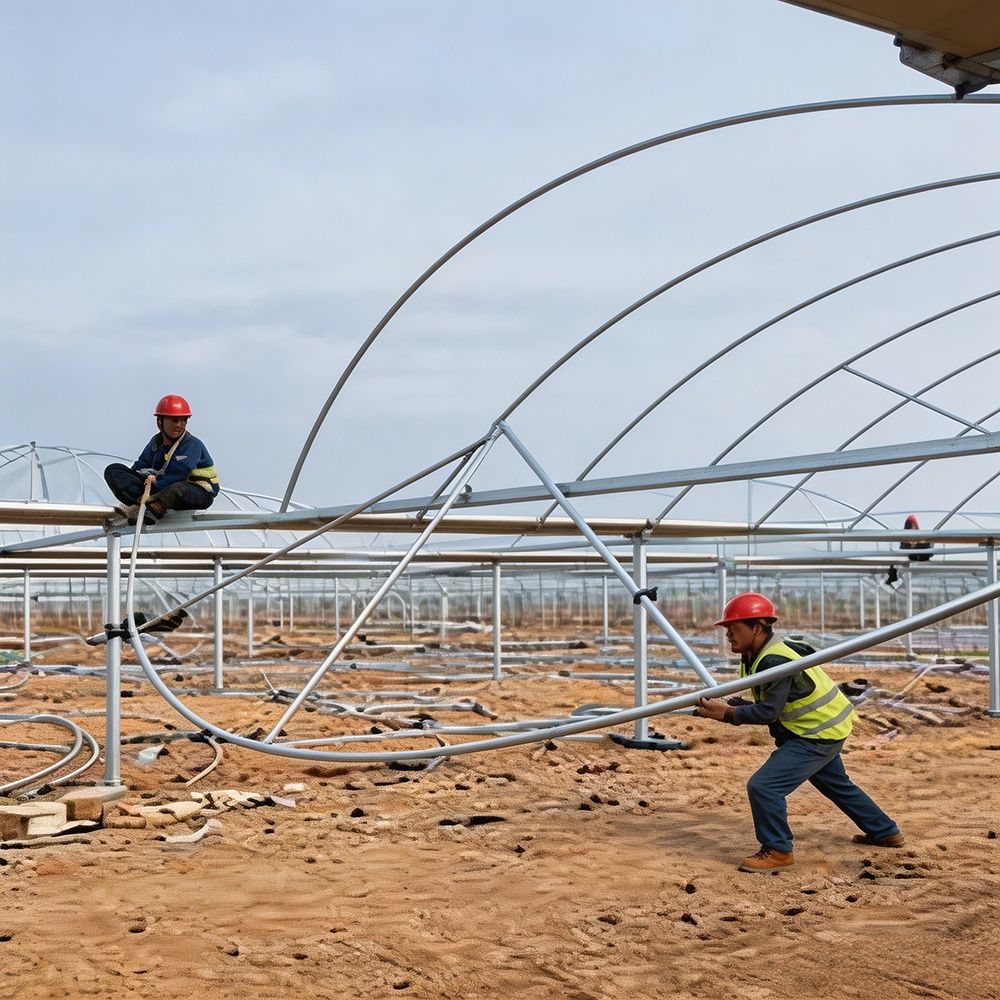
This prefabricated mushroom greenhouse is built for growers who need a dark, humid and stable indoor climate. The insulated covering holds moisture and temperature, while adjustable roof and side vents release the carbon dioxide that mushroom beds produce. Frame and covering arrive as pre made panels and sections, so the house goes up quickly on a prepared base. Interior shelving and benches can be added for multi layer growing, and the structure suits button, oyster and shiitake production at farm scale.
Mushrooms need the opposite of what most greenhouses provide. They want low light, steady humidity and cool temperatures, and they produce carbon dioxide that must be cleared. This prefabricated mushroom greenhouse is configured for that regime rather than for high light vegetable growing.
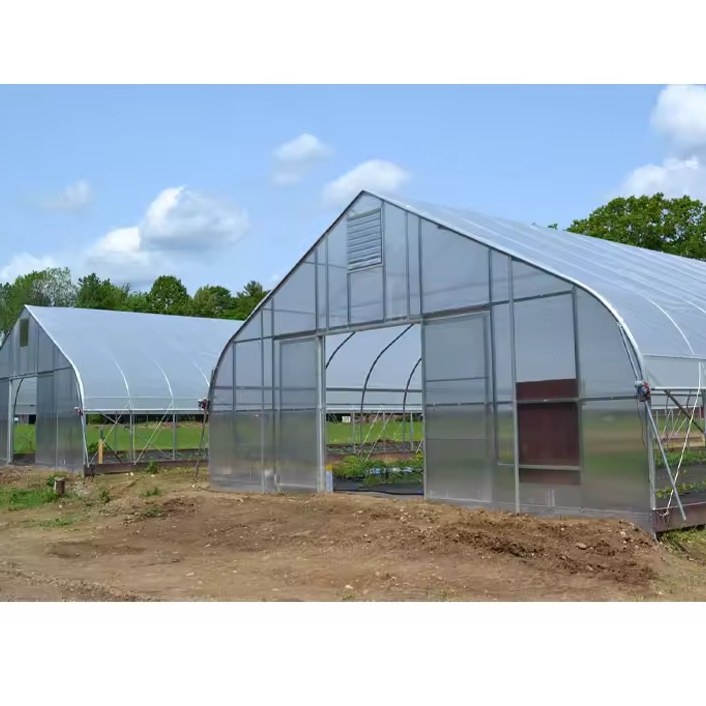
The covering is insulated to buffer outside temperature swings, which keeps the cropping room within the narrow band that fruiting bodies prefer. Humidity control is the central feature: moisture is retained inside the house, and adjustable roof and side vents let stale air out without dumping the whole room at once. That matters because mushroom beds release carbon dioxide as they grow, and letting CO2 build up stalls pinning and stretches stems. Frame sections and covering panels are prefabricated and labelled, so a farm crew can assemble the house on a level base without specialist tooling. Growers following commercial mushroom protocols often work from extension material such as that published by Michigan State University horticulture, and trade reporting on FreshPlaza.
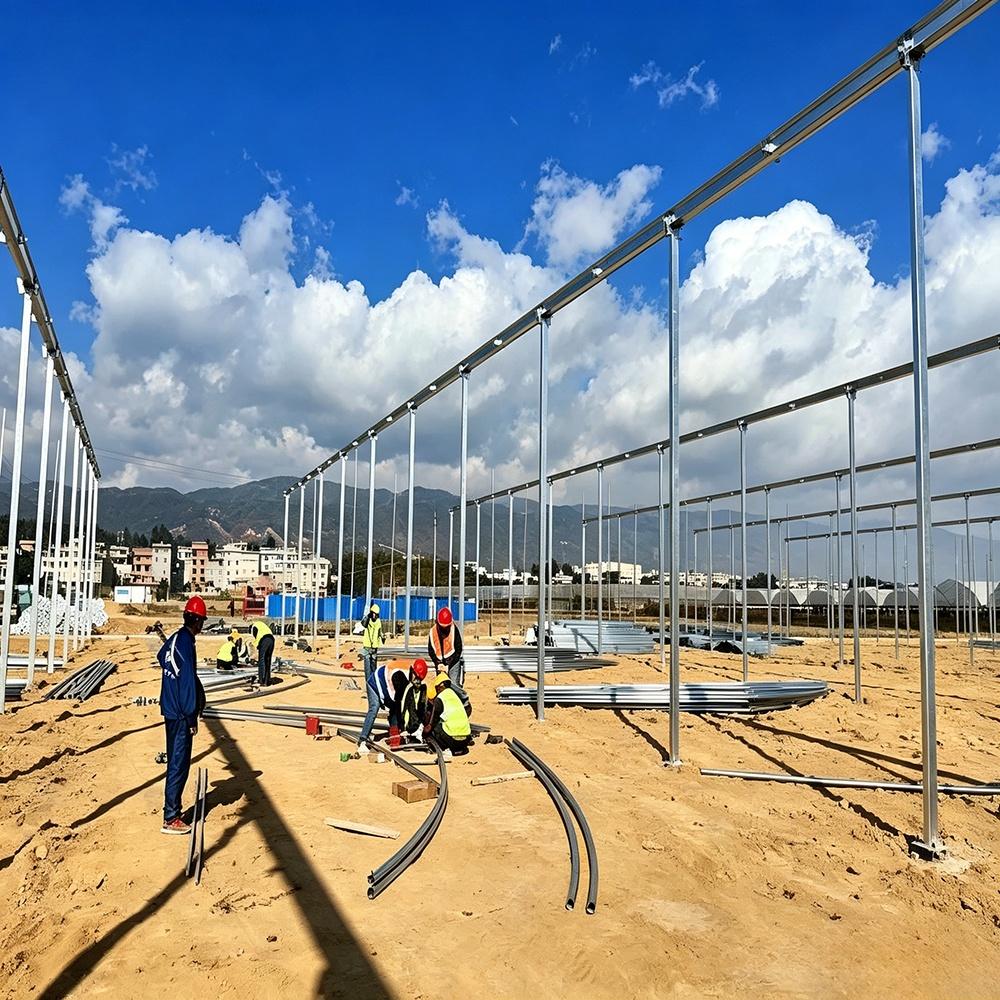
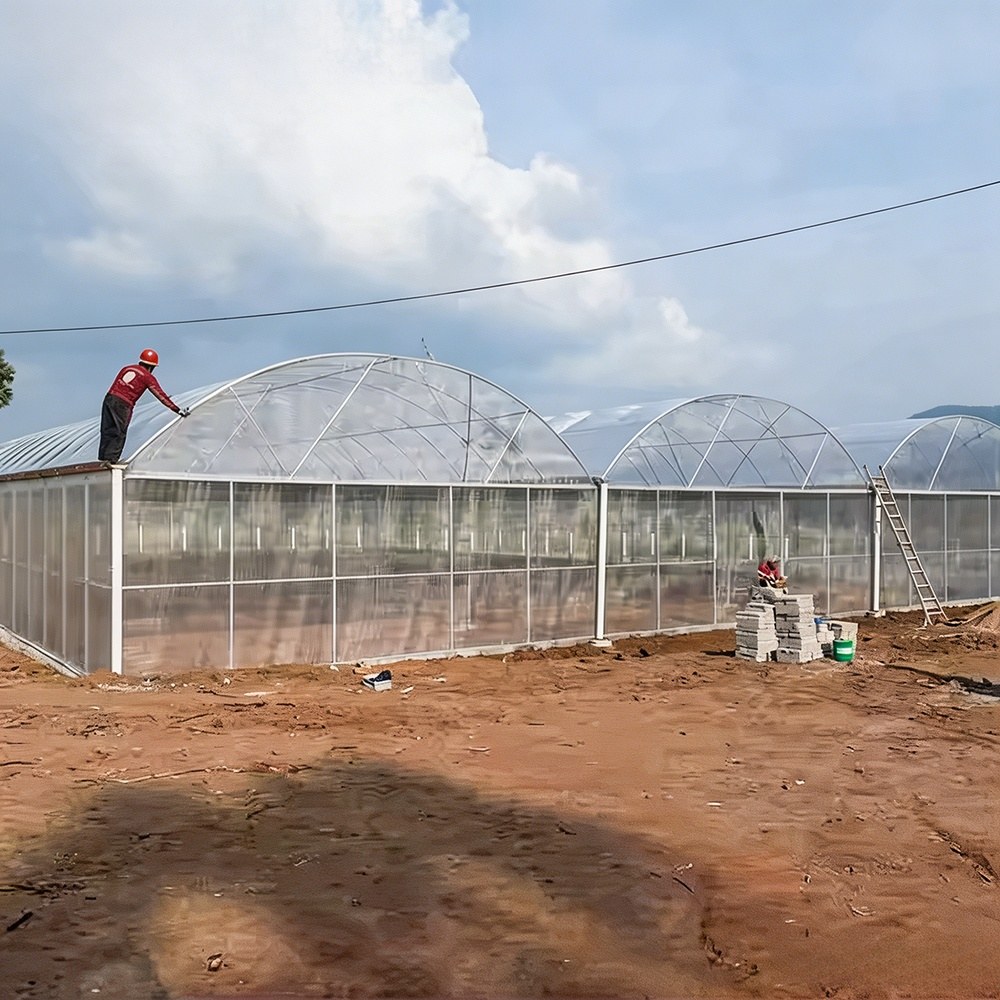
The house ships as prefabricated sections, so site work is bolted assembly on a prepared base rather than fabrication. Because the interior runs damp, galvanized steel is used throughout the frame to resist corrosion, and fixings are specified for humid rooms. Maintenance is simple: check vent mechanisms at the start of each cropping cycle, confirm the covering stays sealed at joints, and keep gutters and drainage clear so water does not collect around the base.
These houses suit commercial mushroom farms producing button, oyster and shiitake crops, and they also work for spawn running rooms and experimental mushroom plots where climate stability decides yield. The same insulated shell can be used for other low light, high humidity crops. Compare our film greenhouse range and the UV protected PC panel greenhouse, or review our glass greenhouse options where a more rigid shell is required.
Mushroom beds release carbon dioxide as they grow. If CO2 is allowed to build up, pinning is delayed and stems become long and thin. Adjustable vents let you exchange air while keeping most of the humidity in the room.
The insulated covering limits moisture loss and buffers temperature, which helps hold the humid conditions fruiting bodies need. Vent opening is then used to fine tune both humidity and CO2, and misting or fogging equipment can be added where tighter control is required.
Mushroom cropping rooms are normally kept dim, so the house is supplied with covering that limits incoming light and can include a shade or blackout layer. Tell us your crop and we will set the light level to suit.
Sections arrive prefabricated and labelled, and assembly is bolted on a level base. A farm crew can normally raise the structure over several days without specialist tooling.
Send your required floor area, span and height, your crop and your local climate. We reply with a layout drawing and a full quotation covering frame, covering, ventilation and interior shelving.