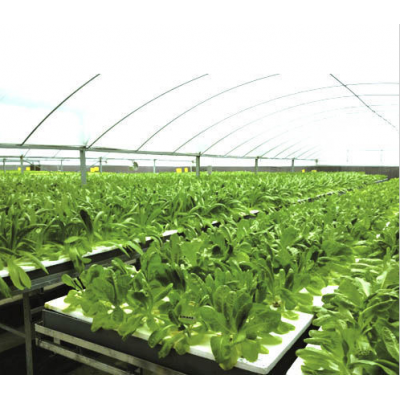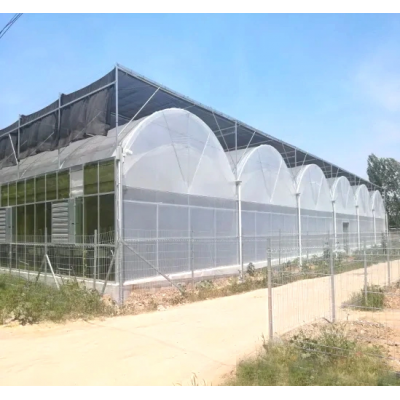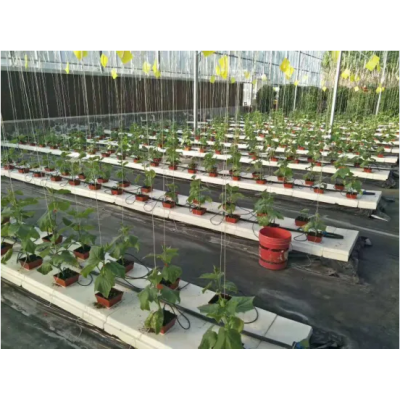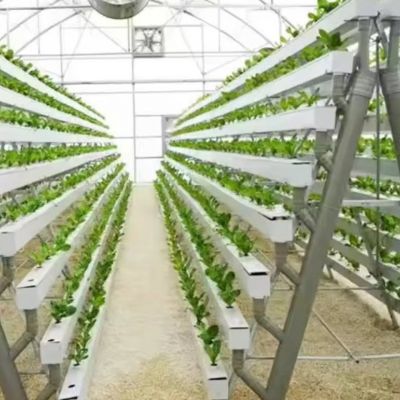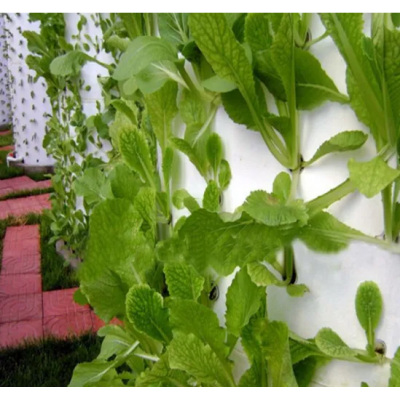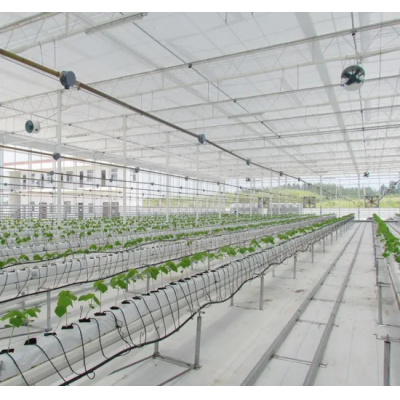
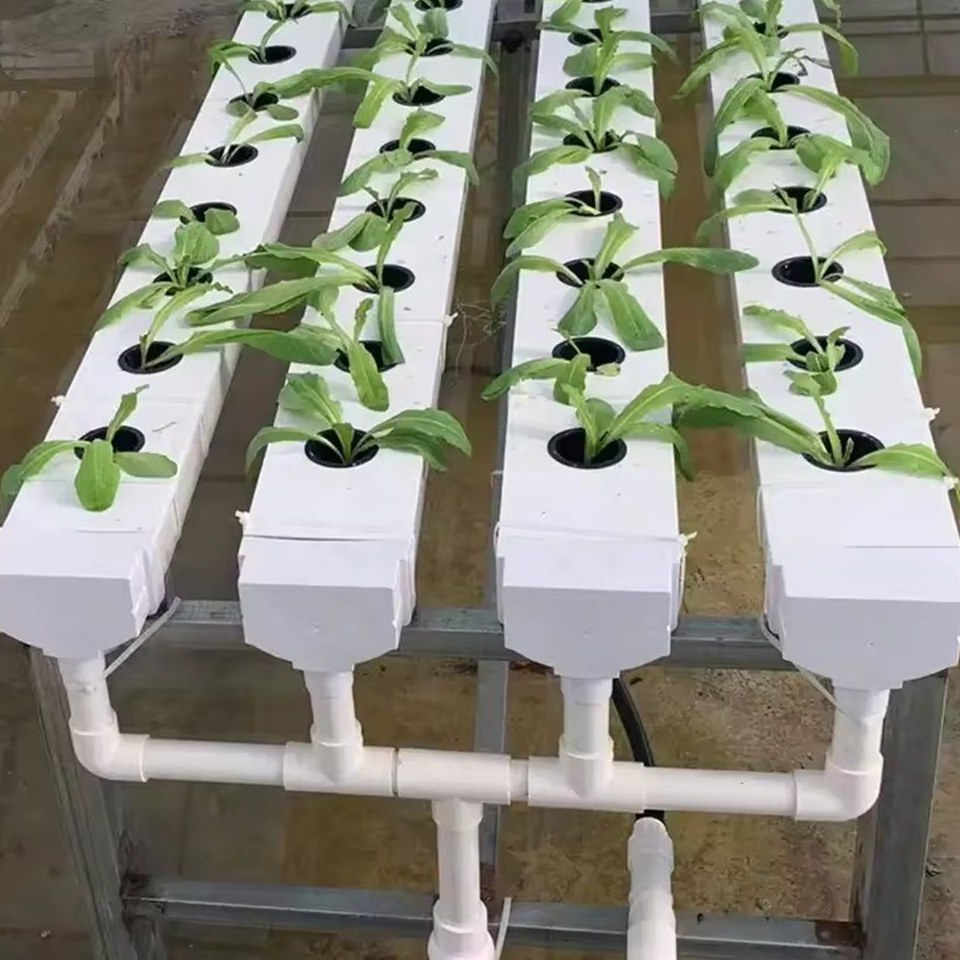
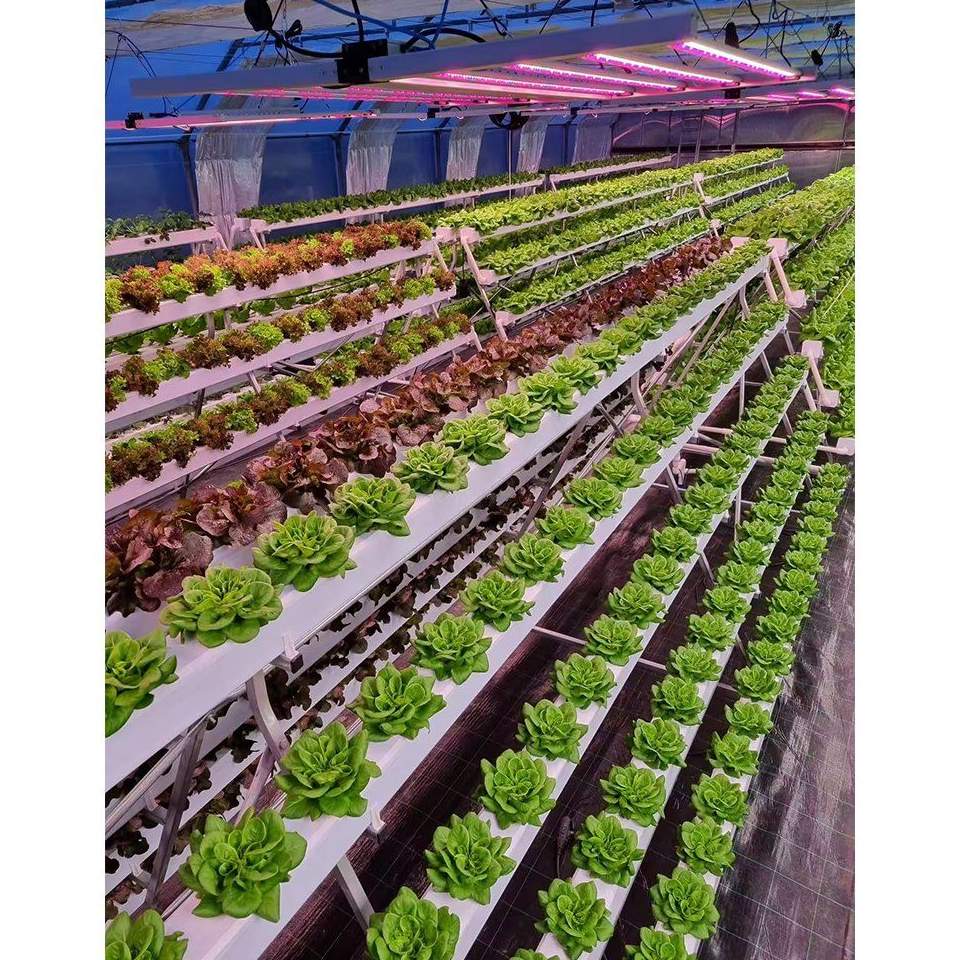
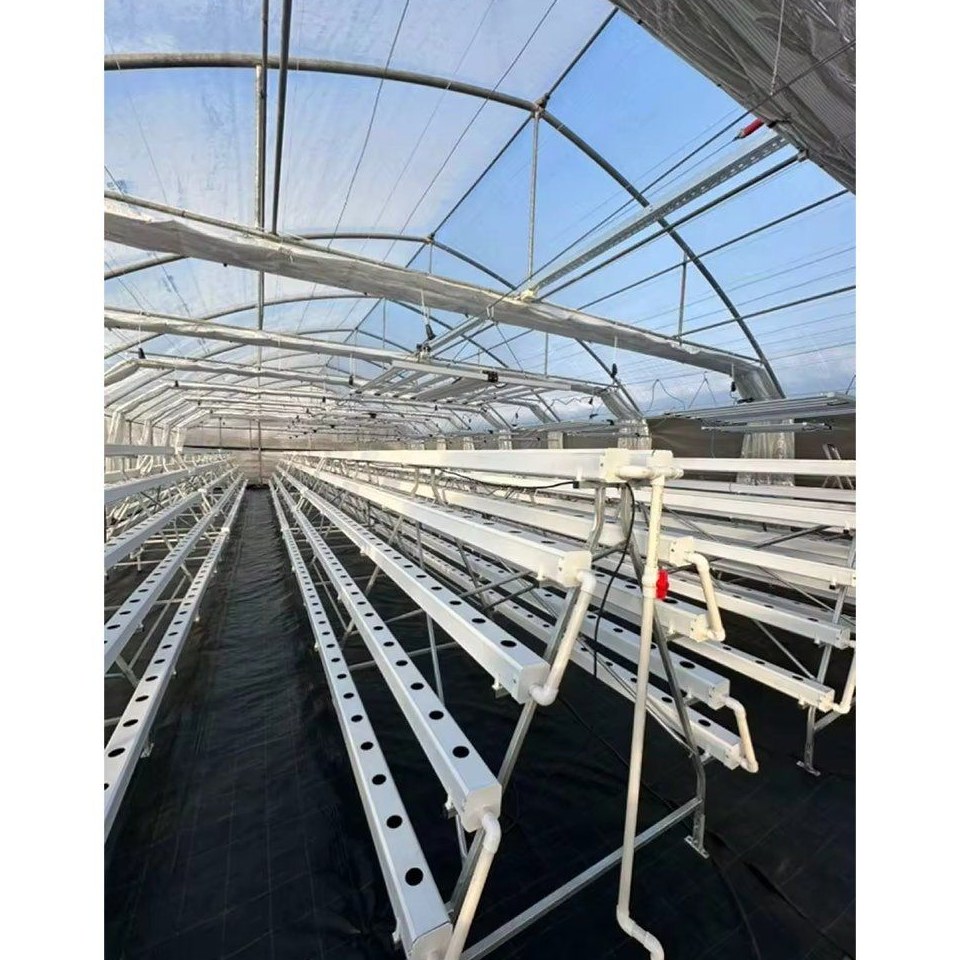
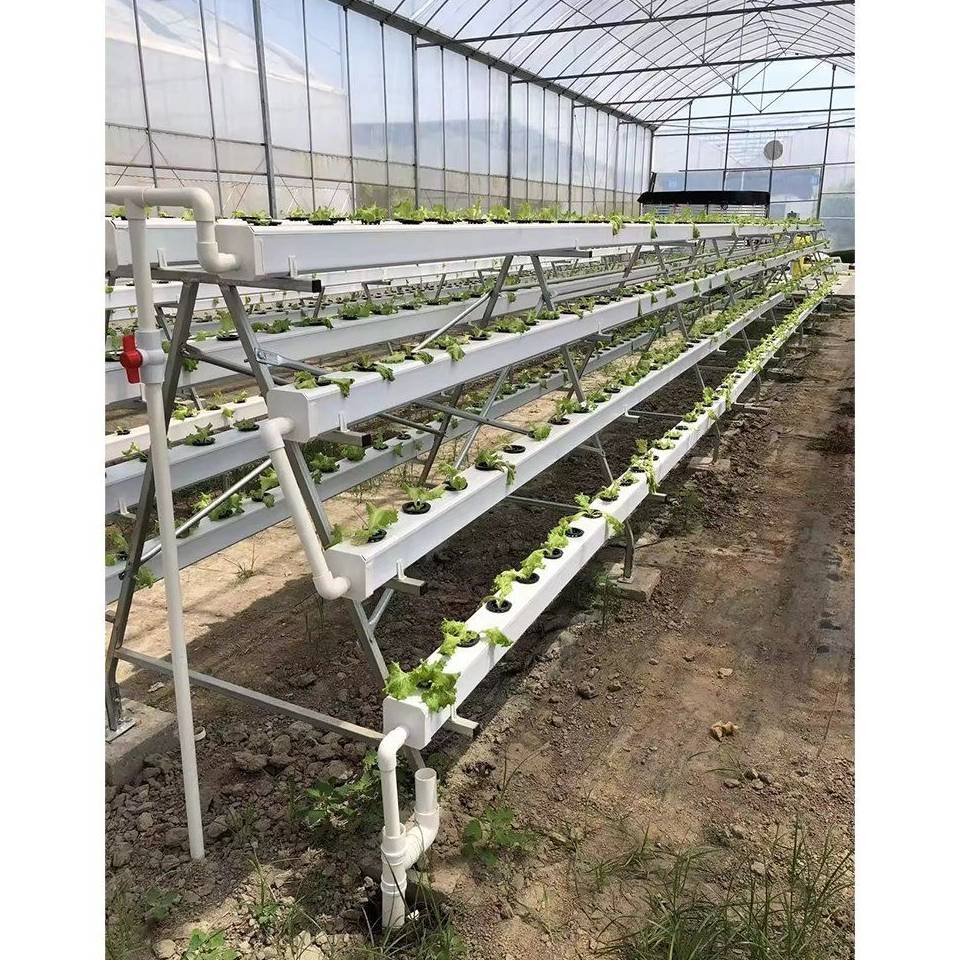
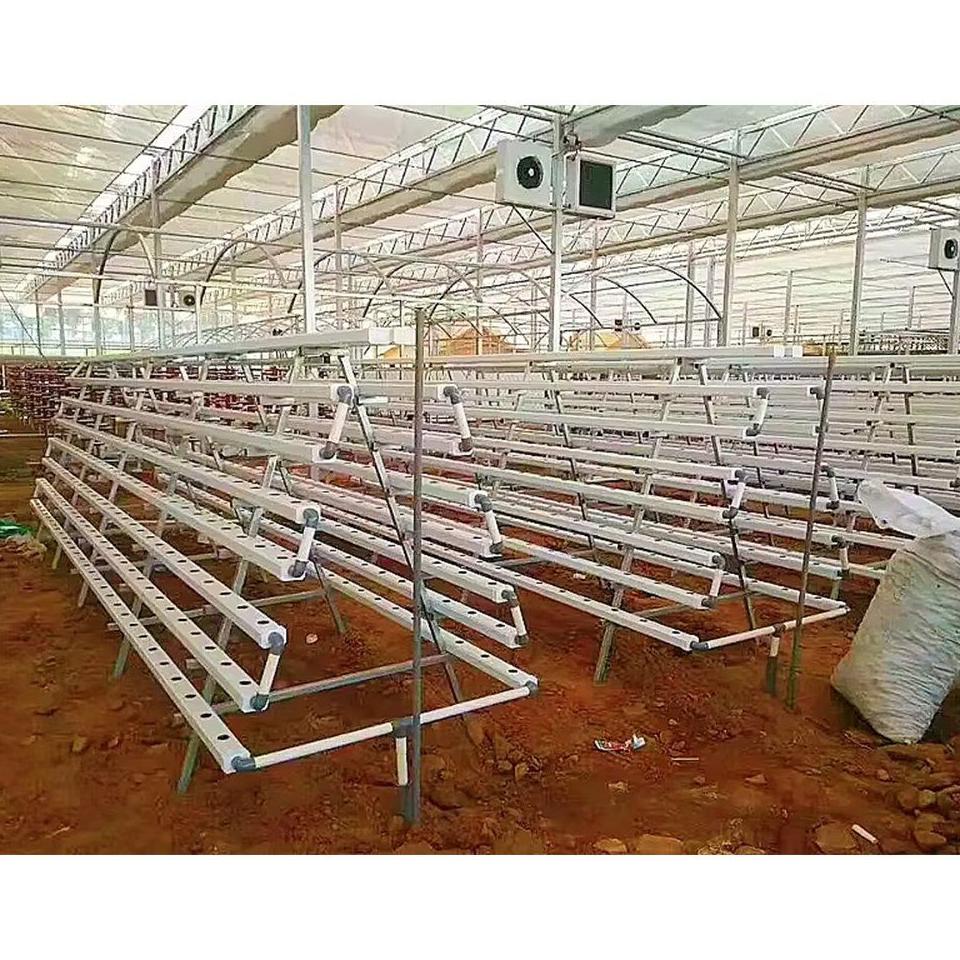
This portable hydroponic kit uses NFT channels fed from a reservoir, which is the same water circuit a commercial house runs, scaled down to a frame that can stand indoors or under cover. The channels are white PVC drilled at a fixed pitch so a seedling goes in at the same spacing every time, and the tank sits underneath so the whole unit can be moved or dismantled without replumbing a house. It suits indoor growing, seedling raising before planting out, and small scale leafy crop production where a full house is not the answer.
Most people who start growing hydroponically do not start with a greenhouse. They start with a frame in a spare room, a shed or a corner of a polytunnel, because that is the point of a hydroponic system: it does not need soil, and it does not need a building to be built around it first. This portable kit takes the same water circuit a commercial house runs and puts it on a frame that can be moved, extended or packed away.
Nutrient solution is held in a tank and pumped along the growing channels, where it runs as a shallow film along the floor of each channel and returns to the tank. The plant roots rest in that film rather than in a growing medium, so they are in contact with water and with air at the same time, which is what lets leafy crops grow quickly without a soil bed. Because the circuit is closed, the same water is used again and again, and only what the crop takes up plus what evaporates has to be topped back.
The scale is what makes a kit different from a house. Channel lengths are short enough to fit a frame rather than a bay, and the tank sits under the frame instead of in a separate pump room. That also means the unit can be moved or taken down between crops, which matters where the space is only available seasonally. The wider family of systems for protected growing is listed on the hydroponics system range page on this site.
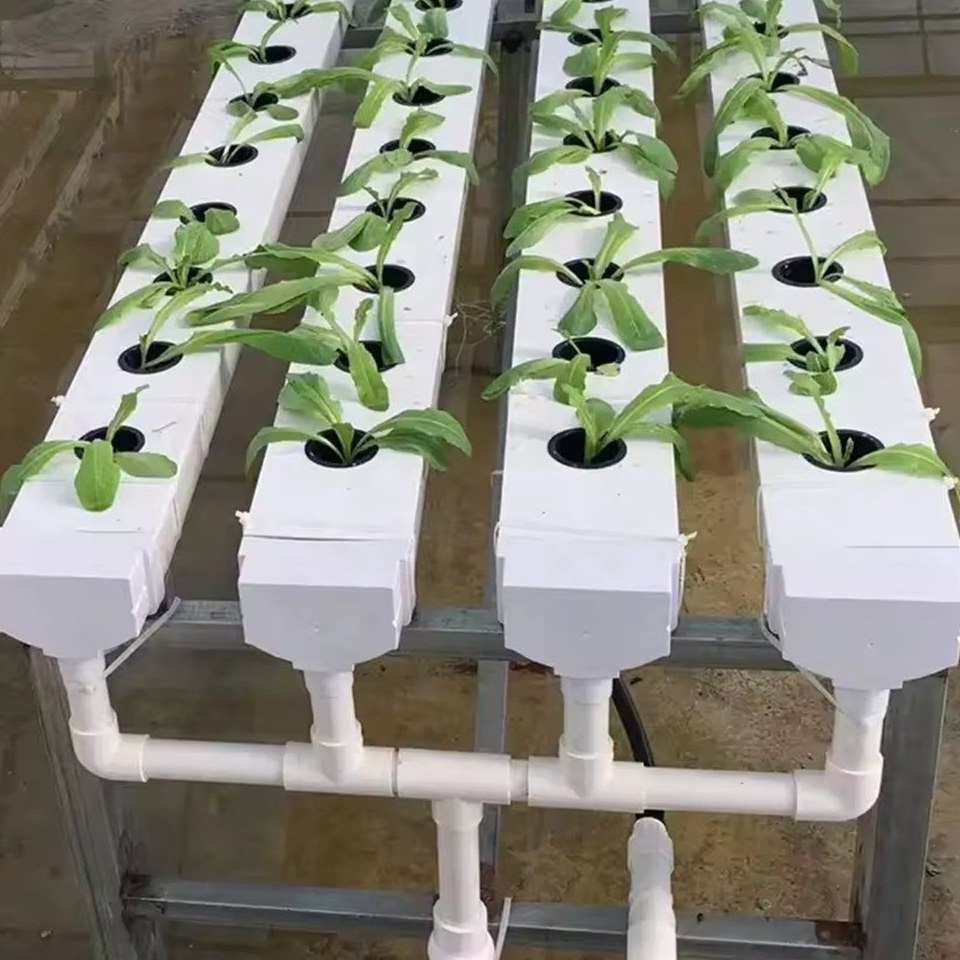
The channels are white PVC, which reflects light back onto the crop rather than absorbing it, and each one is drilled at a fixed pitch so the crop count is known before planting. The reservoir sits below the growing frame and drains back into itself, so the whole circuit can be levelled once and left alone. A tap or valve at the low end of each channel makes it possible to drain one run without disturbing the rest, which is what makes cleaning between crops practical on a small unit.
Because the tank is small, the solution changes faster than it would in a house, and that is the main thing to understand about a kit of this size: the readings move quickly, so the crop benefits from being checked more often rather than less. Growers running both scales usually treat the kit as the place where a new crop or a new recipe is tried before it goes into the bigger circuit. The same channel principle at planting scale is described in the hydroponic lettuce system.
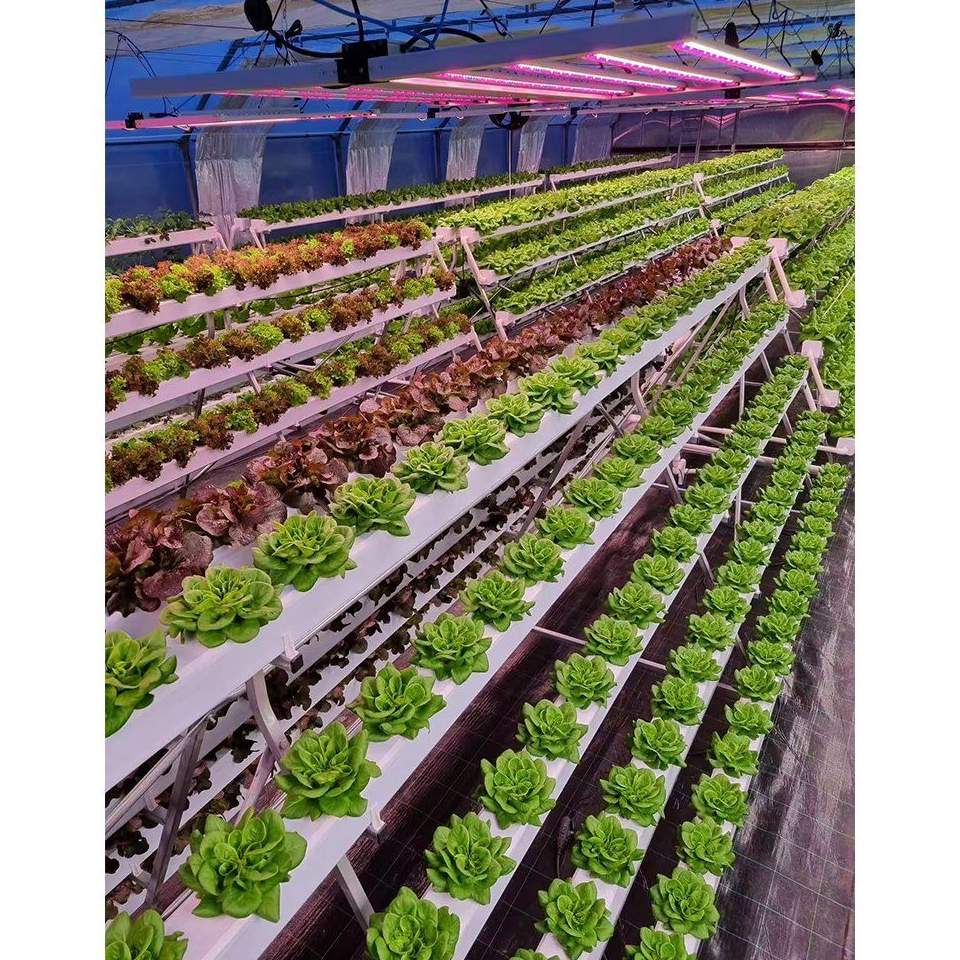
A kit of this type can stand indoors under lamps or under cover where there is natural light, and the layout differs between the two. Indoors, the frame is usually set against a wall with lamps overhead and the reservoir filled from a tap or a can; under cover, the same frame can be run on a bench where roof light reaches it, and the tank can be topped from a hose. In both cases the frame has to sit level, because the solution has to run from the high end of each channel to the low end without pooling.
Where a kit is used to raise seedlings before they go into the ground or into a larger house, the advantage is the moving. A frame that can be carried out and washed down, or shifted to follow the light, is more useful for propagation than a fixed bench. For a full scale house the same circuit is specified as a hydroponic system for greenhouse, where the channel runs are cut to the bay and the tank moves up to a pump station.
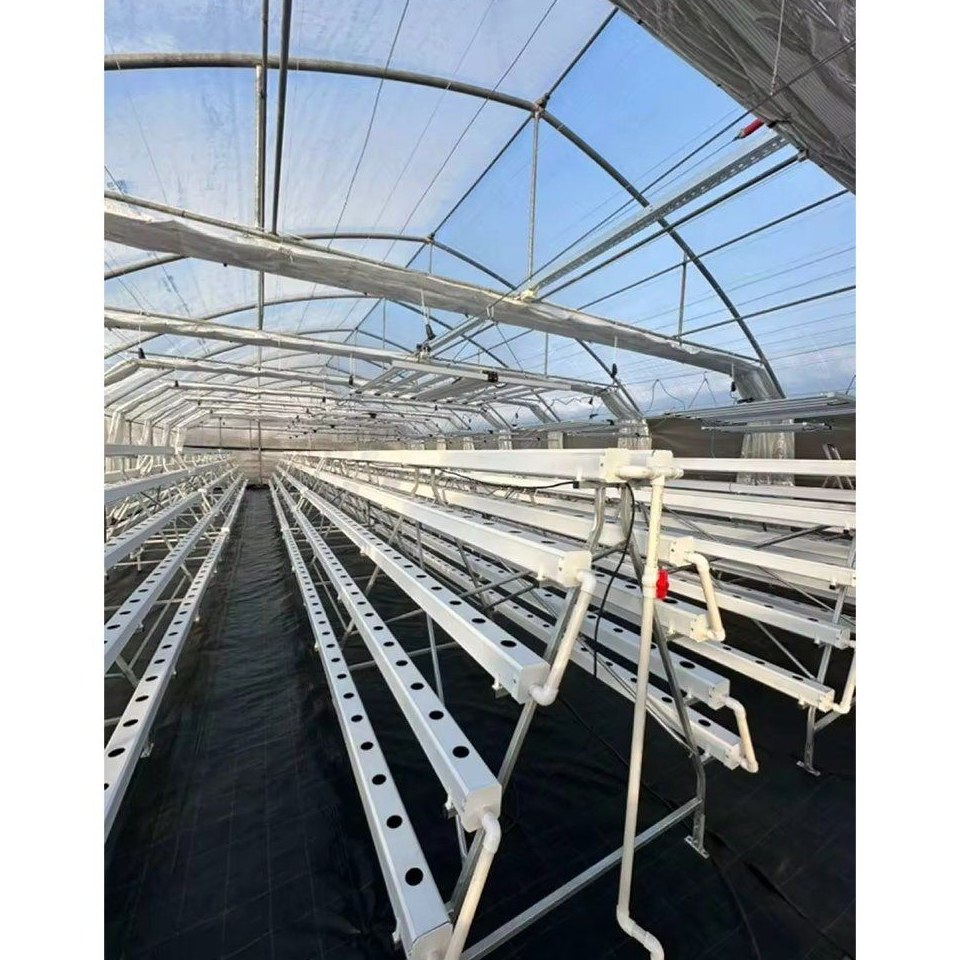
The table below lists the standard kit. Frame length, channel count and reservoir size are set to the space it will stand in.
| Channel material | PVC |
| Channel colour | White |
| Channel layer | Single |
| Cover material | Plastic sheet |
| Frame | Galvanized steel tube, movable |
| Length | Made to the space |
| Reservoir | Tank under the growing frame |
| Crops | Lettuce, herbs, leafy greens and seedlings |
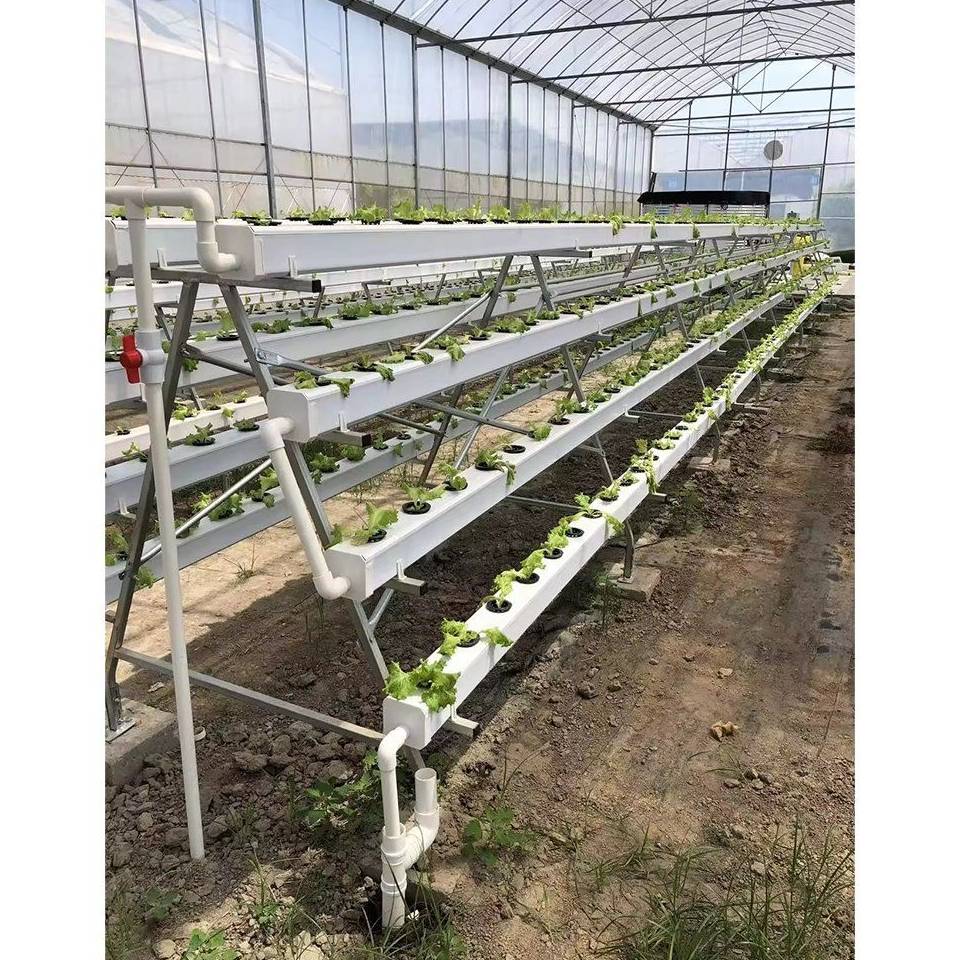
The routine on a small circuit is water, roots and light. Solution has to be topped up and the strength checked more often than on a large system, because a small volume moves further for the same amount of crop. Screens and the pump intake need clearing so a blocked line does not leave the roots dry, and the channels should be washed between crops so root debris does not build up along the floor of the run and slow the film.
Under lamps the other routine is checking that the light actually reaches the plants at the lower level, since a tiered frame loses light as it goes down. Research on nutrient management and recirculating systems in protected growing is published by Wageningen University & Research, and the commercial side of the same sector, including how growers schedule leafy crops, is covered by Farmer's Weekly.
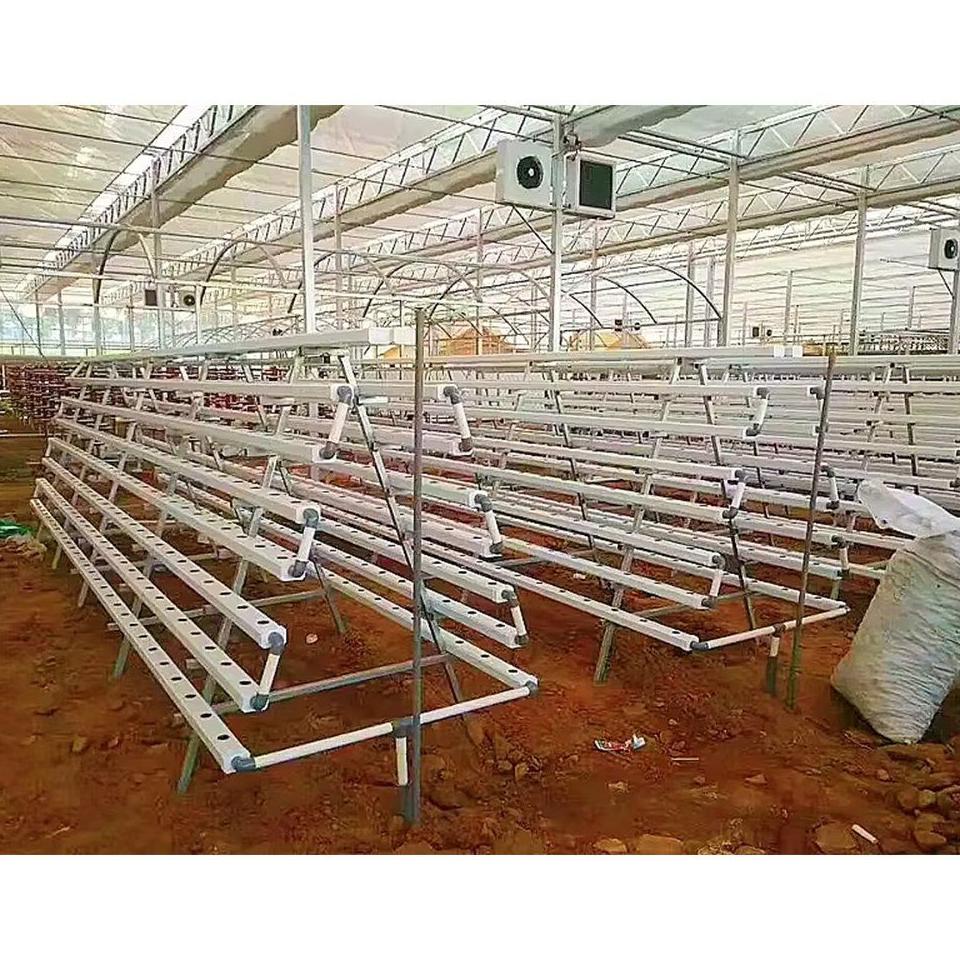
Kits of this type are used indoors under lamps, in a shed or garage where there is power and a level floor, and under cover where a bench can take the frame. The common thread is a grower who wants to raise seedlings, run a small leafy crop, or try a new variety before committing a full house to it.
On a working nursery the kit is usually the propagation step rather than the production step: seedlings start on the frame and move into the ground or into a house once they are established. That is why the movable frame matters more than the channel count, and why buyers usually size the kit against how many plants they need to move on per week rather than against the area they have available.
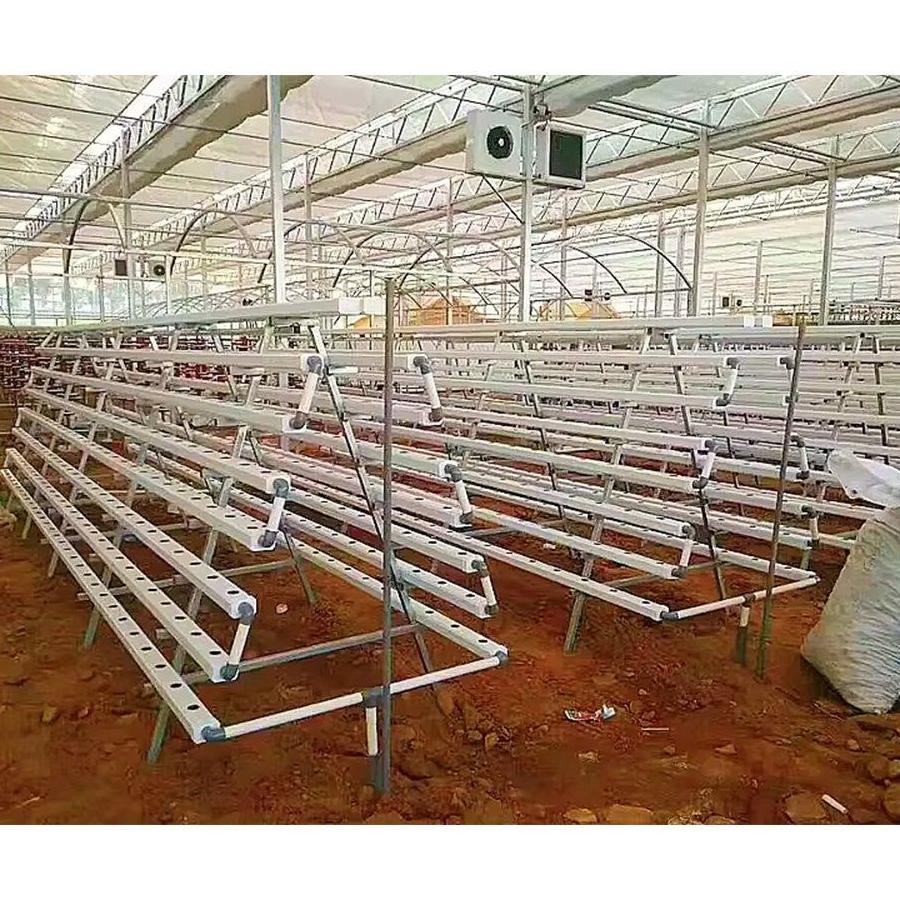
Yes. The frame stands on a level floor with lamps overhead, and the reservoir sits underneath it. Because the circuit is self contained, the unit does not need a building around it, only a power point and somewhere the water can be topped up.
Mainly in scale and in how fast the readings move. A small reservoir changes its strength faster for the same crop load, so it is checked more often, and the channel runs are short enough to fit a frame rather than a bay. The water circuit itself works the same way.
The galvanized steel frame is rated for 15 to 20 years under normal growing conditions. PVC channels and the pump are consumable items, replaced as they wear or as the planting pitch changes.
We provide a 10 year structural warranty and a 5 year anti-corrosion warranty on the galvanized frame. Details are set out in the contract for each project.
Send your site dimensions, the crops and bench layout you plan to use and your local wind and snow loads. We reply with a layout drawing and a full quotation.