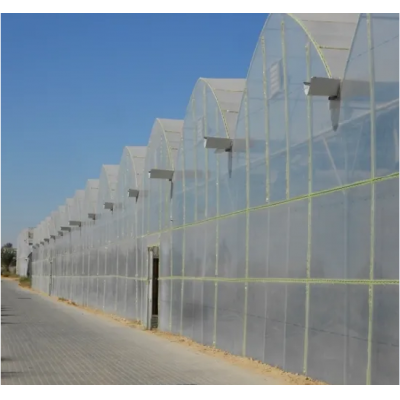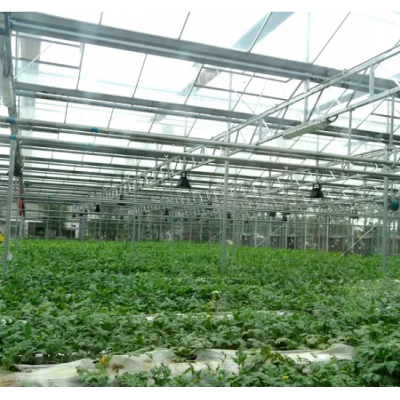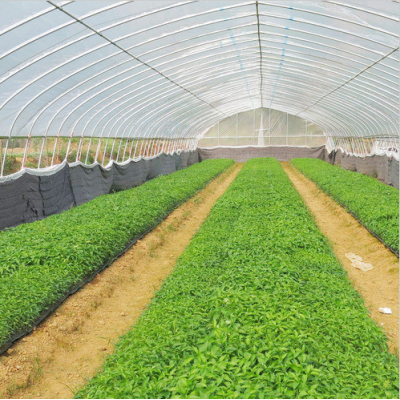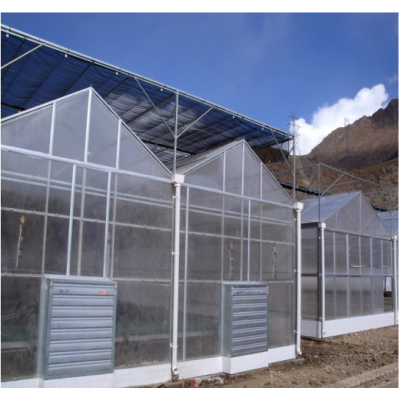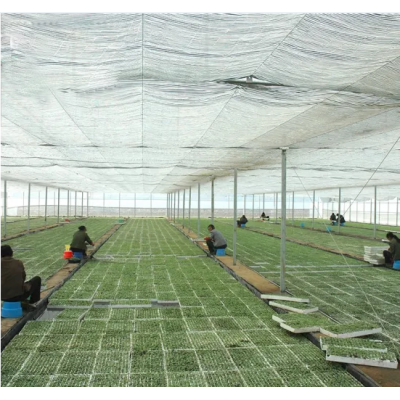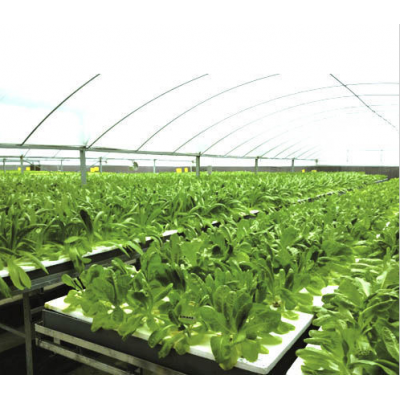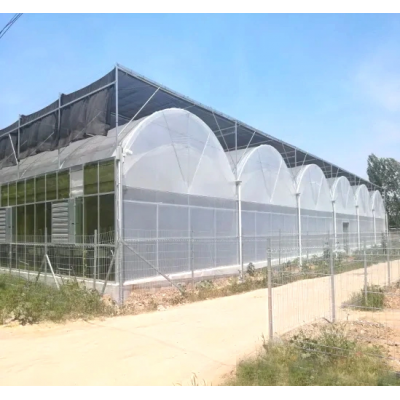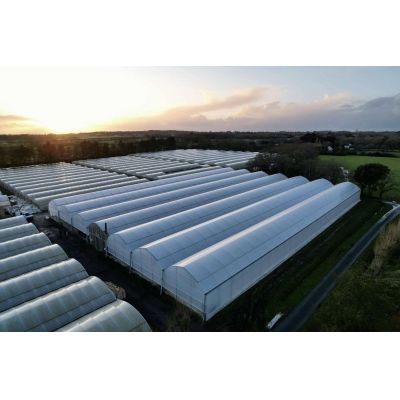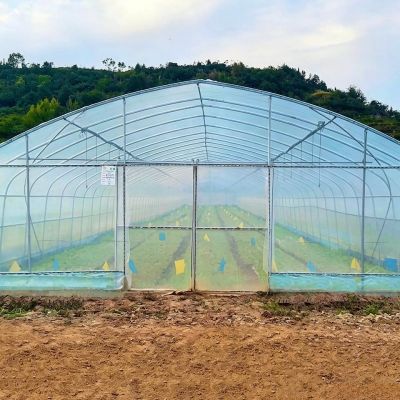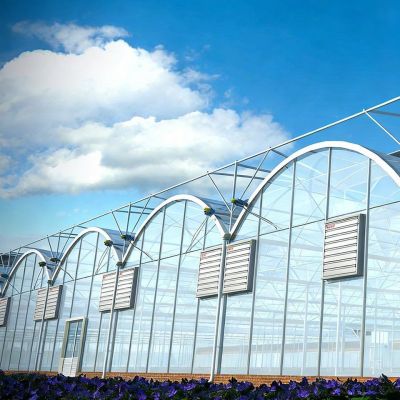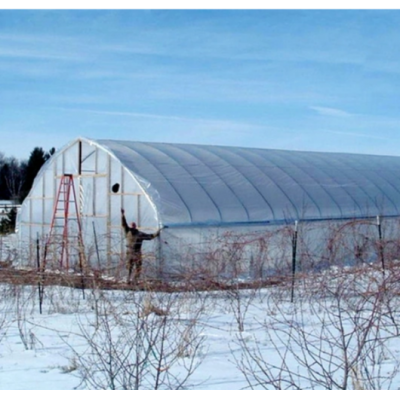
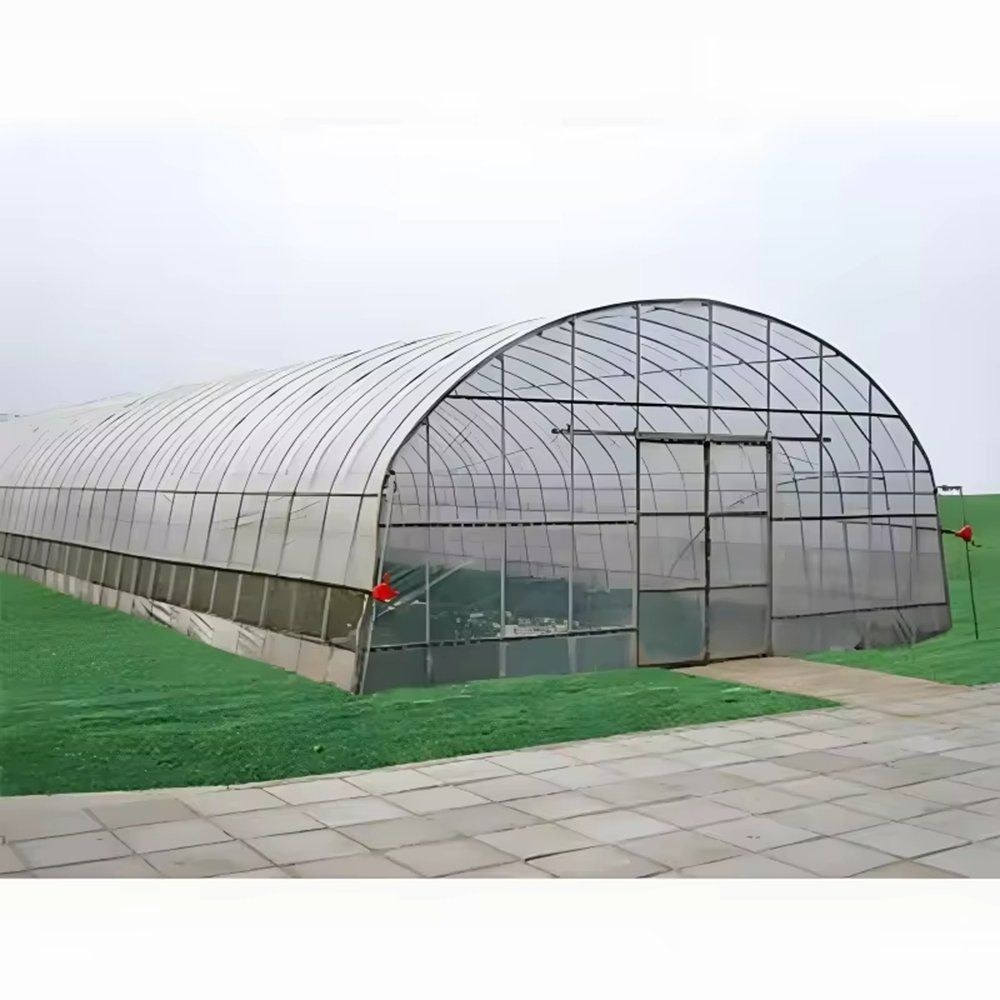
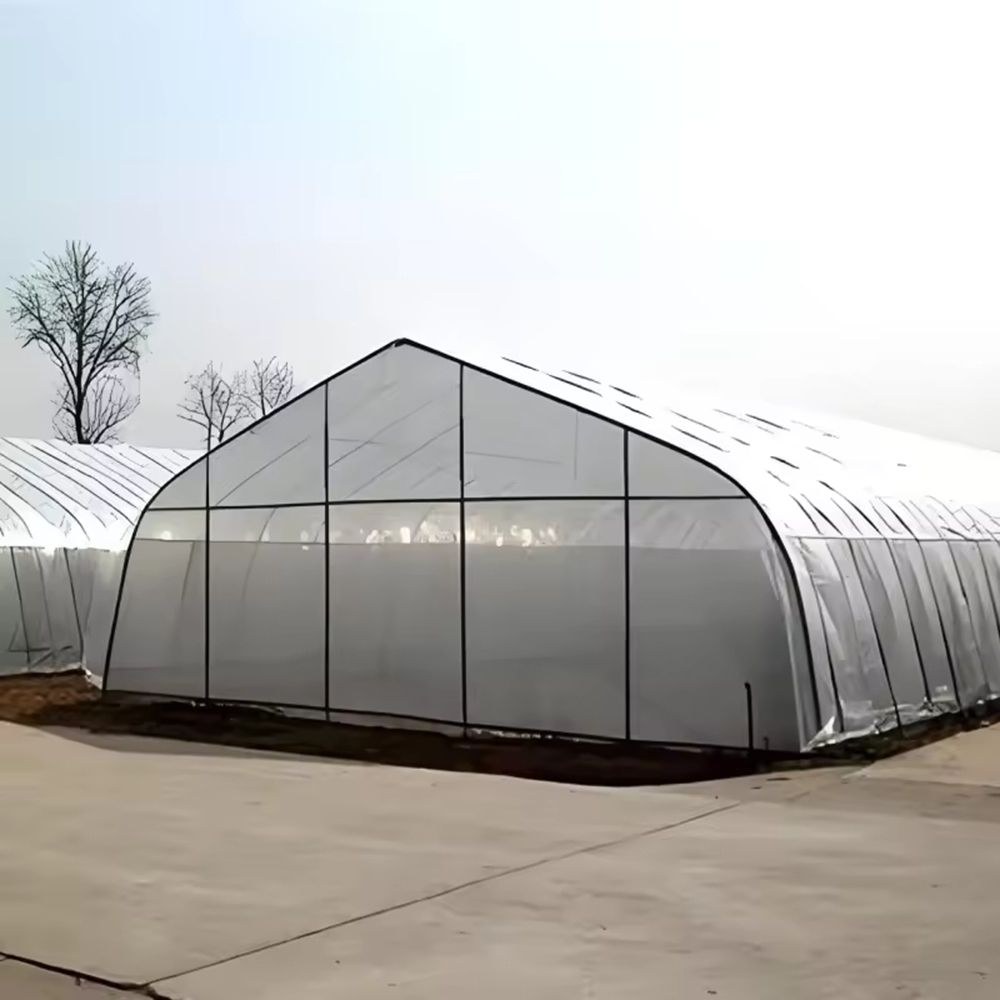
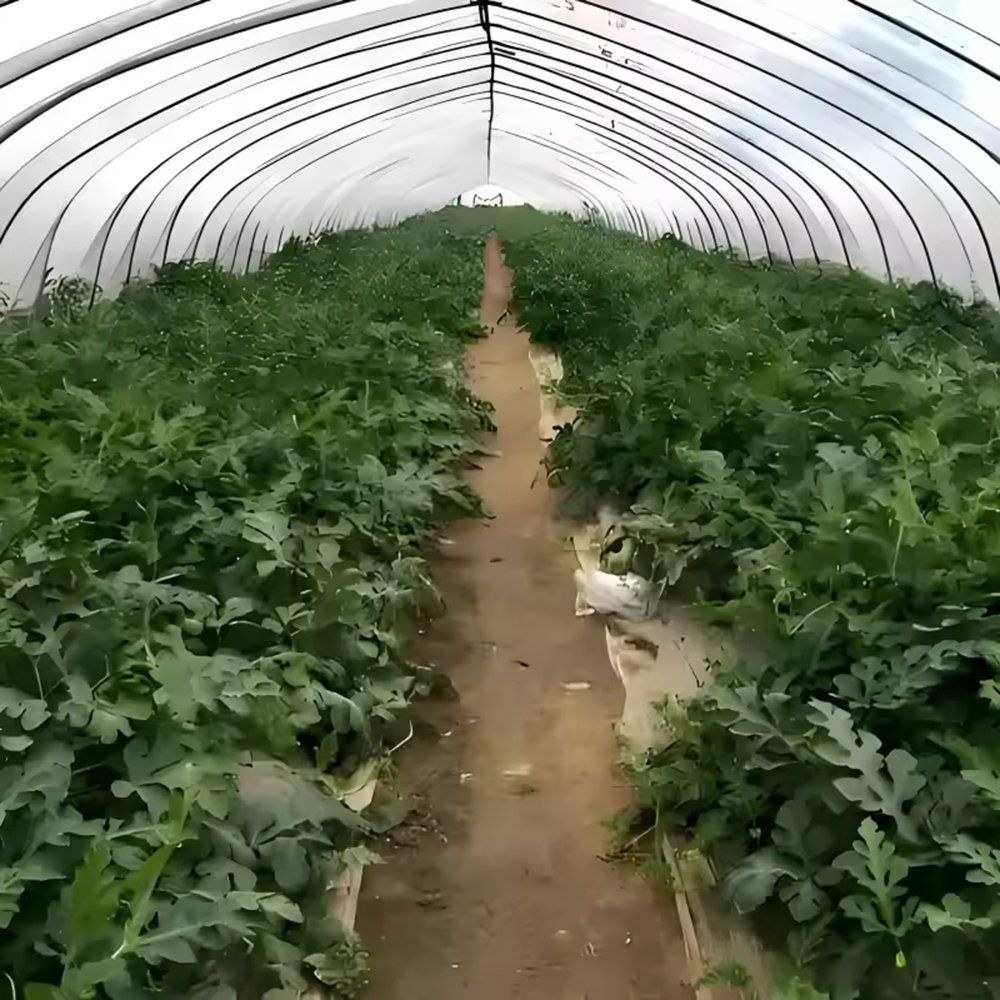
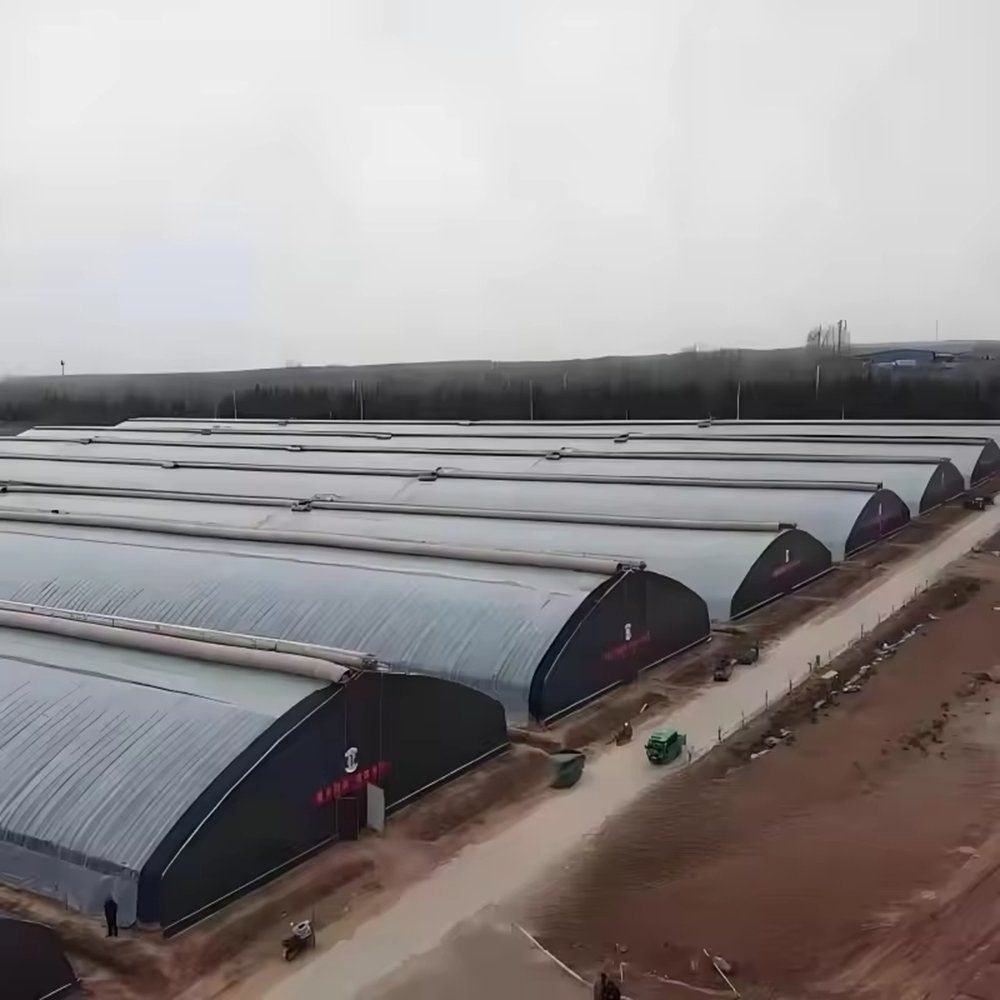
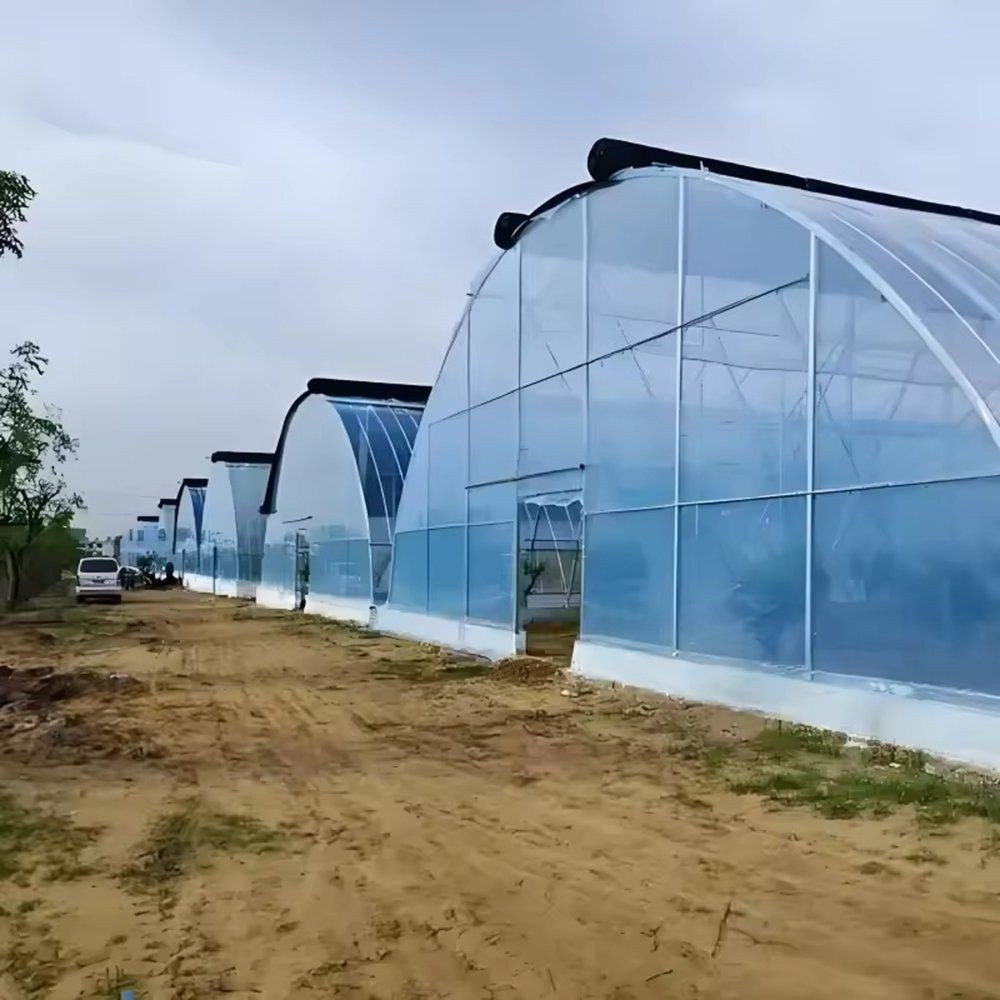
This house is a multi span film greenhouse built to a commercial specification rather than a garden one: heavier sections, a bolted hot dip galvanized frame and a bay wide enough to work with a trolley. It is aimed at vegetable and tomato production where the house runs every day of the season, so the parts that wear are the ones that were sized up rather than down. The cover is a three layer compressed PE film. Spans run from 8 m to 12 m and the length is set anywhere from 10 m to 100 m, or built to client demand.
A greenhouse that is worked every day of the season is a different proposition from one that is used at weekends. The difference is not in how it looks but in which parts were sized up: the sections, the bolts, the base rail and the film fixings are the components that decide whether the house still holds its line in year five or is being patched every spring.
Commercial grade means the frame is sized for the loads the house will actually see, with the wind and snow figures for the site taken into account rather than a single standard section used everywhere. It also means the house is built to be worked: doors wide enough for a trolley, a bay wide enough to run rows without crowding them, and a frame that can carry trellis, irrigation and a crop load.
The other part of the grade is repairability. A house on a working farm will be knocked by machinery and will lose a panel to wind, so the sections are bolted rather than welded. A damaged member is unbolted and replaced instead of being cut out, which keeps the house in production instead of taking it out for a week. Houses of this family are grouped on the film greenhouse range page on this site.
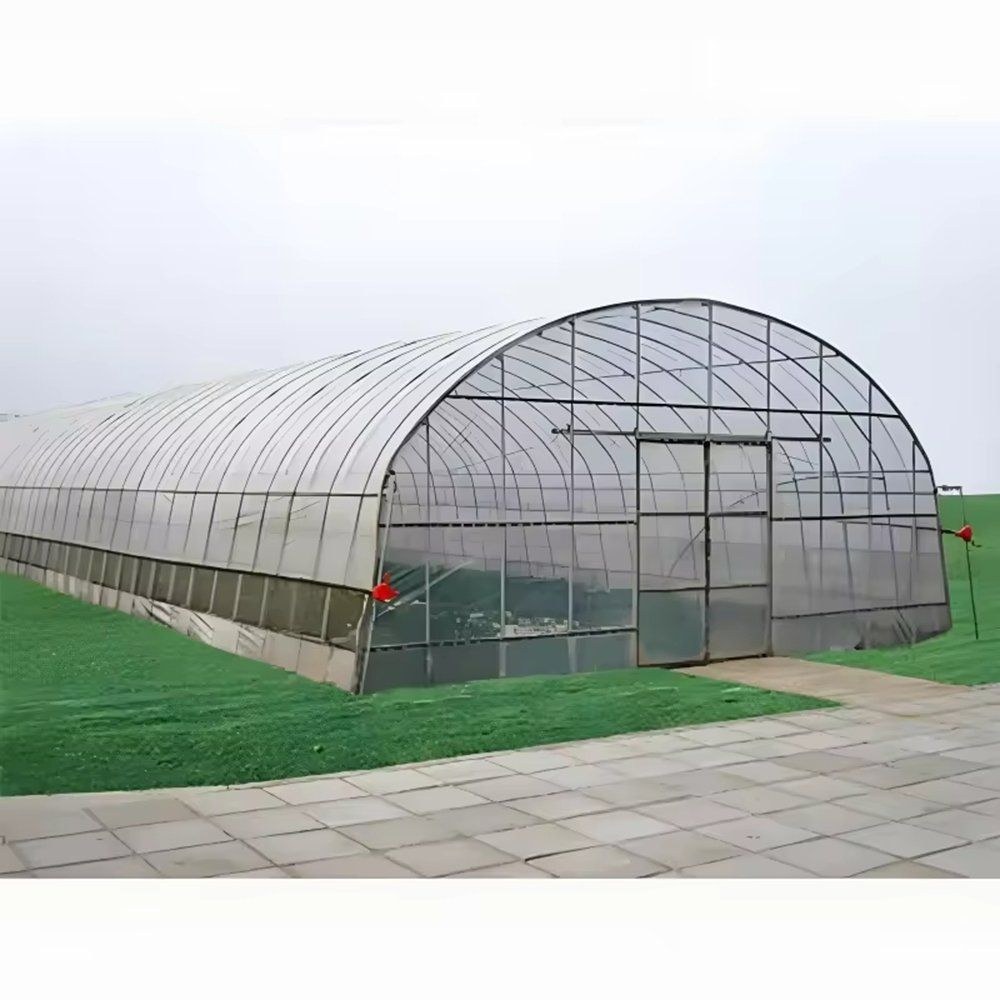
A multi span house covers the same ground as a row of single spans with less wall and fewer doors, which is why it is the usual choice once a block gets large. Gutters run between the bays and take water to downpipes instead of every bay shedding on its own, so the working area outside the house stays usable in the wet season.
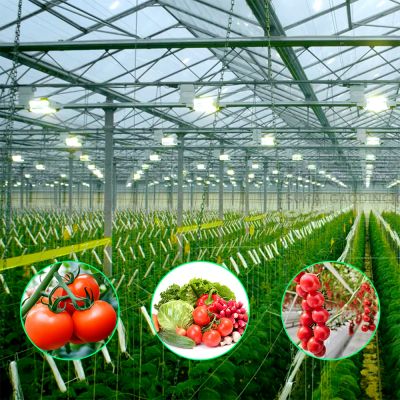
Inside, the bay width and the post spacing decide how many rows fit and how a trolley moves between them. Tomato and cucumber are trained upward on strings, so the clear height at the gutter is what sets the working space above the crop, and the span and spacing are chosen together to give it rather than fixed first.
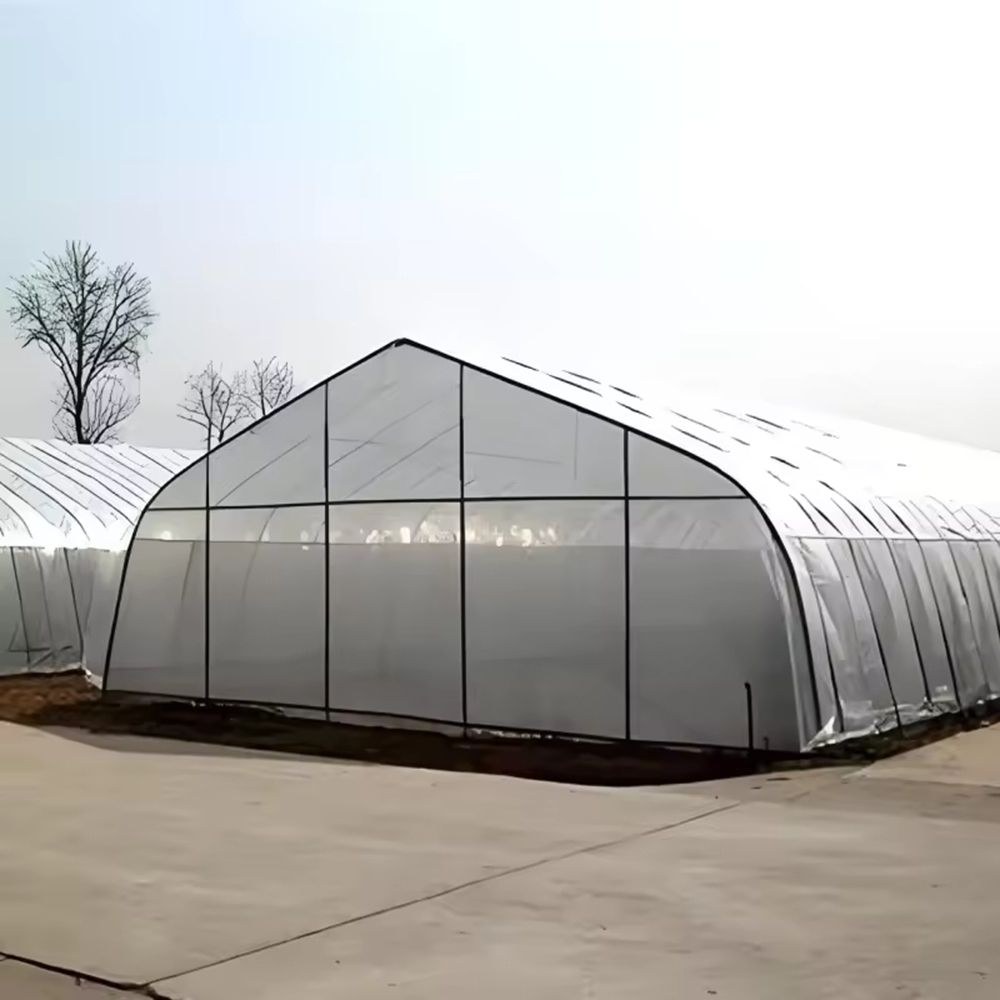
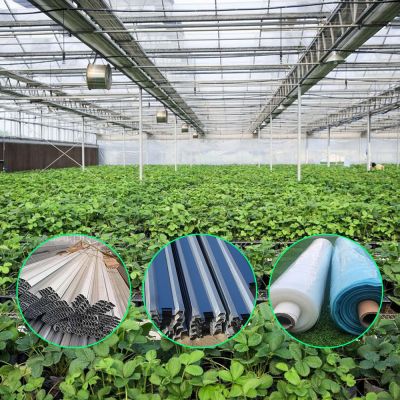
The frame is hot dip galvanized steel, galvanized after the sections are formed, so the zinc reaches the bore of the tubes, the cut ends and the inside of every drilled hole. Columns and trusses are bolted rather than welded on site, which leaves the coating intact and lets a damaged member be unbolted and replaced instead of cut out.
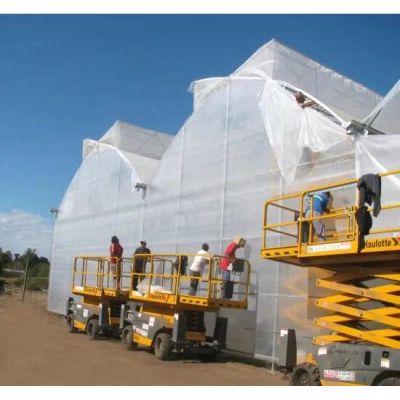
The cover is a three layer compressed PE film. The layers carry their additives separately, so the anti condensation face keeps working for longer than a single layer sheet does, and the outer layer carries the UV stabiliser. Film is held on the hoops and the base rail with clips, so a panel can be released and retensioned without a full recover. A house on the same frame with a double layer cover is described in the multi span film house with a double layer cover.
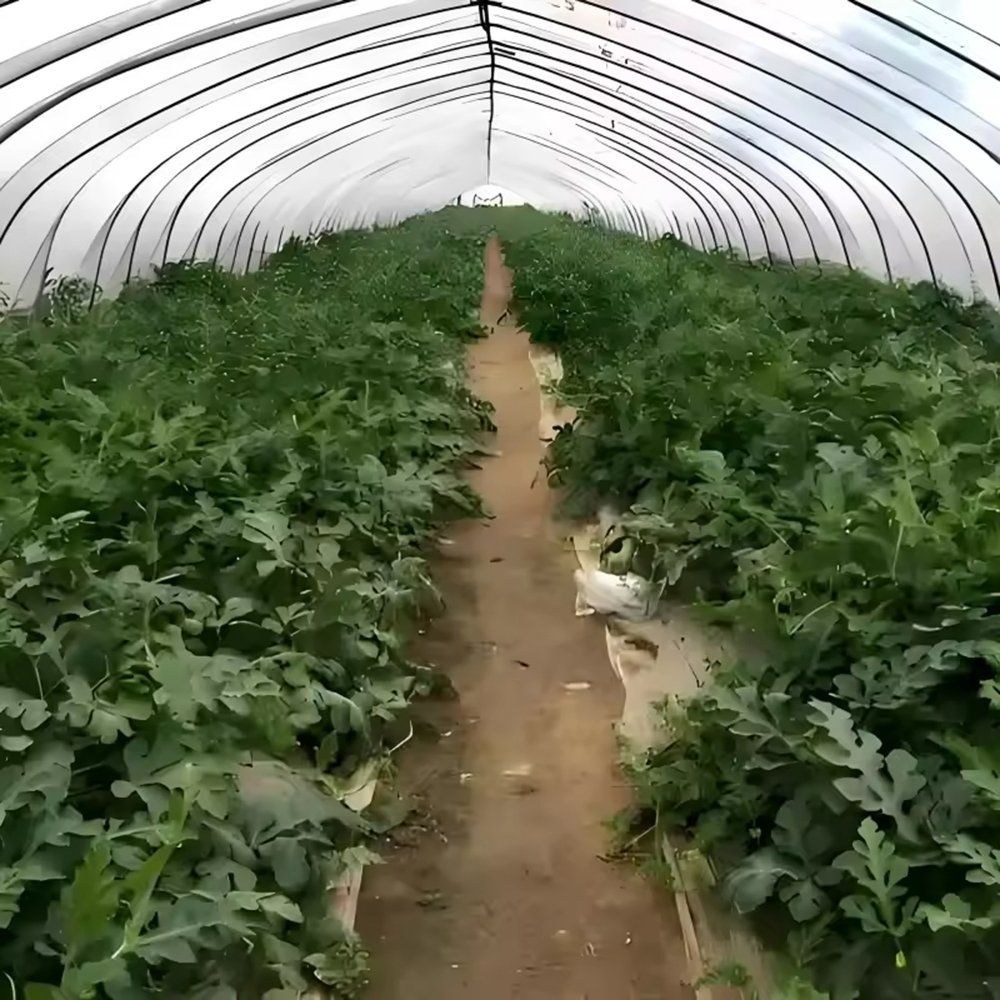
The table below is the standard build. Span, length, height and cover are set to the site and to the crop.
| Greenhouse span | 8 m / 9 m / 10 m / 11 m / 12 m |
| Greenhouse length | 10 m to 100 m, or built to client demand |
| Greenhouse height | 3 m to 8 m, or custom |
| Structure material | Hot dip galvanized steel pipe, bolted assembly |
| Cover material | Three layer compressed PE film |
| Roof type | Arch roof, multi span, gutter connected between bays |
| Gutters | Galvanized gutters between bays with downpipes |
| Cooling | Fan and pad cooling system optional |
| Crops | Tomato, cucumber, leafy vegetables, fruit and flowers |
| Customisation | Span, length, height and cover set to the site and the crop |
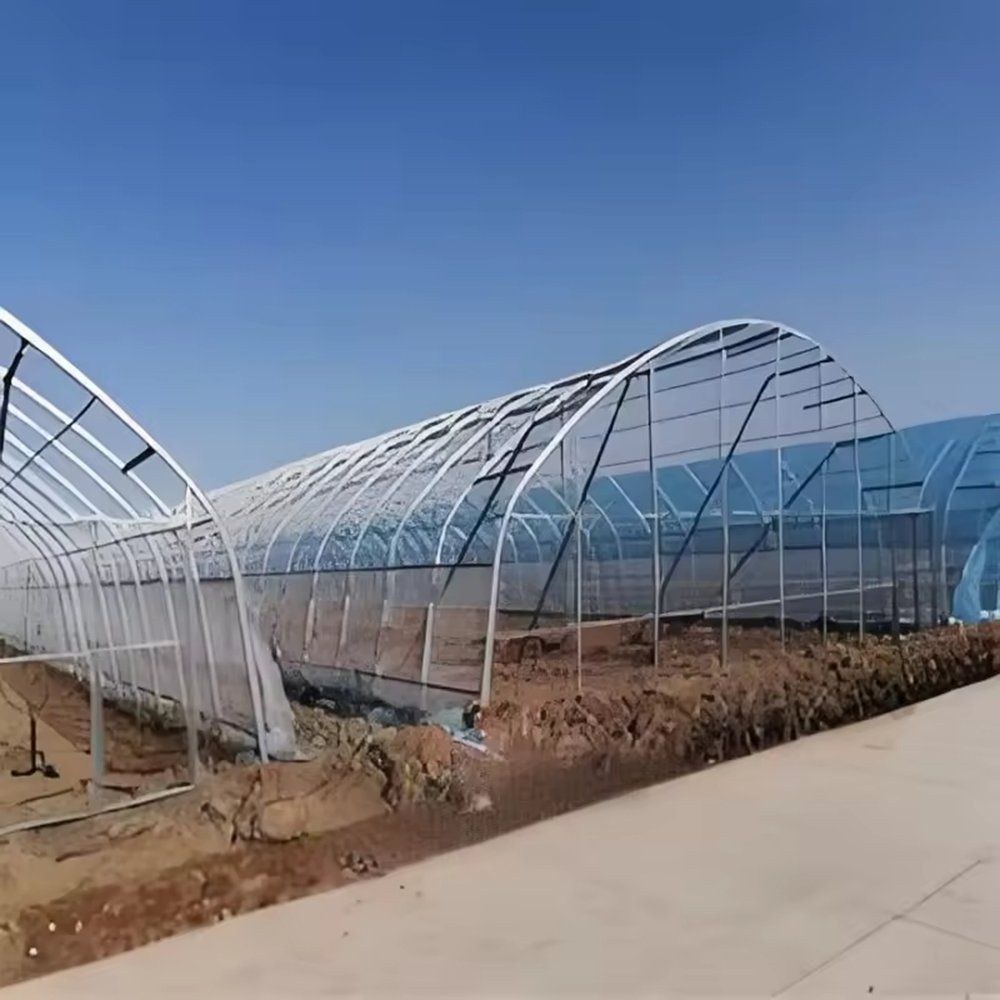
The kit arrives formed and drilled with the fittings, so the work on site is bolting and tensioning rather than fabrication and no welding is done at any point. Ground posts or a base rail are set to the drawing first, the arches and trusses go up bay by bay and the gutters are levelled across the block as the bays are joined, and the film is pulled over and tensioned from the ridge down.
Maintenance divides into the frame, the water and the cover. Bolts, the base rail and the gutter outlets are checked before the wet and windy season, because a blocked downpipe backs water into the bay rather than away from it. Film tension is checked after the first season and the cover renewed on a planned cycle, while the galvanized frame runs for far longer than the film does.
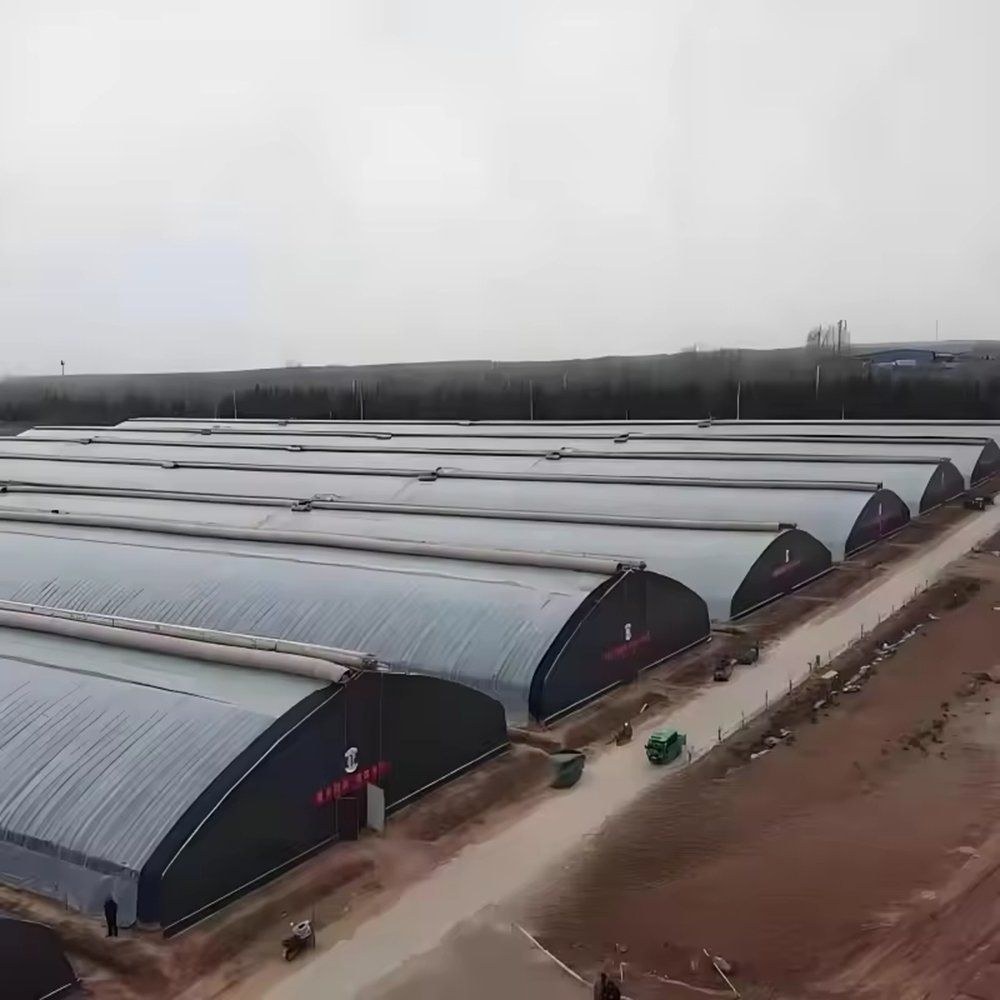
Houses of this type are used for tomato and cucumber production, for leafy vegetables and for fruiting crops grown in soil or in bags on the floor of the bay. They suit commercial vegetable farms running the house through the season, growers replacing a lighter house that did not hold up to daily use, and operations that expect to add cooling, irrigation or a control system to the same frame later. A multi span house built specifically for the commercial grower is described in the hot dip galvanized multi span house for commercial growers.
Research and extension material on protected crop production, including work on the growing environment under cover, is published by NC State University through its horticultural science department. Reporting and analysis on technology in agriculture and food production is published by AgFunderNews. The specification that matters is the one that still suits the crop ten years from now.
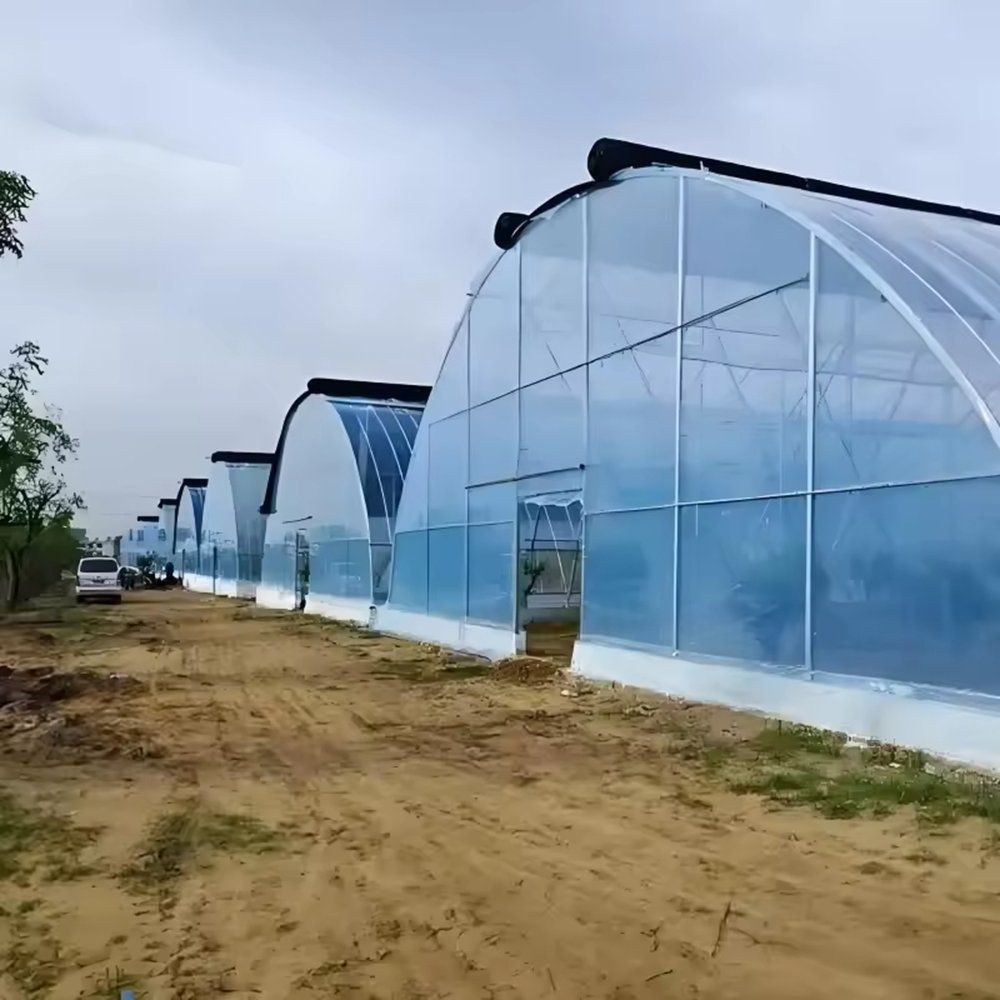
Which parts were sized up. Heavier sections, bolted joints that can be replaced, a base rail that carries the film load, and a bay wide enough to work rows with a trolley rather than by hand.
Less wall and fewer doors for the same ground. Gutters between the bays carry the water to downpipes, so the working area outside stays usable in the wet season and the block costs less per square metre than a row of separate houses.
The galvanized steel frame is rated for 15 to 20 years under normal growing conditions. The film cover runs on a shorter cycle than the frame, typically 3 to 5 years depending on UV exposure at the site.
We provide a 10 year structural warranty and a 5 year anti-corrosion warranty on the galvanized frame. Details are set out in the contract for each project.
Send your site dimensions, the crops you plan to grow and your local wind, snow and rain figures. We reply with a layout drawing and a full quotation.