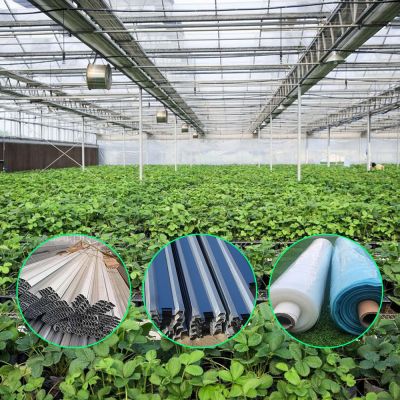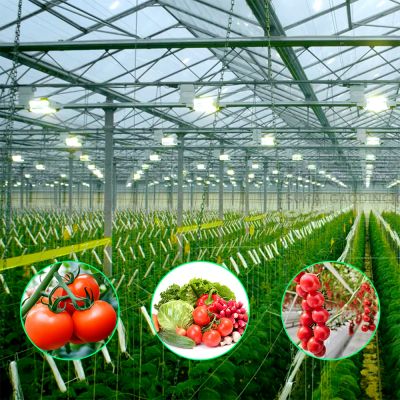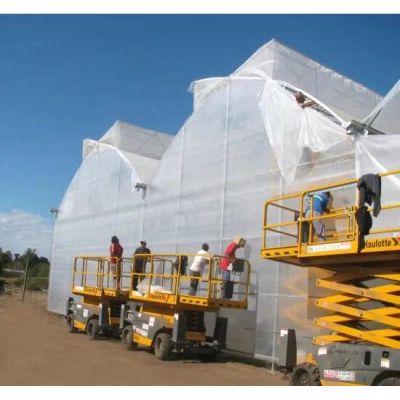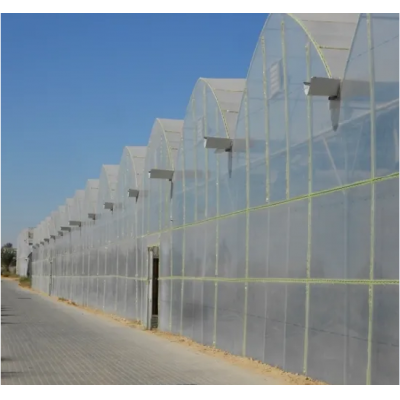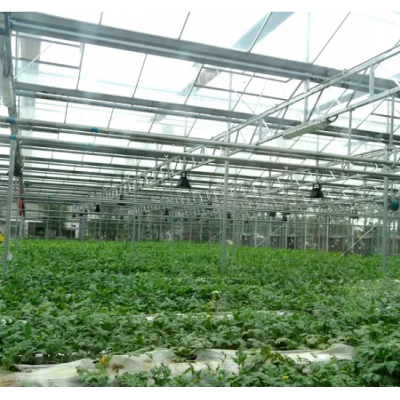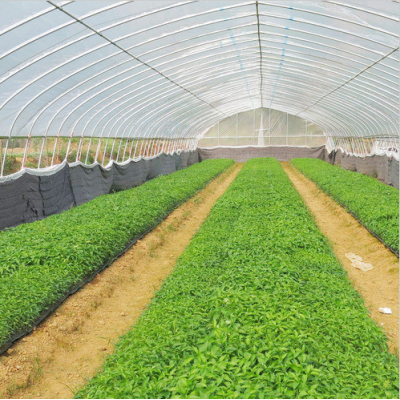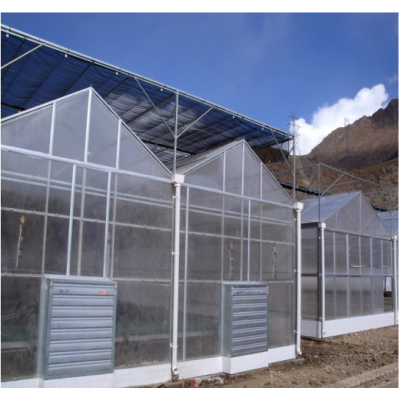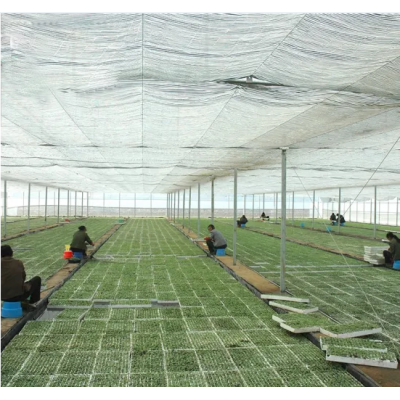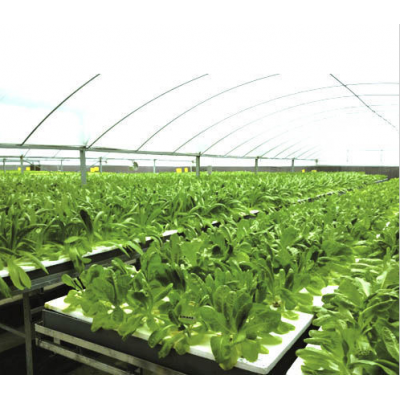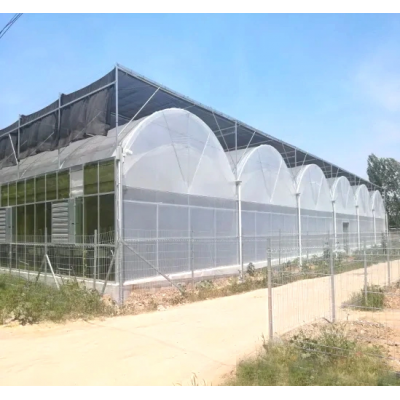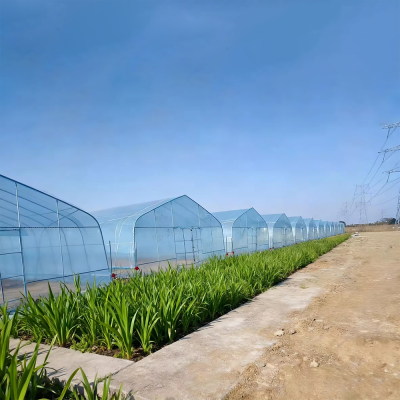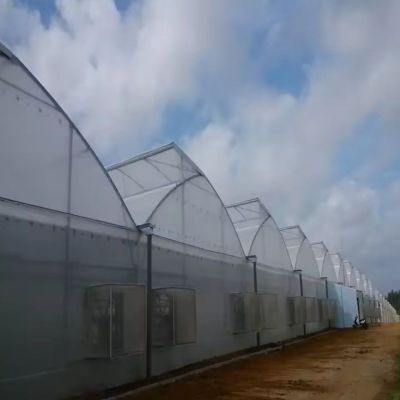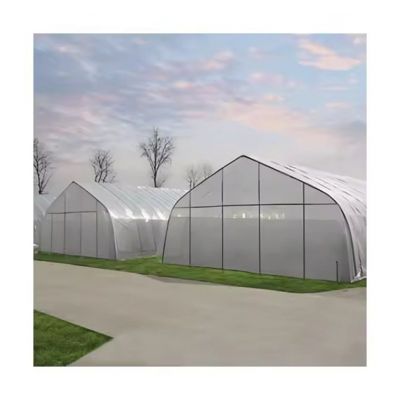
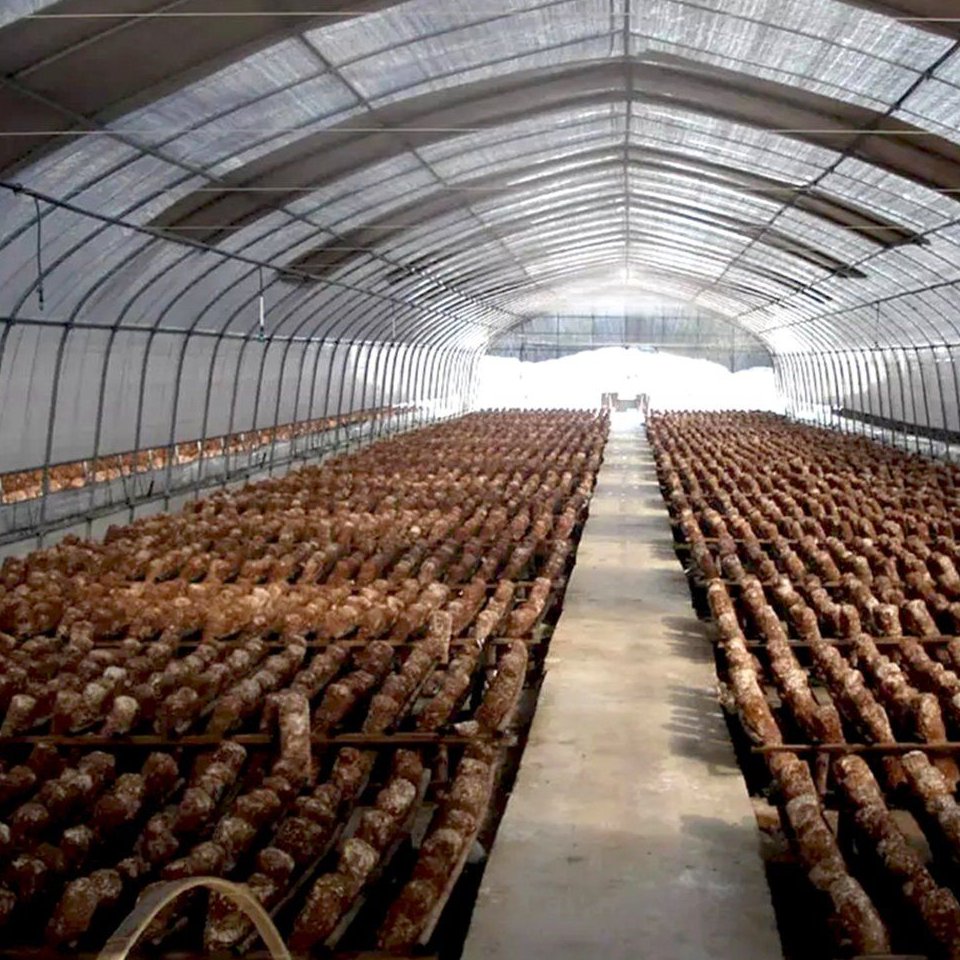
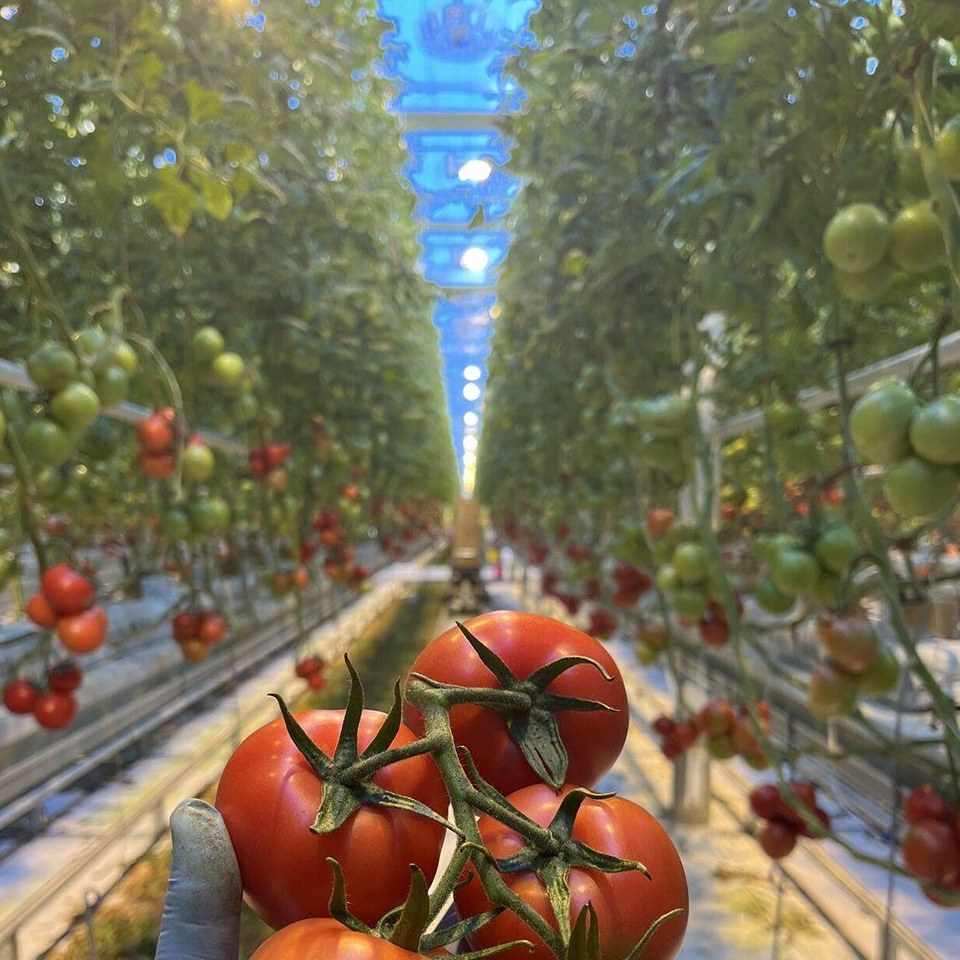
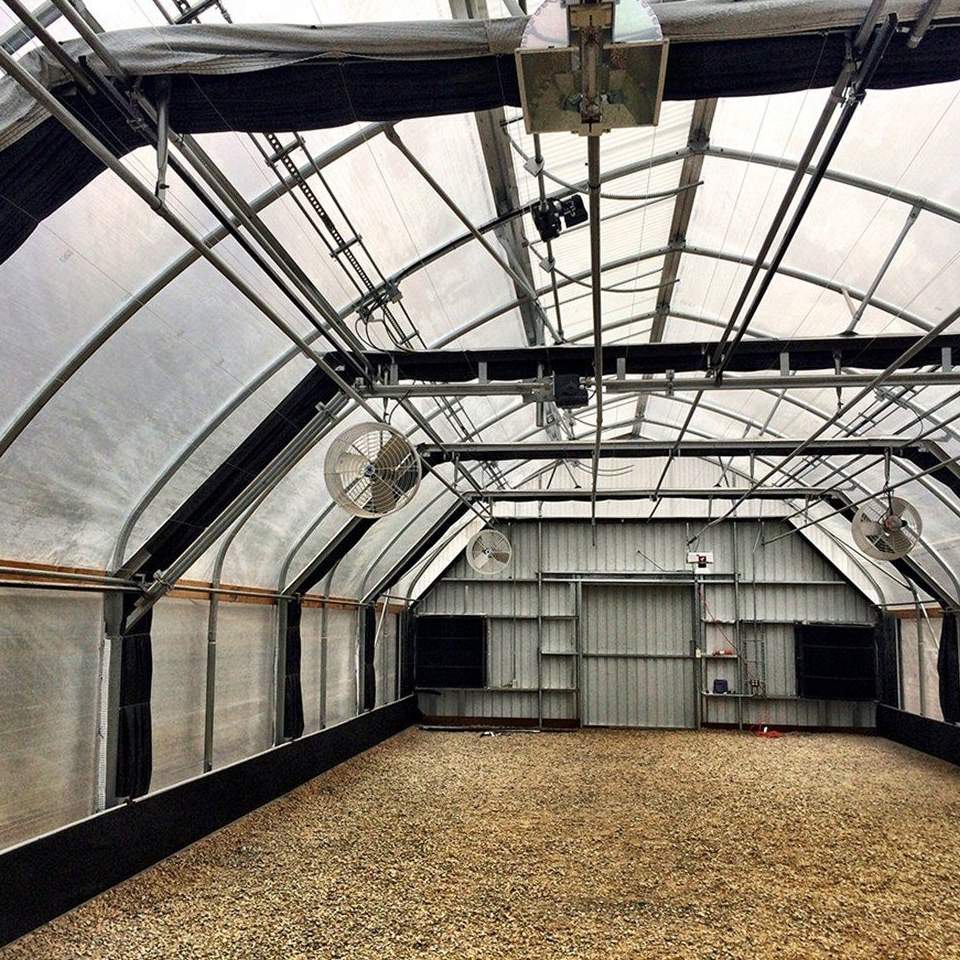
The house is a multi span arched film structure built around the two things a flower crop is least tolerant of: a cold night and a wet canopy. Running the cover as two layers with an air gap between them turns the cover itself into the insulating element, so the house holds its night temperature with less heating, and the inner face stays warmer, which reduces condensation above the blooms. The frame is galvanized steel, with aluminium alloy used where a component has to keep an edge over time. Ventilation is by roof vents and side vents. Spans run from 8 m to 12 m and length from 10 m to 100 m.
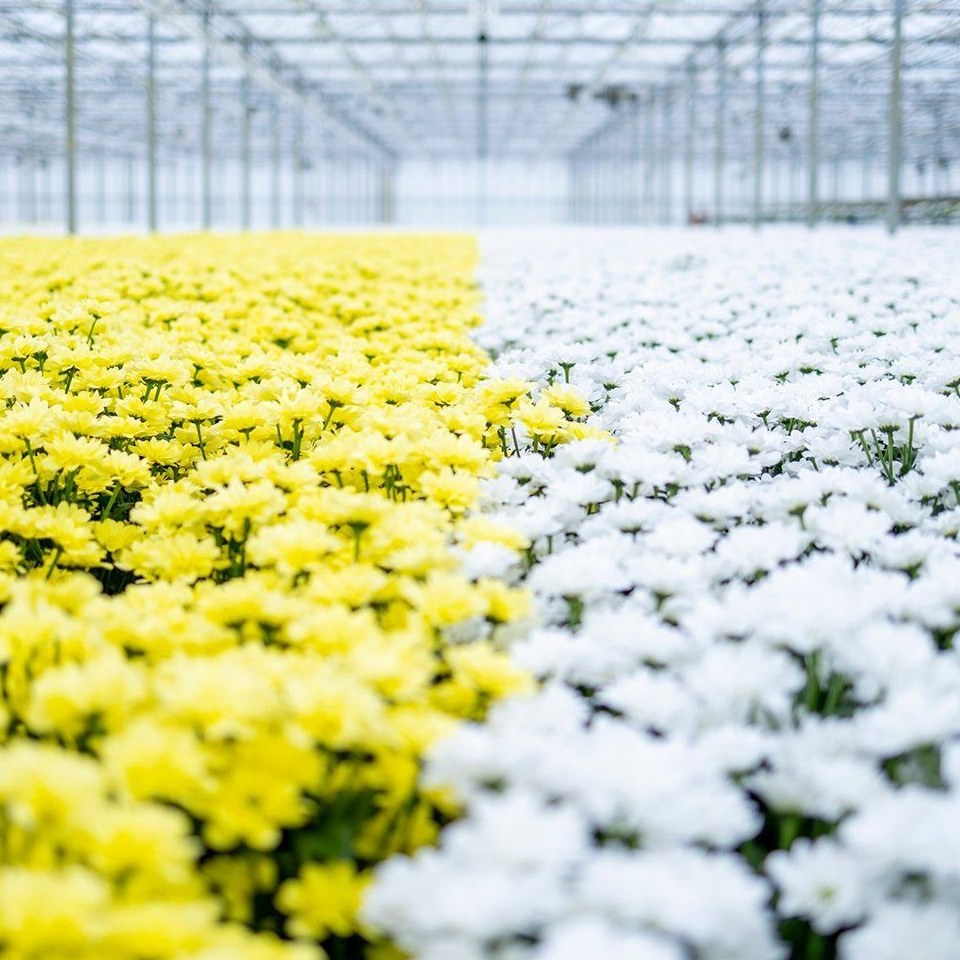
A flower crop is sold on appearance, which makes the growing environment a quality control tool rather than only a convenience. Two things decide how a stem finishes: the temperature band the house holds overnight, and whether water is sitting on the bloom at dawn. Both are addressed in the structure and the cover before any equipment is added, and both are decided when the house is specified rather than at the end of the build.
Heat loss and condensation come from the same place. When the cover is a single skin, the inner surface drops close to the outside temperature on a clear night, water forms on it, and the crop is sitting under a surface that is going to drip. A second film layer changes that: the air held between the sheets slows the rate at which heat leaves, so the inner face stays warmer and stays above the dew point for longer. The result is a steadier night and a drier canopy, which is what a stem has to have to be cut and sold.
The house is built as multi span arched bays tied by gutters, so there is no column line across the working width and a bench layout runs the full length of the building. The wider film family is listed on the film greenhouse range page on this site.
The frame is hot dip galvanized steel, dipped after fabrication so the zinc is bonded to the steel and reaches the inside of the tube, the cut ends and the wall of every drilled hole. Those are the points where a greenhouse frame fails first, because condensation runs down the frame every closed morning and collects exactly there. Aluminium alloy is used for components that have to keep a straight edge over years of use, such as door surrounds, because alloy does not need painting and does not corrode.
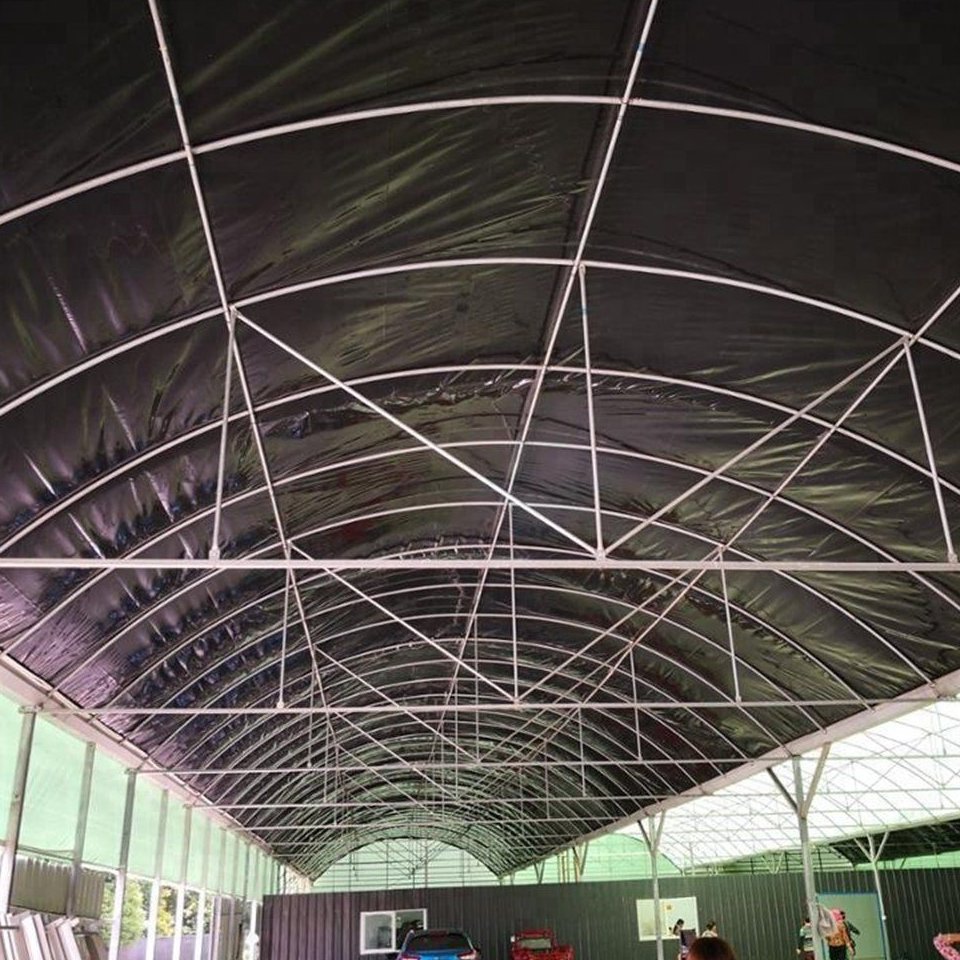
The covering is PO or PEP film with a UV resistant coating and light transmission of 90 to 95 percent. It can be fitted as a single skin, or as two layers with an air gap between them, and the second option is the one normally specified for flower crops grown outside the main season, because still air between the sheets is the least costly insulation a film house has. Film is renewed as a roll over the bay rather than panel by panel. A flower house on a single skin is described in the flower film greenhouse on a galvanized frame.
Ventilation runs at the ridge and along the side walls. The ridge vent releases the air that has collected at the top of the house, and the side opening exchanges the layer the canopy occupies, which is where the humidity that causes petal marking actually sits. Both can be worked by hand or on a driven system, and at commercial scale a controller is the usual choice because the vents need to close before the outside temperature drops rather than after.
Shade net is specified where summer radiation would otherwise push the house past the band the crop wants, and heating from a boiler or radiant pipe is optional for sites that need a firm set point rather than a slower fall. Cooling can be added on the same order where the house runs through a hot season. A house of the same type aimed at cut flower production is described in the greenhouse for flower production.
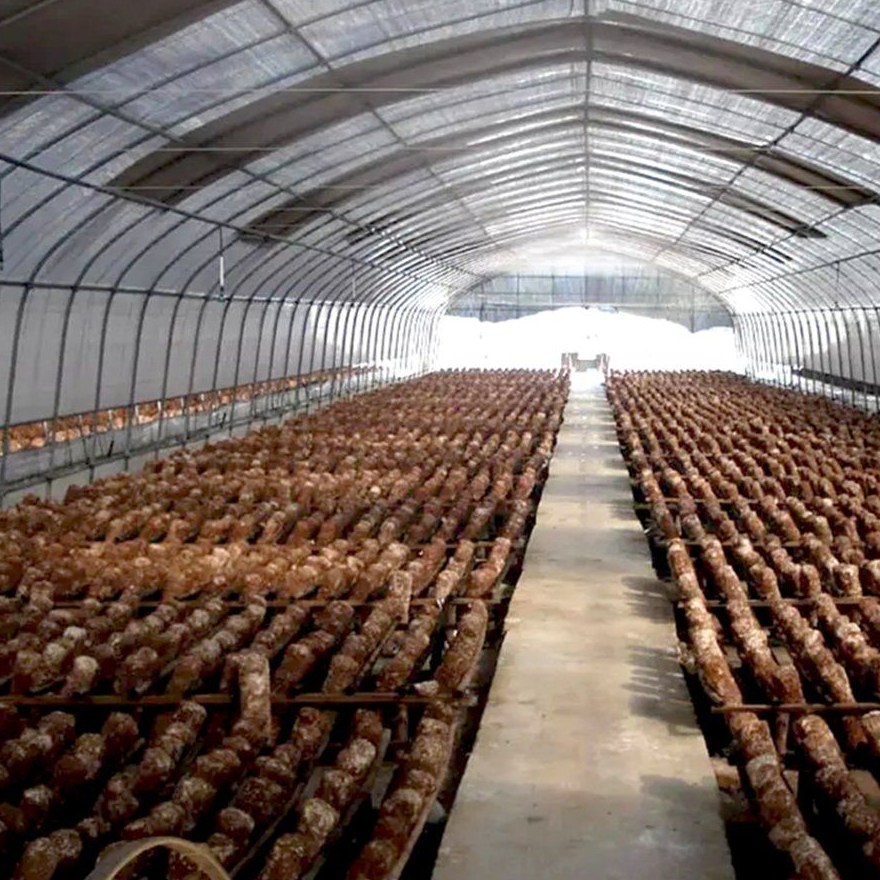
The table below is the standard build. Span, length, height, cover and ventilation are set to the site and to the crop.
| Greenhouse span | 8 m / 9 m / 10 m / 11 m / 12 m |
| Greenhouse length | 10 m to 100 m, or built to client demand |
| Greenhouse height | 3 m to 8 m |
| Structure material | Hot dip galvanized steel, aluminium alloy components |
| Cover material | PO or PEP film with UV resistant coating |
| Cover build | Single skin, or two layers with an air gap between them |
| Light transmission | 90 percent to 95 percent |
| Ventilation | Roof vents and side vents, manual or automated |
| Optional systems | Shading, heating, cooling, irrigation and benching |
| Crops | Cut flowers, pot plants, flowering bedding and ornamentals |
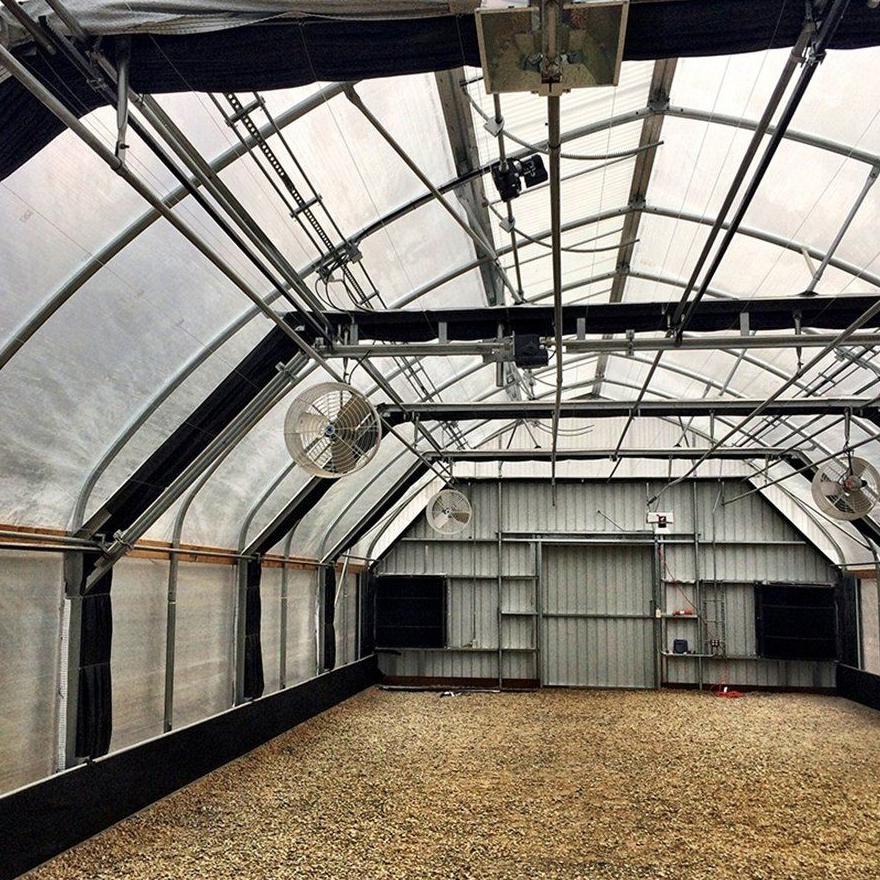
The steel arrives cut, drilled and galvanized and is assembled with bolts, so the work on site is raising and squaring rather than fabrication. Base plates or ground posts are set to the same layout as the gutters, because a multi span house shows any error along the whole gutter line. The bays are tied with purlins and the film goes on last, one skin or two in the same operation. Where benching or a trellis will carry the crop, the layout is set out before the base stage so the frame and the crop support share one setting out.
Maintenance follows the cover and the vent gear. Film tension and the clips along the gutters are checked after the first season and the cover renewed on a planned cycle. On a two layer house the pressure held between the sheets is checked at the same time, because a slack inner layer rubs against the outer one and shortens the life of both. The vent rack, its bearings and the limit stops are inspected before the season turns, and gutters and downpipes are cleared so water cannot back up into the bays.
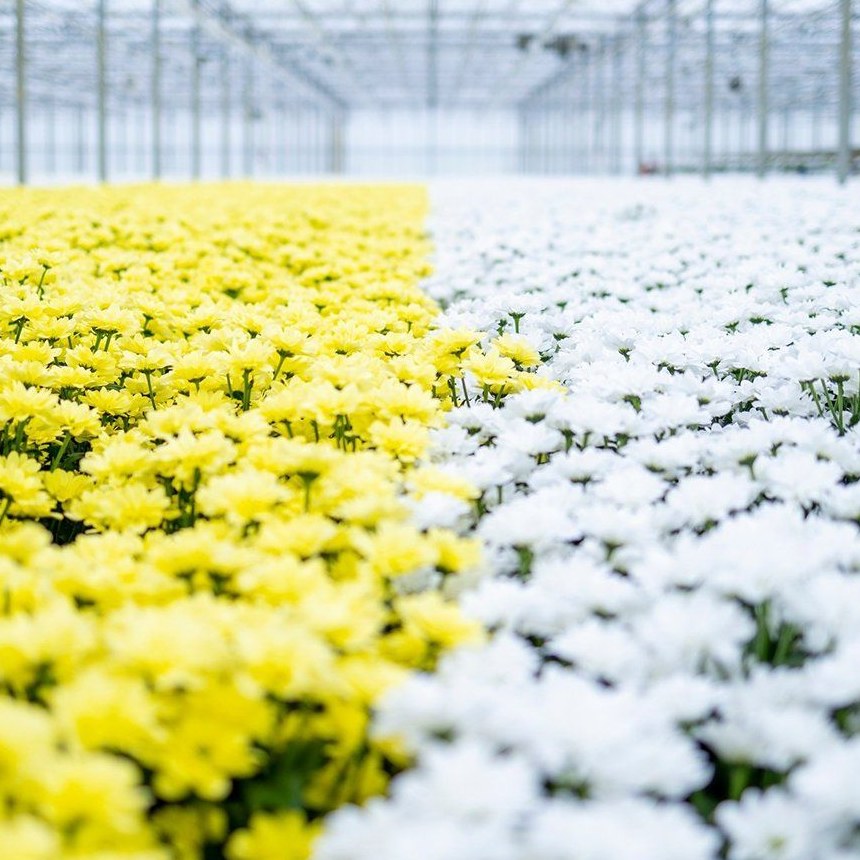
Houses of this type are used for cut flowers such as roses, chrysanthemums and lilies, for pot plants and flowering bedding, for foliage crops and for propagation where the night temperature decides when the next batch can be started. They suit growers who want the light a film house gives a flower crop while holding the temperature steadier than a single skin can manage.
Standards for the films and the galvanized coatings used in structures of this kind are published by ASTM International, whose test methods sit behind coated and galvanized steel specifications. Commodity and market reporting for growers, covering prices and production, is published by Agriwatch. The question that decides the specification is normally the crop the house will be running in ten years, not only at handover.
It keeps the inner surface of the cover warmer through the night, so the house holds a steadier temperature and water forms less readily above the blooms. On a crop sold on appearance, that combination of a steadier night and a drier canopy is worth more than the extra cost of the second sheet.
By running the ridge vent and the side openings together. The ridge vent releases the air collected at the top of the house, and the side opening exchanges the layer the canopy actually occupies, which is where the humidity sits. A controller is normally used at commercial scale so the vents close before the outside temperature falls.
The galvanized steel frame is rated for 15 to 20 years under normal growing conditions. The film cover runs on a shorter cycle than the frame, typically 3 to 5 years depending on UV exposure at the site.
We provide a 10 year structural warranty and a 5 year anti-corrosion warranty on the galvanized frame. Details are set out in the contract for each project.
Send your site dimensions, the crops you plan to grow and your local wind and snow loads. We reply with a layout drawing and a full quotation.