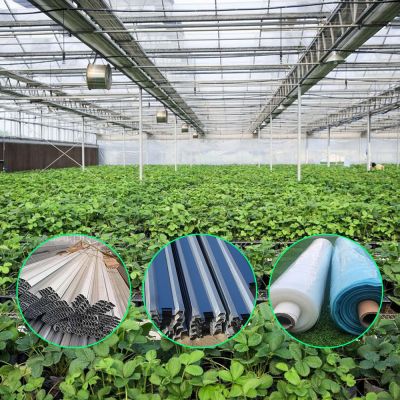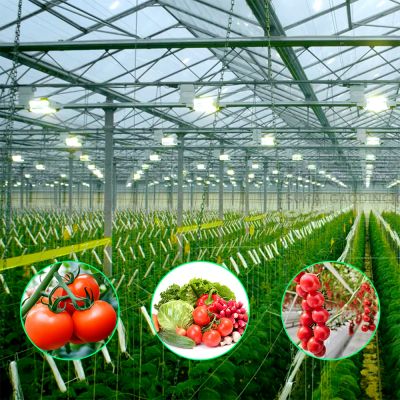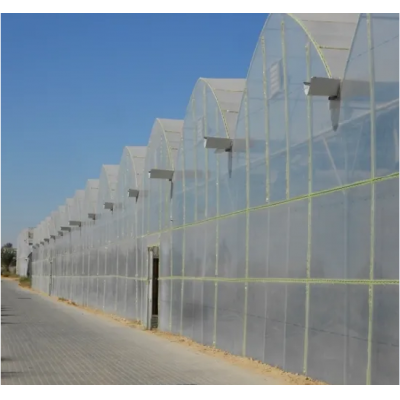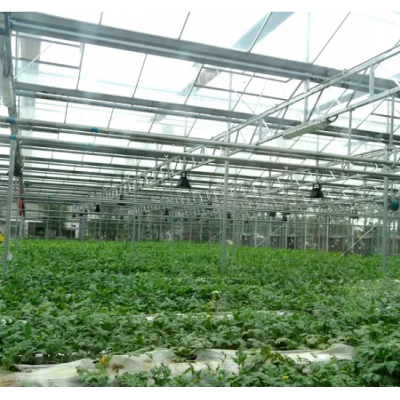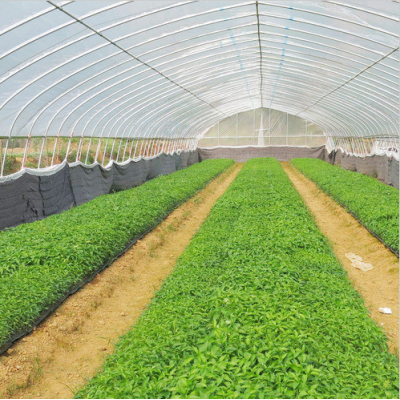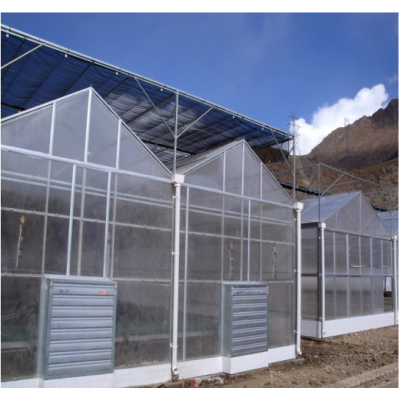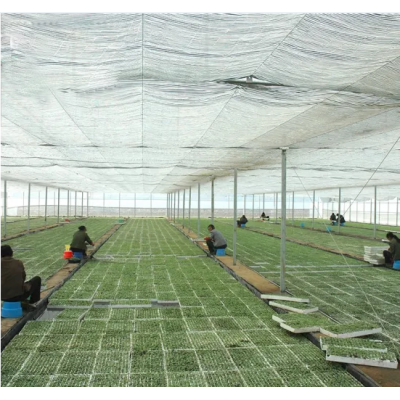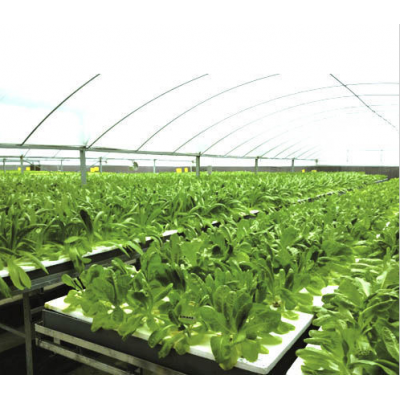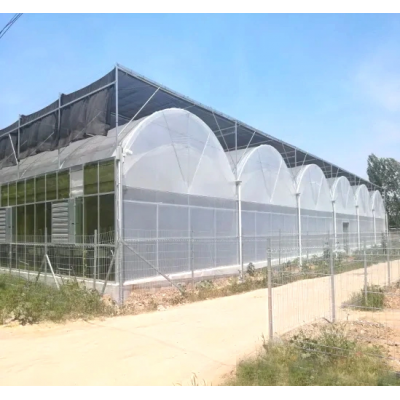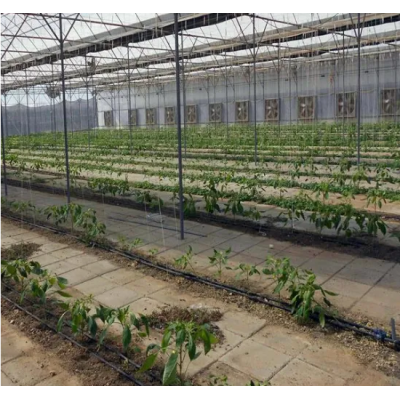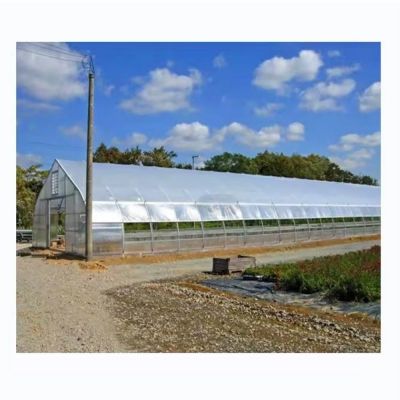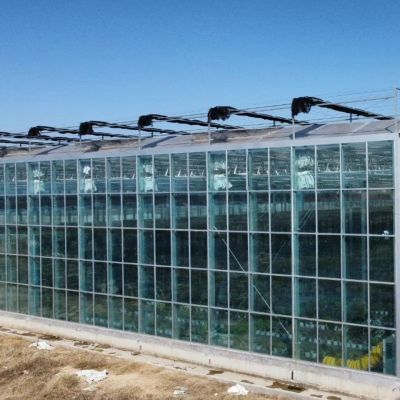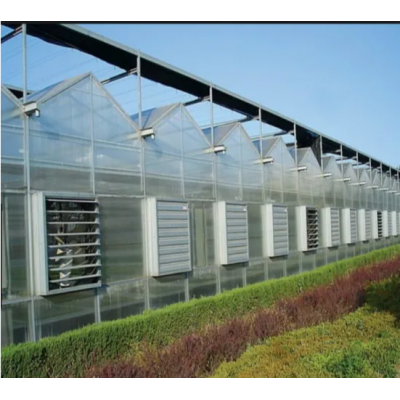
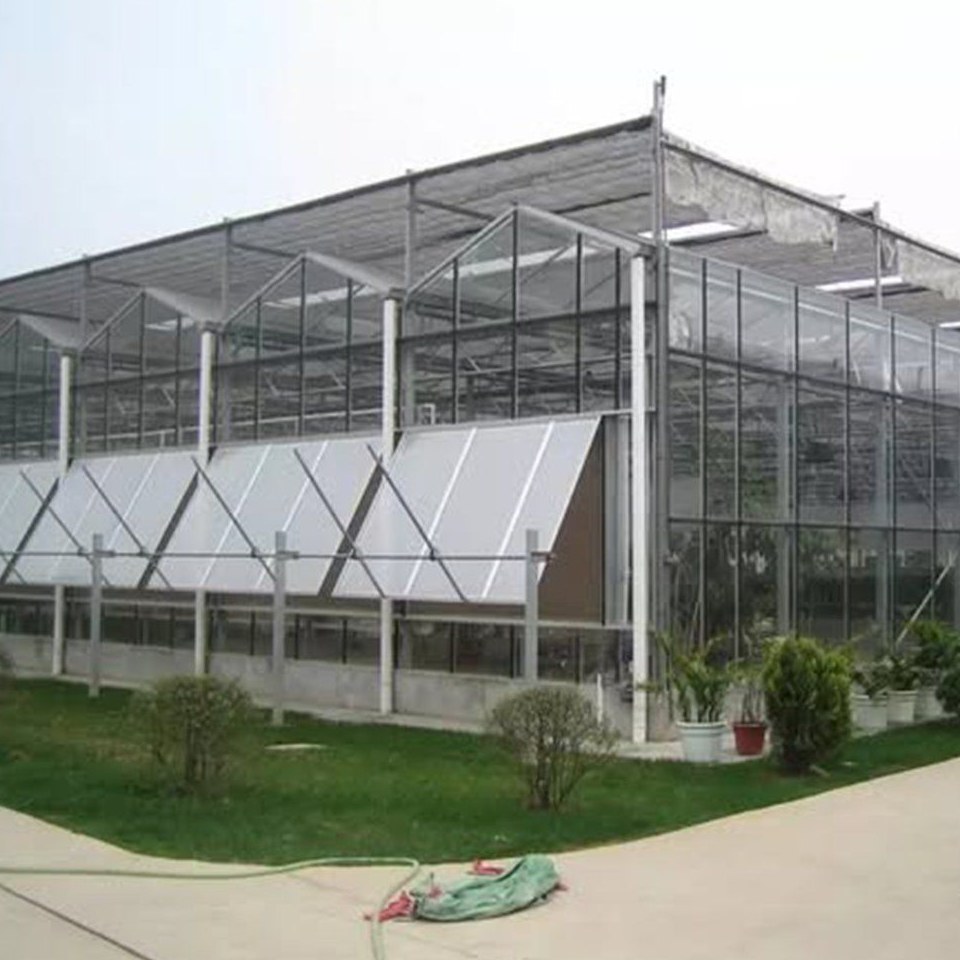
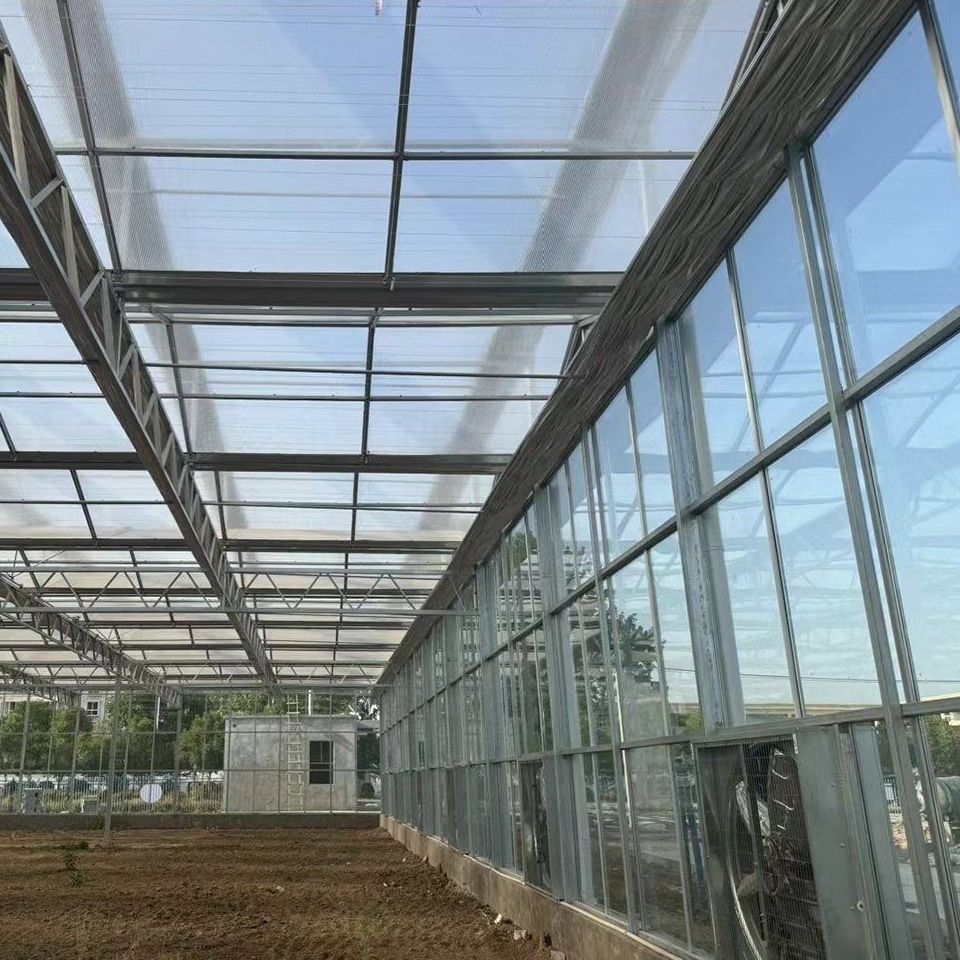
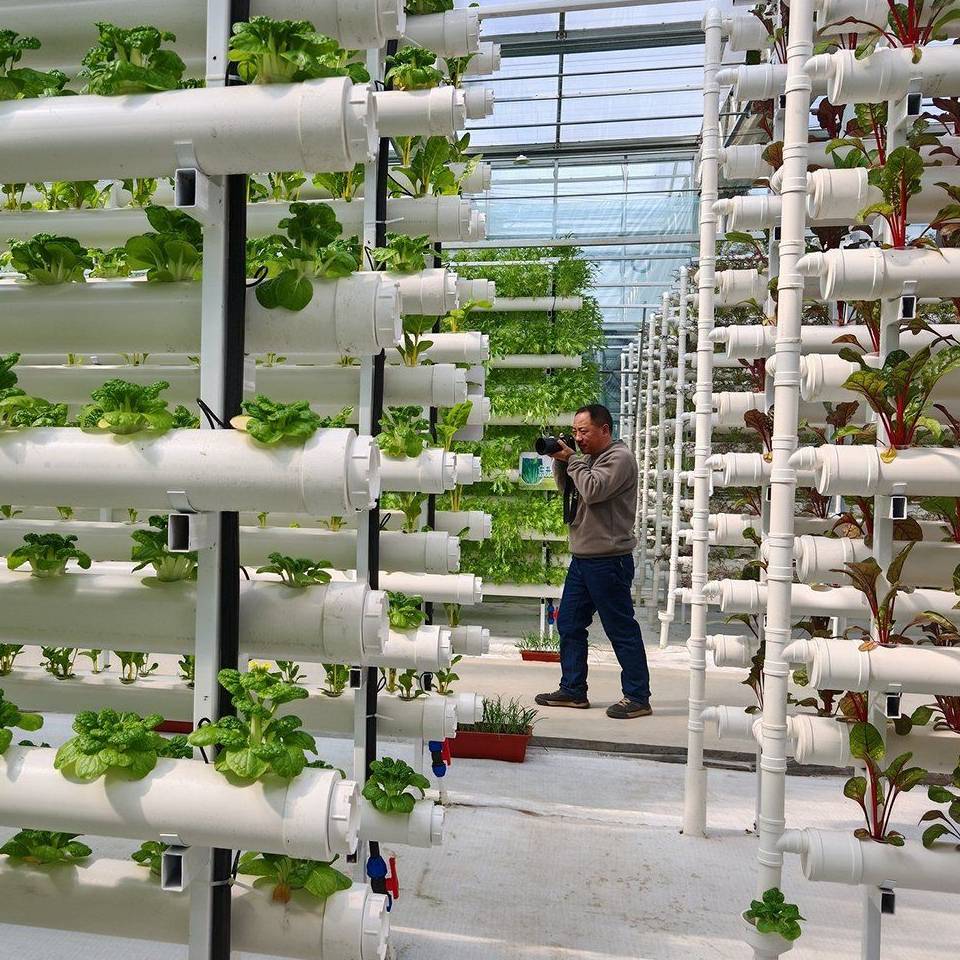
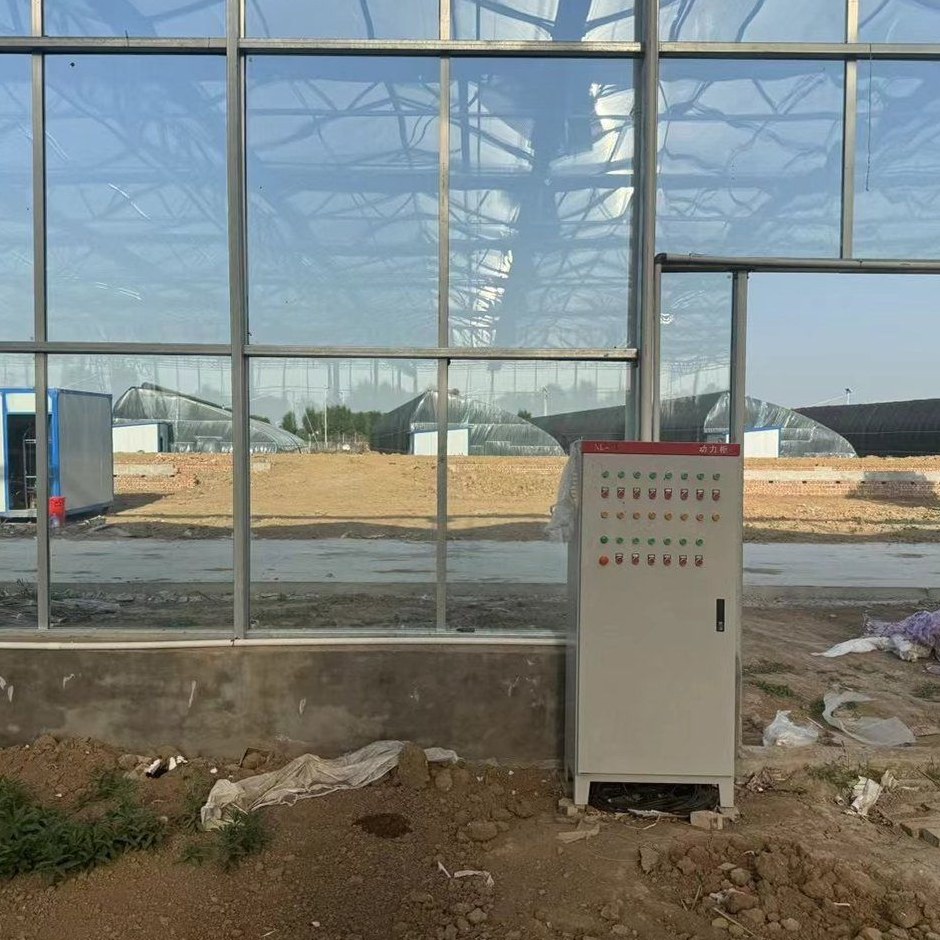
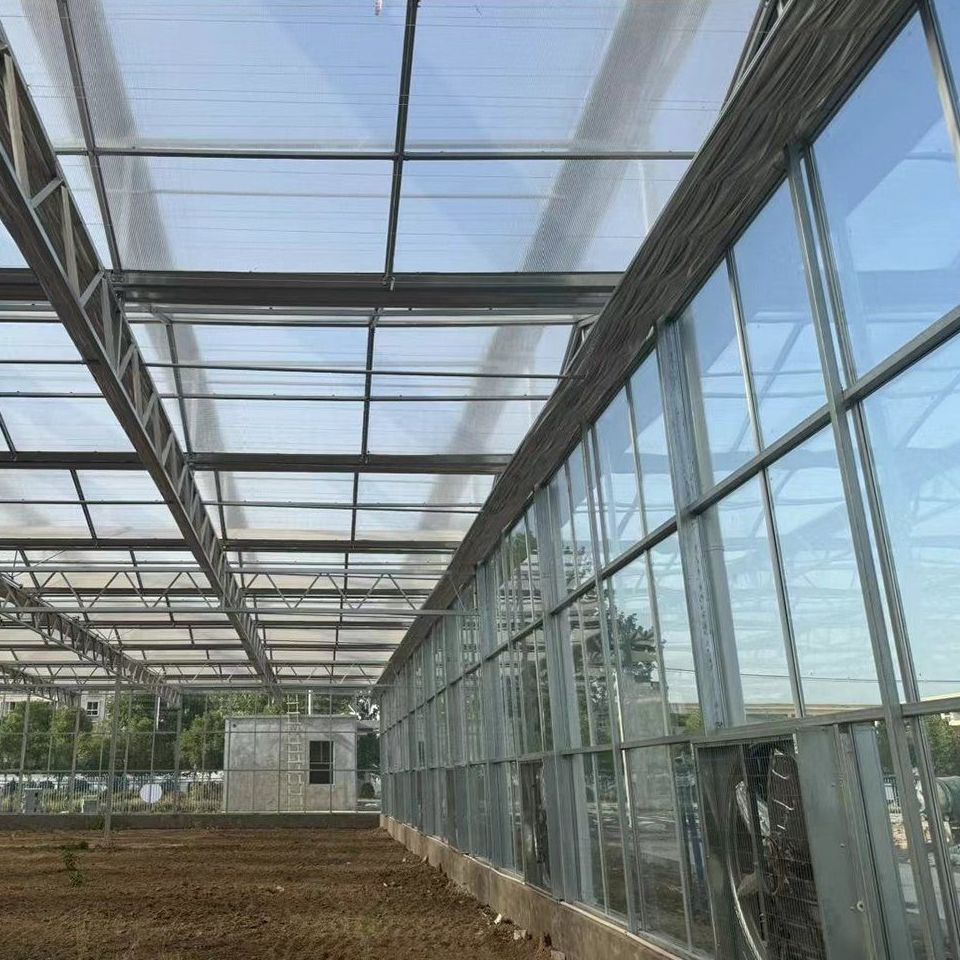
This twin wall polycarbonate greenhouse is built for crops that need a steadier night temperature than a single sheet can hold. The panels are twin wall, so the air trapped between the two skins slows heat loss through the roof and walls, and a hot dip galvanized steel frame carries them without the weight of glass. Spans run 8 m to 12 m, gutter height 3 m to 4.5 m and the house is built 10 m to 100 m long to suit the site. It suits berry growers, soft fruit producers and smart farming operations running benched or vertical crops.
Berries and soft fruit are sold on shelf life as much as on yield, and shelf life starts in the house. Fruit that ripens under a cover that swings in temperature loses firmness before it reaches the buyer, and fruit that stays wet loses it to mould. That is why berry growers reach for a panel cover rather than a film one: the sheet itself holds the night temperature steadier, and the house can be run drier without opening it so far that the climate moves.
Twin wall polycarbonate is a sheet with two skins and a cellular core, so the air trapped between the skins acts as the insulating layer. That structure is what makes a panel house hold its night temperature more steadily than a single sheet of film, and it is the reason a panel house needs less help from heating to keep a crop inside a target band. The panels are also rigid, so they do not flap against the frame in wind, and they resist impact that would tear a film cover.
Light still reaches the crop, and the diffusion through a panel cover spreads it more evenly than a clear sheet, which reduces scorch directly under the ridge. Panels are replaced one at a time rather than as a whole cover, so damage does not take the house out of production. The same sheet system in other spans is listed on the polycarbonate greenhouse range page on this site.
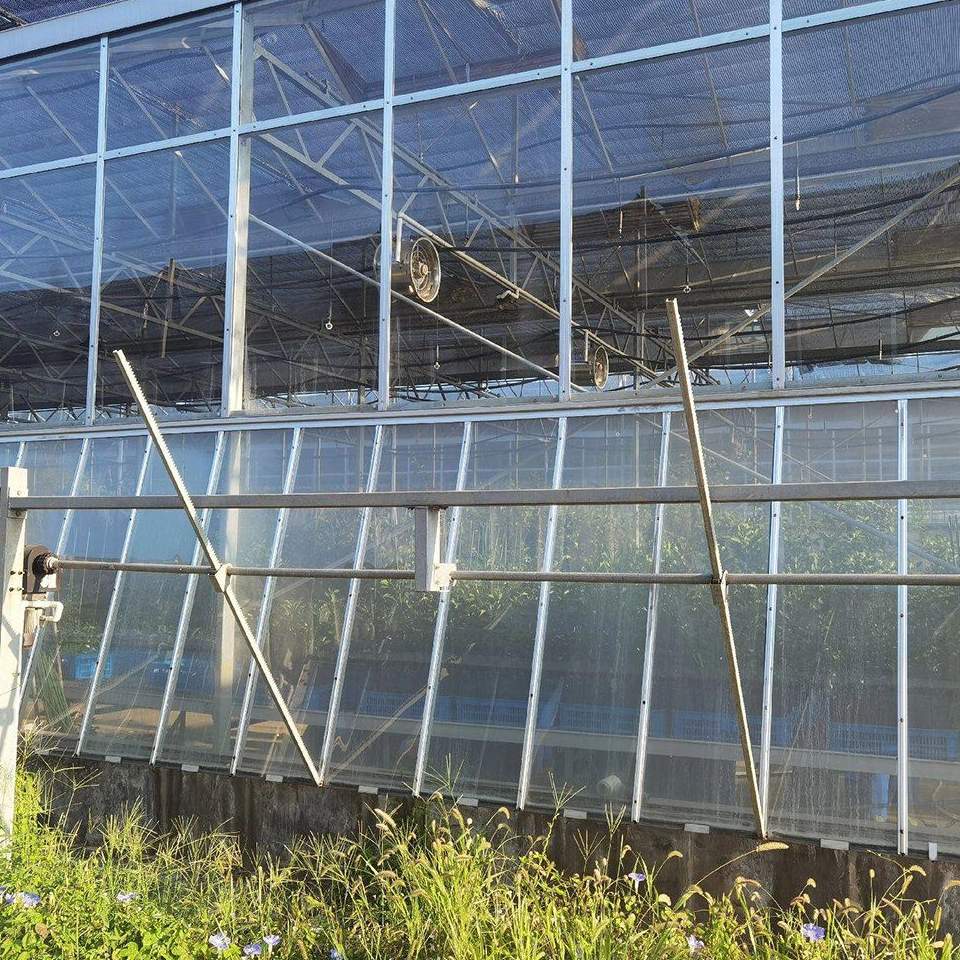
The frame is hot dip galvanized steel tube, formed into trusses and tied with purlins, with aluminium glazing bars holding the panels. Galvanizing is applied by hot dipping, so the zinc layer is bonded at cut ends and bolt holes as well as on the tube faces, which is what keeps a house standing through years of condensation running down the frame. Spans run from 8 m to 12 m with a gutter height of 3 m to 4.5 m, and the ridge reaches between 3 m and 8 m depending on the span.
Length is set from 10 m to 100 m by adding bays, so a range can be extended as a market is built rather than all at once. A different panel configuration on the same frame principle, aimed at buyers who want a lighter sheet they can install themselves, is described in the lightweight polycarbonate greenhouse with PC panels.
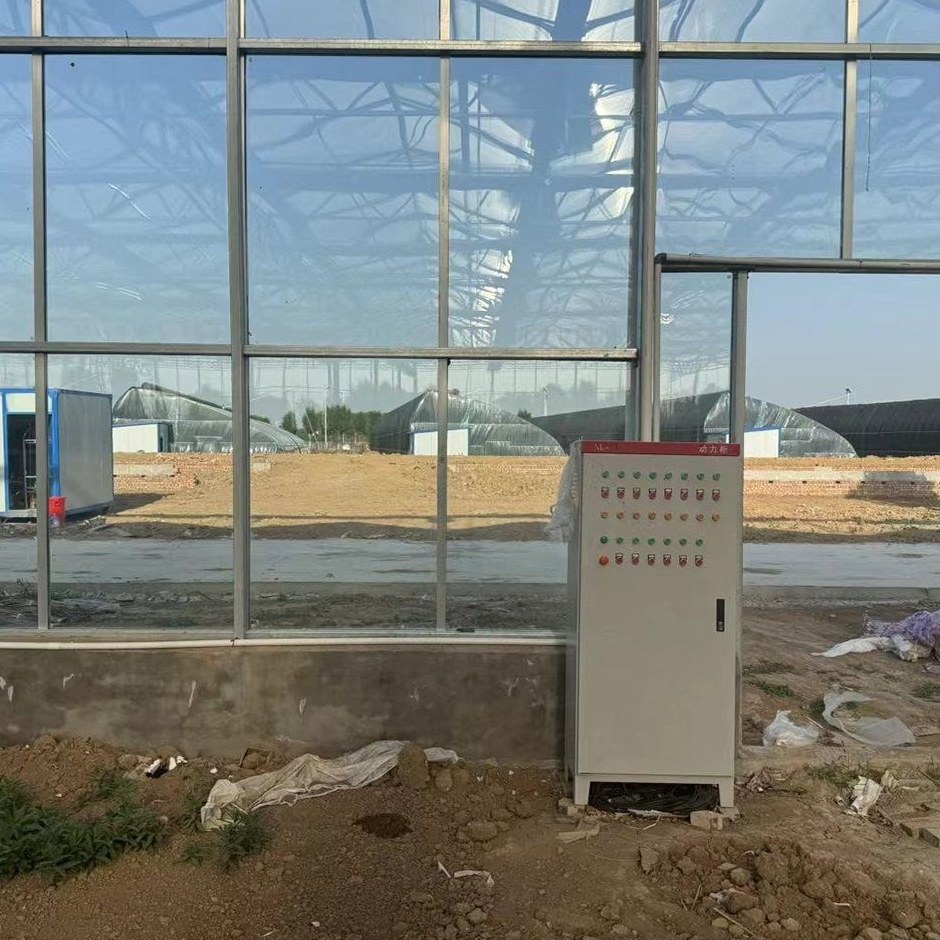
Smart farming in a greenhouse is mostly a control problem: holding the environment steady while the weather outside does the opposite. Vents, screens and, where fitted, circulation fans driven from sensors inside the house keep the crop inside its band through the day, and the insulated panel cover does the part that no controller can do, which is slow the rate at which the house loses what it has. The two work together.
For a berry crop the practical result is a longer picking window and firmer fruit at harvest, because the crop is not pushed through a temperature swing in the days before picking. Panel and frame dimensions in agricultural construction are commonly specified against published standards, and the body that maintains those documents in Germany is DIN, so a buyer can ask for a section to be tested against a named grade rather than described.
The table below lists the standard build. Span, length, panel and controls are set to the site and to the crop.
| Greenhouse span | 8 m / 9 m / 10 m / 11 m / 12 m |
| Greenhouse length | 10 m to 100 m, or built to client demand |
| Gutter height | 3 m to 4.5 m |
| Ridge height | 3 m to 8 m |
| Structure | Hot dip galvanized steel tube, aluminium glazing bars |
| Cover | Twin wall polycarbonate panels |
| Control | Vents, screens and fans on sensors |
| Crops | Berries, soft fruit, vegetables and young plants |
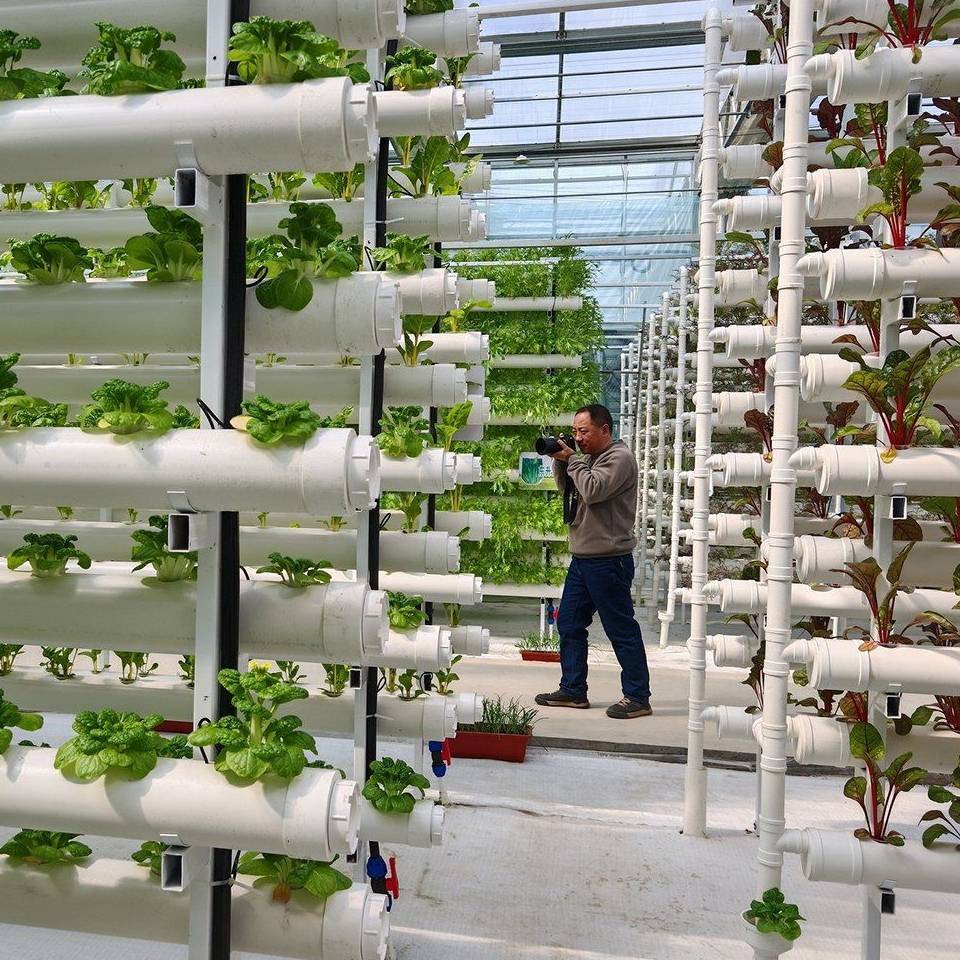
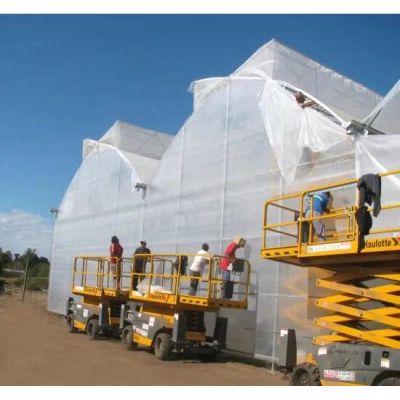
The house arrives as a bolted kit with frame, glazing bars and panels cut to the drawing. Work starts on a level pad, because the frame follows its foundation and a panel house shows any twist along its length. The frame goes up first and is squared, then the panels, and the vents and controls are commissioned last against a finished house. A house of this size is normally standing in three to five weeks on a prepared site.
Maintenance is lighter than on a film house because panels do not need replacing on a cycle. The routine jobs are checking panel fixings and seals after the first season, washing the panels once a year because dust cuts light transmission more than growers expect, and keeping gutters and downpipes clear. Panel and frame sections, and the standards they are specified against, are described alongside the shuttering guidance in the polycarbonate sheet greenhouse page.
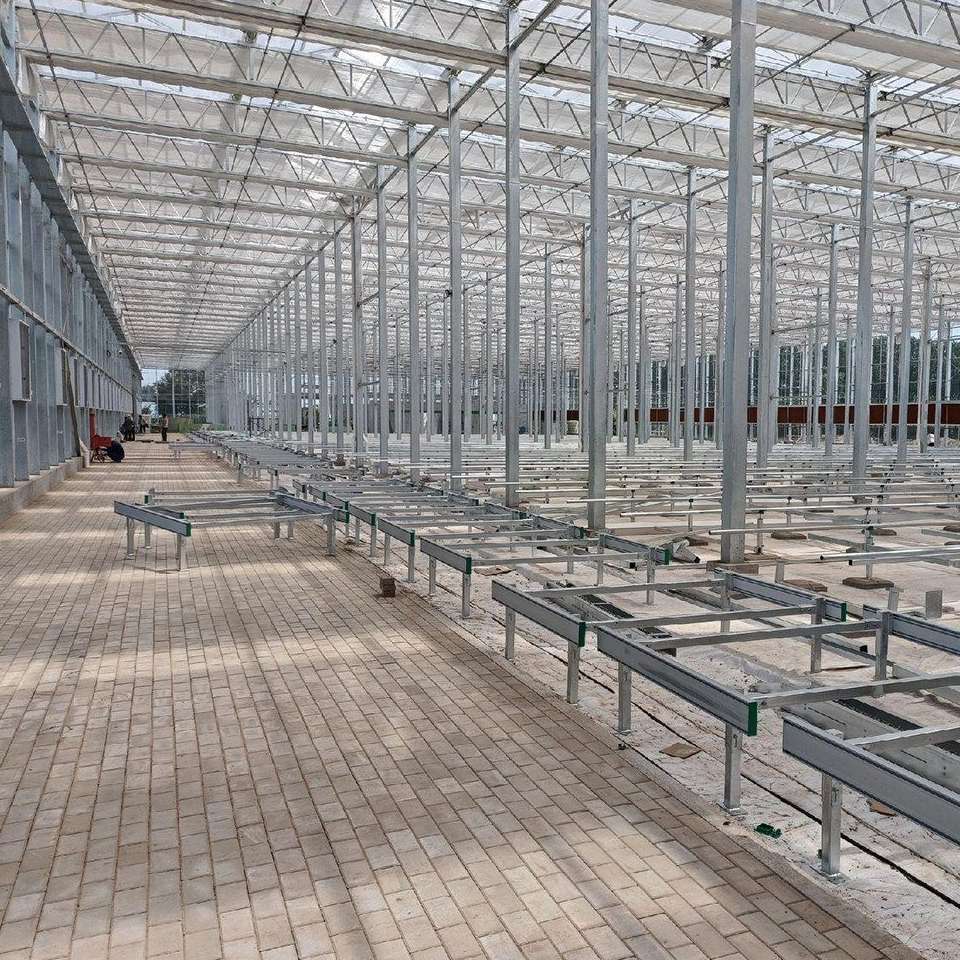
Houses of this type are used for berry and soft fruit production, for vegetables grown on a long season, for young plant raising and for benched or vertical crops where the night temperature matters more than the floor area. The common factor is a crop where shelf life or grading is worth more than the lowest build cost, which is where the insulated panel cover earns its place.
Growers planning protected production follow both the crop and the market, and regional agriculture coverage such as Krishijagran reports on how planting windows and prices move through the season. On the same site, a film house is often specified for the larger working area while the panel house carries the crop that has to be held at a steady temperature.
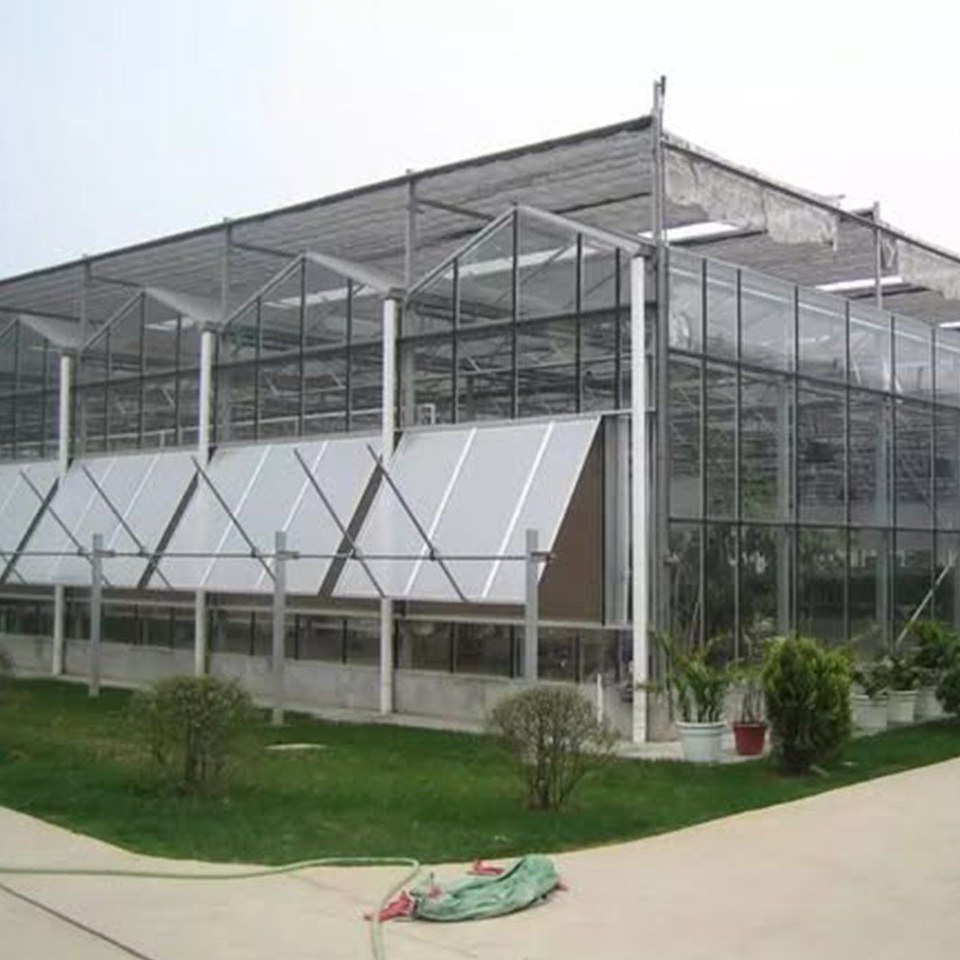
The panel has two skins with a cellular core between them, so the trapped air acts as an insulating layer. That is what lets a panel house hold its night temperature more steadily than a single sheet of film, and it reduces the amount of help the crop needs to stay in its band.
Yes. The insulated cover keeps the crop from swinging in temperature before picking, which protects fruit firmness, and the house can be run drier than a film tunnel of the same size, which reduces mould on the fruit and on the foliage.
The galvanized steel frame is rated for 15 to 20 years under normal growing conditions. Polycarbonate panels keep their light transmission for 20 years or more when they are cleaned and left undamaged.
We provide a 10 year structural warranty and a 5 year anti-corrosion warranty on the galvanized frame. Details are set out in the contract for each project.
Send your site dimensions, the crops and bench layout you plan to use and your local wind and snow loads. We reply with a layout drawing and a full quotation.