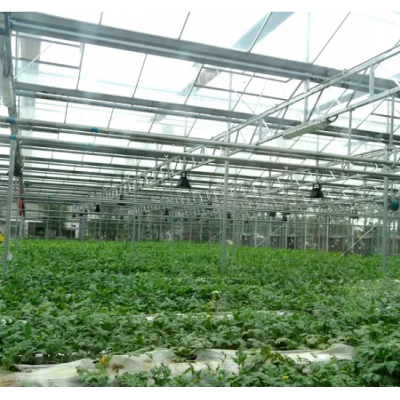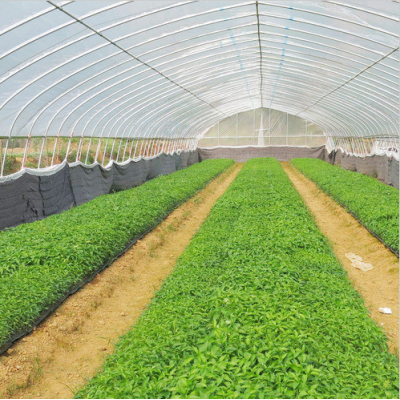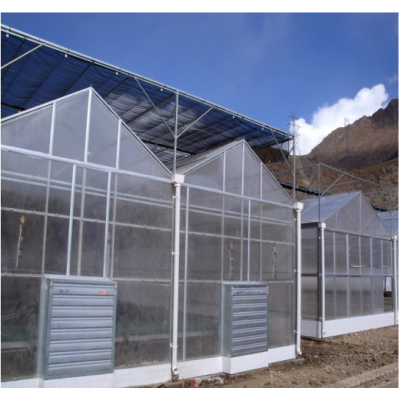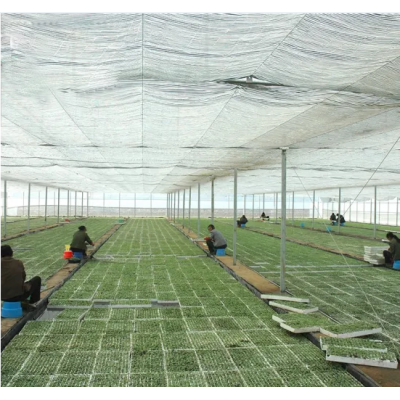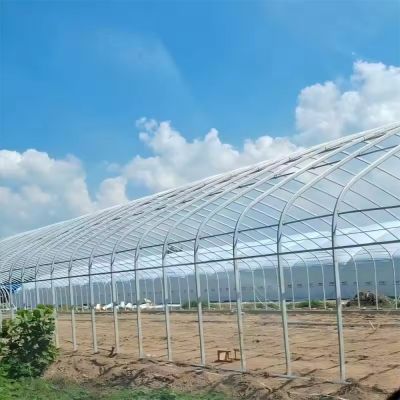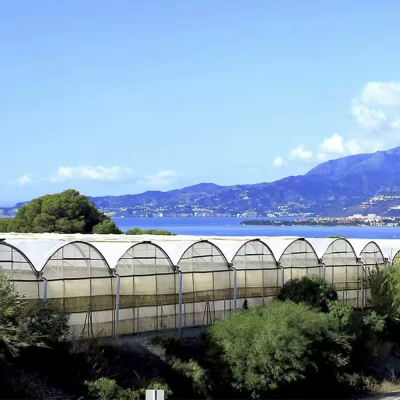
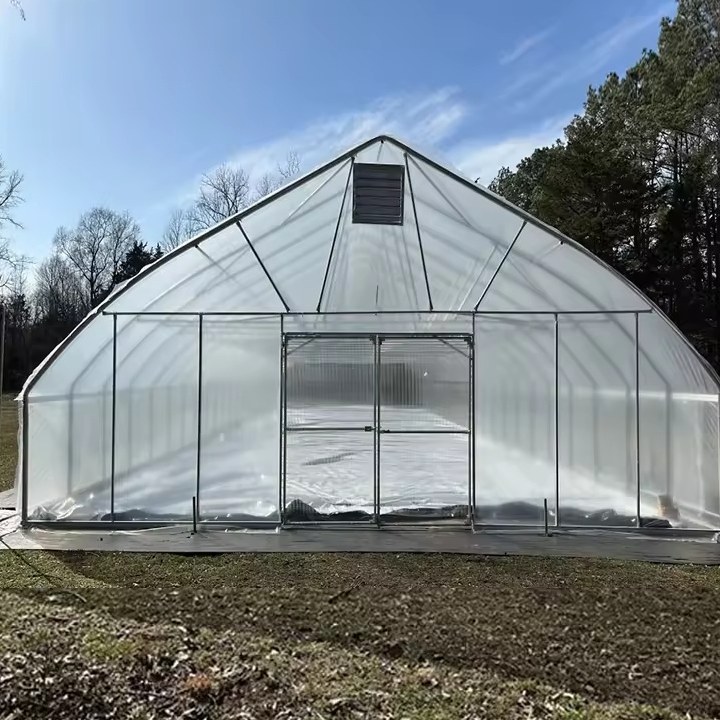
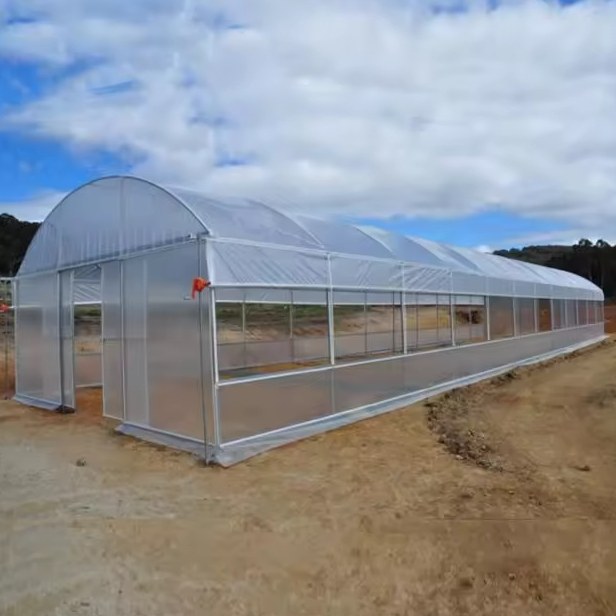
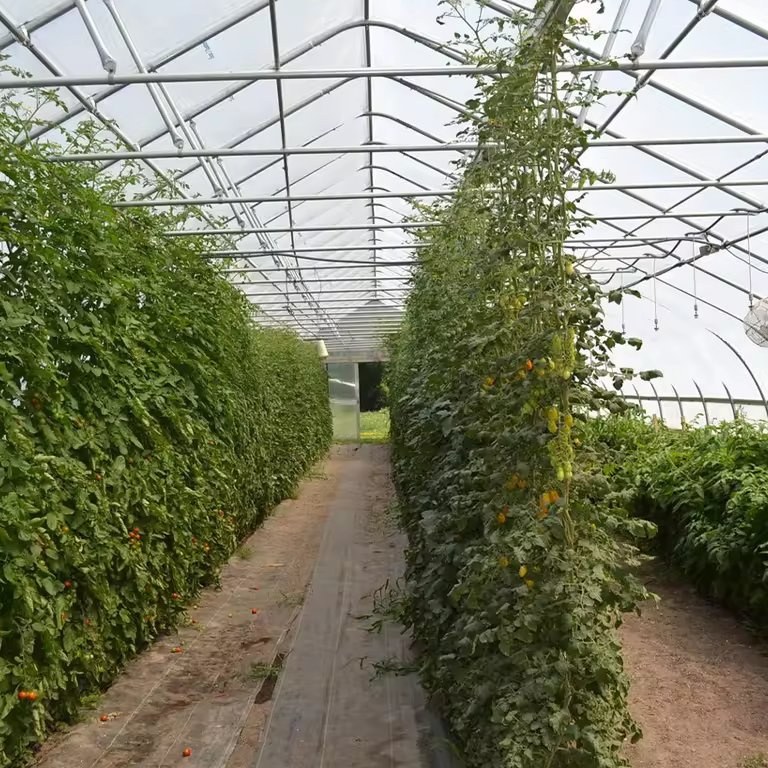
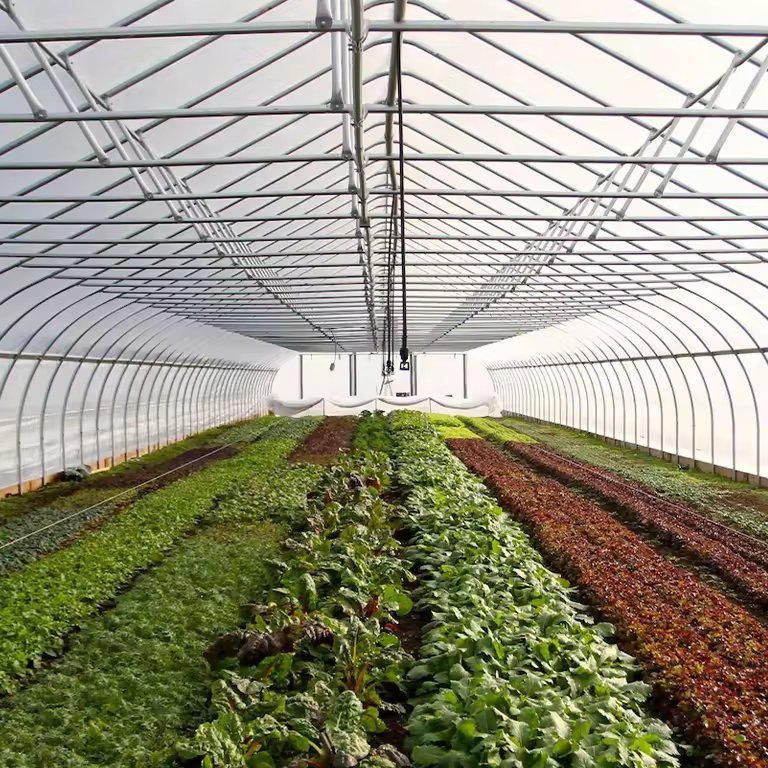
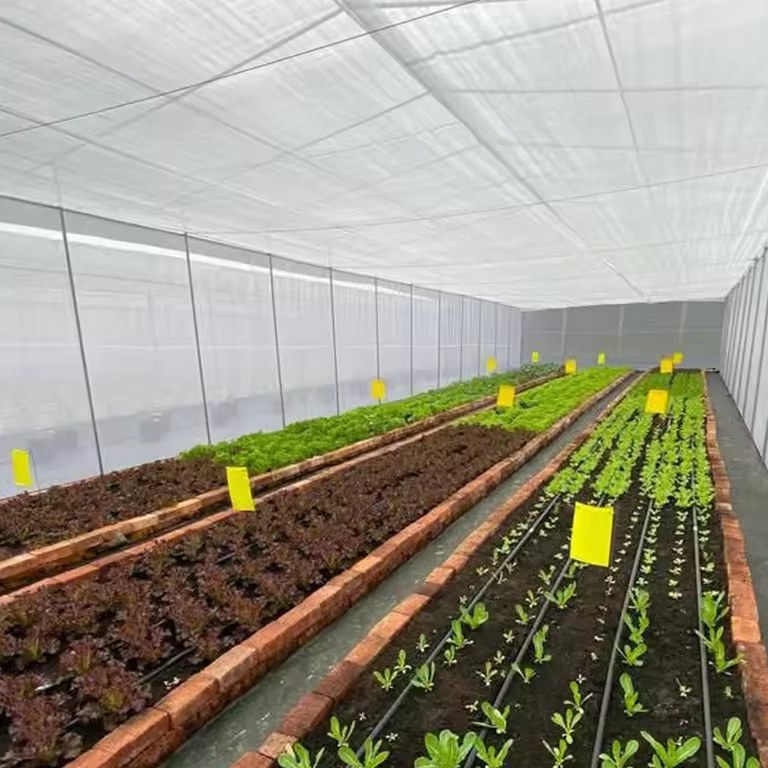
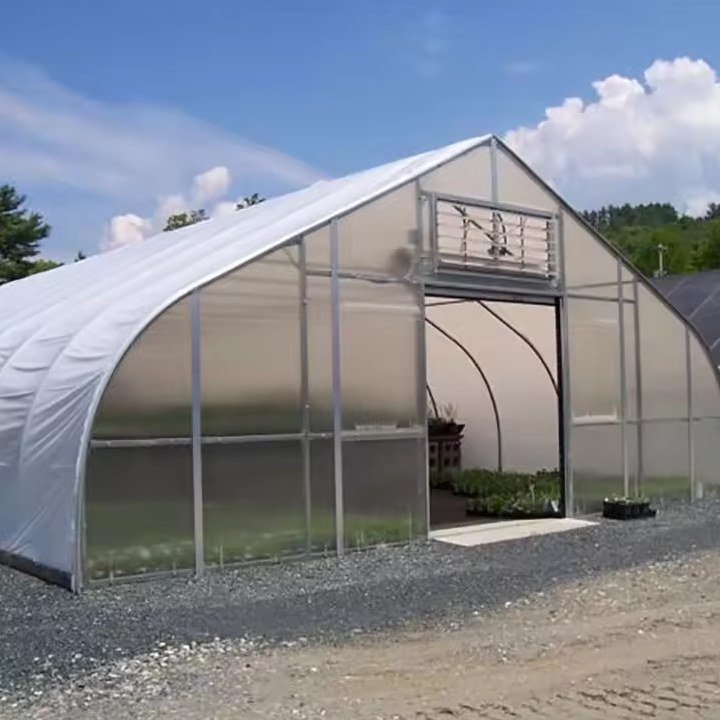
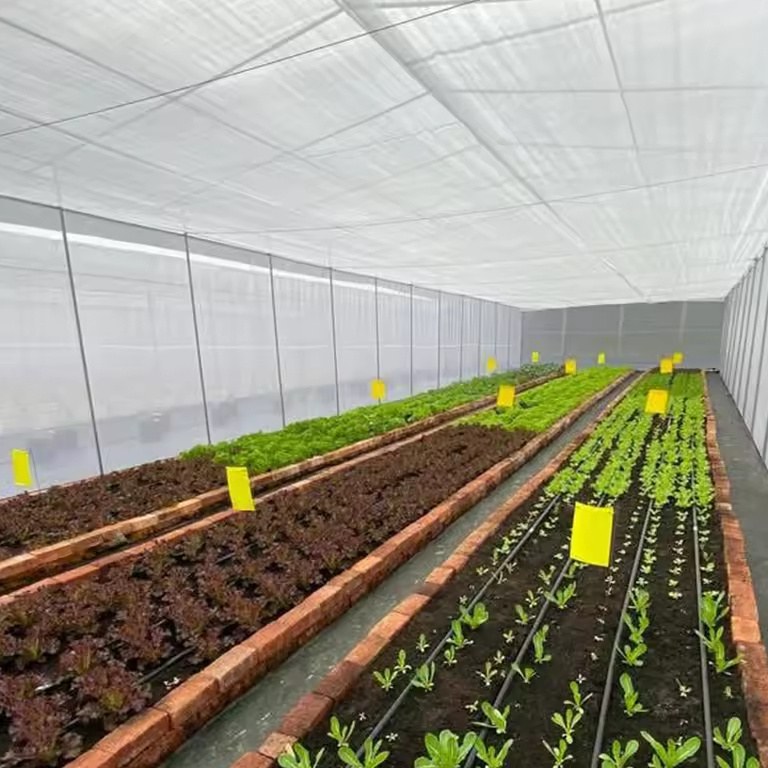
This square profile PE film tunnel greenhouse stands on near vertical side walls with an arched roof, so the working height is kept out at the walls where people and crops actually are. The frame is hot dip galvanized steel pipe, bolted rather than welded, and the cover can be PE or PO film from 120 to 200 micron, 6 mm or 8 mm PC board, or glass on the same frame. Width runs from 6 m to 10 m, length 10 m to 100 m, shoulder height 1.3 m or 2 m and roof height 3.3 m or 3.5 m, all to order. It suits tomato, vegetable, fruit and flower growing.
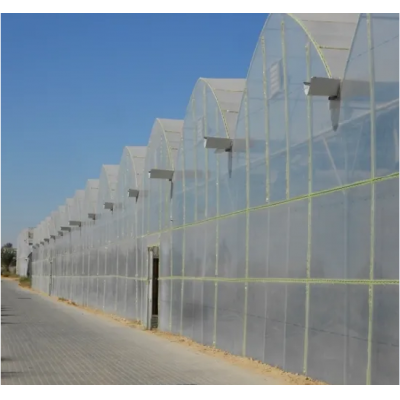
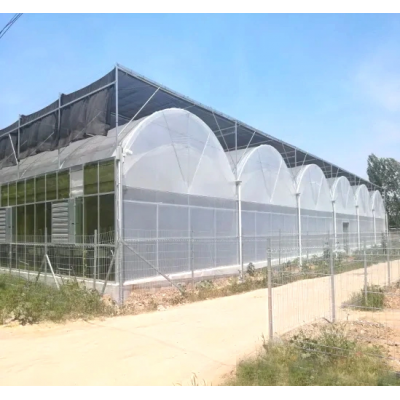
Most film tunnels lose their working height at the edges. The arch comes down towards the ground, so the plants at the walls are the ones a grower has to bend for, and the crop that would use the space most is the one that suffers. This square profile PE film tunnel greenhouse is shaped the other way round: near vertical side walls carry the height out to the edges, and the arched roof sits on top of them.
The house keeps a shoulder height of 1.3 m or 2 m before the roof begins, and a roof height of 3.3 m or 3.5 m at the ridge. In practice that means crops trained up the wall, side ventilation and insect netting all have room to work, and the volume of air under the cover is larger, which makes the temperature easier to hold through a hot afternoon. Width is usually 8 m, with 6 m, 7 m, 9 m and 10 m available on the same frame, and common houses run 30 x 8 m, 40 x 8 m, 50 x 8 m, 60 x 8 m and 100 x 8 m.
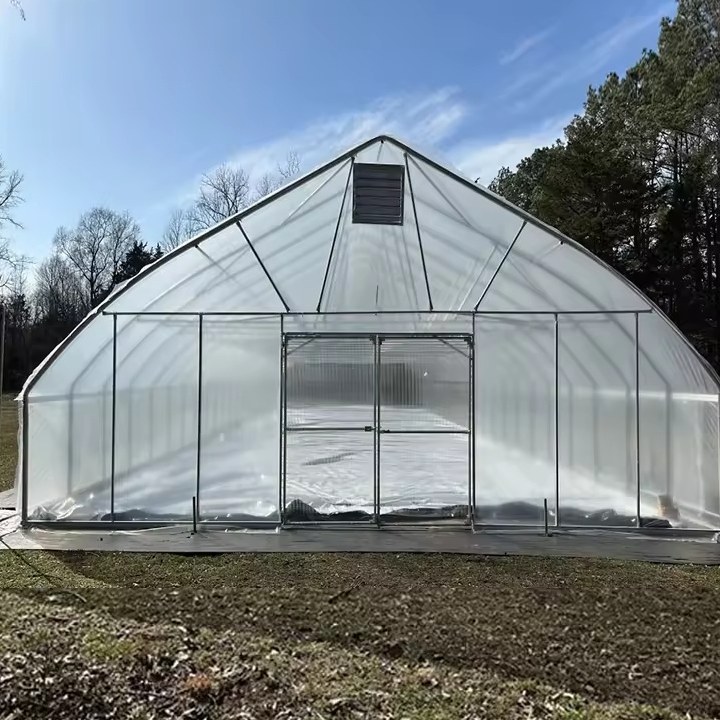
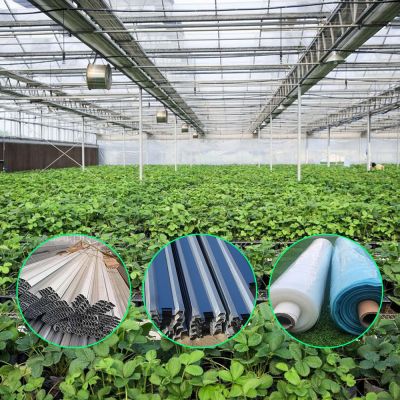
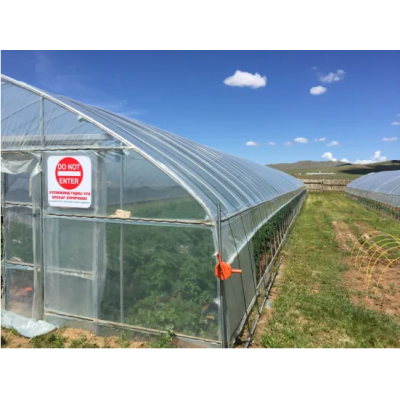
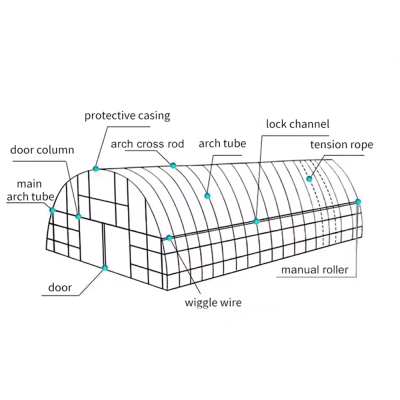
The frame is hot dip galvanized steel pipe, assembled by bolting rather than welding. That keeps the build simple on site, allows a house to be taken down and moved, and means the galvanized coating is never burnt away at a joint. The cover is not fixed by the frame either: the same structure takes PE film or PO film in 120, 150, 180 and 200 micron grades, 6 mm or 8 mm PC board, or glass, so the covering can be chosen against budget and climate rather than against the steelwork. Insect netting of 40 mesh is fitted at the vents and openings.
| Structure material | Hot dip galvanized steel pipe, bolted, no welding |
| Width | 8m standard, 6m / 7m / 9m / 10m optional, custom |
| Length | 10m to 100m, or to client demand |
| Shoulder height | 1.3m or 2m, custom |
| Roof height | 3.3m or 3.5m, custom |
| Common sizes | 30x8m, 40x8m, 50x8m, 60x8m, 100x8m |
| Film covering | PE or PO film, 120 / 150 / 180 / 200 micron |
| Rigid covering | PC board 6mm or 8mm, glass on request |
| Insect net | 40 mesh, custom mesh available |
| Service life | 15 to 20 years for the frame under normal growing conditions |
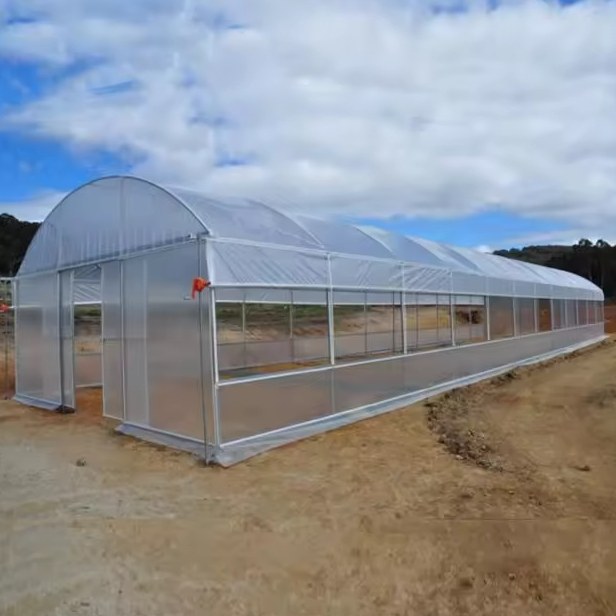
Ventilation on this house is built into the walls rather than the roof, which suits a film tunnel. Side openings let warm air leave high up and cooler air enter low down, and 40 mesh insect netting across the same openings keeps the crop protected without blocking that flow. The netting is also what makes the house work in regions where whitefly, thrips or aphid pressure is heavy, because it removes the need for a closed house with permanent chemical spraying. Industry guidance published by NGMA covers greenhouse ventilation and crop protection practice for commercial growers.
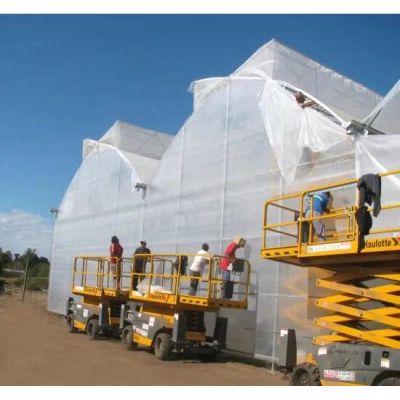
The frame ships as a knockdown kit of galvanized pipe, hoops, purlins and fittings, with the film in rolls. Work follows a set order: set the foundation, raise the hoops and tie the purlins, fit the netting at the openings, then tension the film over the frame. Our engineers can travel to site to guide installation when required.
Routine work is limited. Check film tension at the start of each season and look for any split at the fixings, clean the netting so airflow is not lost to dust, and inspect pipe joints and braces for movement after storm season. Film is the consumable part of the house and is replaced on a three to five year cycle without disturbing the frame.
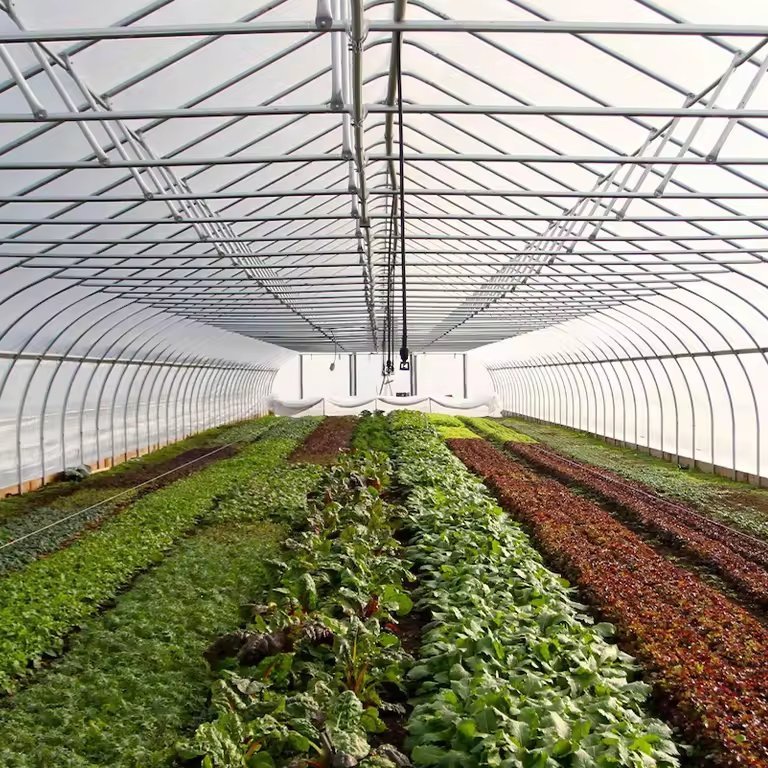
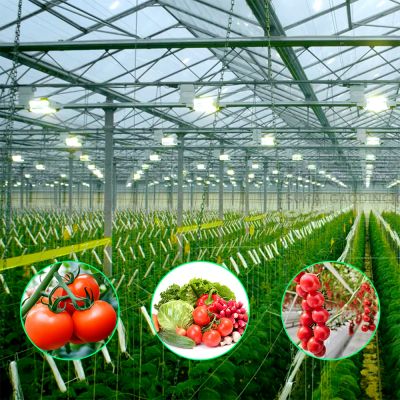
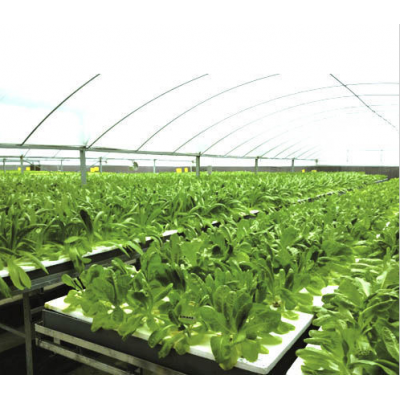
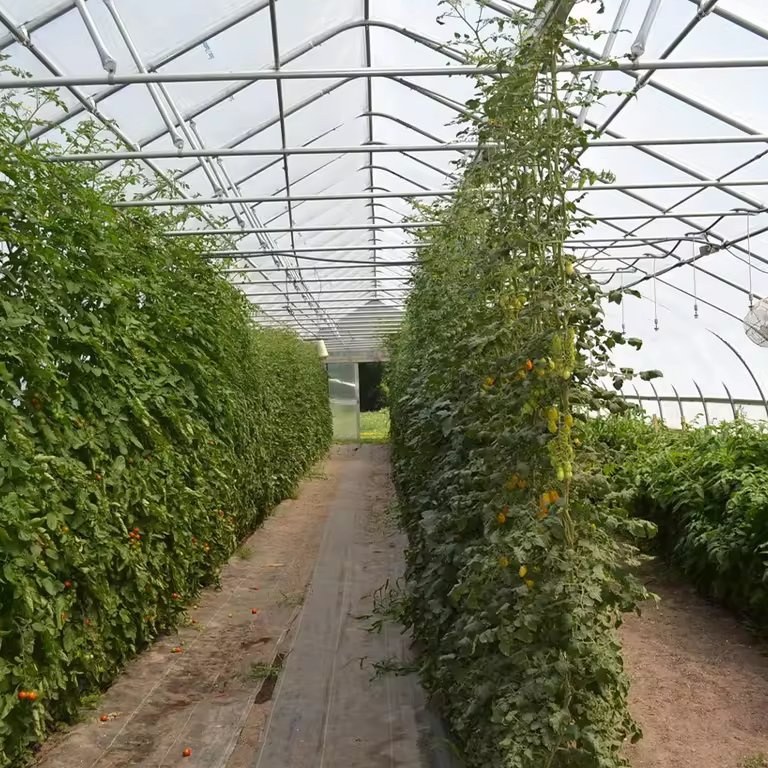
The house is used for tomato, vegetable, fruit and flower crops, and for seedling raising ahead of the field season. In commercial cucumber and tomato crops under this type of tunnel, yields above 10,000 kg per 1,000 sq m are achievable, which is what makes the covering cost easy to justify. Trade reporting on HortiDaily follows how growers plan protected production at this scale. Compare the film greenhouse range, or look at the greenhouse with plastic film and the plastic film greenhouse for other options on the same frame system.
It means the house keeps near vertical side walls up to a shoulder height of 1.3 m or 2 m before the arched roof starts. That gives full working height at the walls, more air volume, and room for side ventilation and netting.
The same frame takes PE or PO film in 120, 150, 180 or 200 micron, 6 mm or 8 mm PC board, or glass. Covering is chosen against climate and budget, and it can be changed later.
The hot dip galvanized steel frame is rated for 15 to 20 years under normal growing conditions. The film cover is replaced on a three to five year cycle.
We provide a 10 year structural warranty and a 5 year anti-corrosion warranty on the galvanized frame. Details are set out in the contract for each project.
Send your block dimensions, the crops you plan to grow, the covering you prefer and your local wind and snow loads. We reply with a layout drawing and a full quotation covering frame, film, netting, vents and irrigation.