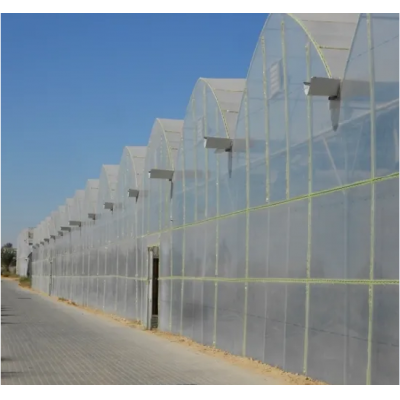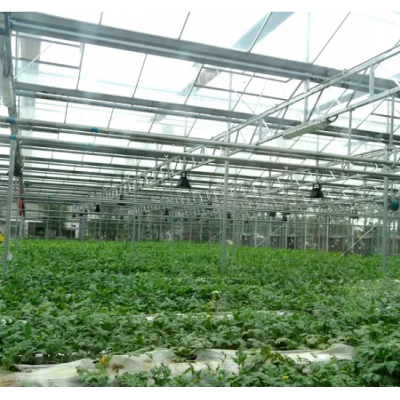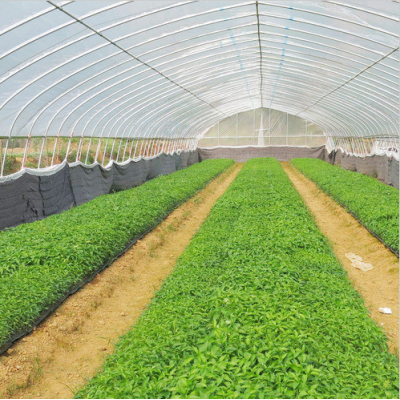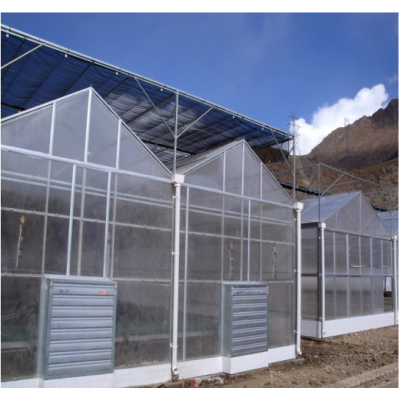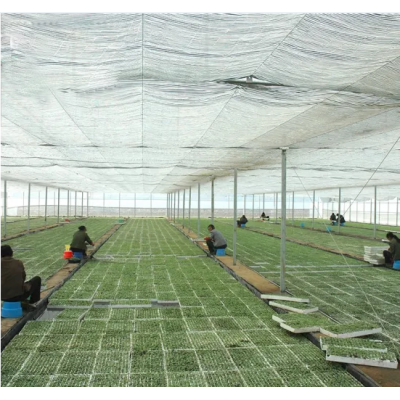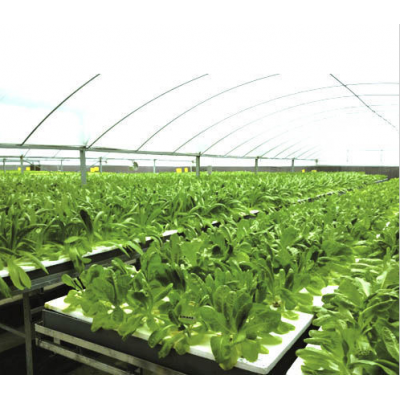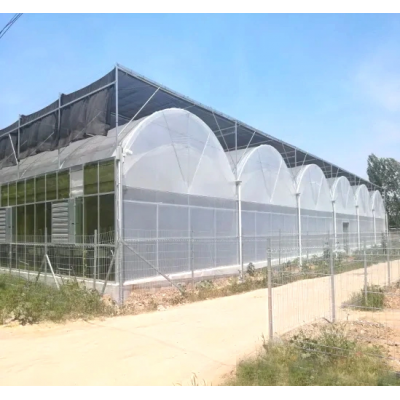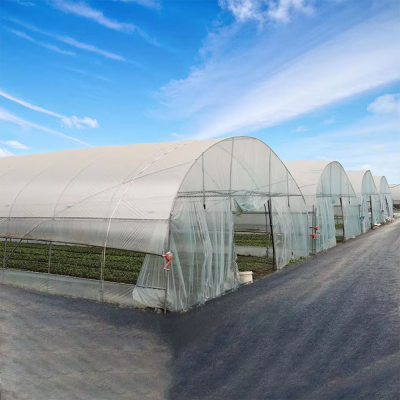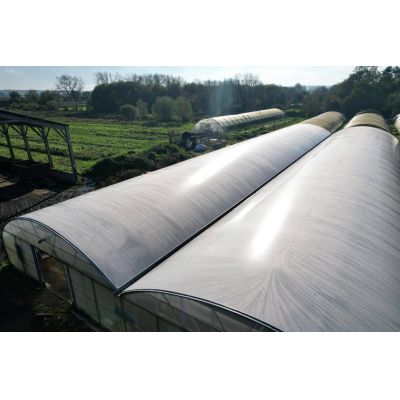
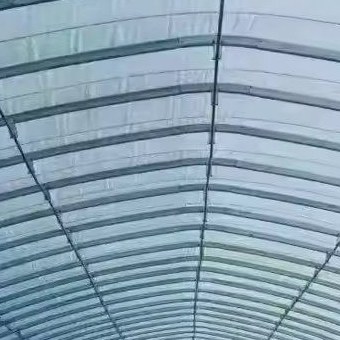
This solar powered PE film tunnel greenhouse uses solar power for the key functions of the house, which keeps running costs down and lets a site work away from a reliable grid connection. The frame is heavy duty hot dip galvanized steel with pipe diameters to order, sized to carry wind and snow load, and the film cover is available from 80 to 200 micron in PE or PO. Dimensions are made to the site. It suits vegetable, fruit and flower production where winters are hard and weather is the main risk.
In a hard winter, the weather is not a background risk for a grower, it is the main one. A house that buckles under snow or lifts in a gale takes the crop and the investment with it. This solar powered PE film tunnel greenhouse is built for those conditions: a heavy duty galvanized frame sized against wind and snow, and solar power carrying the house functions so the running cost does not follow the fuel price.
Solar power is used for the key functions of the house rather than for the crop itself, which is where it pays back fastest: circulation fans, vent and screen drives, irrigation valves and the controller can all run from a photovoltaic supply with battery storage. That means a site away from a reliable grid can still run an automated house, and a site with a grid connection cuts the part of the bill that grows every year. Ventilation and irrigation are the two largest daytime loads in a working tunnel, and both are a natural match for solar.
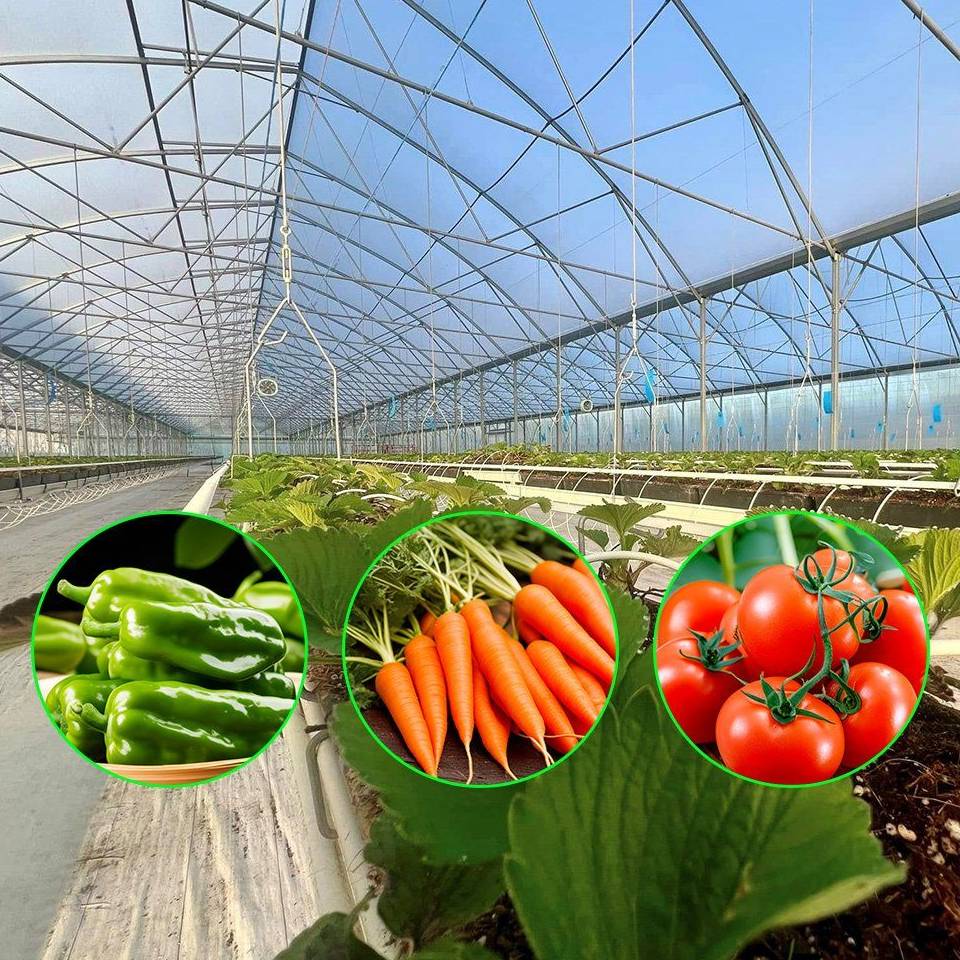
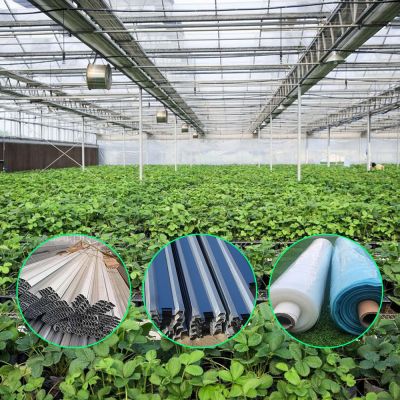
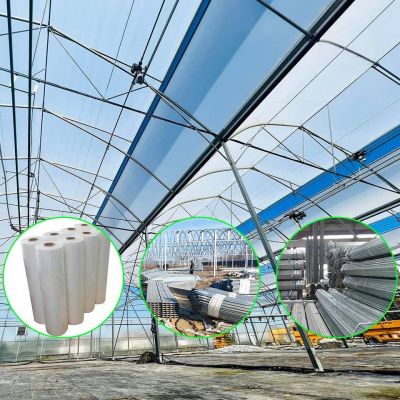
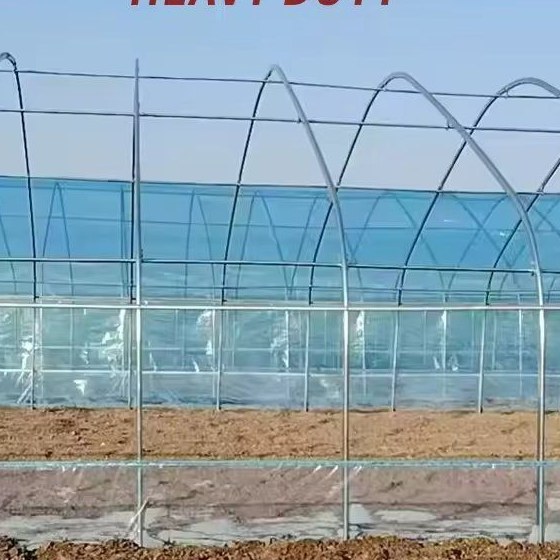
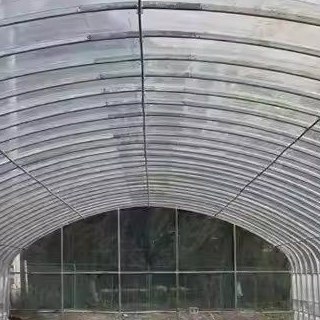
The frame is hot dip galvanized steel pipe, formed into arches and tied by purlins and cross braces, with pipe diameters selected to the load the site actually carries rather than a standard gauge applied everywhere. Galvanizing before fabrication is what keeps the structure sound through humid air and condensation, and it is why the frame is rated for a 15 to 20 year service life. Where snow sits on a film house the difference between a standard and a heavy duty frame is not cosmetic: it is the difference between a house that holds through the winter and one that has to be rebuilt in spring.
| Structure material | Hot dip galvanized steel pipe, heavy duty, diameter to order |
| Covering material | PE or PO film, 80 to 200 micron |
| Roof shape | Arch roof, tunnel |
| Dimensions | Made to the site requirement |
| Weather resistance | Sized for local wind and snow load |
| Power | Solar supply for fans, vent and screen drives, irrigation and control |
| Service life | 15 to 20 years for the frame under normal growing conditions |
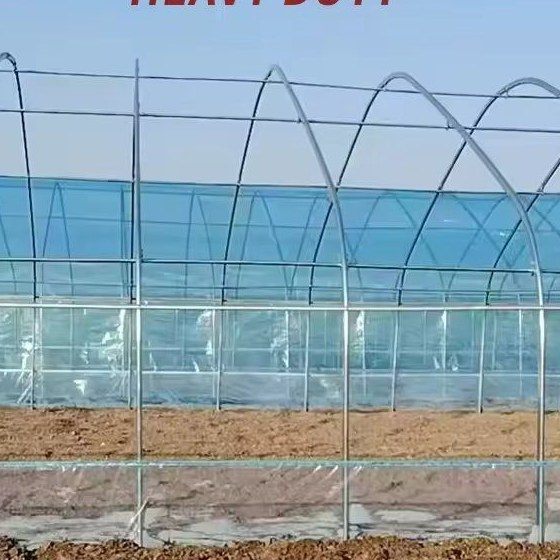
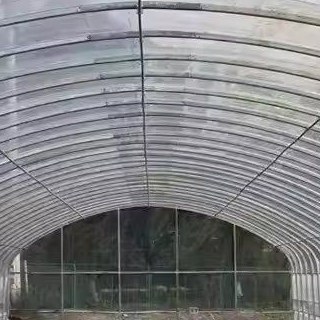
The cover is available from 80 to 200 micron, in PE or PO, with anti-drip and UV stabilising treatment. Thickness and width are chosen against the house: a wider bay is spanned in one piece to remove a seam at the ridge, and a thicker sheet is used where the cover has to hold through heavy snow and strong sun. Film is the consumable part of the house and is replaced on a three to five year cycle without disturbing the frame.
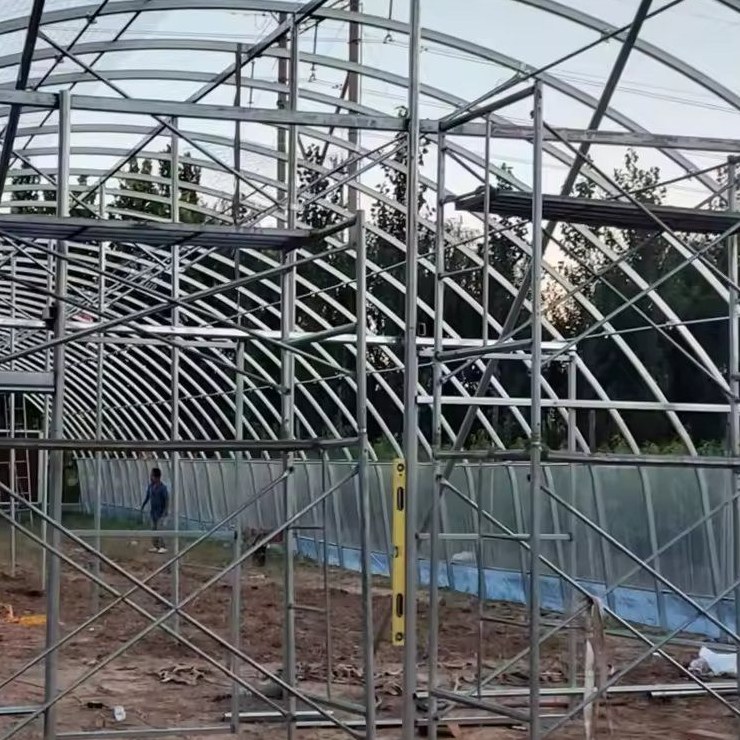
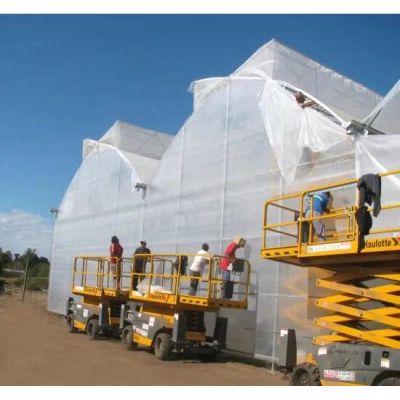
The house ships as a knockdown kit of galvanized arches, purlins, fittings and film rolls. Work follows a fixed order: set the foundation, raise the arches and tie the purlins, then tension the film and fit the vents, doors and control equipment. Where the frame is specified against a snow load, the foundation detail matters as much as the steel, so the drawings are issued against the site survey. Our engineers can travel to site to guide installation when required.
Routine work is limited. Check film tension before the snow season so the cover cannot pond, clear snow off the roof after heavy falls, service vent motors and the solar supply, and inspect pipe joints and braces for movement after storm season. Standards from BSI cover the structural requirements a snow and wind specification should be checked against.
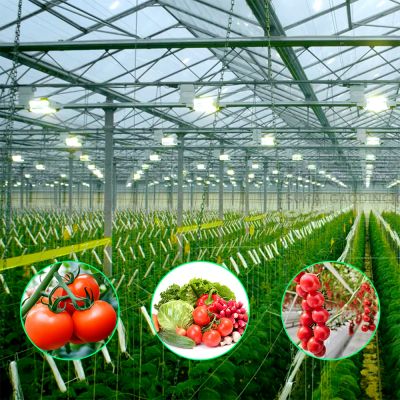
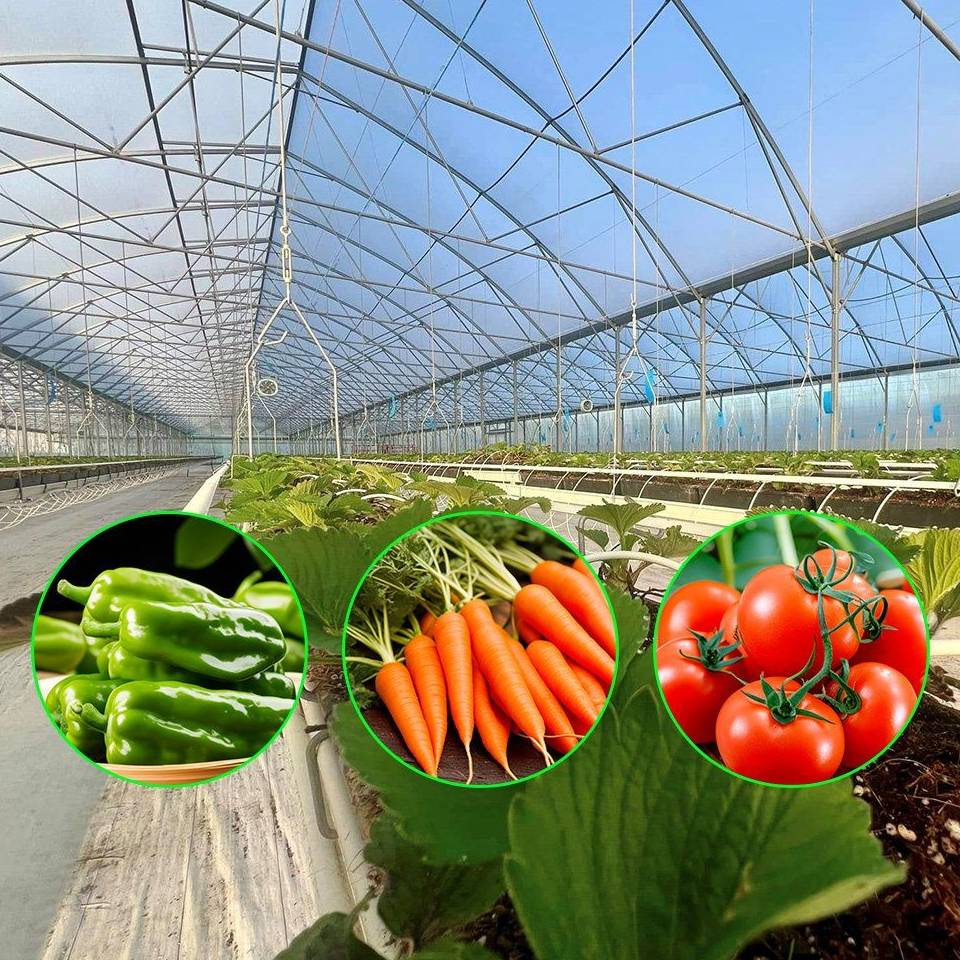
The house suits vegetable, fruit and flower production, and it is at its most useful where winters are hard and the site is off the main grid. Market reporting on FloralDaily follows how protected production is planned commercially. Compare the tunnel greenhouse range, or look at the film greenhouse and the polyethylene film greenhouse for other options on the same frame system.
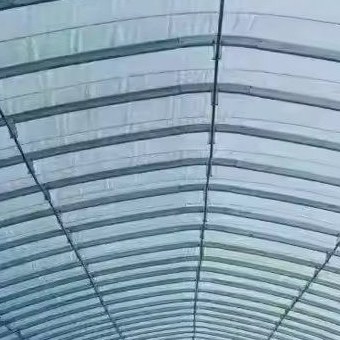
They supply the house functions: circulation fans, vent and screen drives, irrigation valves and the controller. Those are the largest daytime loads in a working tunnel and the easiest to run from a photovoltaic supply with battery storage.
Pipe diameters and bracing are selected against the load the site actually carries, and the foundation detail is issued with the drawings. A heavy duty frame is specified where snow settles on the house for long periods.
The hot dip galvanized steel frame is rated for 15 to 20 years under normal growing conditions. The film cover is replaced on a three to five year cycle.
We provide a 10 year structural warranty and a 5 year anti-corrosion warranty on the galvanized frame. Details are set out in the contract for each project.
Send your site dimensions, your local wind and snow loads, the crops you plan to grow and whether you need off-grid power. We reply with a layout drawing and a full quotation covering frame, film, vents, doors and control.