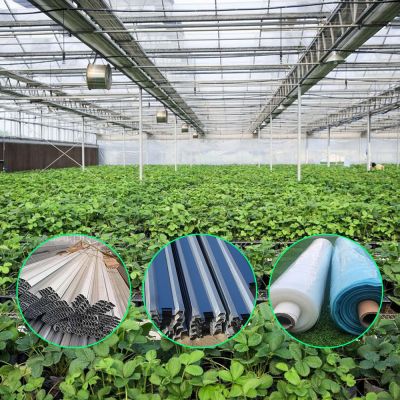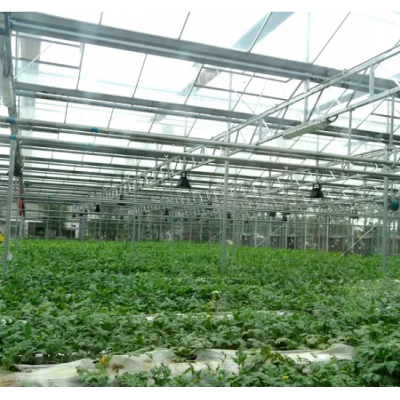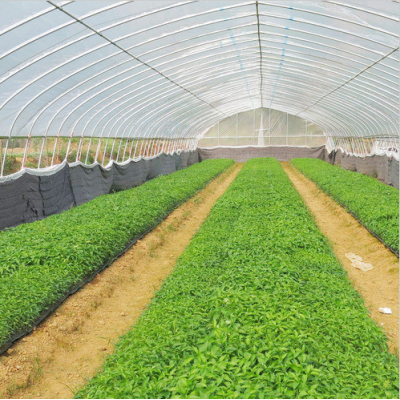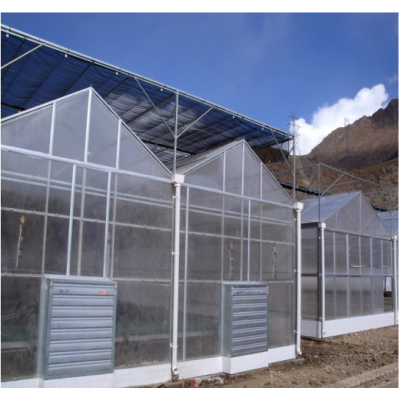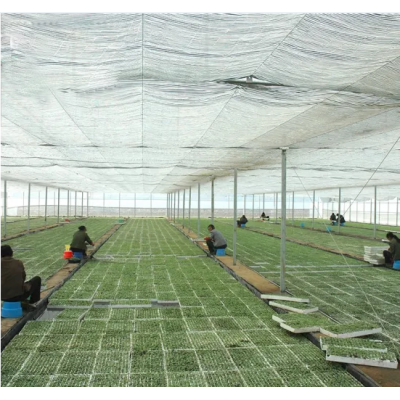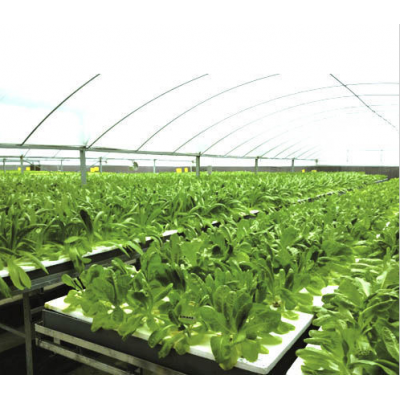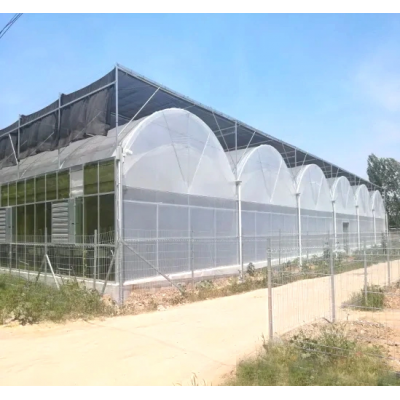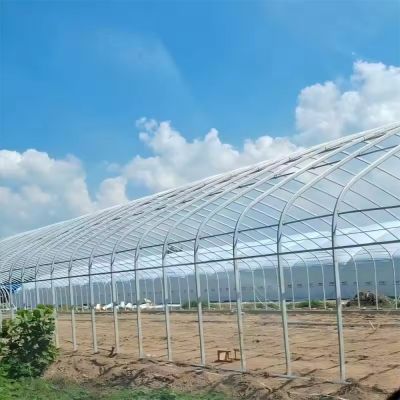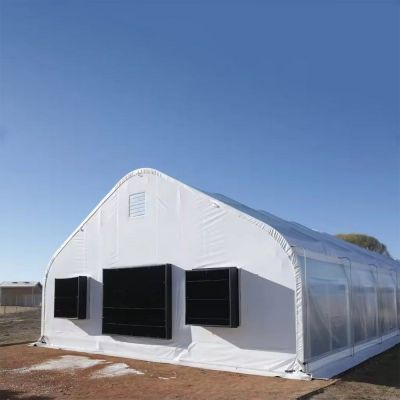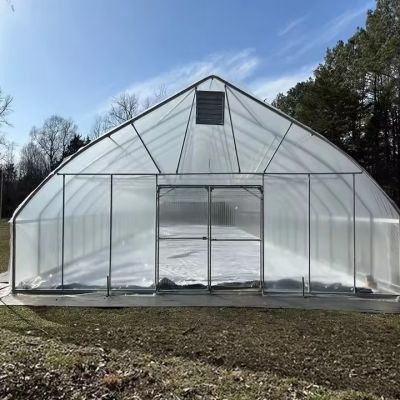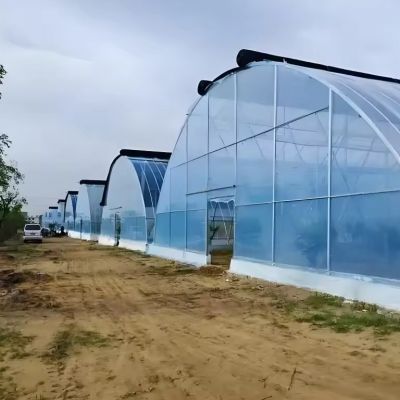
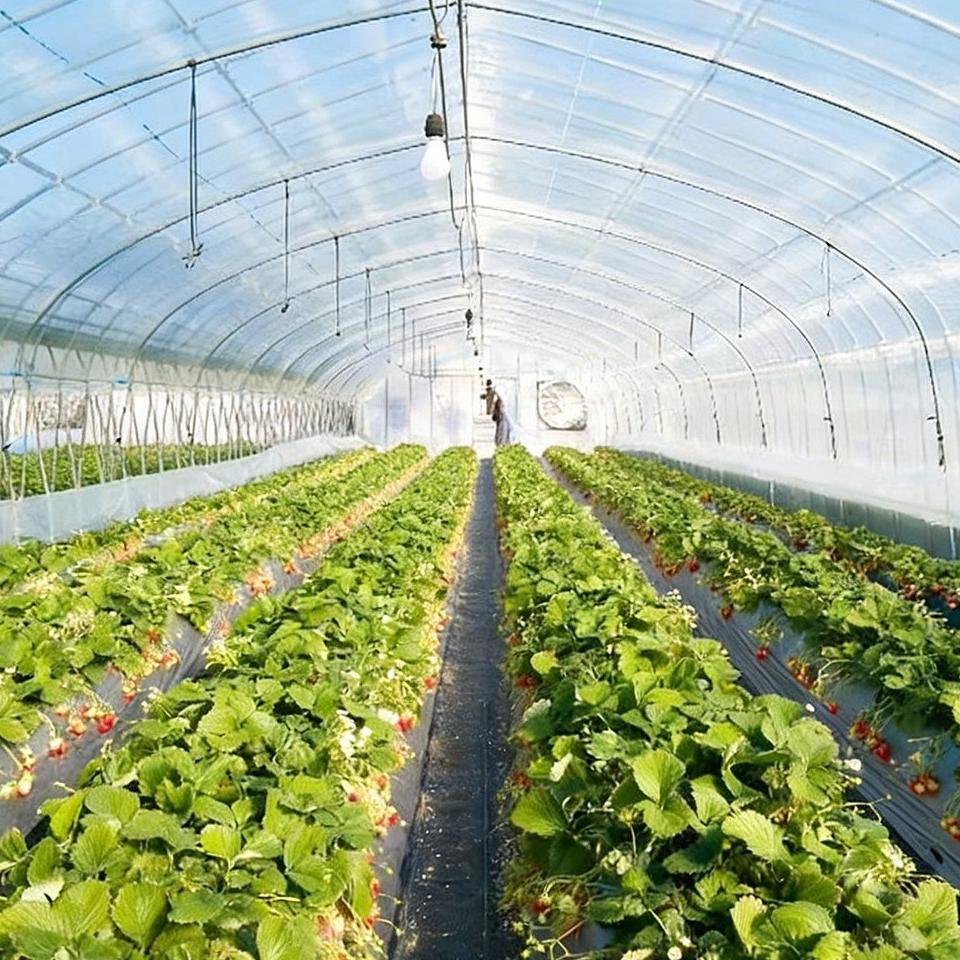
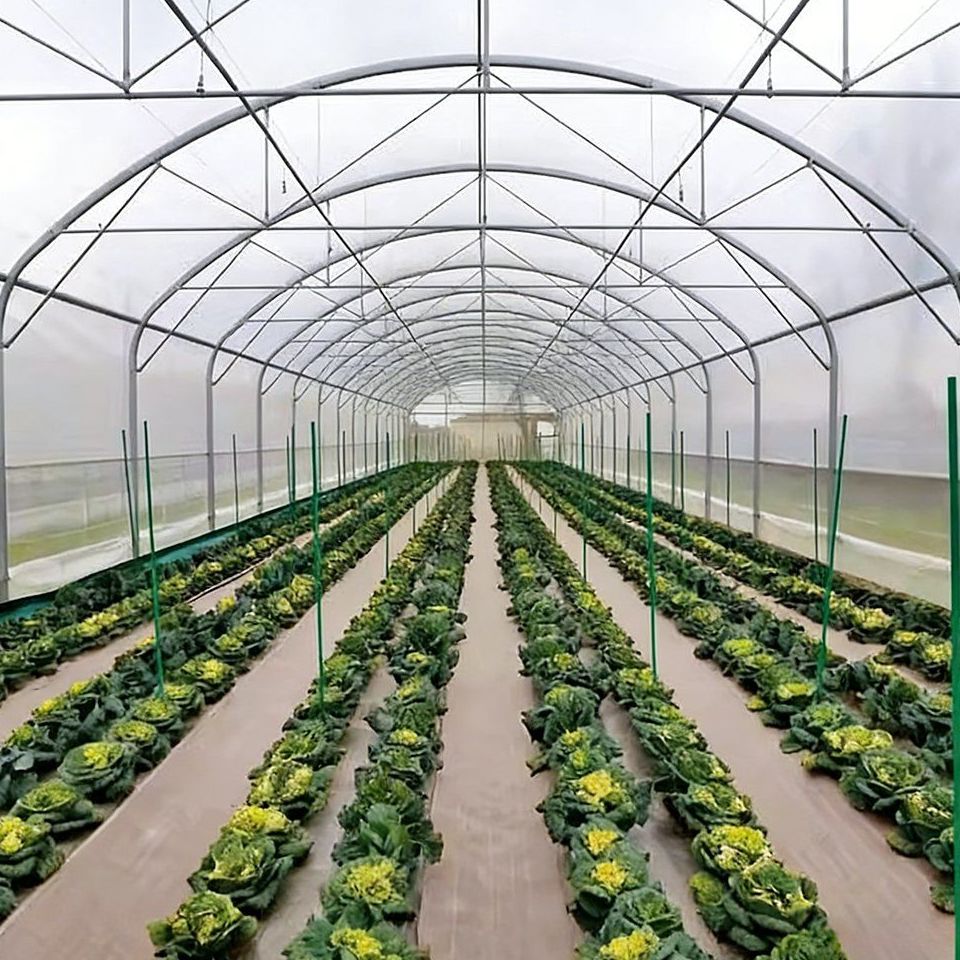
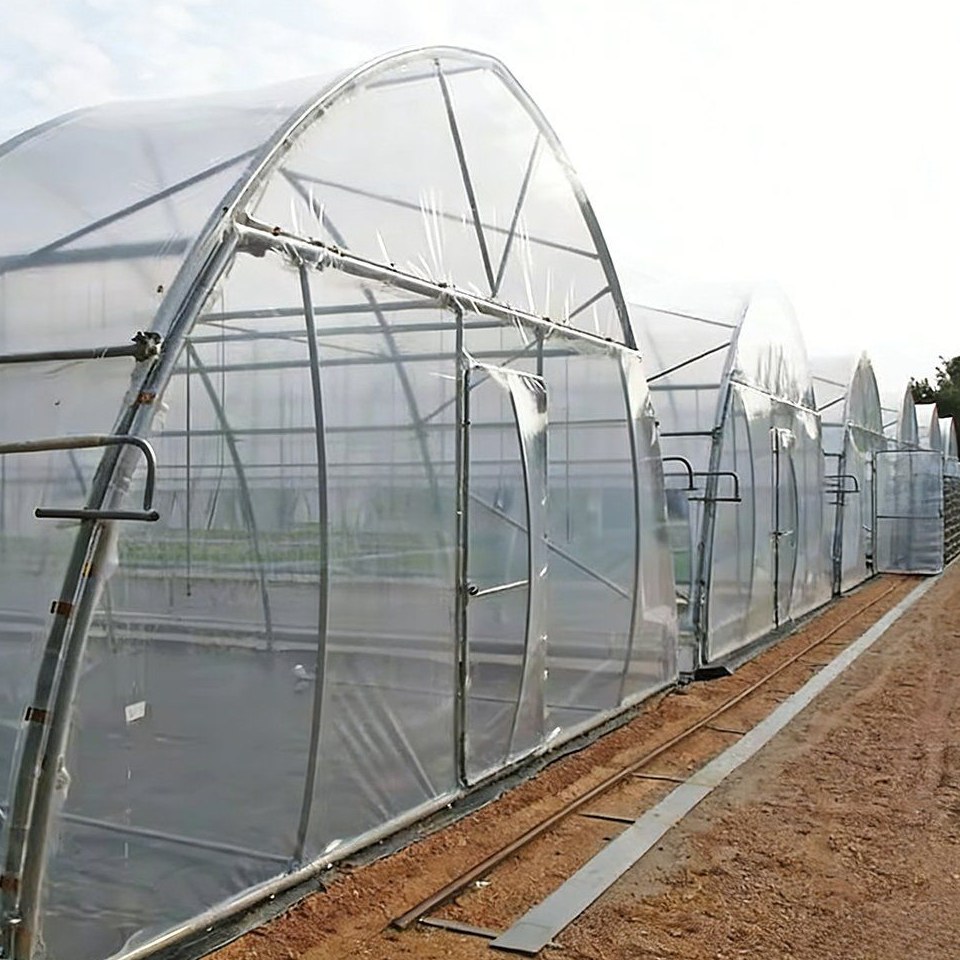
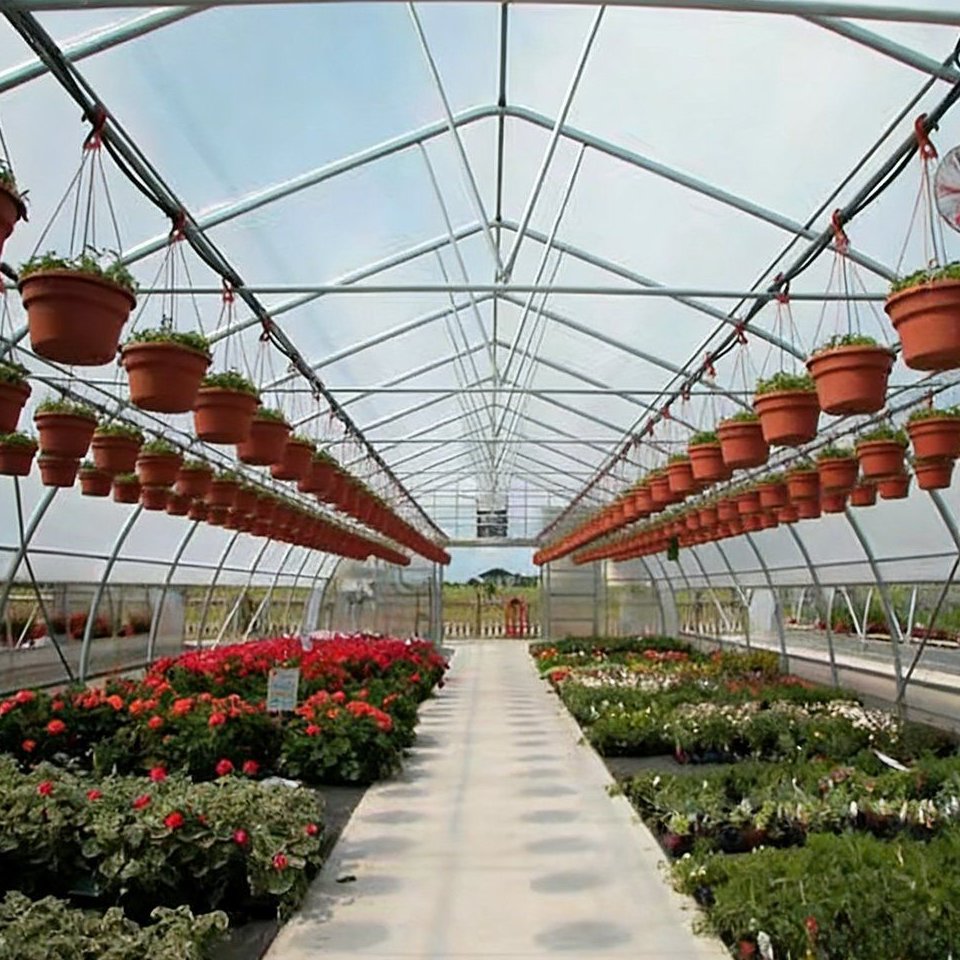
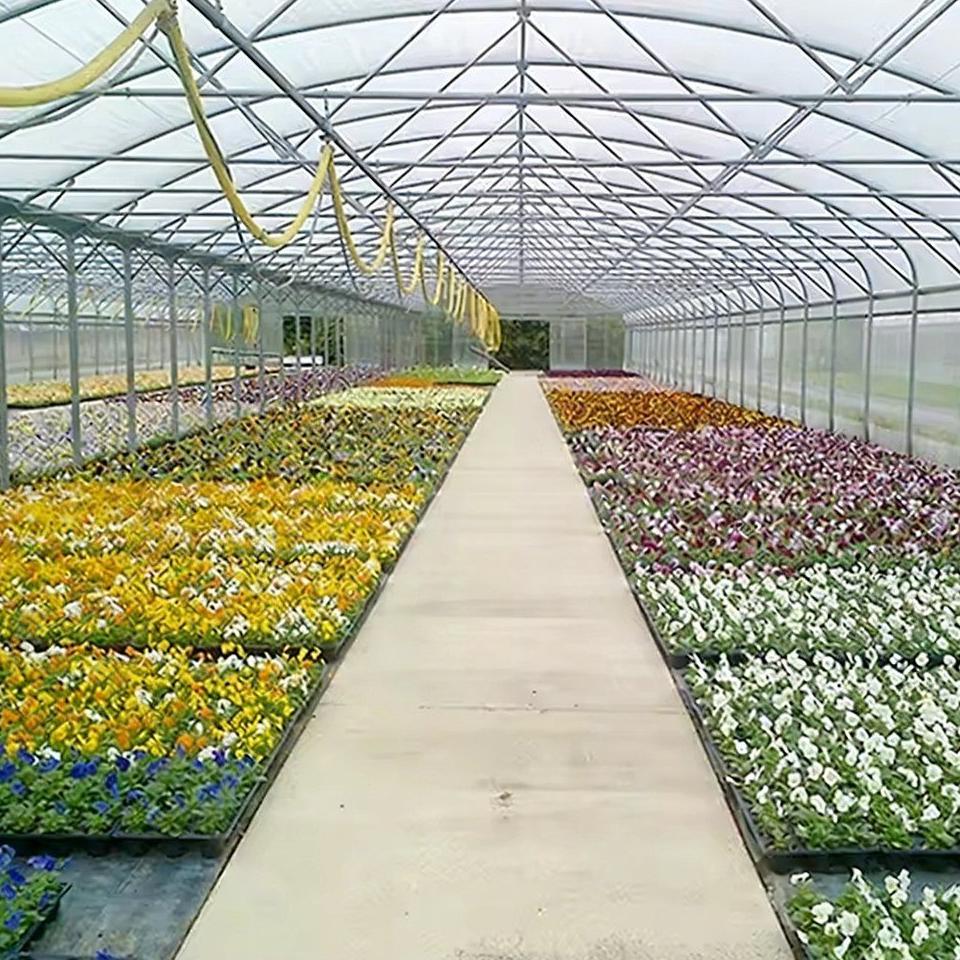
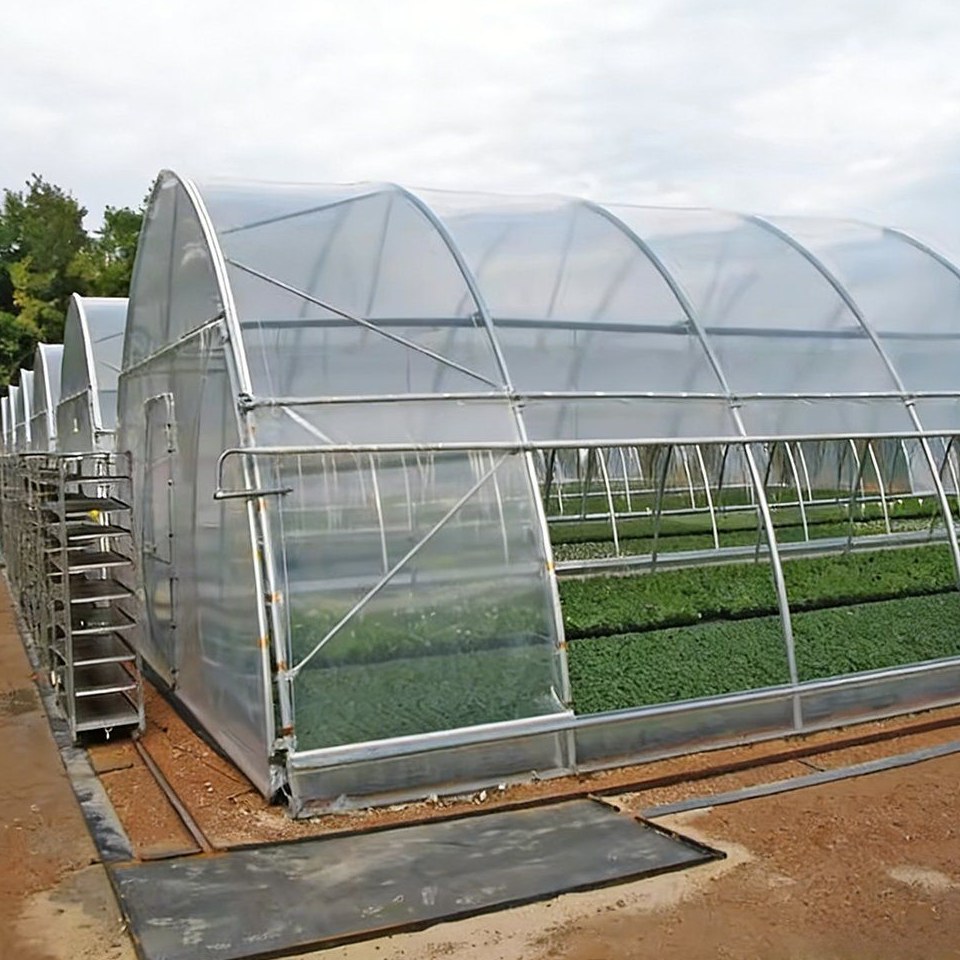
This prefabricated multi span plastic greenhouse arrives as a kit of galvanized pipes and plates that bolt together on site, so no welding burns the zinc coating at a joint. Widths run 6 m to 9 m with a shoulder height of 1.3 m, and the frame is rated for a plant hanging load of 0.15 kN per sq m, which is what a high wire tomato crop needs. The cover is film from 80 to 200 micron, and side ventilation with insect netting is fitted on two walls. Length is made to order, usually between 10 m and 100 m.
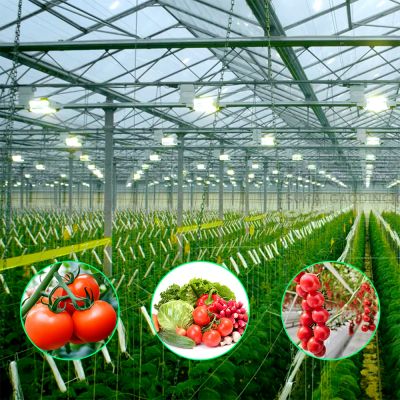
A tomato crop is heavier than it looks. Trained on high wire, a single plant carries a long string of trusses for months, and all of that weight ends up in the frame above it. This prefabricated multi span plastic greenhouse is specified with that load in mind rather than added to afterwards, and it arrives as a kit that a farm team can erect with bolts.
Every part of the frame is hot dip galvanized before it leaves the works: hoops, purlins, gutters, joining plates and pipe. Assembly uses bolts and nuts only, with no welding points to burn the zinc coating away, which is the detail that decides how long a steel frame survives in a working house. Because the structure is prefabricated and modular, a house can be built to the block on the ground rather than the block made to fit a standard shed, and it can be extended bay by bay later. Spacing between arches is 0.8 m to 1.0 m, and the main pipe sizes are 25, 32, 48 and 60 mm.
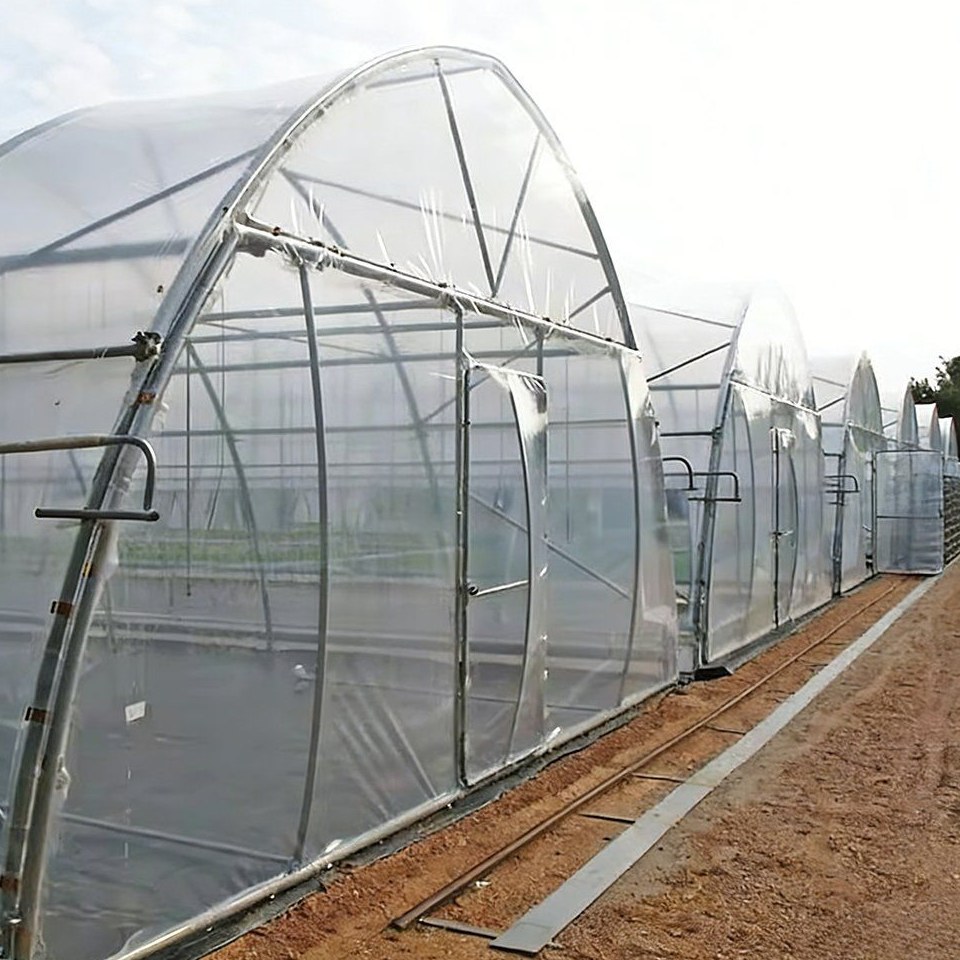
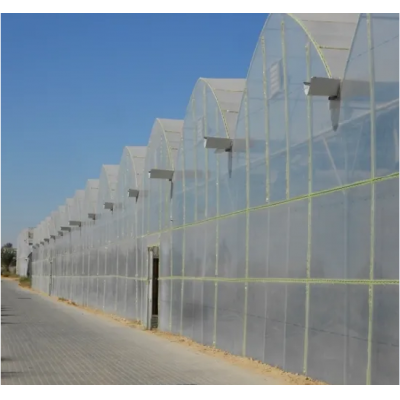
The covering is film from 80 to 200 micron, treated against dust, fogging, dripping, ageing and mildew, with UV block in the formulation. Those treatments matter more than the thickness on its own: an untreated cover drips onto the crop, clouds with dust and fails at the folds long before it wears through. Natural ventilation runs along both side walls and is controlled by hand, and 40 mesh insect netting can be fitted across the same openings so the house can breathe without letting the pest population in.
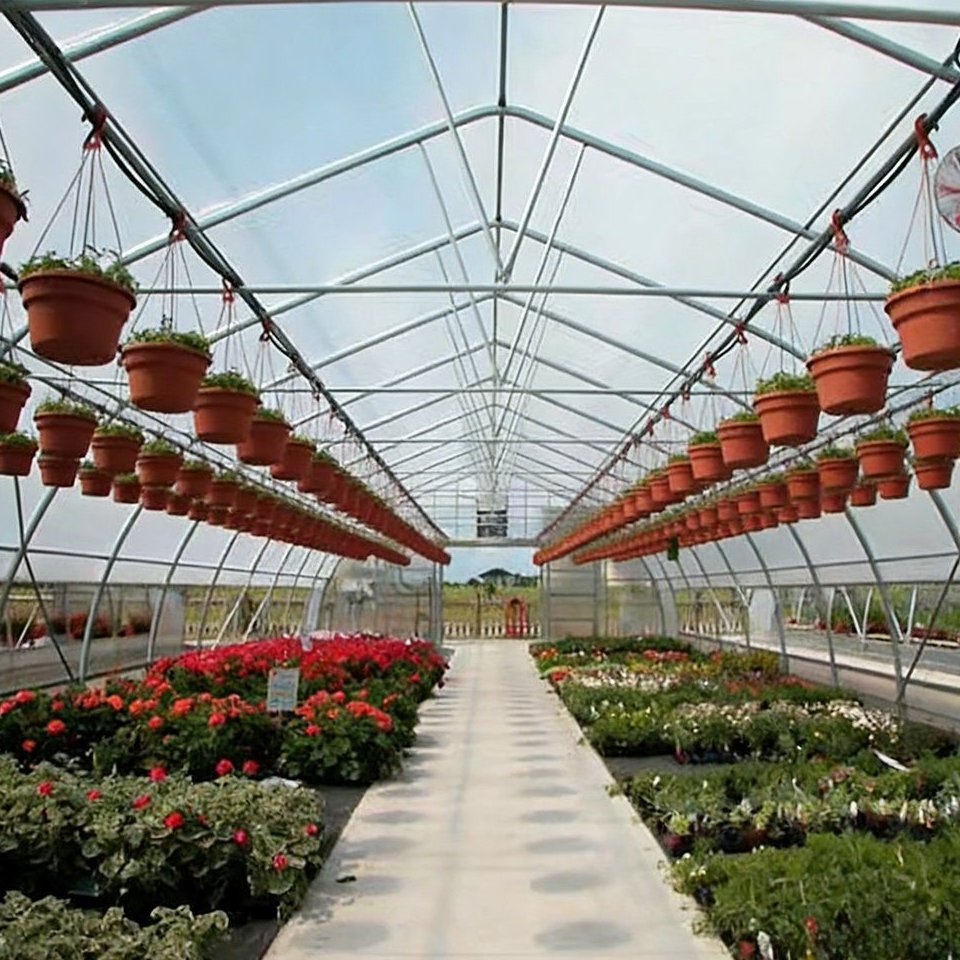
| Structure material | Hot dip galvanized steel pipe, bolted, no welding |
| Width | 6m / 7m / 8m / 9m |
| Length | 10m to 100m, or to client demand |
| Shoulder height | 1.3m |
| Top height | 2.5m (6m) / 2.7m to 3m (7m) / 3m to 3.2m (8m) / 2.5m (9m) |
| Arch spacing | 0.8m to 1.0m |
| Pipe diameter | 25mm / 32mm / 48mm / 60mm |
| Wind load | 0.35 kN per sq m |
| Snow load | 0.25 kN per sq m |
| Plant hanging load | 0.15 kN per sq m |
| Rainfall | 140 mm per hour |
| Covering film | 80 to 200 micron |
| Service life | 15 to 20 years for the frame under normal growing conditions |
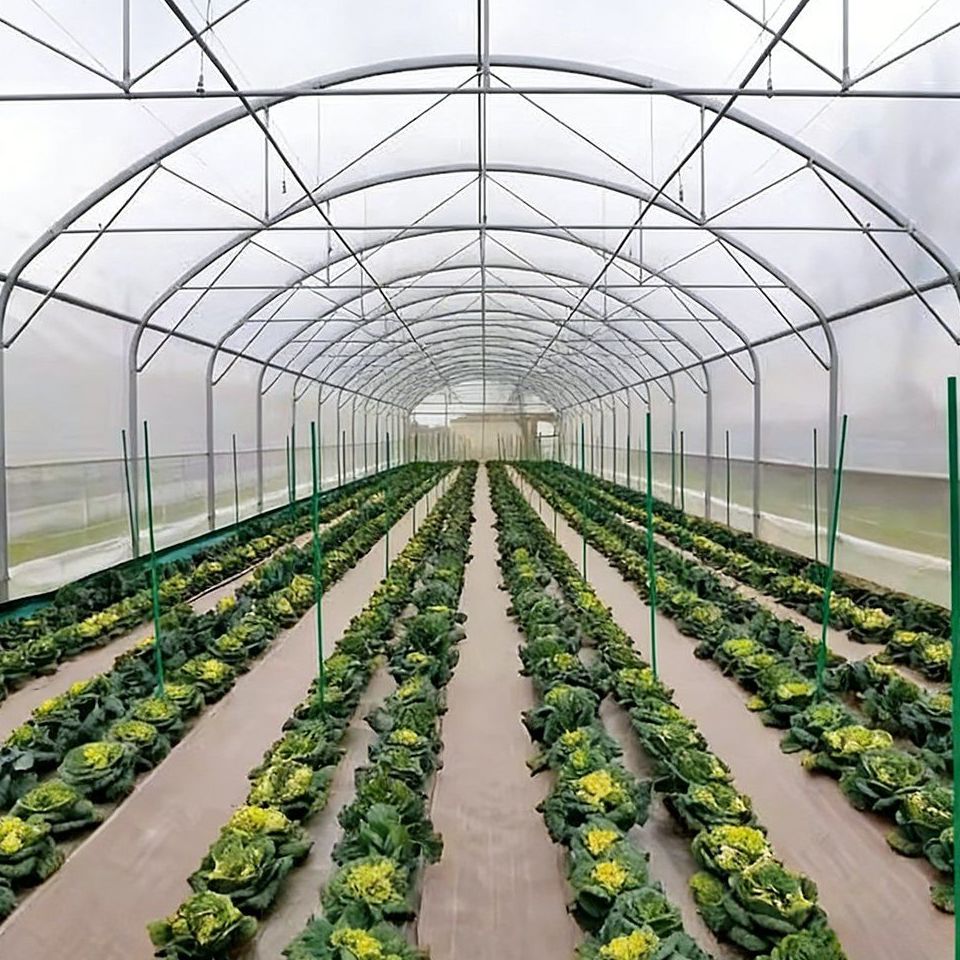
High wire tomato and cucumber work is what the plant hanging load of 0.15 kN per sq m is there to carry. Trusses are supported from the frame above rather than from the ground, so the row below stays clear for picking and the crop can be lowered and leaned through the season. In commercial tomato and cucumber production under houses of this type, yields above 10,000 kg per 1,000 sq m are achievable. Guidance from FAO on protected cultivation covers the wider case for growing under cover, from water use to season extension.
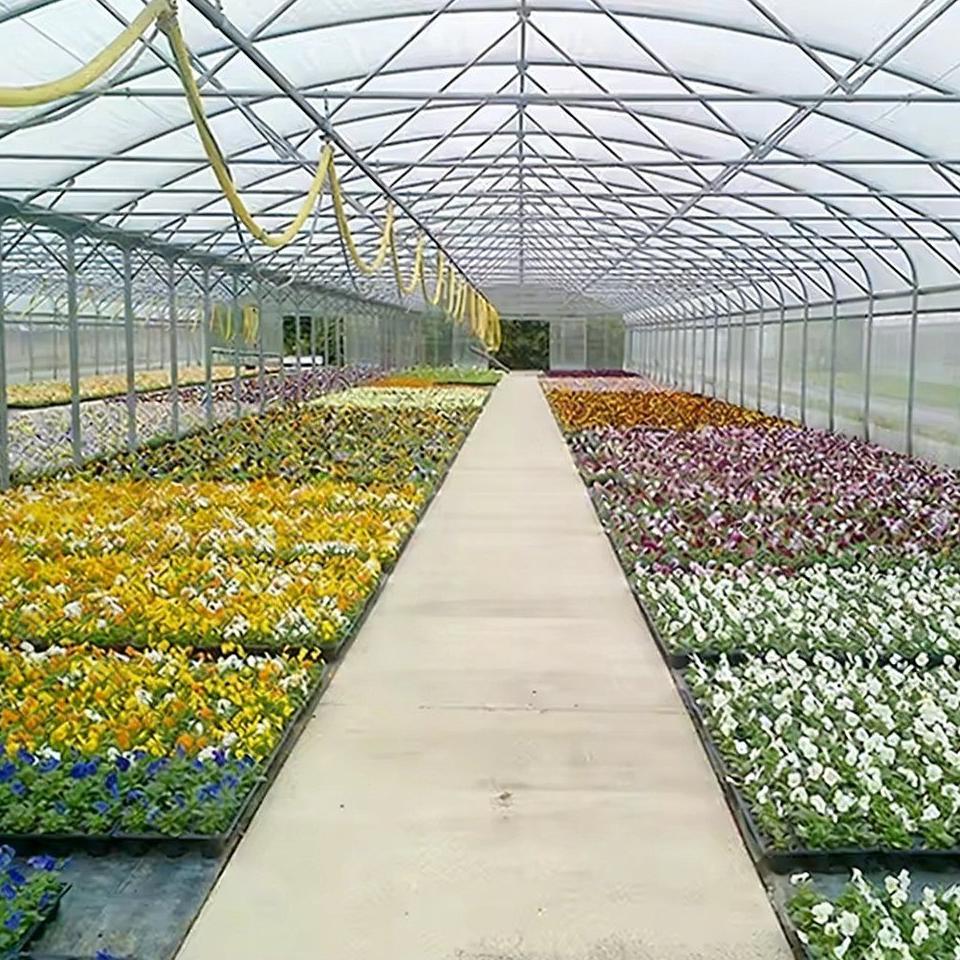
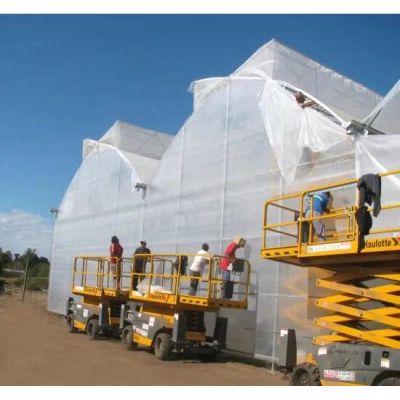
The house ships flat packed with joining parts, bolts and nuts, and the film in rolls. Installation runs in a set order: set the foundation, raise the arches at 0.8 m to 1.0 m spacing, tie the purlins and gutters, fit the side ventilation frames and netting, then tension the film. Our engineers can travel to site to guide installation when required.
Routine work is limited. Check film tension at the start of each season, look for any split at the fixings, clear the netting so airflow is not lost to dust, and check bolts for movement after storm season. Film is the consumable part and is replaced on a three to five year cycle.
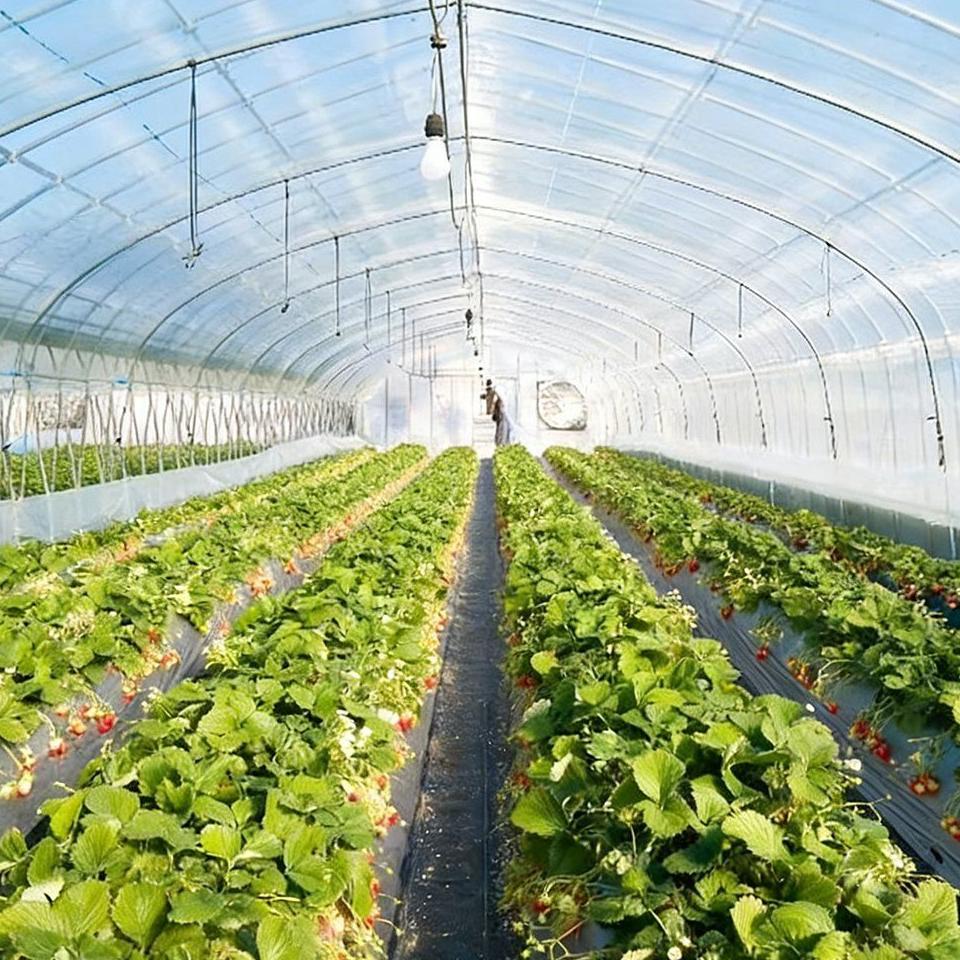
The house suits tomato, cucumber and leafy vegetable production, as well as pot plants and cut flowers where a lighter cover is enough. Because widths run from 6 m to 9 m and the frame is modular, one design can be repeated across a whole block. Trade reporting on Greenhouse Grower follows how commercial protected production is planned at this scale. Compare the film greenhouse range, or look at the greenhouse for tomatoes and the multi span greenhouse for agricultural use for other layouts in the same family.
Because it is bolted, no welding burns the galvanized coating at the joints, so the anti-corrosion protection stays intact. It also means the house can be built with hand tools on site and taken down or extended later.
Yes. The frame is rated for a plant hanging load of 0.15 kN per sq m, which is what a high wire tomato or cucumber crop requires. Trusses are supported from the structure above the row.
The hot dip galvanized steel frame is rated for 15 to 20 years under normal growing conditions. The film cover is replaced on a three to five year cycle.
We provide a 10 year structural warranty and a 5 year anti-corrosion warranty on the galvanized frame. Details are set out in the contract for each project.
Send your block dimensions, the crops and training system you plan to use, and your local wind and snow loads. We reply with a layout drawing and a full quotation covering frame, film, netting, ventilation and door sets.