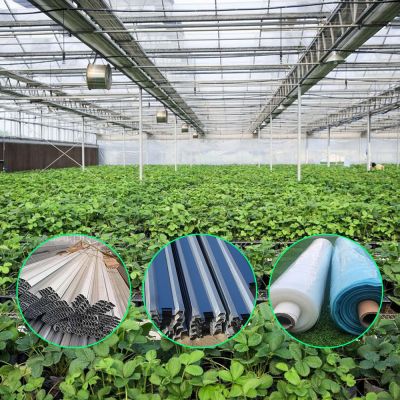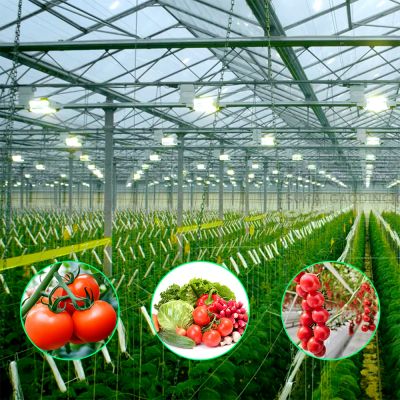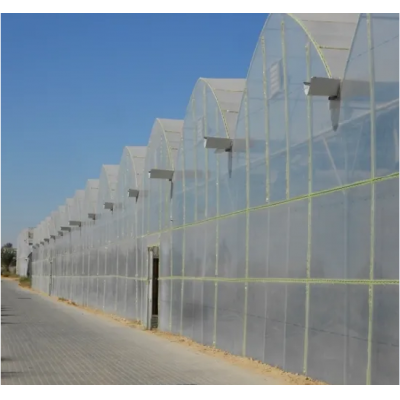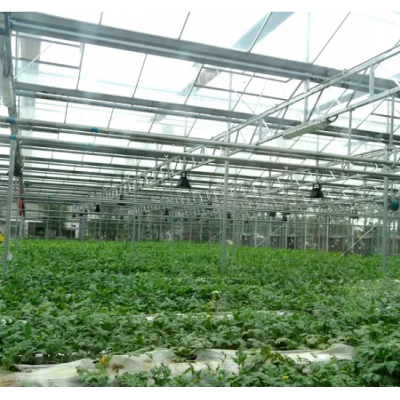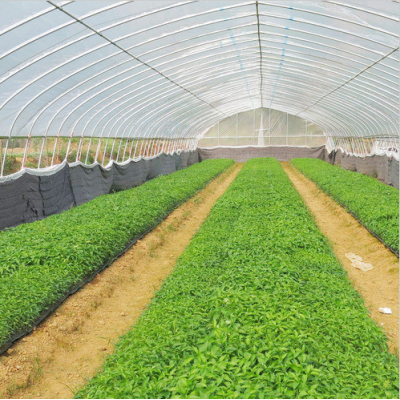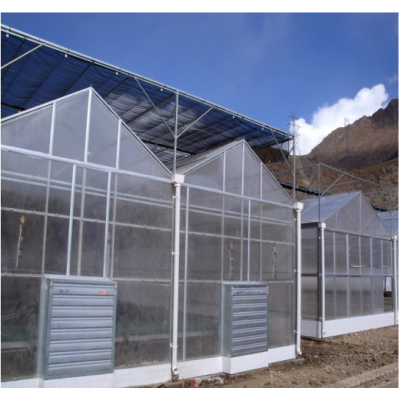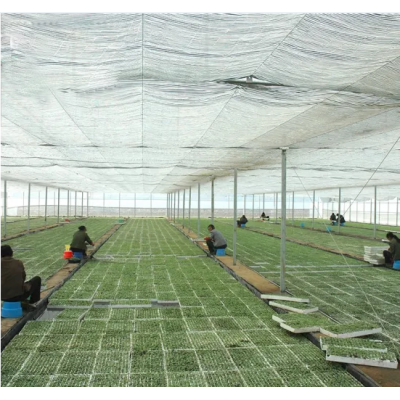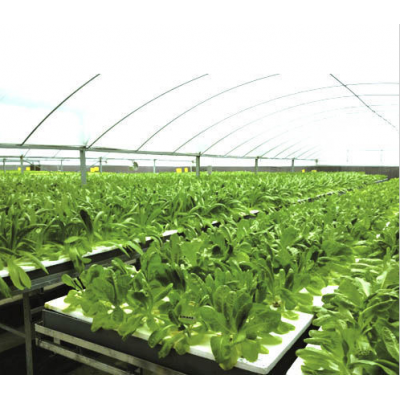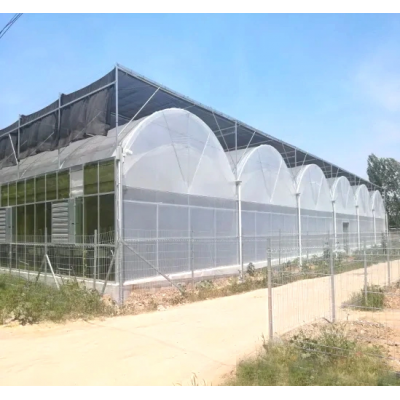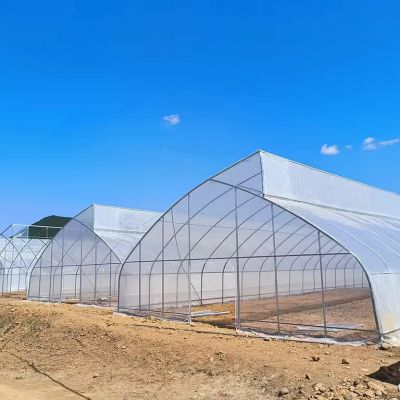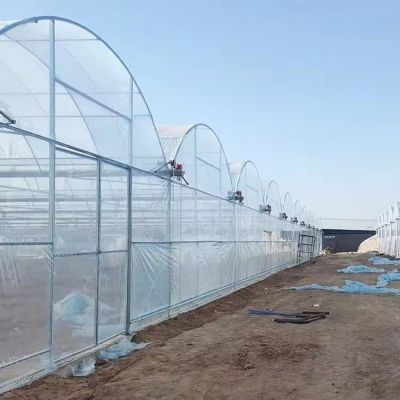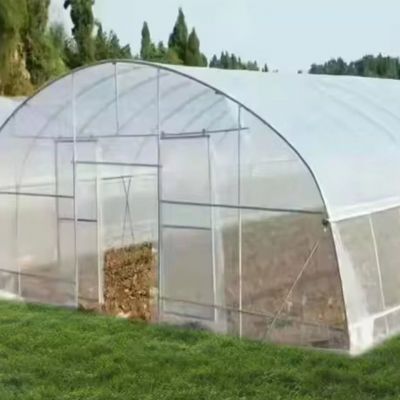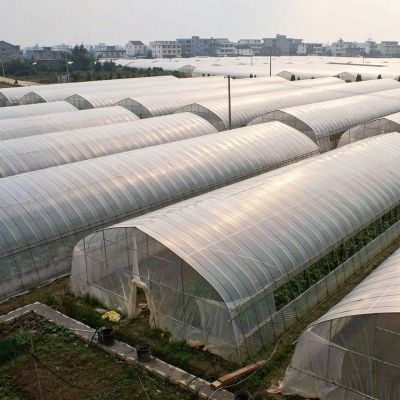
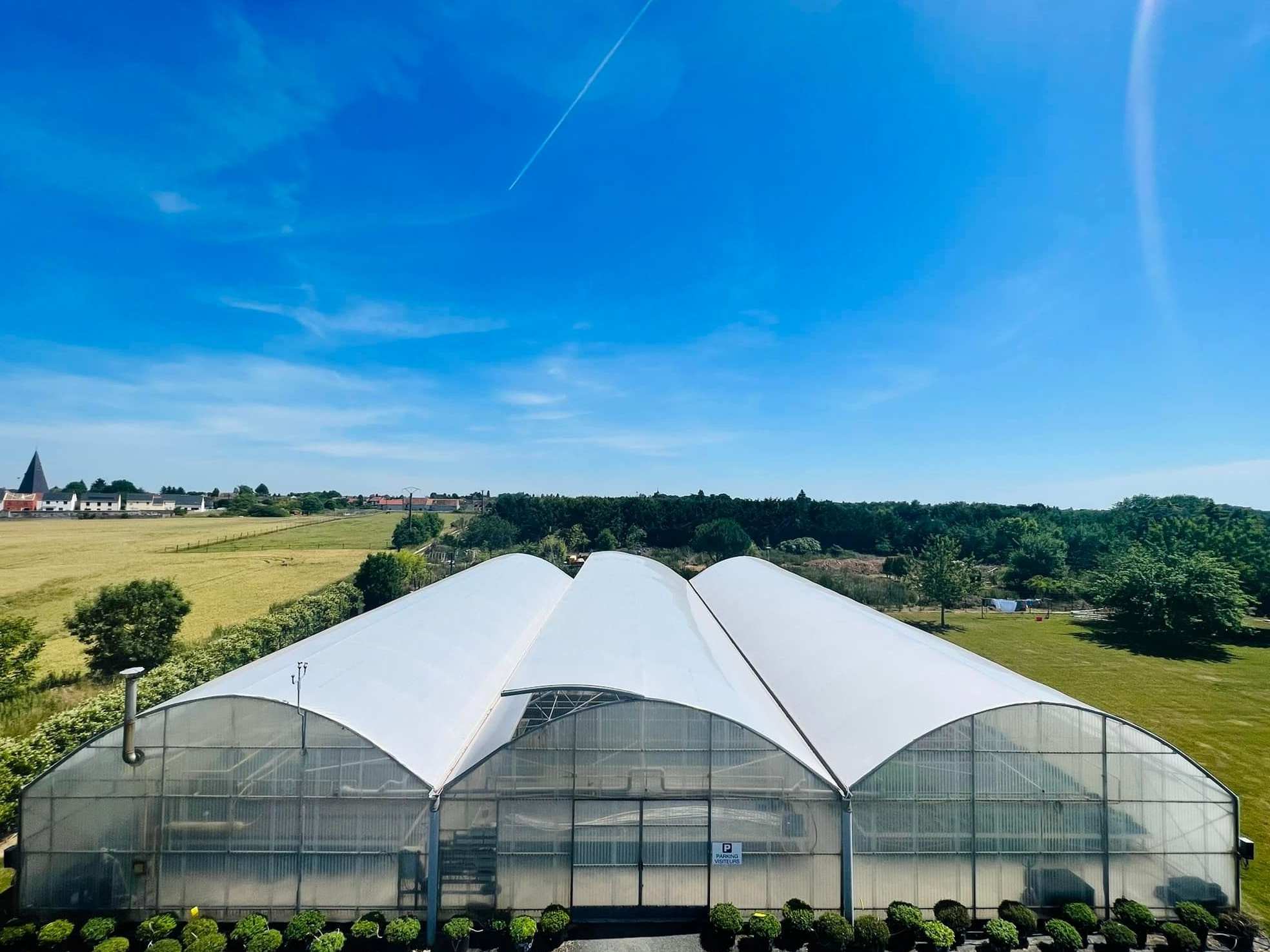
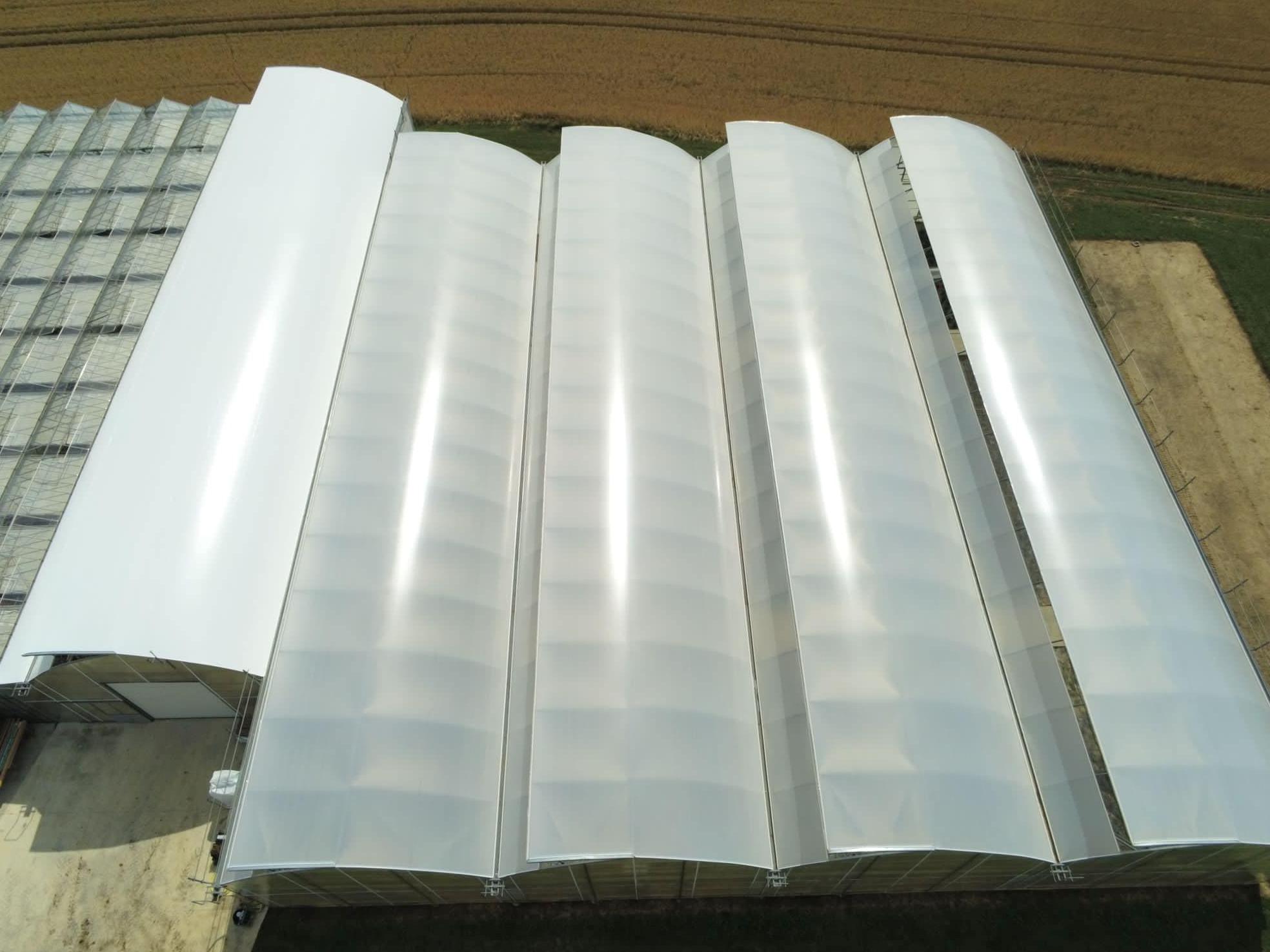
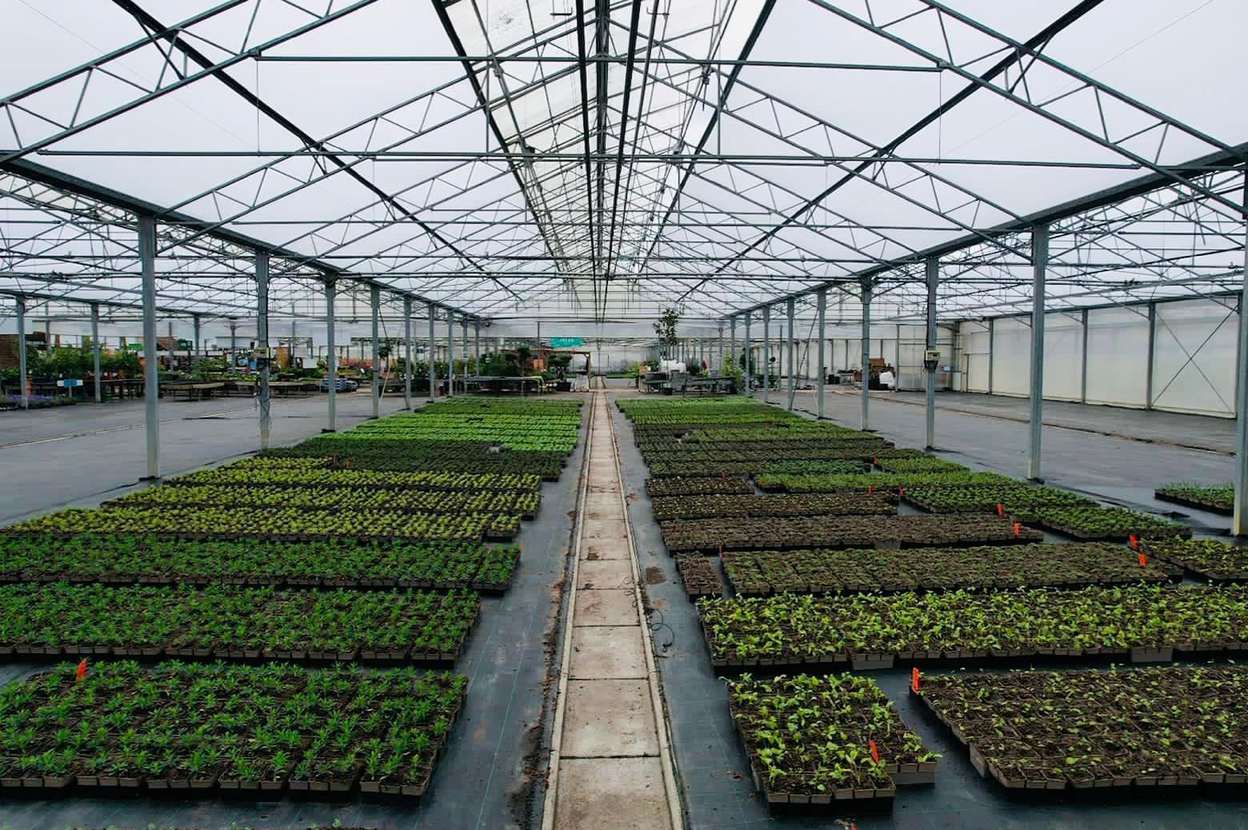
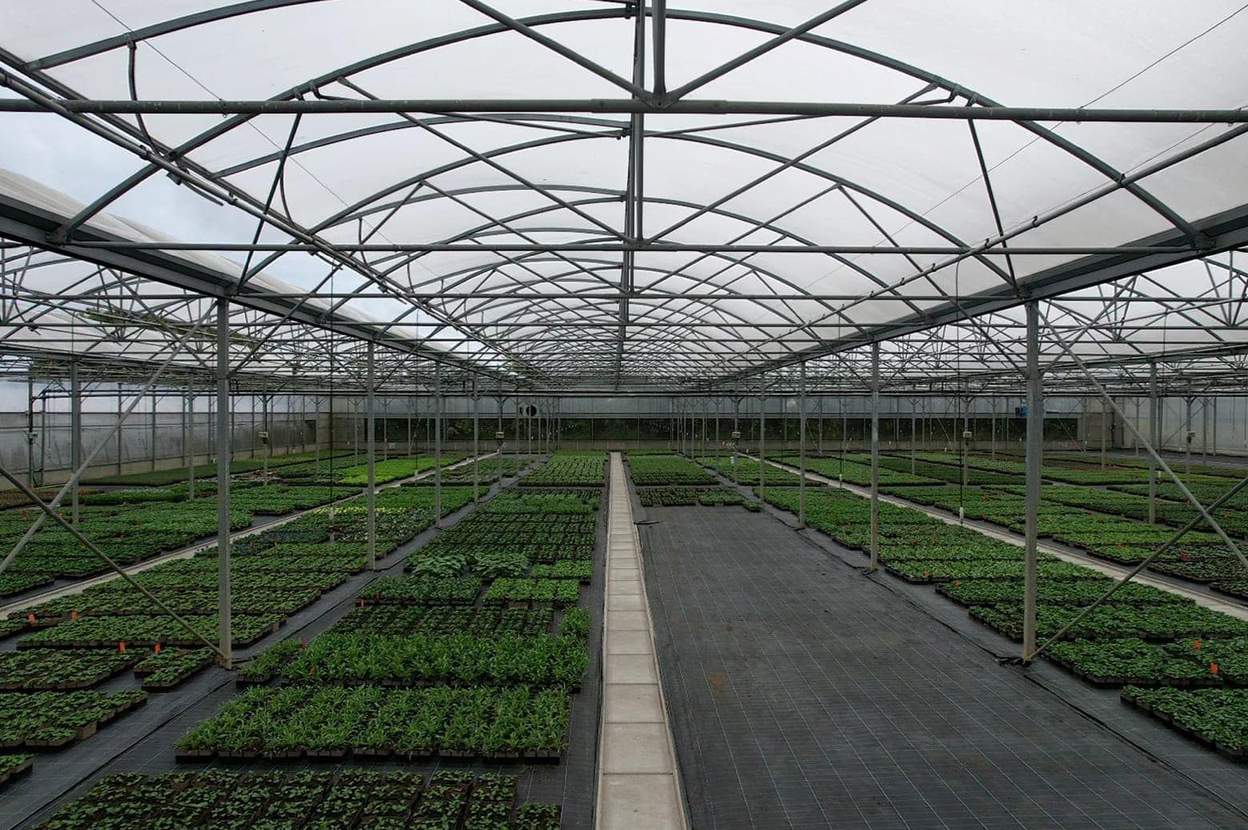
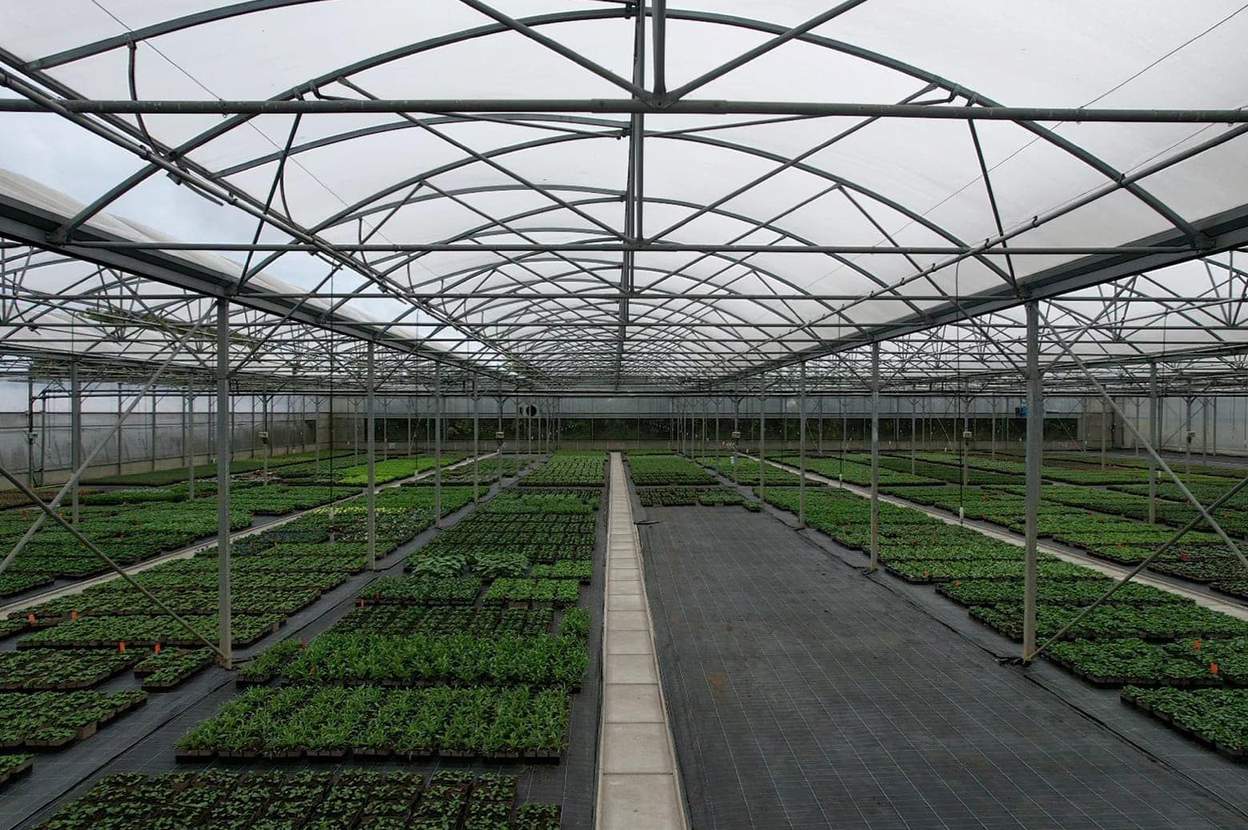
This multi-span plastic film tunnel greenhouse is built on a hot dip galvanized steel frame and covered with a three-layer compressed PE film, which holds warmth overnight and sheds condensation during the day. Side ventilation runs along both walls through a manual or motorised roller, so air changes at crop level rather than only at the ridge. Spans run 8 m to 12 m, gutter height 3 m to 4.5 m and the house can be built from 10 m to 100 m long or cut to the client site. It suits vegetable growers, flower producers and nurseries that need a working structure rather than a display house.
A tunnel house only earns its place on a farm if the climate inside can be held steady. Film keeps rain off and holds warmth, but a sealed tunnel also traps the humid air that comes off the crop, and still, damp air is where most leaf disease starts. This multi-span tunnel greenhouse is arranged around that problem: a hot dip galvanized frame carries the cover, a three-layer PE film does the insulating, and continuous side ventilation gives the humid air somewhere to go.
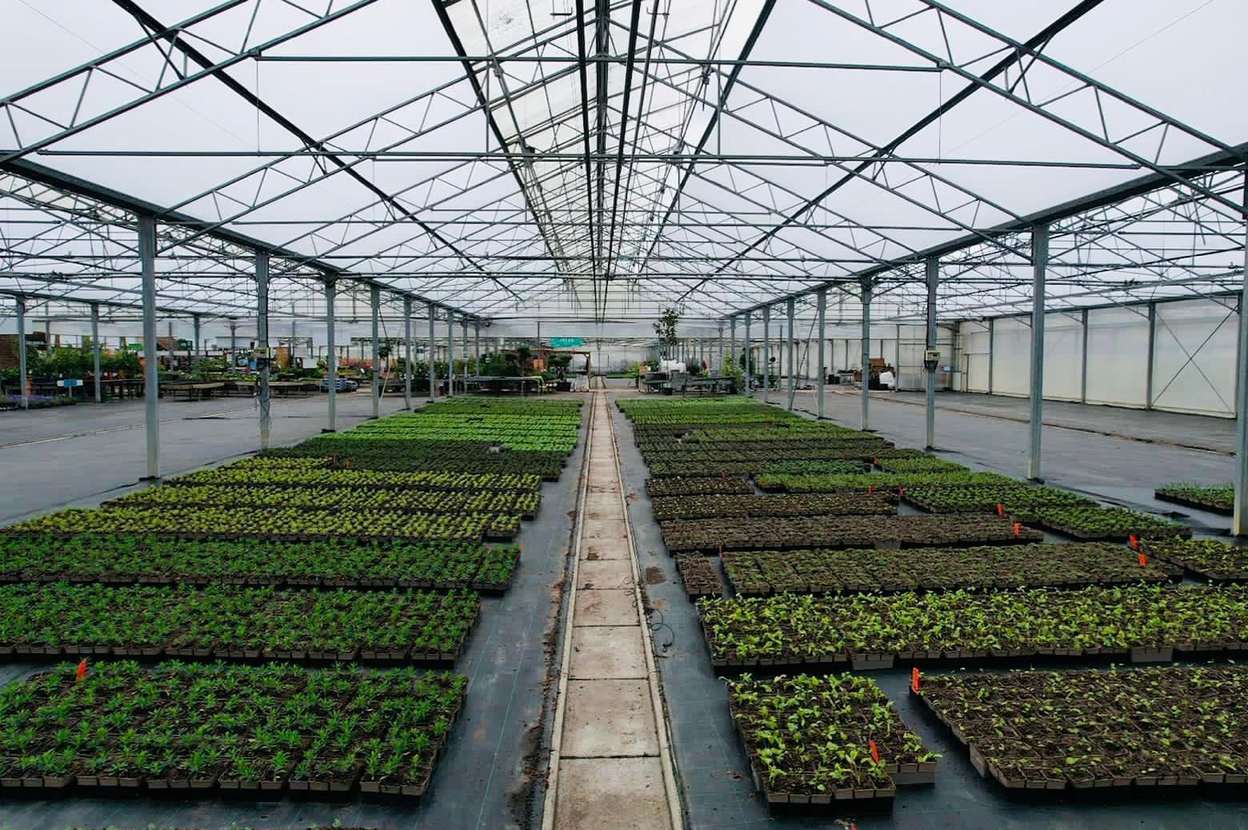
The frame is made from hot dip galvanized steel tube, formed into arched trusses and joined into a multi-span block. Running several spans off shared gutters is what keeps the internal floor clear: instead of a line of posts down the middle of every house, the load is carried at the gutters, which leaves long undisturbed runs for beds, trolleys or machinery. Spans are built from 8 m to 12 m, gutter height from 3 m to 4.5 m, and the ridge sits between 3 m and 8 m above ground depending on the span chosen.
The galvanizing is applied by hot dipping rather than by painting, so the zinc layer bonds to the steel and protects it at cut edges and fixing points as well as on the tube faces. That matters in a working house, where condensation runs down the frame for months at a time and where the structure is usually expected to stay in service across several film changes. Length is built from 10 m to 100 m and can be set to the client site. If a multi-span block is more structure than the site needs, the same frame family is shown on the tunnel greenhouse range page in single and multi-span versions.
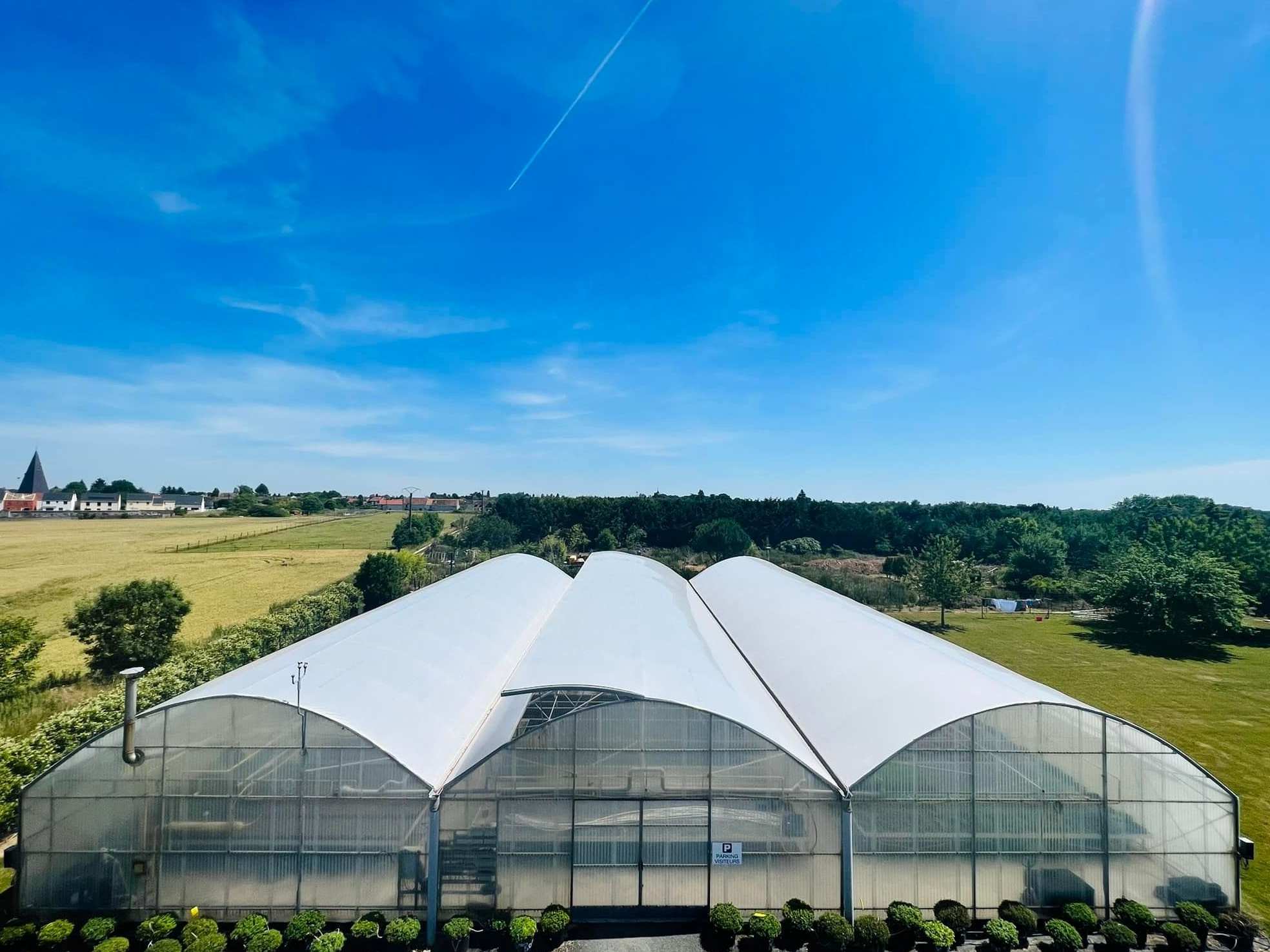
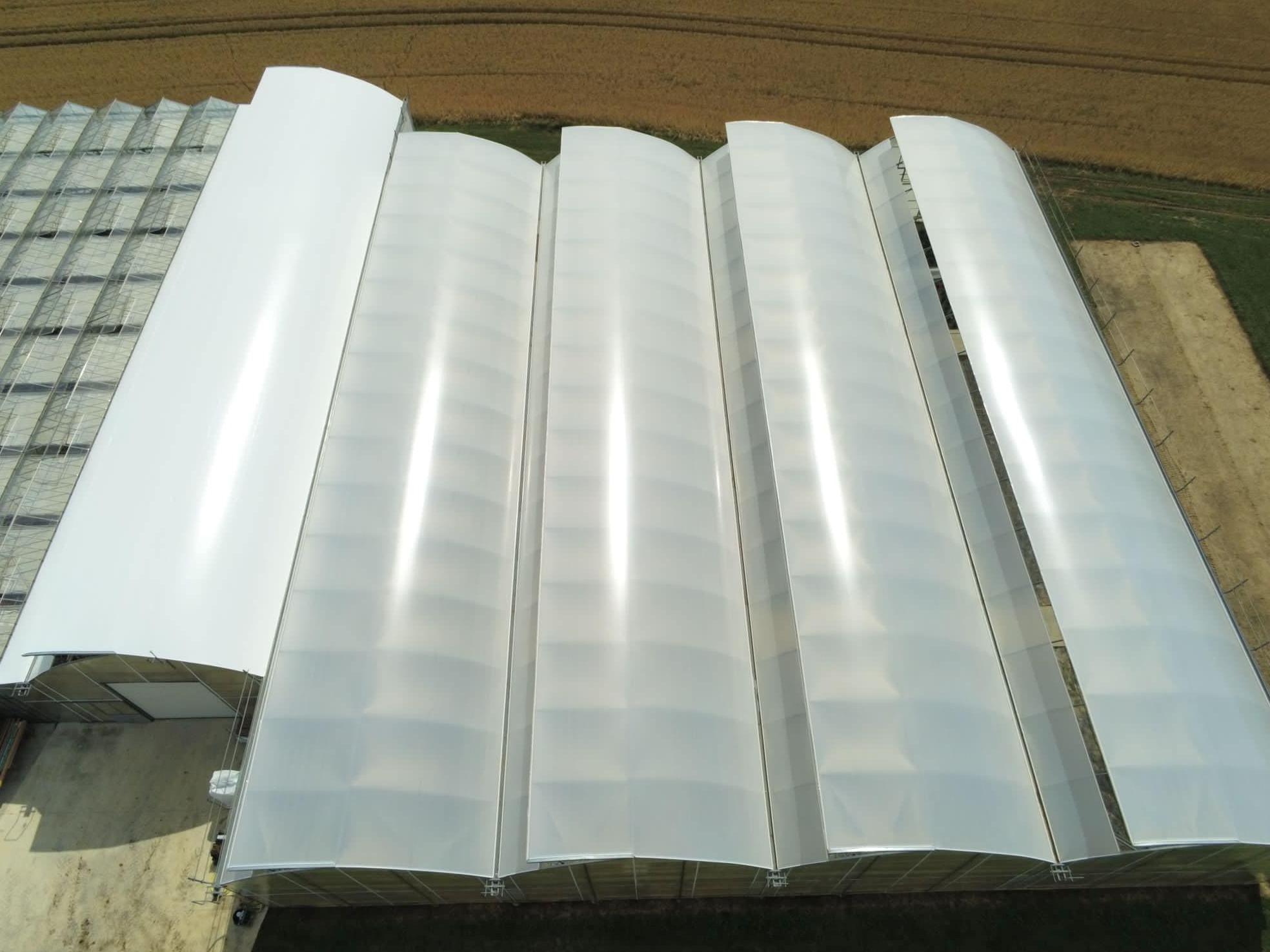
The cover is a three-layer compressed PE film, co-extruded so that each layer does a different job: an outer layer carries the UV stabilisers that resist sunlight, a middle layer adds the mechanical strength and an inner layer manages condensation so that droplets run down the film instead of falling onto the crop. The result is a cover that holds more warmth overnight than a single sheet of the same thickness, which is worth real money on early and late crops. Film used in this class of house is normally specified against a recognised agricultural film standard, and the requirements behind those documents are published by NEN, so a buyer can ask for the sheet to be tested against a named grade rather than a description.
The film is supplied in rolls wide enough to run from gutter to gutter, which leaves the roof with as few joints as possible. Joints are where film coverings fail first, so a long unbroken run across the spans is a practical advantage, not just a tidy one. Cover life sits in the three to five year range under normal UV exposure, and because the cover is a separate item from the frame, replacing it is a planned cost rather than a rebuild.
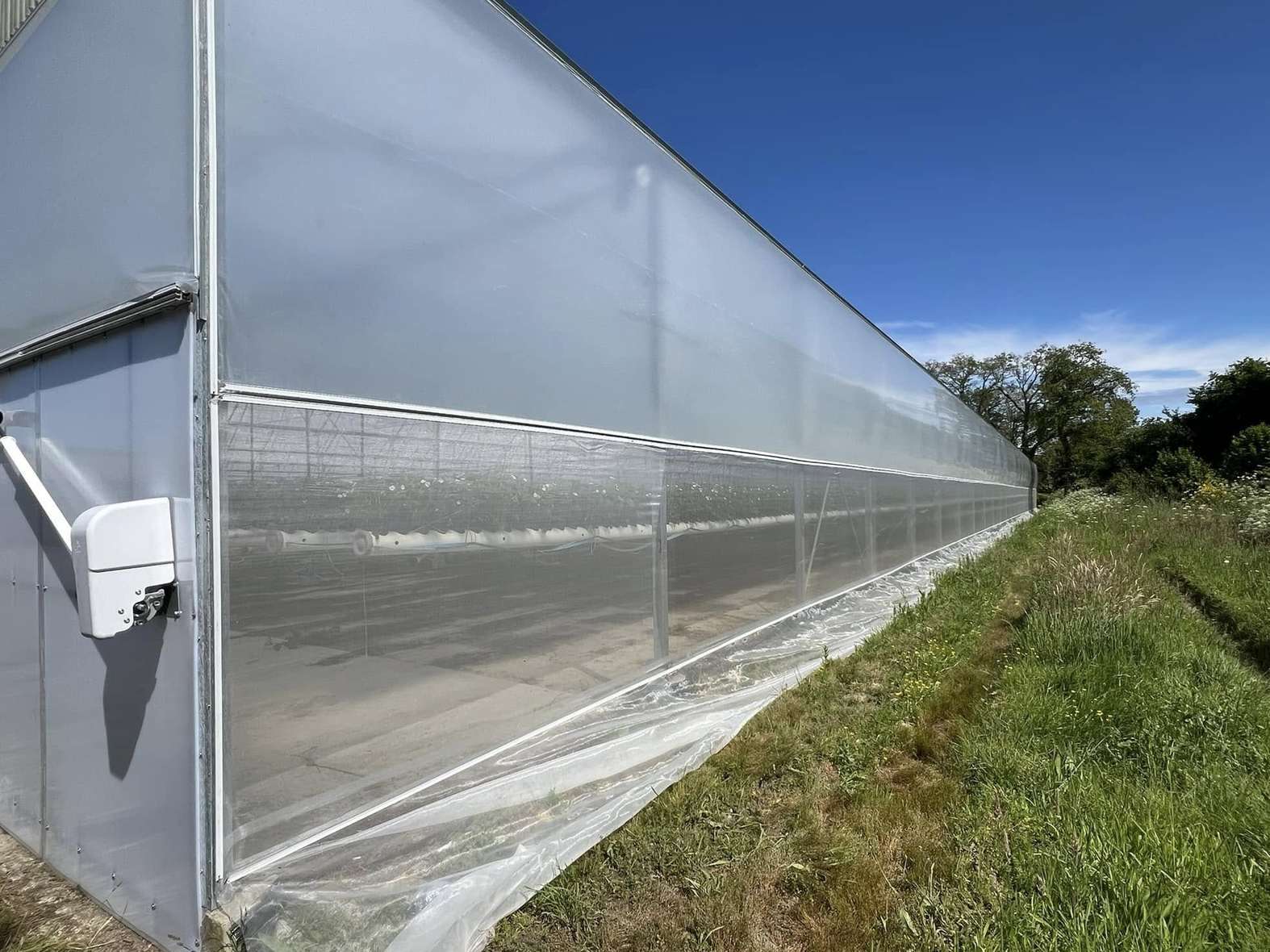
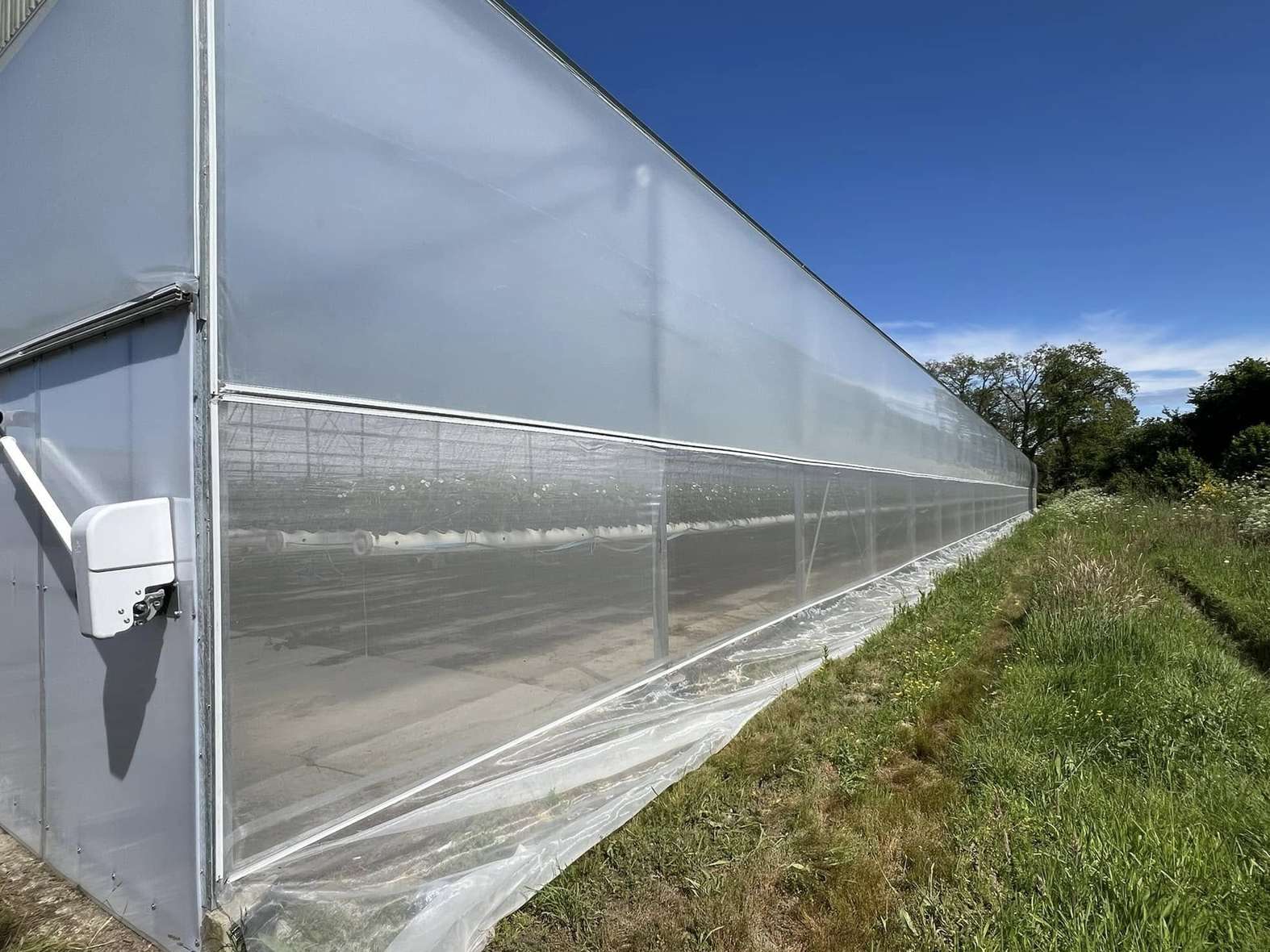
Ventilation is where a tunnel house is usually weakest. Ridge vents sit high up and move the warm air that has already risen, but the crop lives in the bottom metre of the house, and that layer is the one that stays humid. Side ventilation takes the opposite approach: the film on both side walls is rolled up from the bottom, so fresh air enters at crop height and pushes the damp layer up and out. In practice a tunnel with side opening runs drier through the night, which shows up as less leaf mould and less botrytis on the crop.
The wall film is wound on a roller driven by a hand crank or a motorised unit, and the same mechanism can be tied into an automatic climate controller so a house opens and closes on temperature or humidity rather than on someone remembering. Opening height is adjustable, so the same house can be run almost closed in cold weather and wide open in midsummer. Growers running several houses off one block usually take the motorised option and group the controls, which keeps the labour down on a large site. A similar frame and ventilation arrangement for tomato and vegetable crops is described in the galvanized polytunnel for tomato and vegetable growers.
The table below lists the standard build of this house. Span, length and height are all set to the site, and the covering and ventilation can be specified to suit the crop.
| Greenhouse span | 8 m / 9 m / 10 m / 11 m / 12 m |
| Greenhouse length | 10 m to 100 m, or built to client demand |
| Gutter height | 3 m to 4.5 m |
| Ridge height | 3 m to 8 m |
| Structure | Hot dip galvanized steel tube, arch roof |
| Cover | Three-layer compressed PE film, UV resistant |
| Ventilation | Side film rolled by manual crank or motorised unit |
| Crops | Vegetables, fruit, flowers and young plants |
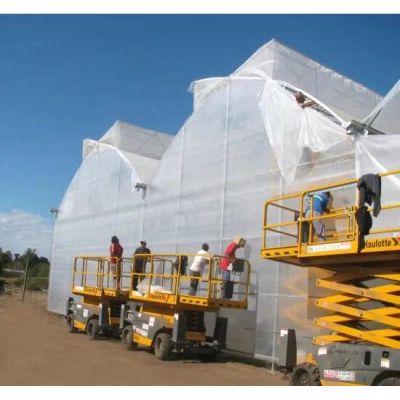
The house is delivered as a bolted kit: galvanized arches, gutters, purlins and the film, with the frames drilled and matched so the structure goes up with hand tools. Work starts on a level pad, because a tunnel frame follows its foundation, and the ground posts or base plates are set to the drawing before any arch is lifted. A multi-span block of this type is normally standing in two to four weeks on a prepared site, depending on the length of the house and how much of the film work is done at the same time.
Once the house is up there is very little to do to the frame itself. Hot dip galvanizing does not need painting, and the joints only need a check after the first season when the structure has settled into its bearing. The film is the item on a maintenance cycle: it should be inspected at the end of each season for chafing over the purlins and for any tear that will run, and the whole cover is planned for replacement in the three to five year band. Keeping the rollers and the ventilation drive clean is the other routine job, because a side curtain that jams is usually a mechanical problem rather than a film one.
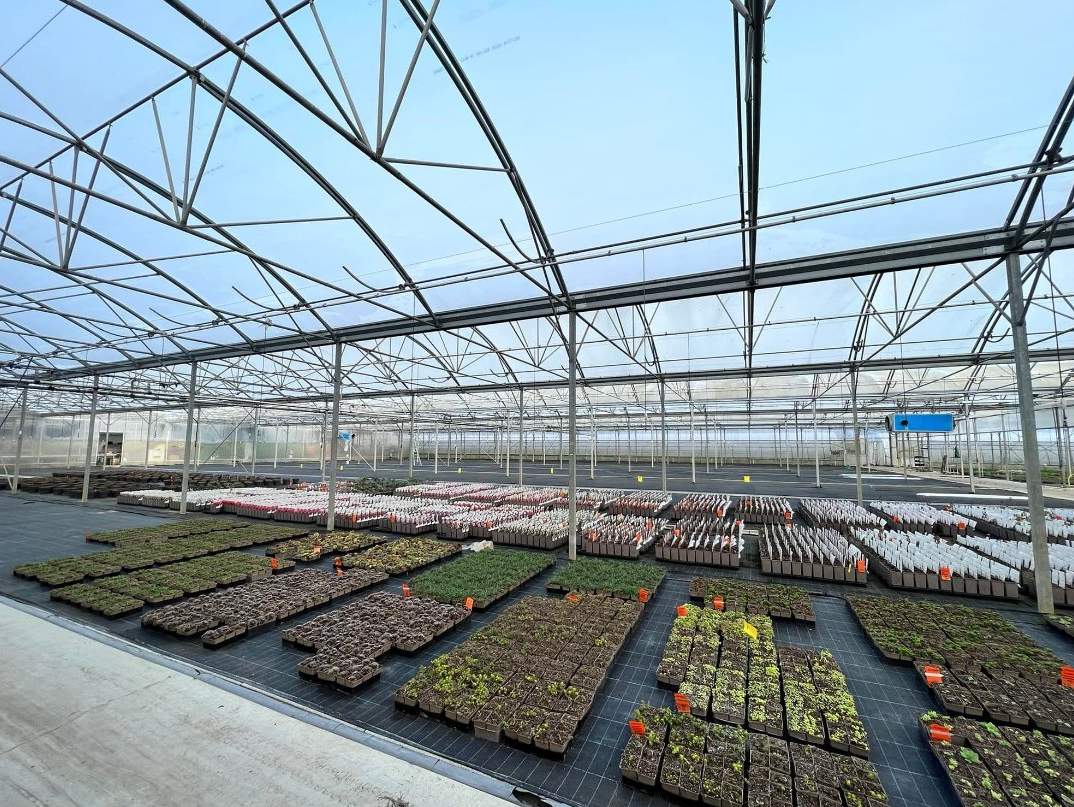
These houses are used wherever a farm needs a large covered area at a cost that suits a productive crop: field vegetables and salads grown on rotation, soft fruit under protection, cut flowers, and nurseries raising young plants for sale. The side opening is the part growers ask about first, because it decides whether the house can be held at a steady humidity during a humid summer night, and it is the reason this design is chosen over a plain sealed tunnel in coastal and tropical markets.
Commercial growers who compare structures tend to judge them on what the crop returns rather than on the frame alone, and the trade press that follows that side of the business, such as FreshPlaza, regularly covers how protected cropping margins move across different regions. A tunnel of this size usually forms part of a larger layout, so growers often look at a high tunnel greenhouse when they want a taller working height on part of the same site.
Air enters at the height of the crop rather than at the ridge. The humid layer that sits around the leaves is pushed upward and out instead of being left in place, so the house runs drier where it matters. Roof vents can be added as well, but on their own they work on air that has already risen.
Each layer has a separate job: UV resistance on the outside, mechanical strength in the middle and condensation control on the inside. A three-layer sheet holds more warmth overnight than a single extruded film of the same thickness and manages drip onto the crop better.
The galvanized steel pipe frame is rated for 15 to 20 years under normal growing conditions. The film cover is replaced on a three to five year cycle.
We provide a 10 year structural warranty and a 5 year anti-corrosion warranty on the galvanized frame. Details are set out in the contract for each project.
Send your site dimensions, the crops and bench layout you plan to use and your local wind and snow loads. We reply with a layout drawing and a full quotation.