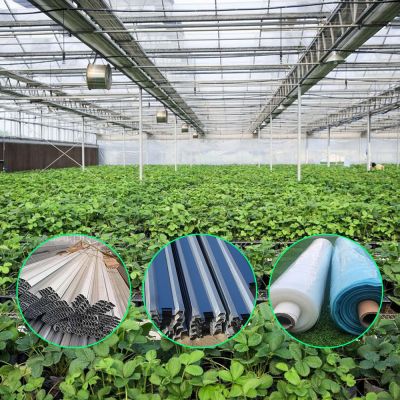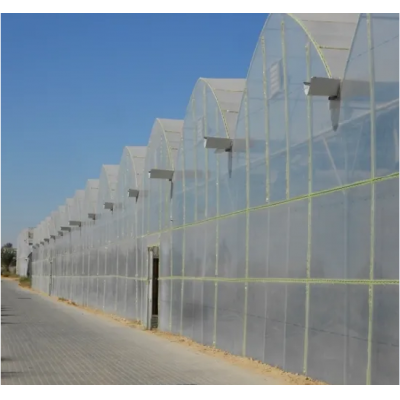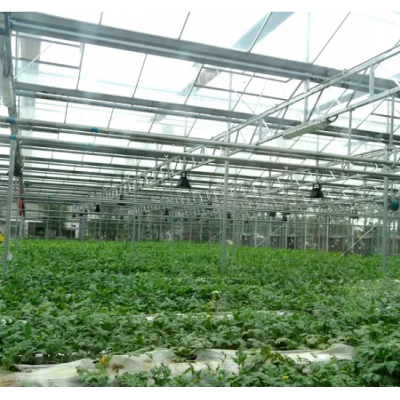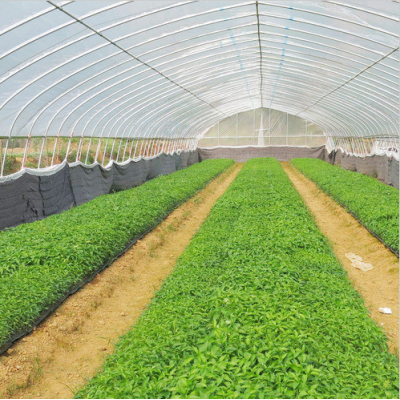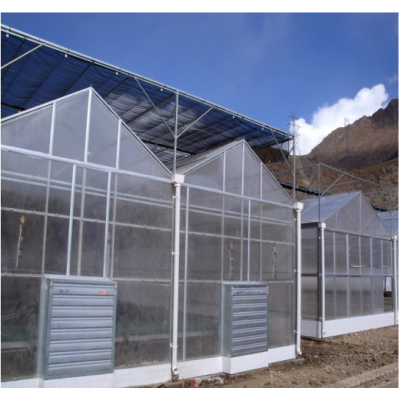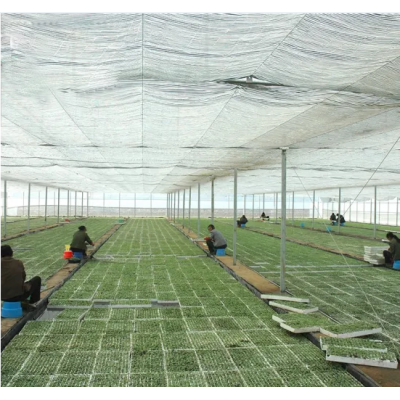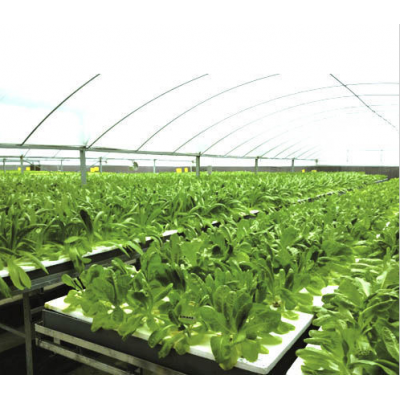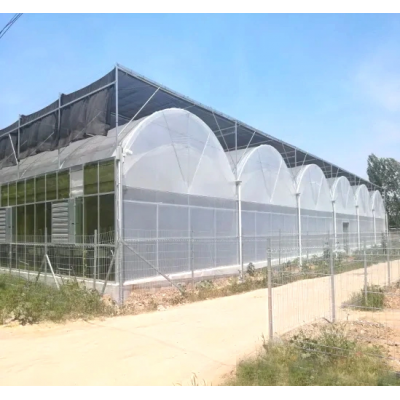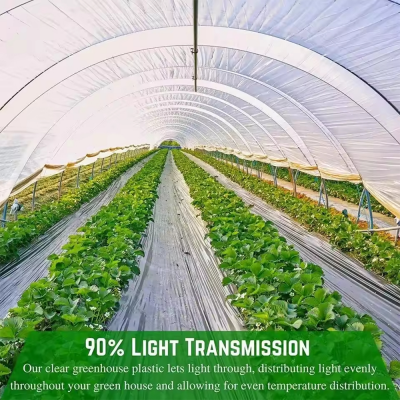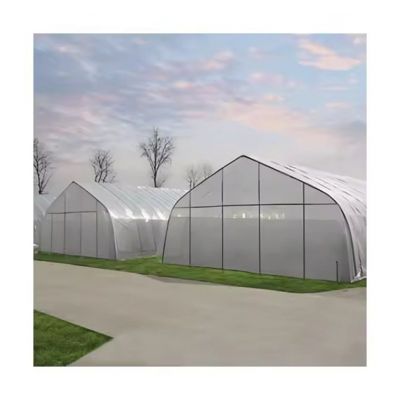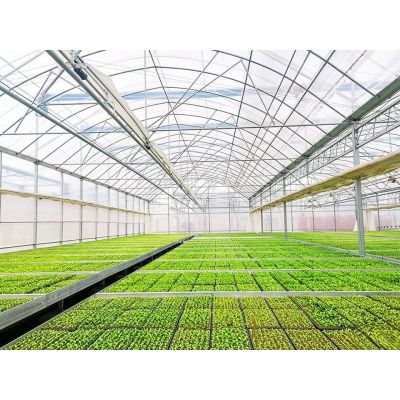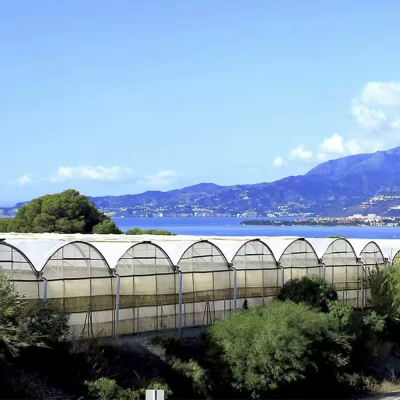
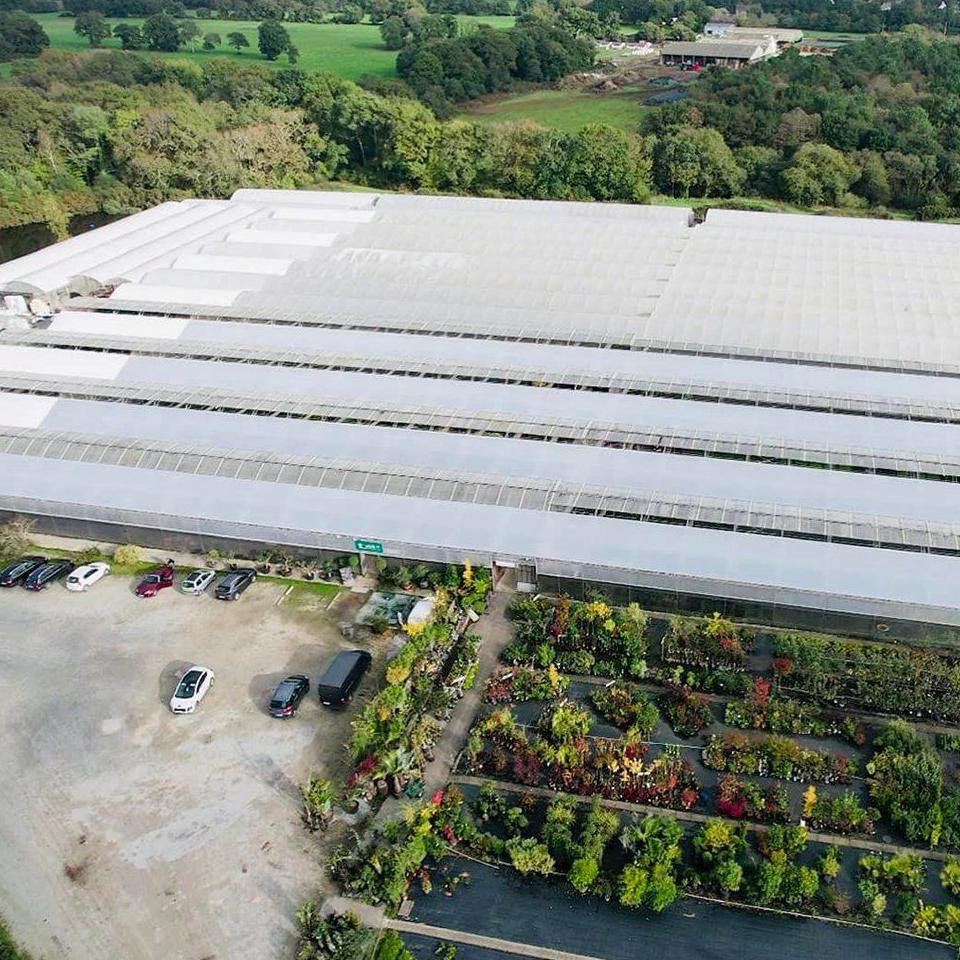
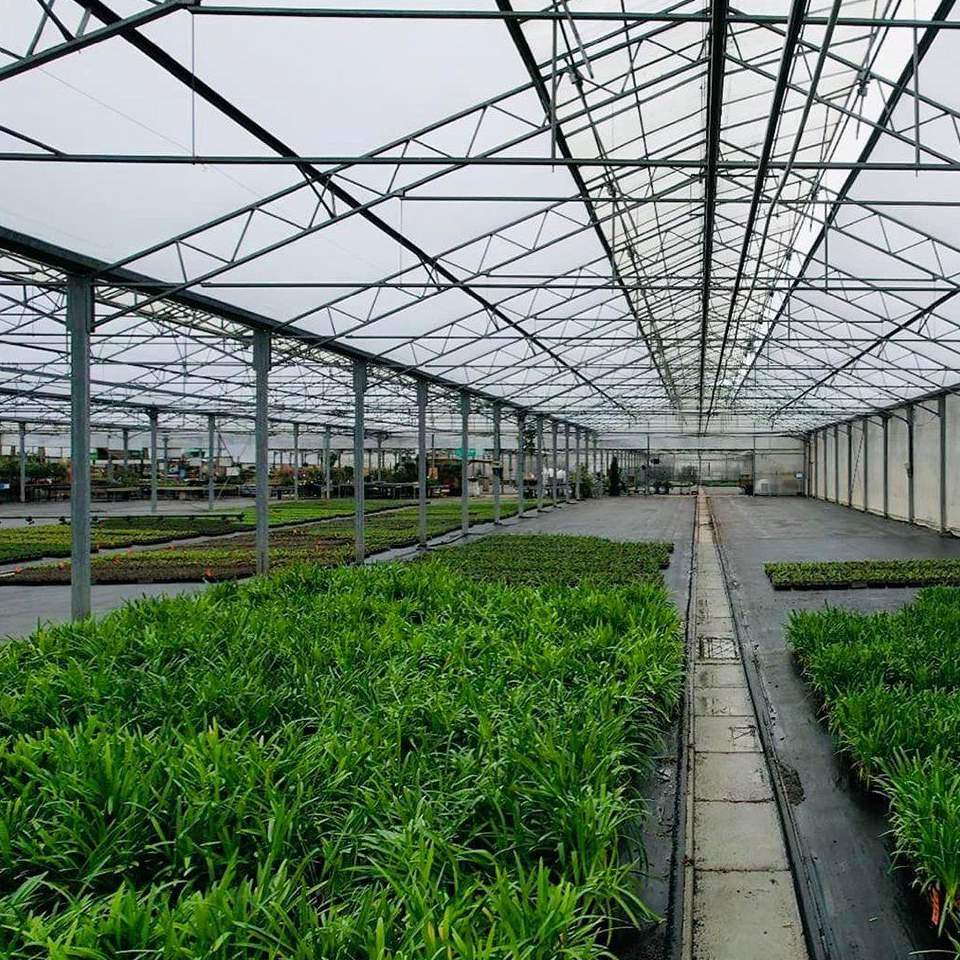
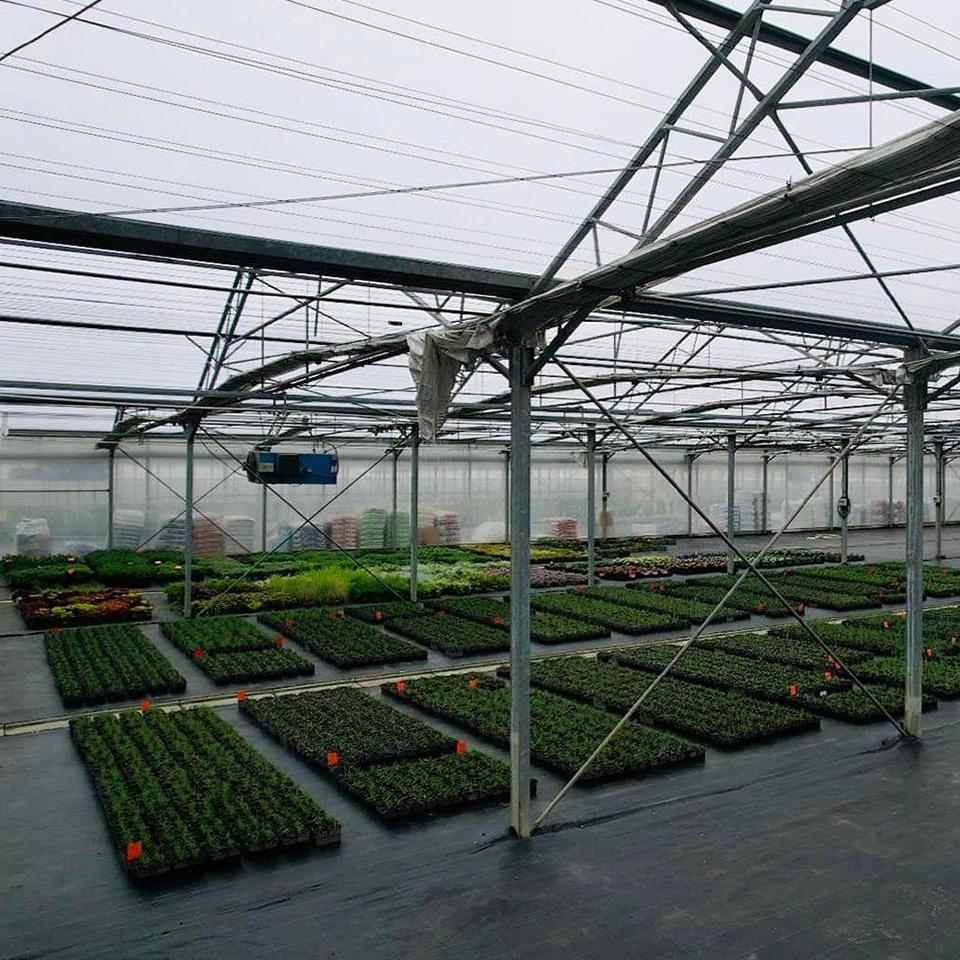
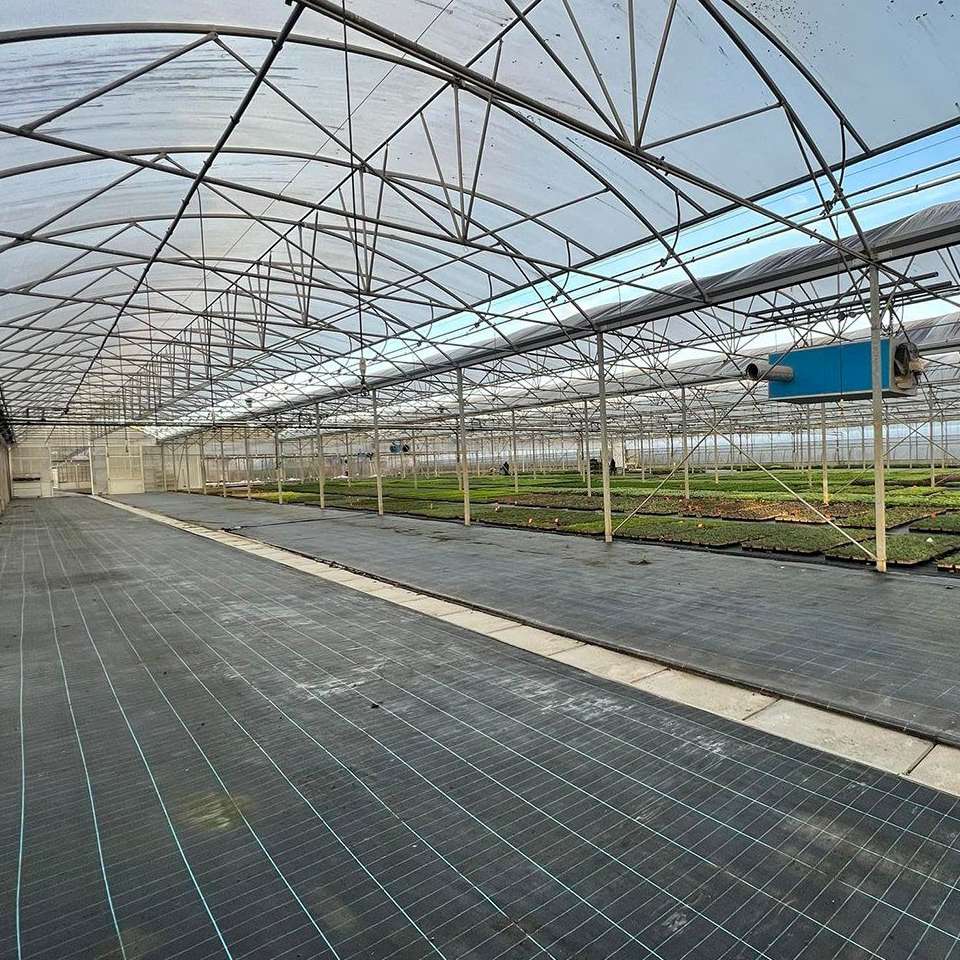
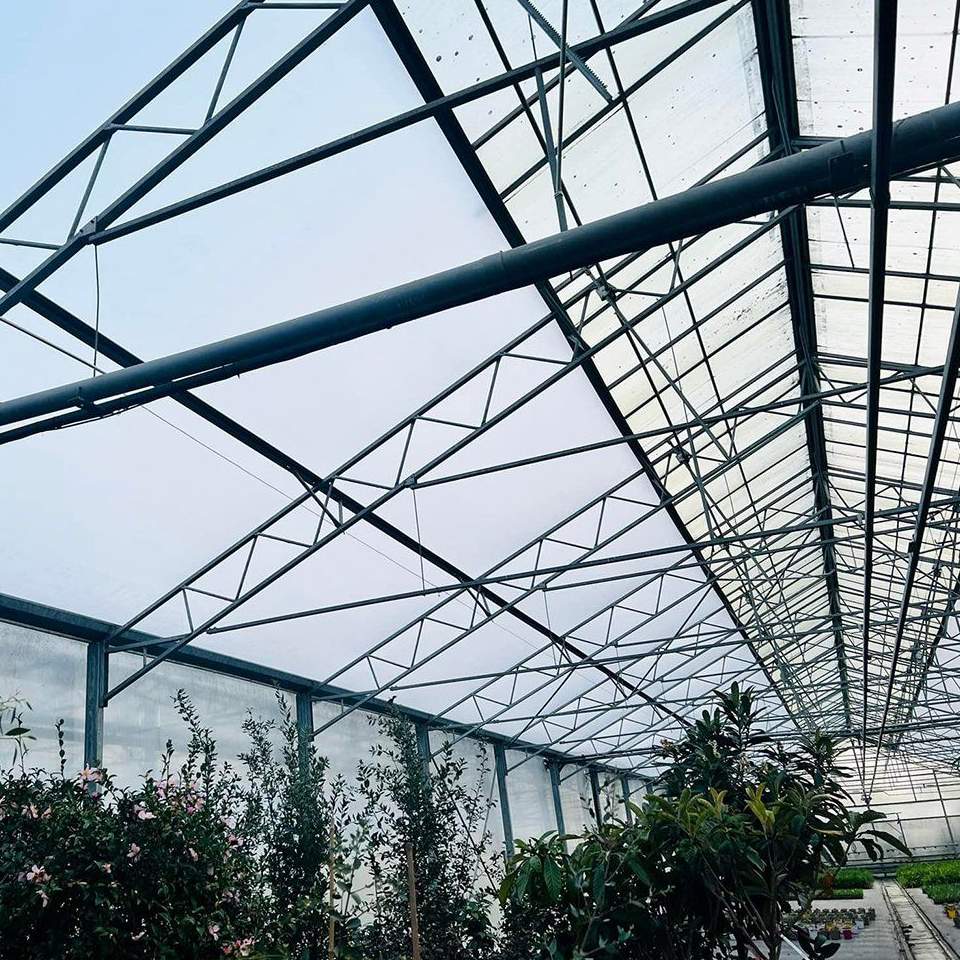
This house is built for flower crops that cannot take a swing in temperature. The frame is hot dip galvanized steel pipe formed into arched bays, bolted rather than welded, so the zinc coating stays whole at every connection. The cover is PO film at 0.12 mm or 0.15 mm, with a UV resistant coating, and it can be fitted as a single skin or as two layers with an air gap between them for extra insulation on tropical species and out of season work. Light transmission runs 90 percent to 95 percent. Roof vents and side vents are opened by hand or on an automated system, and heating can be added.
Flower crops are less forgiving than vegetables about a cold night. A bud that opens early or a petal that marks from condensation is a stem the grower cannot sell, which is why the houses used for cut flowers and pot plants are specified around temperature stability and airflow rather than around floor area alone. This house is put together with that in mind: an arched multi span frame, a film cover that can be run as two layers, and ventilation that moves air across the crop instead of dumping it in one corner.
Two things decide the quality of a flower crop under cover. The first is how far the night temperature falls, because a wide swing pushes stems into growth the market is not asking for. The second is whether water sits on the leaves and petals, since a wet flower head at dawn is where botrytis starts. Both are managed by the same set of choices: enough insulation to slow heat loss, and enough air movement to dry the canopy before the sun is on it.
The house is built in arched bays joined by gutters, so the covered area sits under one roof line with no internal columns across the working width. The wider film range is listed on the film greenhouse range page on this site.
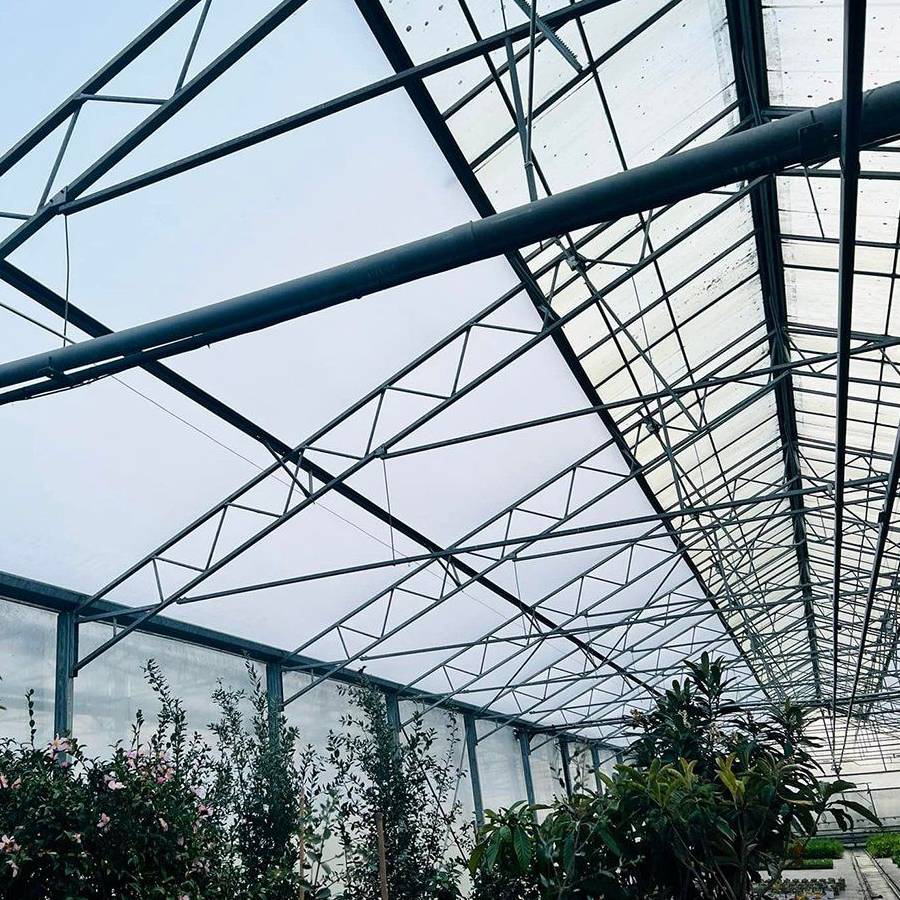
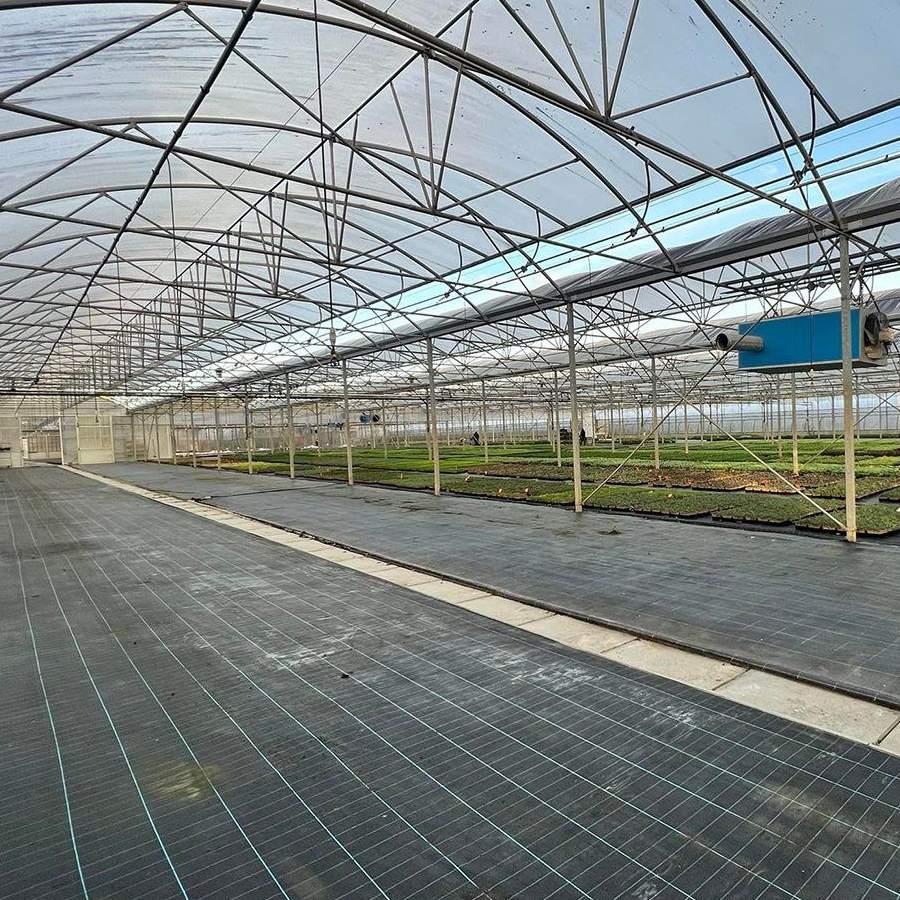
The frame is hot dip galvanized steel pipe, dipped after fabrication so the zinc reaches the inside of the tube and the cut ends. Sections arrive cut and drilled, and the bays are assembled with bolts and joining parts, which keeps the coating intact where a welded joint would burn it off. Span runs from 8 m to 12 m and the ridge reaches 3 m to 8 m, giving enough headroom for benches and for a trolley under them.
The covering is PO film in 0.12 mm or 0.15 mm, with a UV resistant coating and light transmission of 90 percent to 95 percent. It can be fitted as one skin, or as two skins with an air gap between them, and the second option is what makes the house usable for tropical species and for growing outside the normal season, because still air between the layers is the least costly insulation a film house has. A flower house on the same frame built around a single film skin is shown in the flower film greenhouse with a galvanized frame.
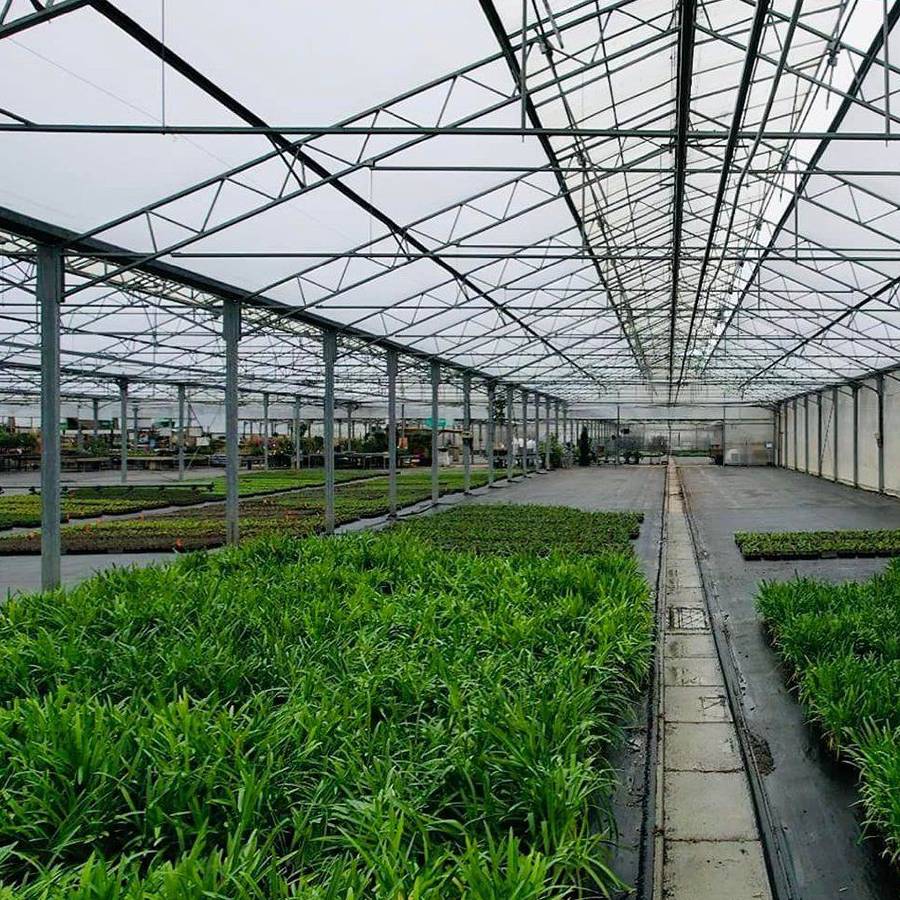
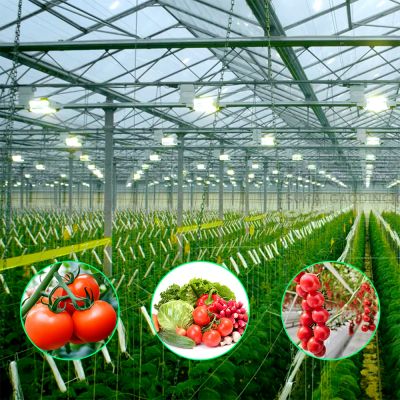
Ventilation is split between roof vents and side vents. Roof vents release the hot air that collects under the ridge, and side vents pull cooler air in at crop level, and running the two together gives a flow through the house rather than a single opening that only moves air near it. The vents can be worked by hand or on an automated system that opens and closes them on temperature, which is what makes the difference on a house that has to hold a set point overnight.
Heating is available as an option, from a boiler or from radiant pipe, and the choice normally follows the crop rather than the building. Shading, irrigation and fertilising systems can be added on the same order, so the house is specified once instead of being retrofitted season by season. A second flower house on this frame type is described in the greenhouse for flower production.
The table below is the standard build. Span, length, height, cover and ventilation are set to the site and to the crop.
| Greenhouse span | 8 m / 9 m / 10 m / 11 m / 12 m |
| Greenhouse length | 10 m to 100 m, or built to client demand |
| Greenhouse height | 3 m to 8 m |
| Structure material | Hot dip galvanized steel pipe |
| Cover material | PO film, 0.12 mm or 0.15 mm, UV resistant coating |
| Cover build | Single skin or two layers with an air gap |
| Light transmission | 90 percent to 95 percent |
| Ventilation | Roof vents and side vents, manual or automated |
| Heating | Optional, boiler or radiant pipe |
| Wind load | 0.35 kN/m2 |
| Crops | Cut flowers, pot plants, foliage and young plants |
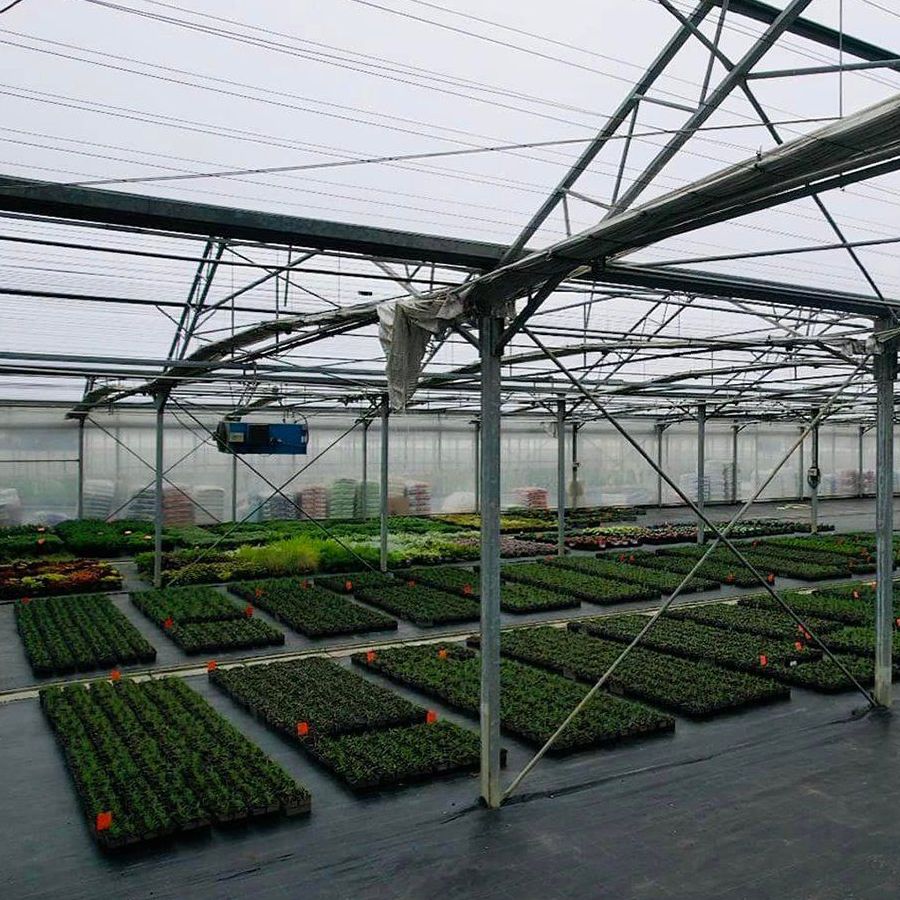
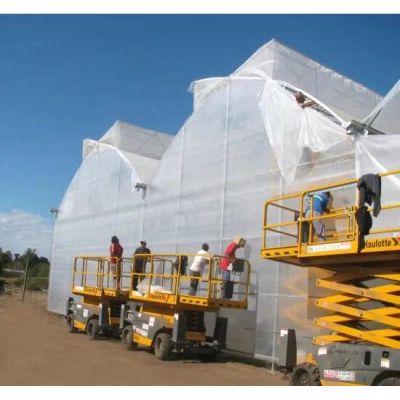
Erection is bolting work on a prepared base. The frame arrives as prefabricated sections with the joining parts and bolts, and each bay is squared as it goes up, because a multi span house shows any twist along the gutter line. A house of this size is normally standing in two to four weeks on a level site, and the frame is light enough that the bays can be lifted without heavy plant.
Maintenance follows the cover rather than the steel. The routine work is checking bolt torque and film tension after the first season, clearing gutters and downpipes so water cannot back up into the bays, and checking the vent gear before the season turns. Where the house runs two film layers, the inflation or tension between them is worth a look at the same time, because a slack inner layer rubs against the outer one and shortens the life of both.
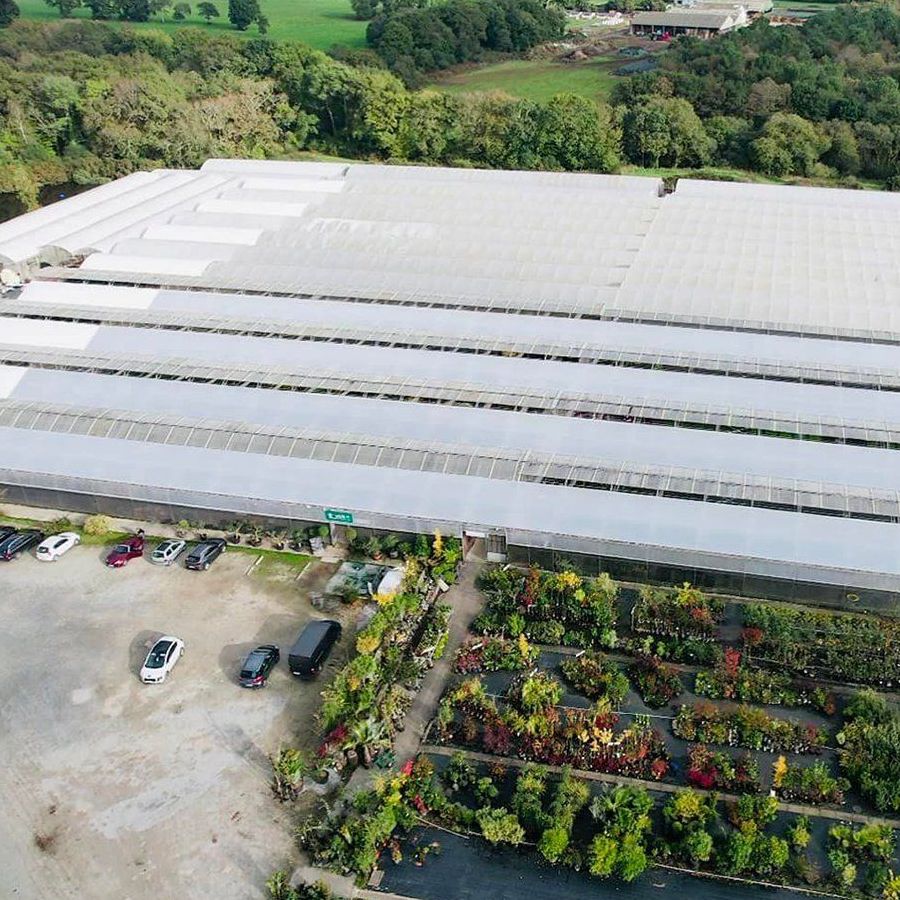
Houses of this type are used for cut flowers such as roses, chrysanthemums and lilies, for pot plants and bedding, for foliage crops and for propagation where the night temperature decides when the next batch can be started. They also suit growers who want the light a film house gives to a flower crop but need the temperature held steadier than a single skin can manage.
Published guidance on protected cultivation and on post harvest handling of the crop is available from NEN, the Dutch standards body whose documents cover horticultural materials and construction practice. Buyers setting up a controlled environment operation also follow the indoor farming sector coverage published by VerticalFarmDaily, which reports how these projects are built and financed. The question that decides the specification is usually the crop the house will be running in ten years, not only at handover.
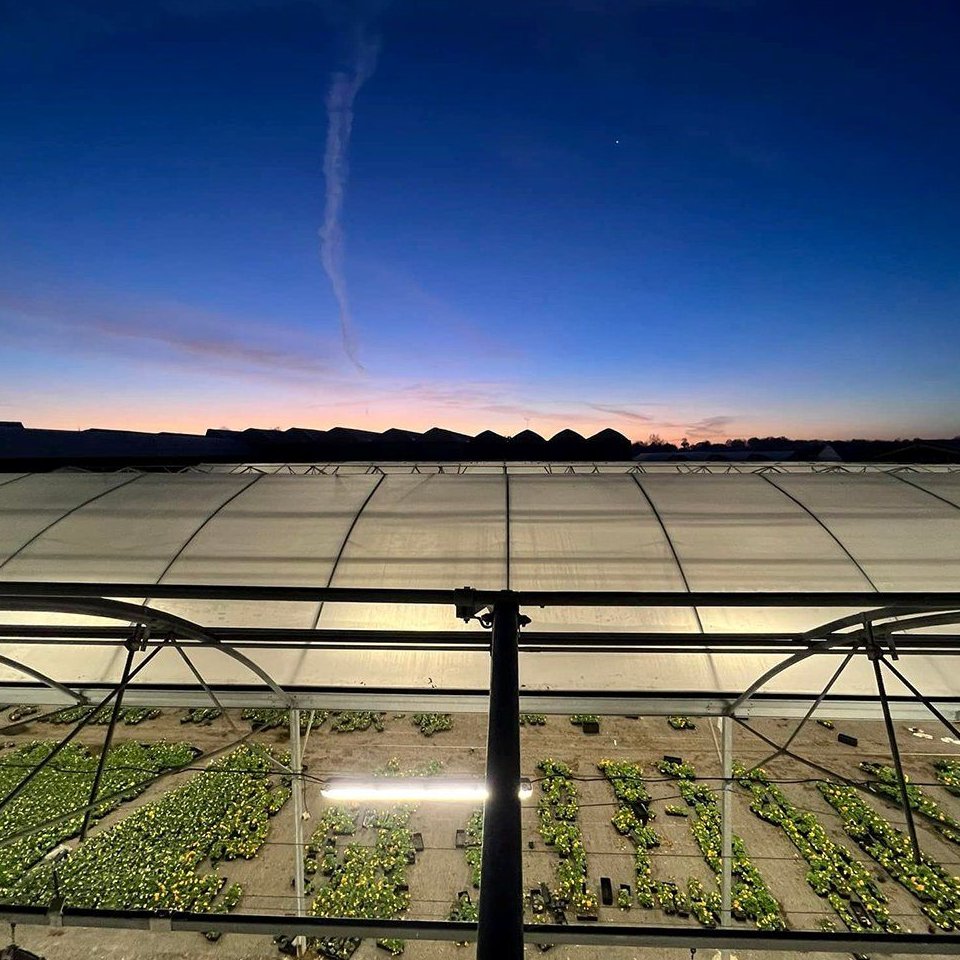
One layer gives the highest light transmission and is the simpler house to maintain. Two layers with an air gap between them hold the night temperature far better and cut condensation on the inner surface, which is what a flower crop needs through a cold season or when the house is growing a tropical species.
Two things do most of the work: the air gap between the film layers, which slows heat loss through the cover, and closing the vents before the outside temperature drops so the air already inside the house is kept rather than exchanged. Heating is available where a site needs a firm set point rather than a slower fall.
The galvanized steel frame is rated for 15 to 20 years under normal growing conditions. The film cover runs on a shorter cycle than the frame, typically 3 to 5 years depending on UV exposure at the site.
We provide a 10 year structural warranty and a 5 year anti-corrosion warranty on the galvanized frame. Details are set out in the contract for each project.
Send your site dimensions, the crops you plan to grow and your local wind and snow loads. We reply with a layout drawing and a full quotation.