
Industry News · Ziyang Bozong Greenhouse Industry Co., Ltd.
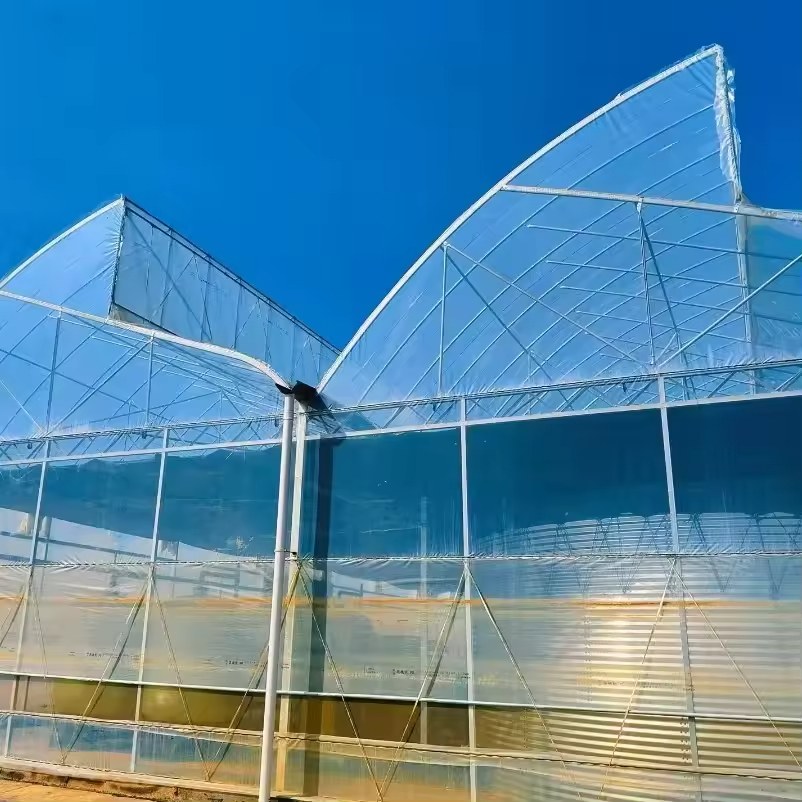
A greenhouse is a translucent structure that lets a grower hold a climate around a crop instead of accepting whatever the sky delivers. That is the whole idea, and most of the claimed benefits come from it.
The useful question is not whether a greenhouse is better than open field. It is which of the returns you can actually collect on your site, with your crop, and at what cost. Here is the honest version.

Inside a closed house, three things become adjustable: temperature, humidity and airflow. None of them becomes free, and none becomes perfect. What changes is the size of the swing.
A crop that would see 38 °C at midday in the open can be held several degrees cooler under shade and ventilation, and a night that would drop below the crop's limit can be buffered by the air volume and, where needed, by heating. Humidity can be lowered by exchanging air, which is what prevents the leaf wetness that drives most fungal problems.
The mechanism is ordinary physics: hot air rises and leaves through the highest opening, cooler air enters low, and the rate depends on how large those openings are. That is why ventilation design decides whether a house can hold a climate at all.
Rain, hail, wind and insects are four different problems and the structure addresses each one differently.
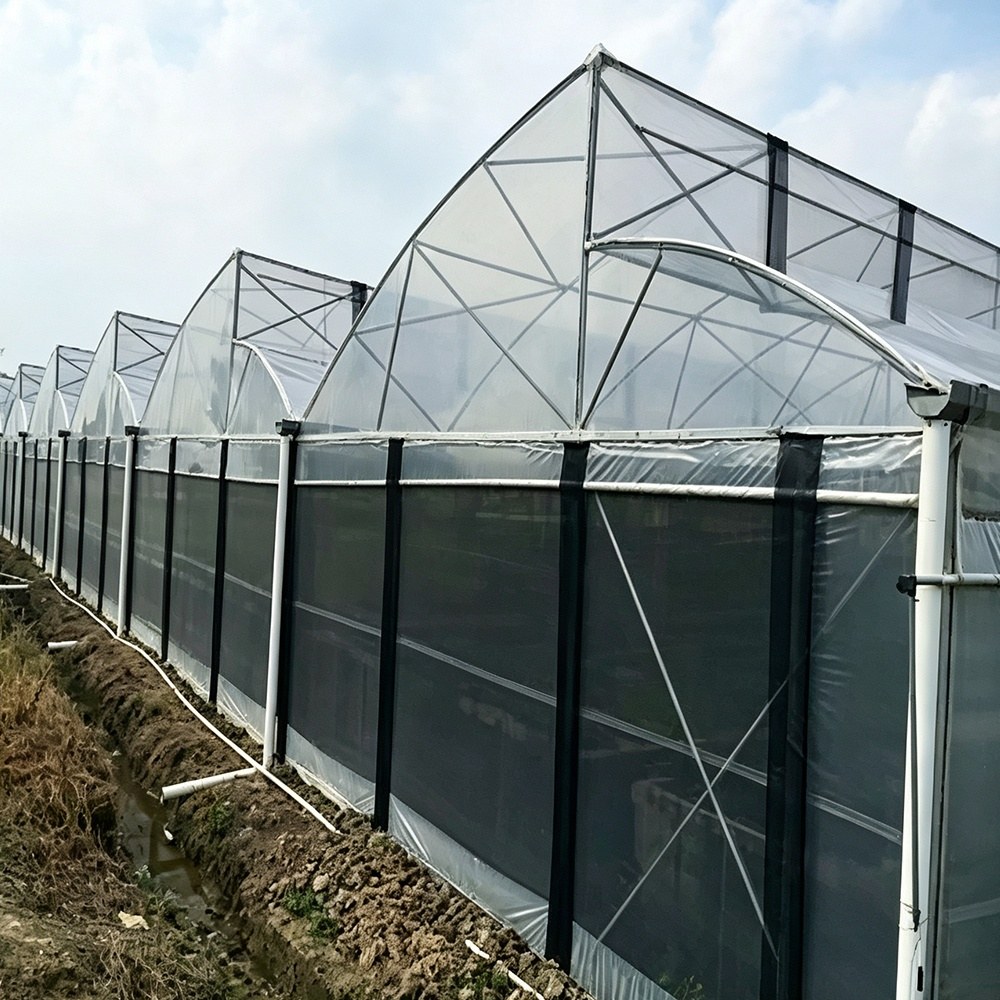
The cover stops rain from battering the canopy and from splashing soil onto leaves and fruit, which is where several soil-borne diseases start. It stops hail outright, and it takes the edge off wind, though wind protection is a structural question rather than a covering one. Insect screen, fitted to the openings, keeps the larger pests out — but it also reduces airflow, so the openings have to be sized for the screened condition.
The practical return is fewer spray rounds and a cleaner crop at harvest, which matters more for some markets than for others.
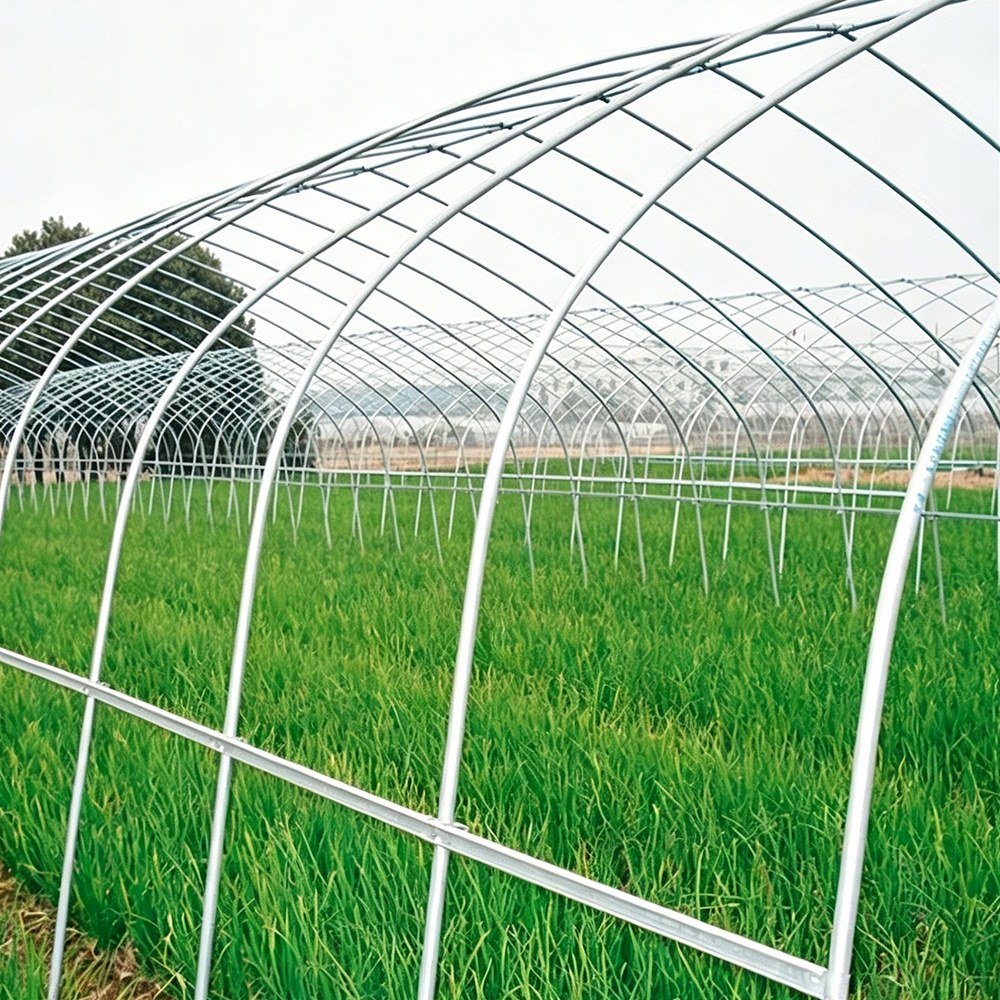
Under cover, water is applied rather than rained on. Drip lines deliver to the root zone, runoff is limited, and fertiliser can be metered into the same line.
That does three things: it cuts the volume of water per kilogram of produce, it keeps nutrients where the roots are, and it reduces the leaf wetness that foliar irrigation causes. On a site where water is pumped or bought, this is often the return that pays back fastest.
The fourth gain is commercial rather than agronomic. A protected crop — tomatoes, cut flowers, leafy greens — can be planted earlier and harvested later than the same crop in the open, and it can be supplied on a schedule rather than in a glut.
For a grower selling into a contract, steady supply is worth more than a big peak week. For a grower selling into a spot market, arriving two weeks before the field crop is where the margin sits.
Every gain above is conditional on the building doing its job for fifteen years rather than three.
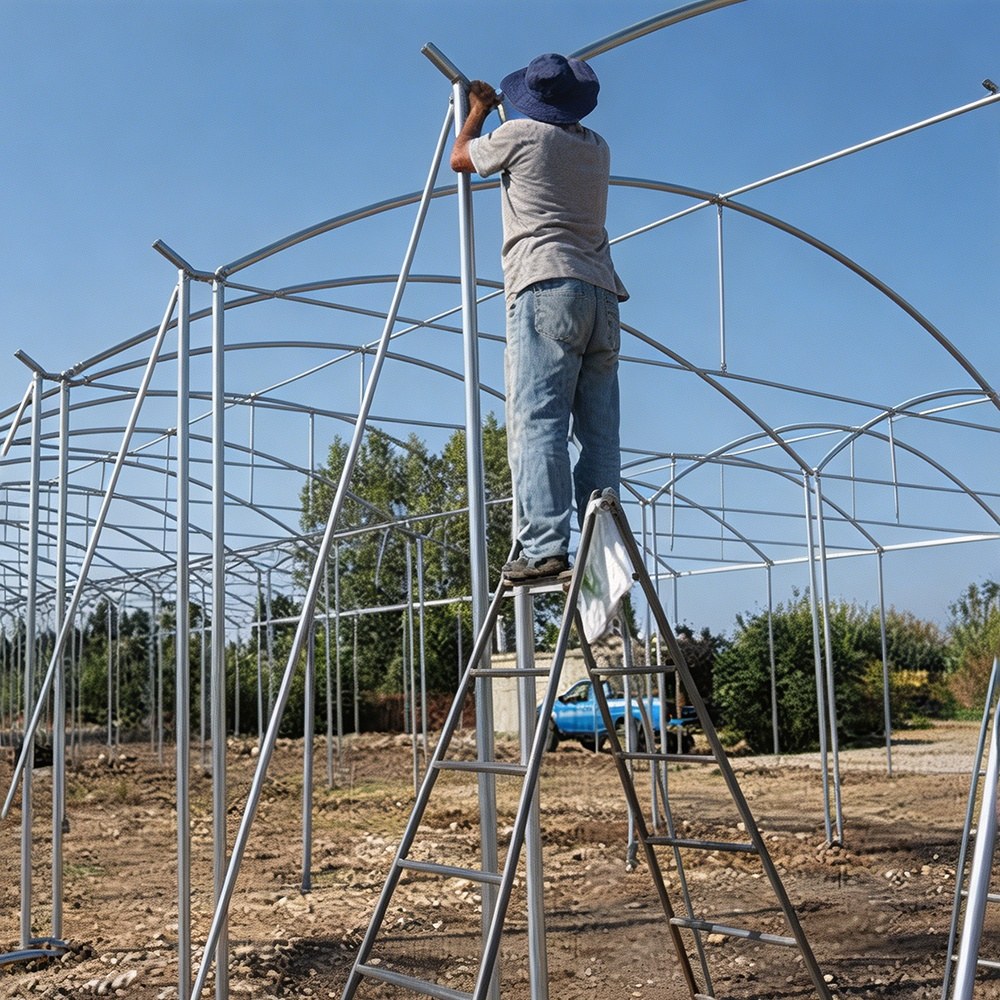
A frame with a thin, uncoated gutter starts weeping at the joints before the crop has paid for the house. A covering fixed with clips tears at the edge in the first strong wind. A roof vent that binds because the gutter deflects turns a climate-control system into a manual job.
This is why we spend more time on sections, coating and fixings than on the shape of the arch. The type of house sets what it can do, but the detailing sets how long it keeps doing it.
It is worth being blunt about the limits, because overselling this is how growers end up disappointed.
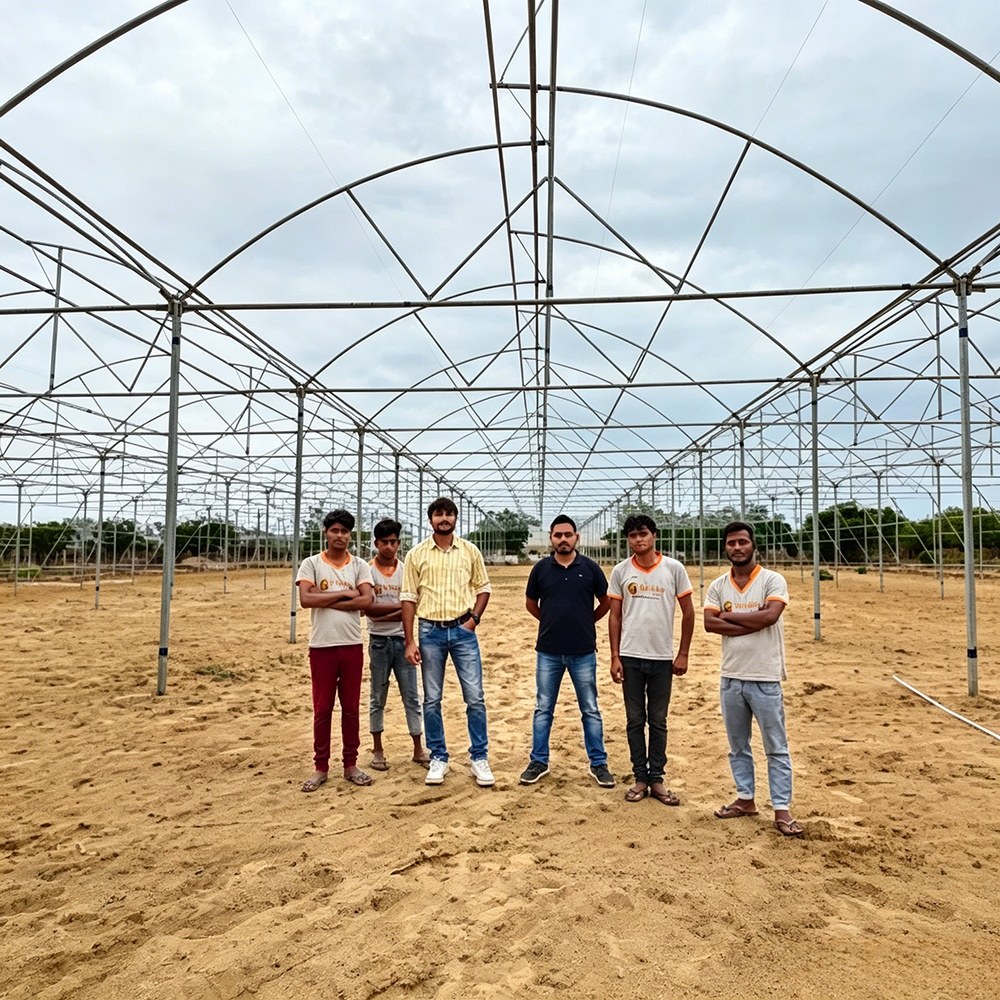
Before ordering, put four numbers on paper:
1. The yield you expect under cover, and the yield you get now — as a range, not a single figure 2. The price difference between your current grade and the grade a protected crop can reach 3. The water, fertiliser and spray cost you expect to save 4. The annual cost of the structure, spread over its service life, plus cover replacement
If the first two do not move, the third and fourth will not rescue the case.
We design the structure to your site: span, bay and height from your conditions, wind and snow loads stated in the quotation, hot-dip galvanized frame with a 10-year structural warranty and a 5-year warranty against corrosion perforation, and a service life of 15-20 years in normal agricultural environments.
We do not promise free agronomy consultancy for life. We supply drawings, a bill of materials and installation guidance, and we can put you in touch with growers running similar crops. The rest of the return comes from how the house is managed.
No. It is more controllable and more expensive. Whether it is more profitable depends on whether your market pays for the control — graded quality, out-of-season supply or a contract schedule.
The structure does not add value by itself. It protects the crop and shifts the harvest window; the price you get for that is a market question, not a construction one.
Yes, and it is the usual way. Multi-span houses are built bay by bay, and single-span tunnels can be added one at a time. Plan the water, power and access for the final size, even if you build the first house now.
Ziyang Bozong Greenhouse Industry Co., Ltd. manufactures hot-dip galvanized greenhouse structures and agricultural accessories for commercial growers. Protected cultivation research is published by the International Society for Horticultural Science; industry coverage is published by HortiDaily.


