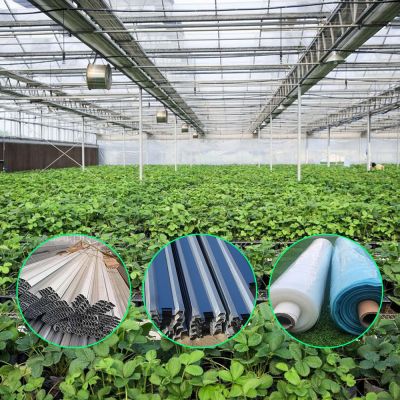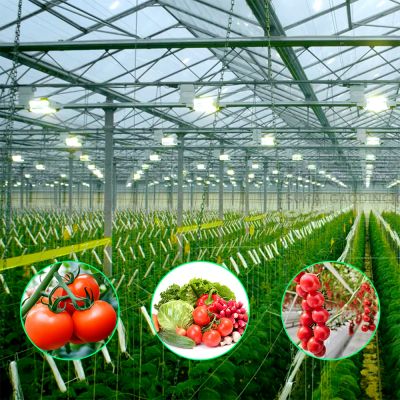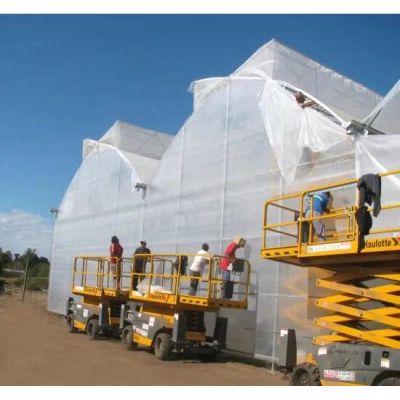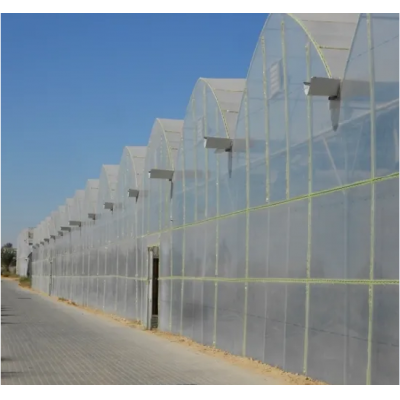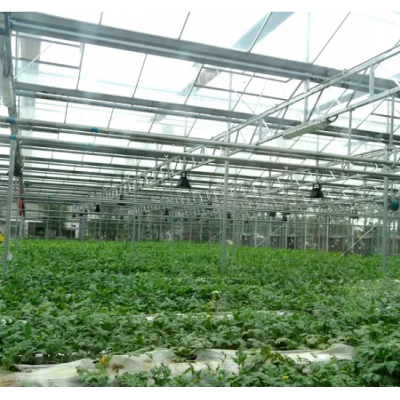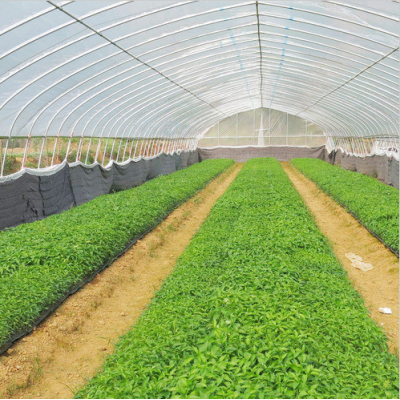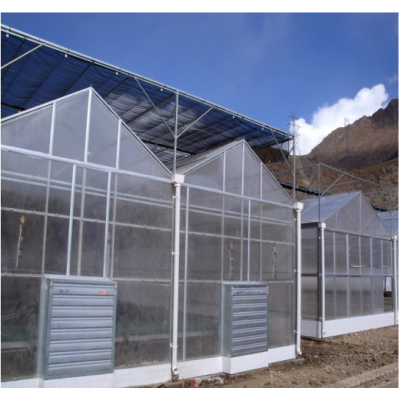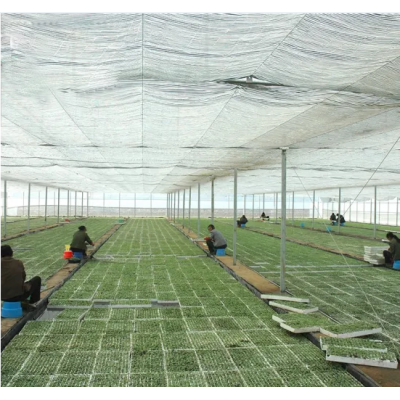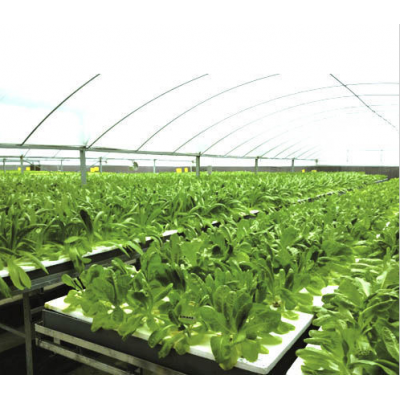


This system is a nutrient film layout built at industrial scale, with white food grade PVC channels carried on galvanized steel support pipes and the feed run automatically rather than by hand. A shallow stream of solution moves along each channel past the roots, so water, oxygen and nutrients arrive together and what the crop does not take up is collected and returned. It is laid out for a production block rather than a trial, which means the row spacing, the walkways and the return are all set from the start.
At industrial scale the question is not whether the system works, it is whether it works the same way on every channel in the block. That comes down to two things: a layout that delivers solution evenly, and a return that brings it back rather than losing it, so the crop is fed from a known solution instead of from whatever happens to arrive at the end of the row.
The premise of a nutrient film layout is that the roots do not need to be submerged. A shallow stream running along the channel floor gives them water and oxygen at the same time, and because the film is thin the solution stays aerated as it moves. That combination is difficult to reproduce in a deep tank, and it is the reason growth is even along a whole run rather than strongest at the feed end.
At scale the second advantage is the water and fertiliser loop. What the crop does not take up is collected at the end of the channel and returned to the tank, so the block is fed from a known solution rather than from fresh water every pass. Hydroponic layouts under cover are grouped on the hydroponic system range page on this site.

Channels are white food grade PVC, held level to a small fall along the run so the film moves at a steady speed rather than pooling at the low end. Support is a galvanized steel pipe frame, which carries the channels at a working height and lets the layout follow the row spacing of the house instead of the other way round.
The fall, the channel length and the number of rows are set together, because a run that is too long for the fall will not hold a film over its whole length and the plants at the far end starve first. That is the calculation worth getting right at the design stage, since it decides how the block is divided and how the walkways fall between the rows.

The feed is automated, so the system runs to a set point rather than to a manual valve. The pump cycles on a timer or a sensor, the tank is topped up and dosed on the same schedule, and the return carries what is not taken up back to the tank instead of running to waste.
Because every plant on a channel shares the same solution, the system is only as even as its flow, and at industrial scale that is checked rather than assumed. Filters, the pump and the return are the parts that keep it even, and a blocked filter or a pump running slow shows up along the row rather than at one point, which is why they are serviced on a schedule. A layout built on the same principle for a smaller house is described in the automated NFT hydroponic planting system.

The table below is the standard build. Channel length, row spacing, support height and the control package are set to the house and to the crop.
| System type | Nutrient film, channels with a shallow flowing solution |
| Channel material | Food grade PVC |
| Channel colour | White |
| Support frame | Galvanized steel pipes |
| Feeding | Automated pump cycle with dosing and tank top up |
| Drainage | Return line to the tank for recirculation |
| Layout | Rows set to the house, with aisles at working height |
| Crops | Leafy vegetables, tomato, herbs, flowers and microgreens |
| Use | Inside a greenhouse or a controlled growing room |
| Customisation | Channel length, row spacing and support height set to the house |

The system arrives as channel lengths, support pipe, fittings and the control set, and is assembled in the house rather than fabricated on site. The support frame is set out and levelled first, because the fall along each run is what makes the film work, then the channels are laid in and the feed and return are connected to the tank and the pump.
At industrial scale the schedule matters as much as the parts. Filters are cleaned and the tank is checked on the same cycle as the crop, the return is flushed when the block is turned over, and the channels are washed between crops so root material does not carry from one planting to the next. The pump and the dosing unit are serviced rather than replaced on failure.

Systems of this type are used for leafy vegetable production at scale, for tomato and cucumber on a recirculating feed, and for herb and microgreen work where a clean root zone matters. They suit growers converting a soil block to soilless production, operations that are short of clean water and want to recirculate, and houses that expect to add lighting, cooling or a larger control layer to the same layout later.
Research and extension material on protected crop production, including work on soilless growing, is published by the Food and Agriculture Organization. Horticulture and growing industry reporting is published by HortWeek. A vertical layout on the same principle is described in the commercial hydroponic grow tower for strawberry and leafy crops.

Because the roots need oxygen as well as water. A shallow stream along the channel floor stays aerated as it moves and gives the roots water and nutrients in the same pass, which is why growth is even along the run rather than strongest at the feed end.
The fall along the run. A channel that is too long for its fall will not hold a film over the whole length, and the plants at the far end are the first to suffer, so channel length and fall are set together at the design stage.
The PVC channels and the galvanized support frame are both built for long service under normal growing conditions. The pump, the dosing unit and the filters run on their own service cycle.
We provide a 10 year structural warranty and a 5 year anti-corrosion warranty on the galvanized support. Details are set out in the contract for each project.
Send your house dimensions, the crop you plan to run and the way you want the rows divided. We reply with a layout drawing and a full quotation.