

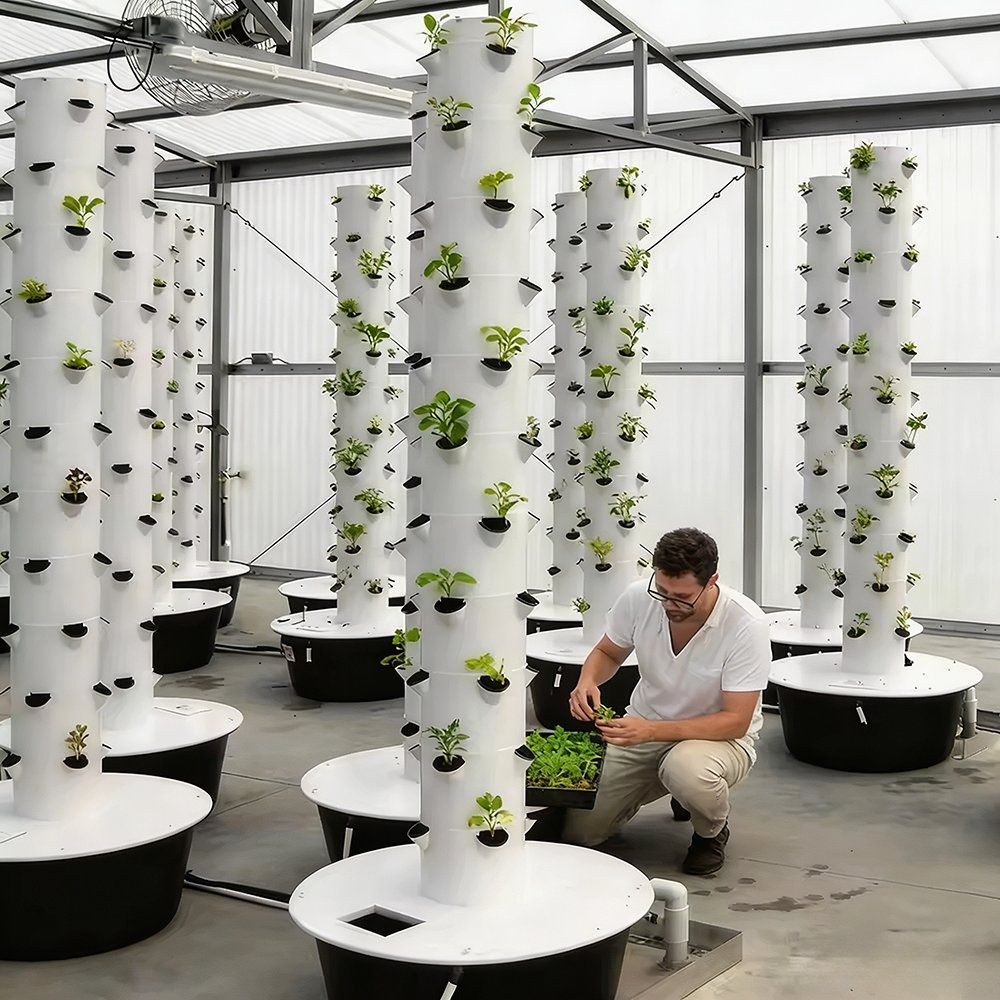
Aeroponics takes the growing medium out of the system altogether. The roots hang in the tower and are fed by a mist rather than by a film or a bed, which means the root zone is mostly air and the water is only present for a few seconds at a time. The mist is made by a 70 bar pump and runs on a cycle, so the roots are wet often enough not to dry and dry often enough to stay aerated. Each column carries 48 planting ports over 1.5 metres and stacks in sections, so the height is set on site.
In every other hydroponic layout the roots are in something: a film of solution, a bed of substrate, or a deep tank. Aeroponics takes that away and puts the roots in air, delivering water as a mist for a few seconds at a time. It is the layout that uses the least water per plant and the one that has the least tolerance for a pump that stops.
Because the roots are exposed, oxygen is no longer the limiting factor it is in deep water culture. A root suspended in mist has air on every side between cycles, and the mist itself carries dissolved oxygen that a submerged root would have to compete for. That is the reason aeroponics is used on crops where root health and speed of leaf expansion decide the picking date.
The trade is that there is no buffer. A film system holds solution against the root for minutes after a pump stops, and a bed of substrate holds it for hours. A mist column holds nothing, so the cycle, the nozzles and the pump are the whole system and are maintained as such. Columns of this family sit with the rest of the hydroponics system range on this site.
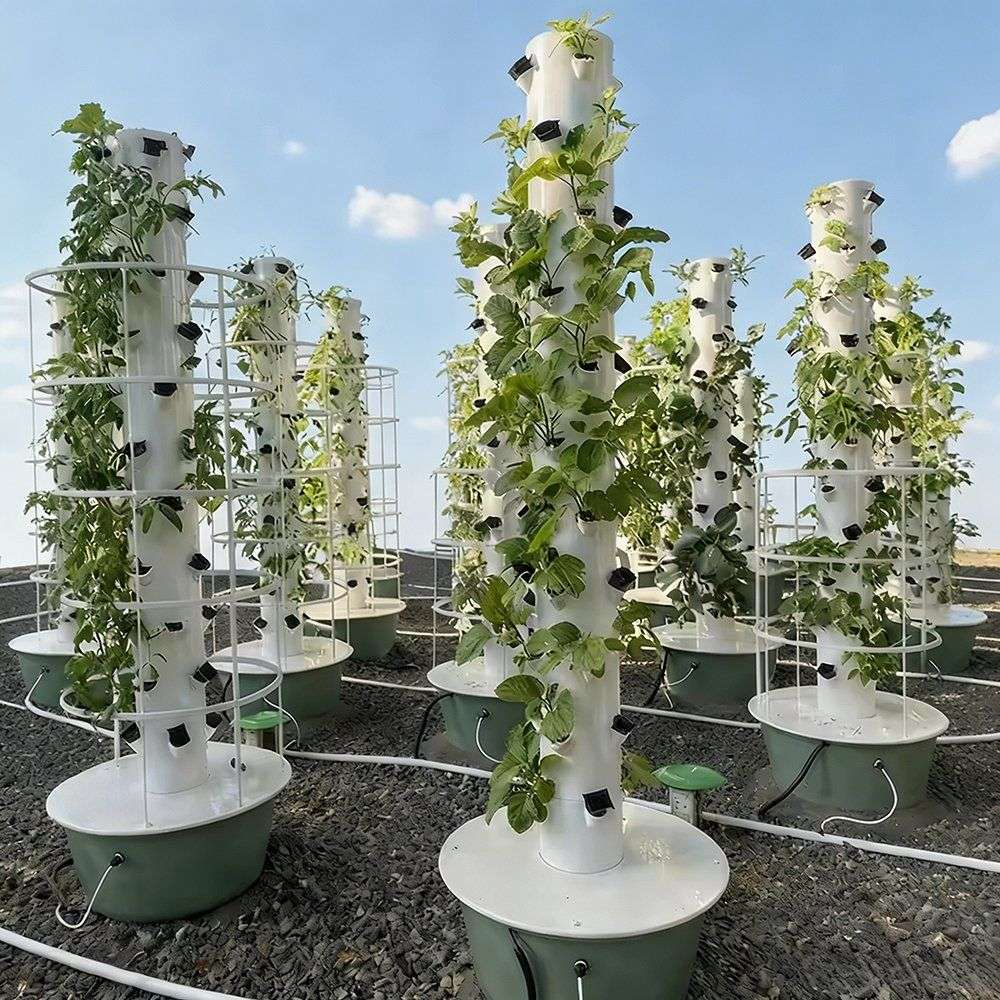
The mist is produced by a high pressure pump running at 70 bar through nozzles inside the column. Pressure is what decides how fine the mist is, and a fine mist is what reaches the whole root mass rather than wetting the top third of it. The standard cycle runs the pump for about five seconds every three minutes, which is short enough that the roots are never saturated and frequent enough that they never dry.
Filters ahead of the nozzles are the part that protects the pressure side. A nozzle passage is far smaller than an emitter, so the filtration that a drip system tolerates is not enough here, and the elements are cleaned on a short cycle rather than at the end of a run.
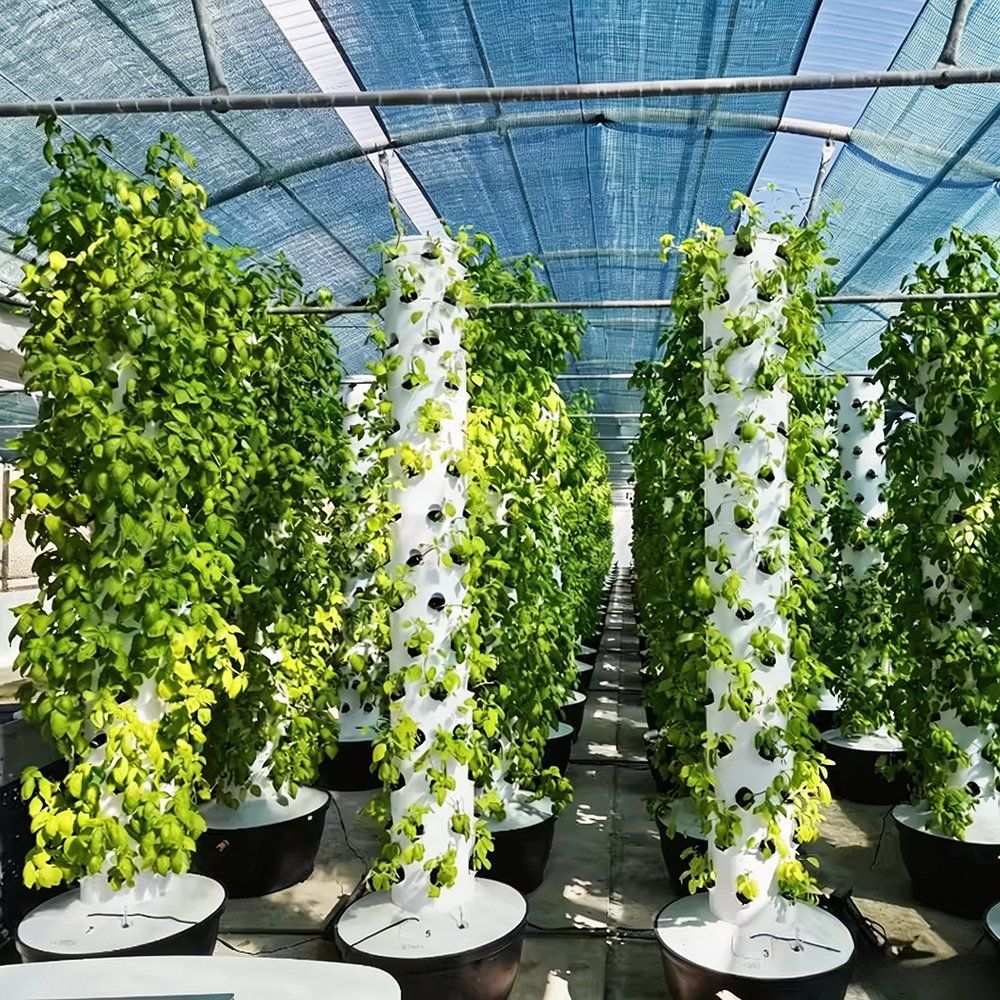
Each column is 1.5 m tall and carries 48 planting ports, and the columns stack in sections so the height follows the house rather than the other way round. Sections arrive with the mist nozzles already fitted, and the pump kit is matched to the number of columns on the order, which means a block is built out from a tank and a manifold rather than assembled from loose parts.
Crops are set into the ports in net pots, so a column is replanted by lifting one pot and setting the next rather than by emptying a bed. On a lettuce or herb programme that is what keeps the turnaround between crops measured in days.
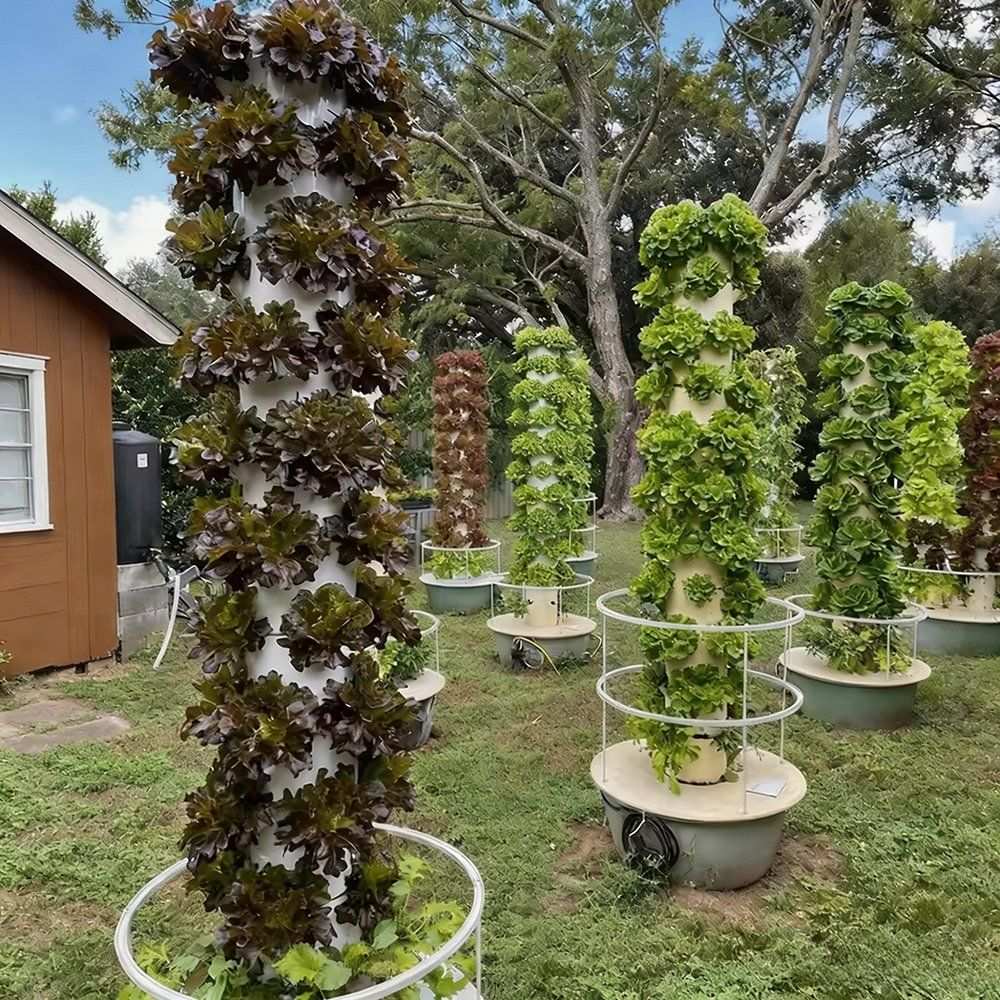
The table below is the standard build. Column count, height and the pumping package are set to the house and to the crop.
| Growing method | Aeroponic, soilless, roots in mist |
| Pump pressure | 70 bar high pressure |
| Mist cycle | About 5 seconds every 3 minutes, adjustable |
| Column height | 1.5 m, stackable in sections |
| Planting ports | 48 per column |
| Nozzles | Pre installed mist nozzles in each section |
| Column material | Food grade PVC, white |
| Support pipes | Galvanized steel pipes |
| Water system | Recirculating; deep water culture or aquaponic loop |
| Crops | Lettuce, herbs, leafy vegetables and microgreens |
| Customisation | Column count, height and pumping package set to the site |
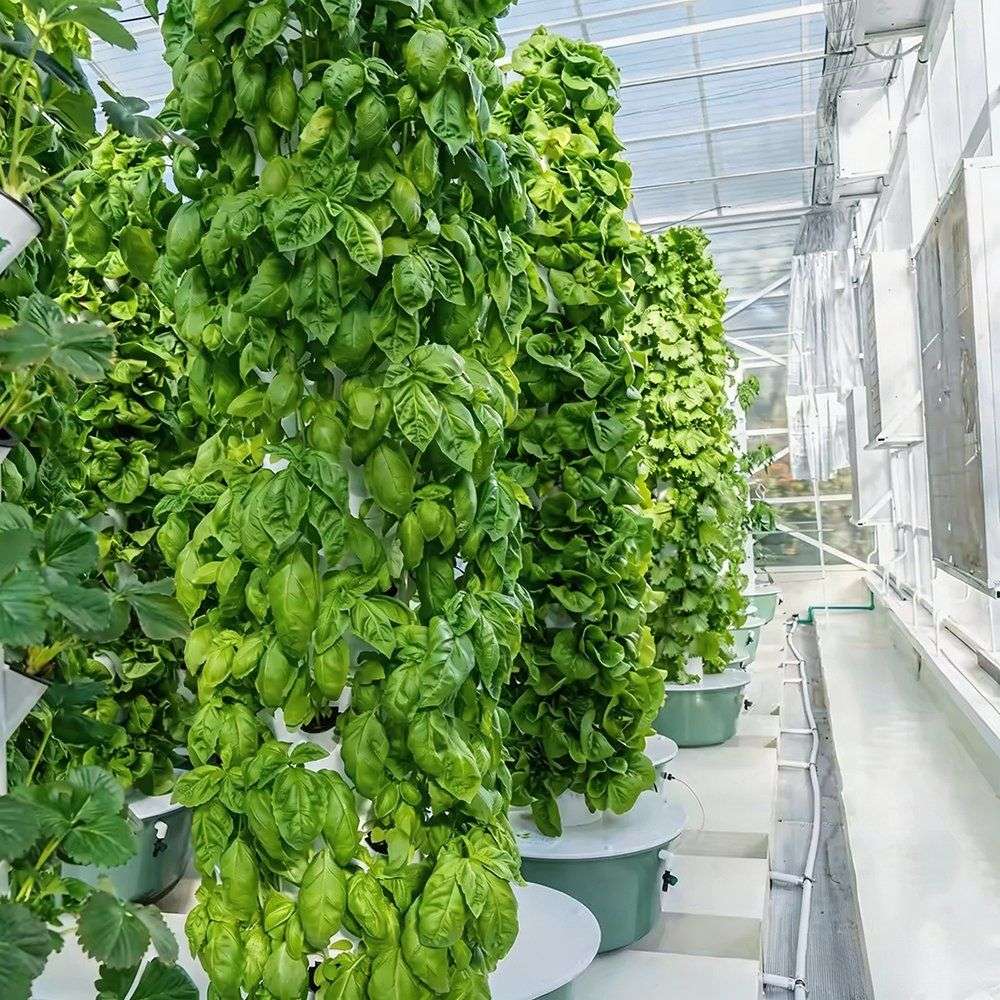
Columns are set on a level base, because the sections stack and a column out of plumb loads one side of the joints and misaligns the nozzles. The tank, the pump and the filters go in first, the manifold is run, and the columns are stacked and plumbed to it. The cycle is set once the system is wet, and the nozzle pressure is checked at the top column rather than at the pump, since that is where a pressure loss shows up first.
Maintenance is filters, nozzles and the pump, in that order. Nozzles are checked and descaled on a routine, because a partly blocked nozzle starves one band of the column and the crop shows it before any gauge does. Filters are cleaned on a short cycle, the pump is serviced on the maker schedule, and columns are washed through between crops so root material does not carry over. The pump is the one part worth holding a spare of: a mist column has no buffer and very little time.
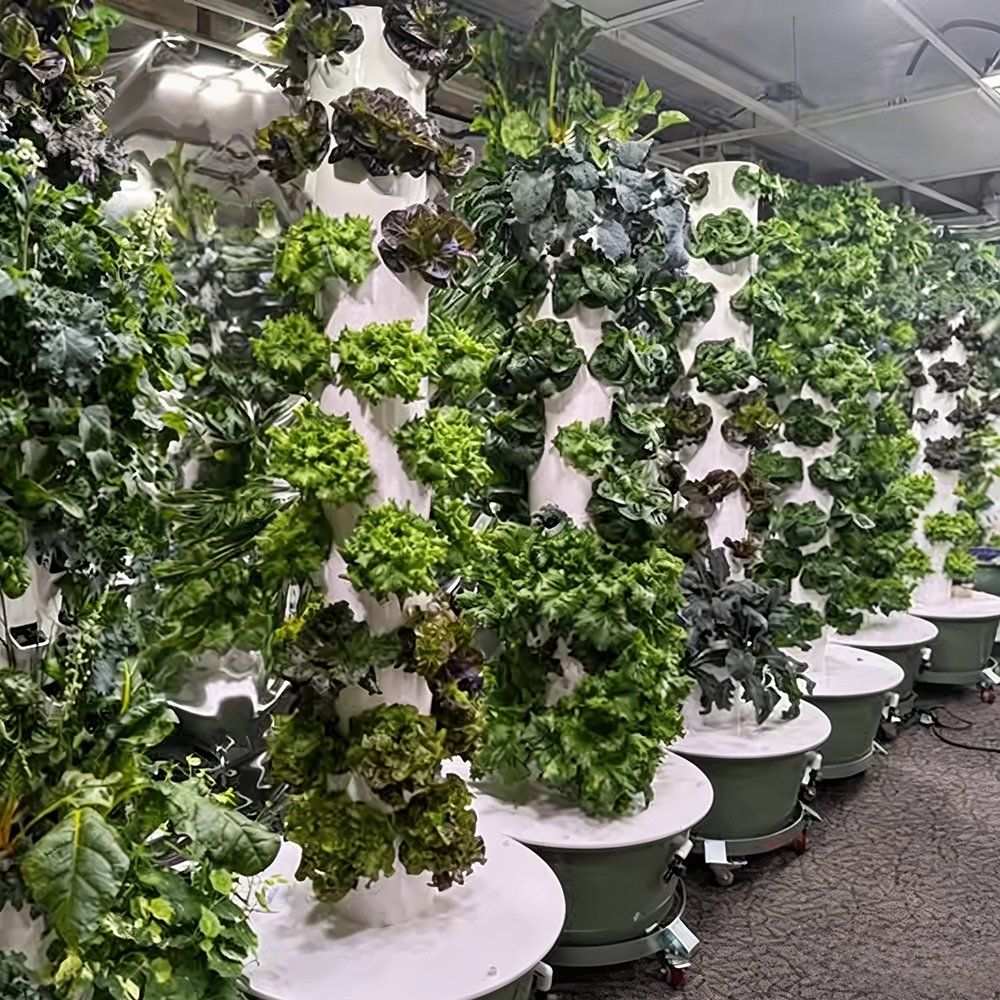
Mist columns are used for lettuce and herb production on a short cycle, for leafy vegetables and microgreens where the crop is cut rather than picked over, and for blocks where water use is metered or limited. They suit commercial houses adding capacity without a new building, operations that want the same tank and manifold to serve a run of columns, and projects where the growing system is specified before the house. A tower built on the same principle for lettuce and herbs on a fixed frame is described in the 5 layer hydroponic grow tower kit page.
Research and extension material on controlled environment horticulture is published by Michigan State University Department of Horticulture. News and analysis on indoor and vertical production is published by VerticalFarmDaily. A system built around a recirculating film rather than a mist is described in the nutrient film technique hydroponic farming system page.
Because the roots stay in air between cycles. A root suspended in mist has oxygen on every side rather than competing for it in a solution, which is what suits crops where root health and leaf expansion set the picking date.
The roots dry out quickly, because a mist column holds no solution against them the way a film or a bed does. That is why the pump, the filters and the nozzles are the parts serviced on a schedule, and why a spare pump is worth keeping on site.
The galvanized support steel is rated for 15 to 20 years under normal growing conditions. The pump, the nozzles, the filters and the column sections run on their own service cycles and are replaced as they come due.
We provide a 10 year structural warranty and a 5 year anti-corrosion warranty on the galvanized steelwork. Details are set out in the contract for each project.
Send your house dimensions, the crop you plan to run and the growing layout you intend to use. We reply with a layout drawing and a full quotation.