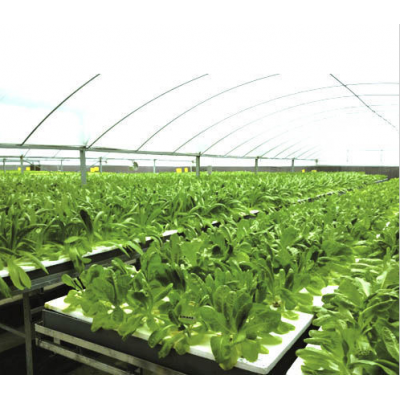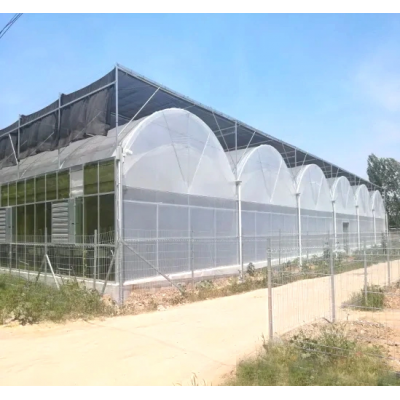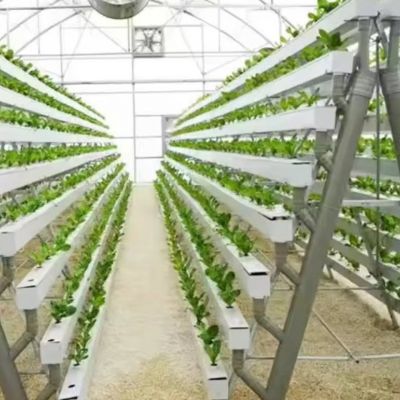


This set is the water side of a hydroponic house rather than a structure. It arrives as dosing pumps and pH controllers, drip stakes, inline filters, meters and the fittings that join them, so a grower starting a house does not have to build the feed system from separate parts. Everything that touches the solution is chemical resistant, and the larger sets ship as modular manifolds with quick connect fittings, flat packed on a pallet. Bulk orders can be put together for a distributor rather than a single site, with the spares that wear first included in the box.
A greenhouse is one half of a growing operation. The other half is the water, and it is the half that costs a grower the most time when it is bought piece by piece. This set is put together as the water side, so the feed system and the parts that keep it running arrive as one order with the fittings already matched.
The core of the order is a set of pre calibrated dosing pumps with pH controllers, which take the nutrient stock and hold the solution at the strength the crop plan asks for. Around that sit the parts that deliver it: anti clog drip stakes, inline filters, EC meters, tubing cutters and net pots. The large sets ship as modular manifolds with quick connect fittings, so a run is assembled on site from standard lengths rather than made up to order. Set sizes for the hydroponics system range are quoted to the house.
Dosing is the part of a hydroponic system that decides whether the crop is even. Solution is mixed in a tank from two or more stock concentrates and held at a set point, and the pumps are calibrated before they leave so the dosing figure on the controller is the figure the crop receives. A pH controller corrects the mix as the water is drawn from source, which matters on a site where the supply shifts between wet and dry season.
The EC meter is the grower check on all of it. Where the controller sets the strength, the meter is what confirms the strength at the channel end, and the two together are what let a block of channels be trusted rather than sampled.
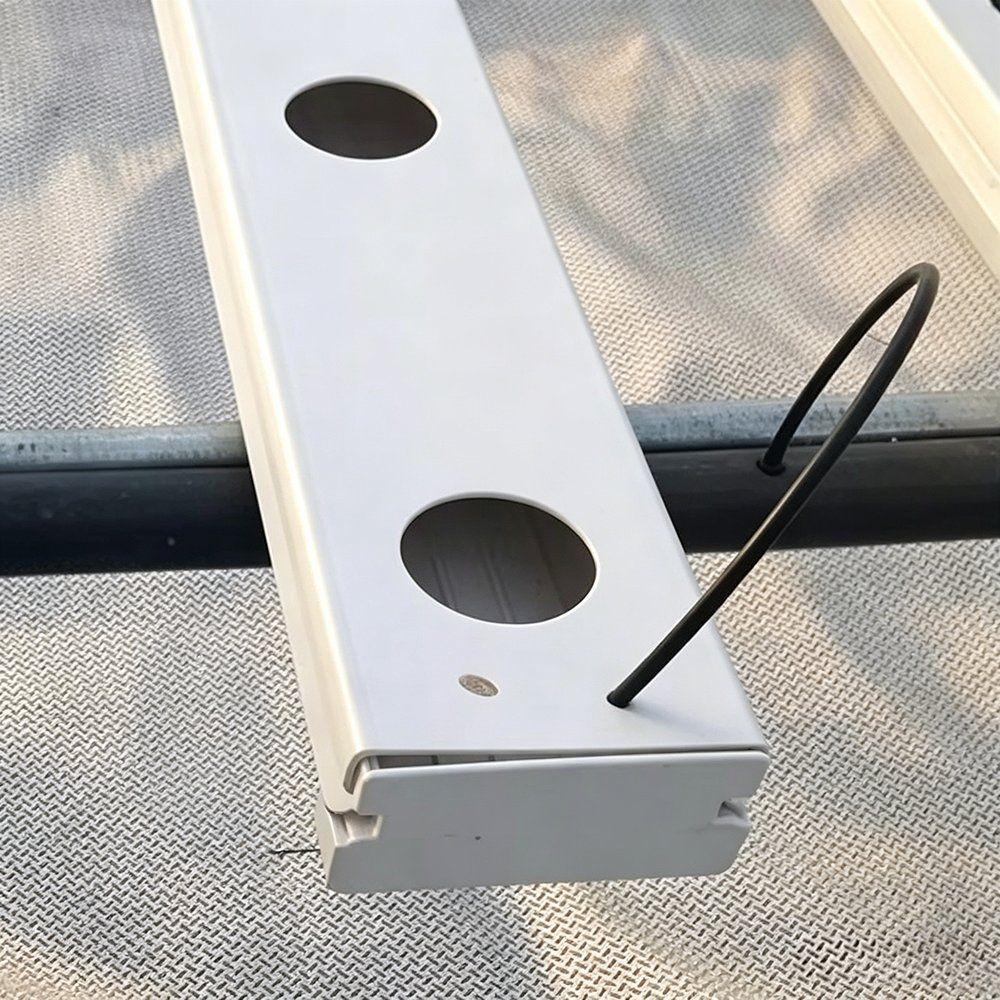
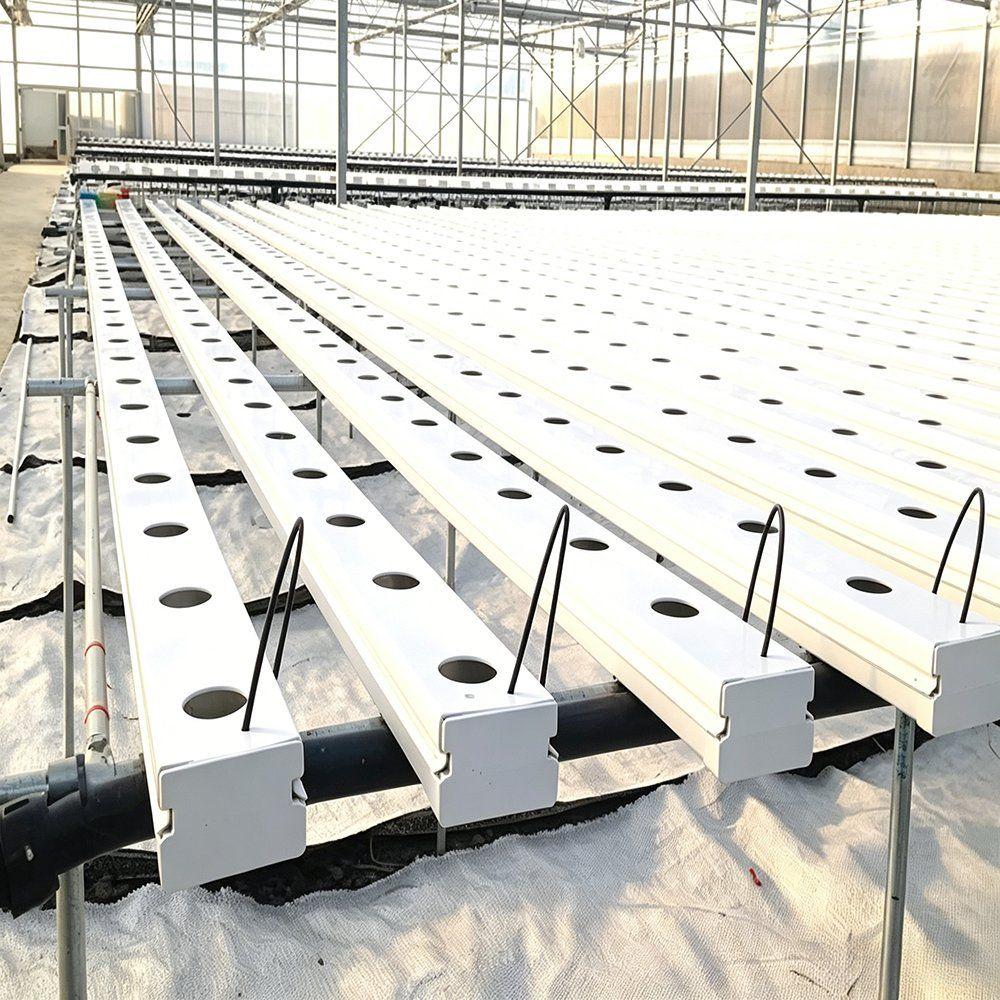
The growing channels are white food grade PVC, 1.8 mm to 2.0 mm thick, in 2.9 m and 5.8 m lengths or cut to order, and can be set as one flat layer or stacked in several layers. Each channel takes a drip stake, and the inline filters ahead of the stakes are what stop the fine root and algae debris that would otherwise block an emitter and starve one plant while the rest of the row is fine.
Because the manifold is modular, a run can be extended, shortened or split without cutting the header, and a faulty section is isolated rather than taken out of the whole house. Where the feed is by drip rather than by channel, the same approach is described in the dripping irrigation page.
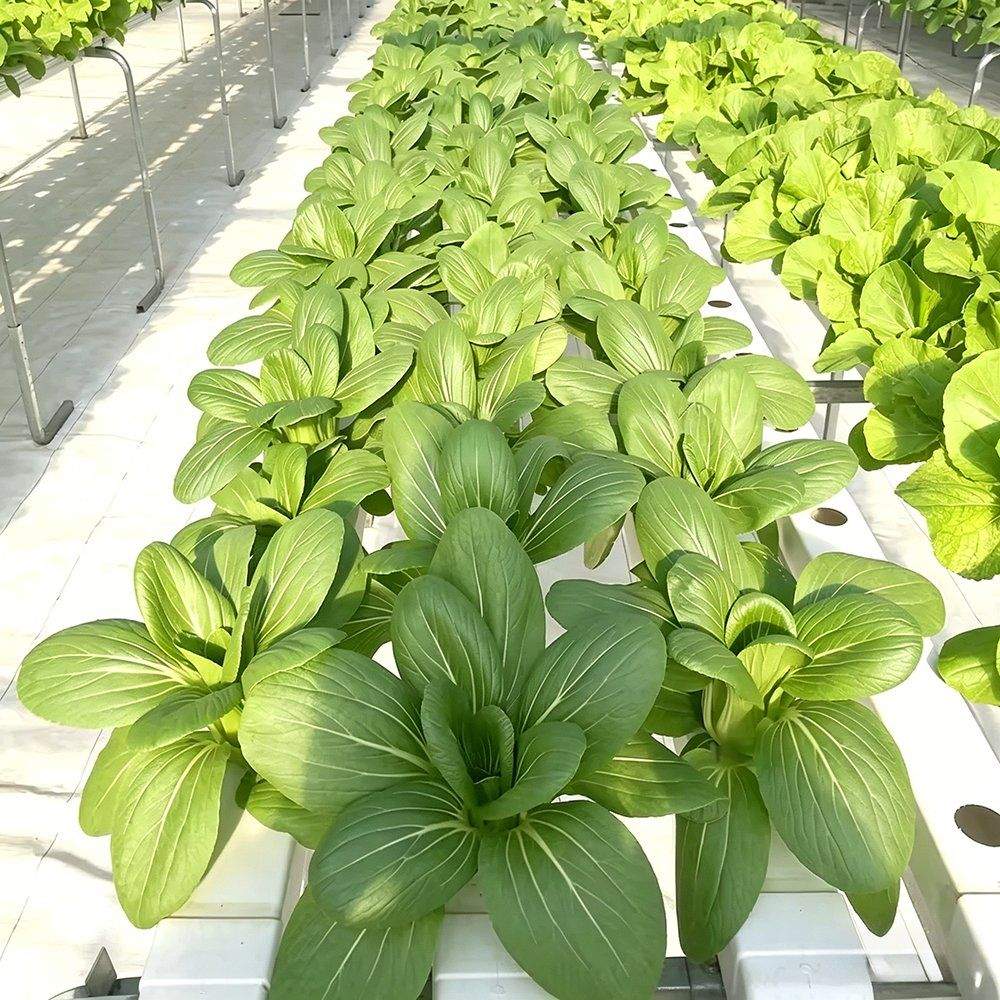
The table below is the standard set. Contents, channel count and the control package are set to the house and to the crop.
| Dosing and pH | Pre calibrated dosing pumps with pH controllers |
| Monitoring | EC meters with the set |
| Emission | Anti clog drip stakes |
| Filtration | Inline filters ahead of the stakes |
| Growing channel material | Food grade PVC |
| Channel thickness | 1.8 mm to 2.0 mm |
| Channel length | 2.9 m, 5.8 m or cut to order |
| Channel colour | White |
| Layer arrangement | One flat layer or multiple layers |
| Manifold | Modular manifolds with quick connect fittings |
| Spares in the box | Gaskets, pressure gauges and mounting brackets |
| Planting type | Soilless |
| Water system | Deep water culture or aquaponic loop |
| Crops | Lettuce, tomato, leafy vegetables, herbs, flowers and microgreens |
| Packing | Flat packed for pallet shipping |
| Customisation | Set contents, channel count and control package set to the site |
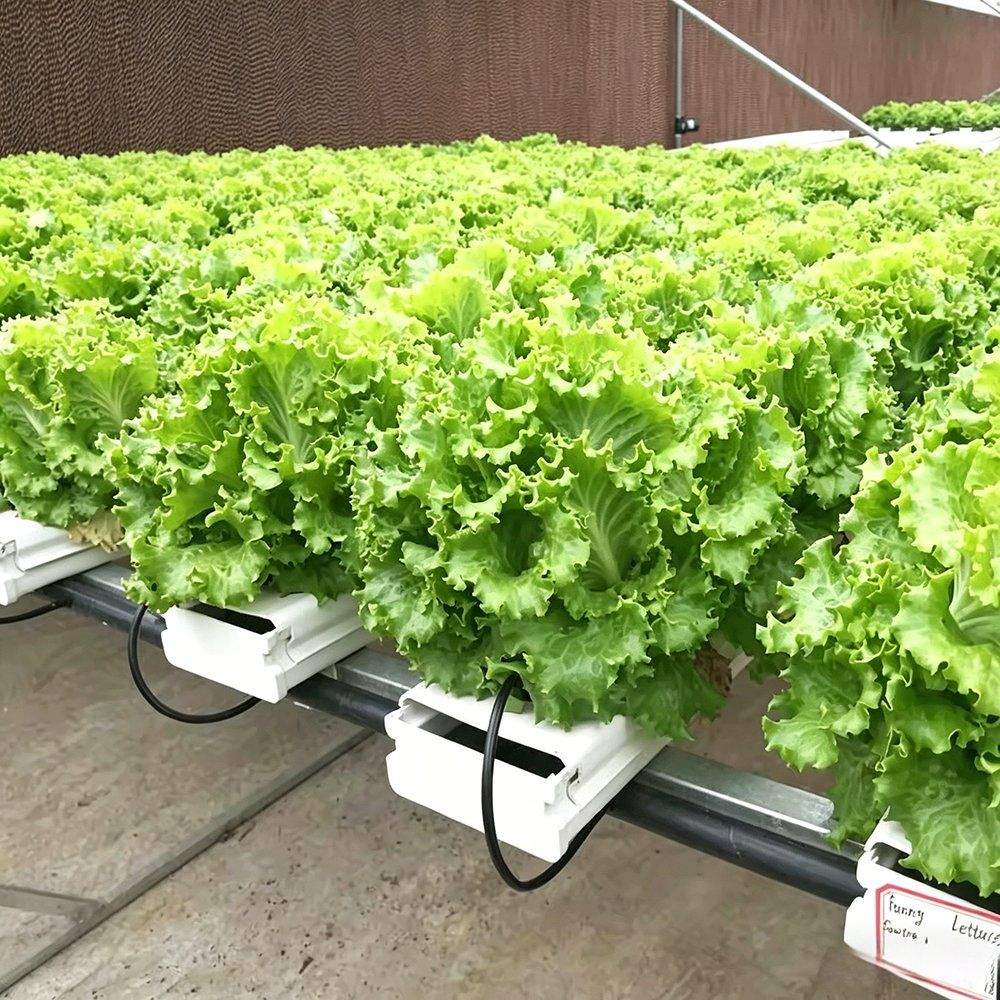
The order arrives flat packed on pallets with the manifolds and fittings matched to the drawing. The header and the tank go in first, then the manifold sections are run and joined, the channels are set out on their frames, and the drip stakes and filters are fitted last so nothing is disturbed while the pipework is being pulled into place. Controllers are powered and calibrated once the water is in the system.
Maintenance is mostly filters and emitters. The inline filters are cleaned on a short cycle and replaced when the element stops clearing, because a filter that is half blocked changes the flow at the far end of a run before it changes anything the controller can see. Stakes are checked at each crop change, the dosing pumps are recalibrated on the same routine, and the gaskets and seals in the manifold are the parts to keep on the shelf. A distributor supplying the same houses is described in the wholesale hydroponics system page.
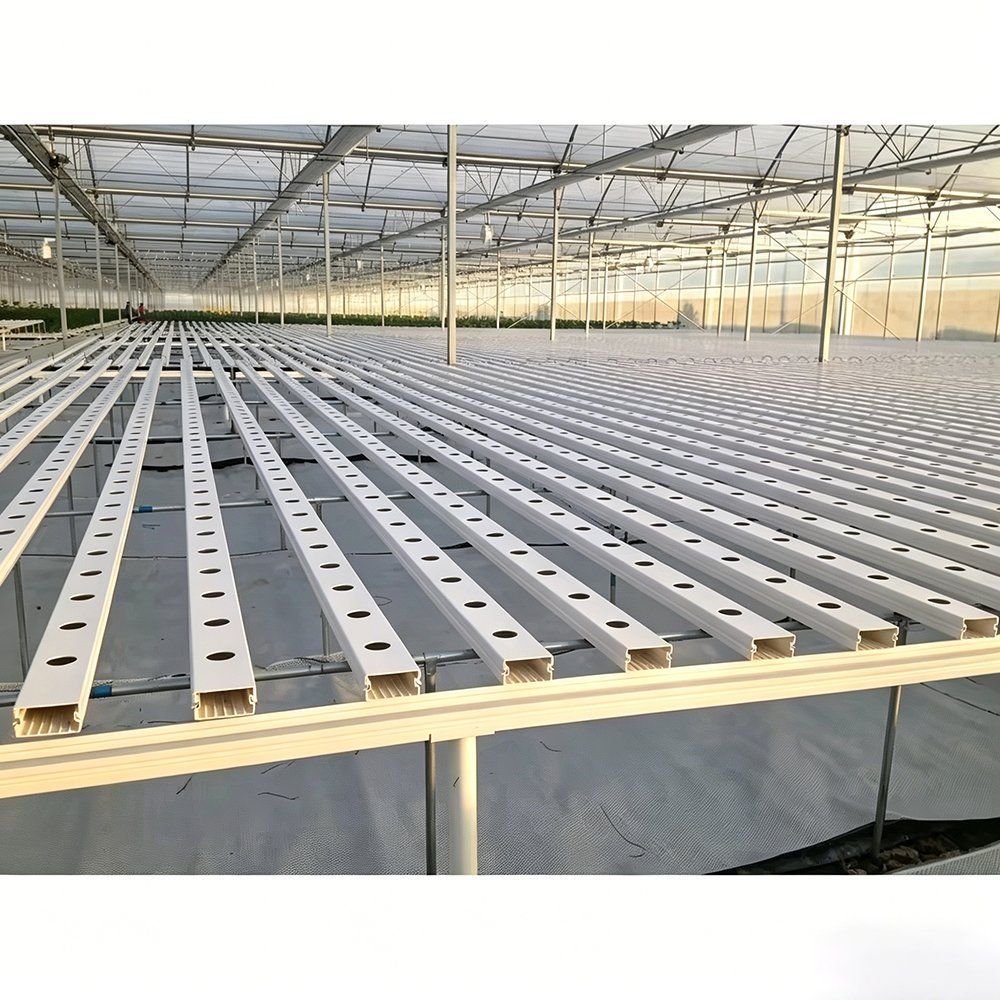
The sets are put together for commercial hydroponic farms running lettuce, tomato and leafy crops on channels or gutters, and for the distributors and contractors who supply those farms and want one packing list instead of twelve. They suit a new house where the water side is being specified from scratch, an existing house where the dosing gear has reached the end of its life, and an operation that expects to extend the run later and wants fittings it can add to.
Industry news and standards work for commercial horticulture is published by AIPH. Trade news covering protected cropping and growing equipment is published by HortWeek.
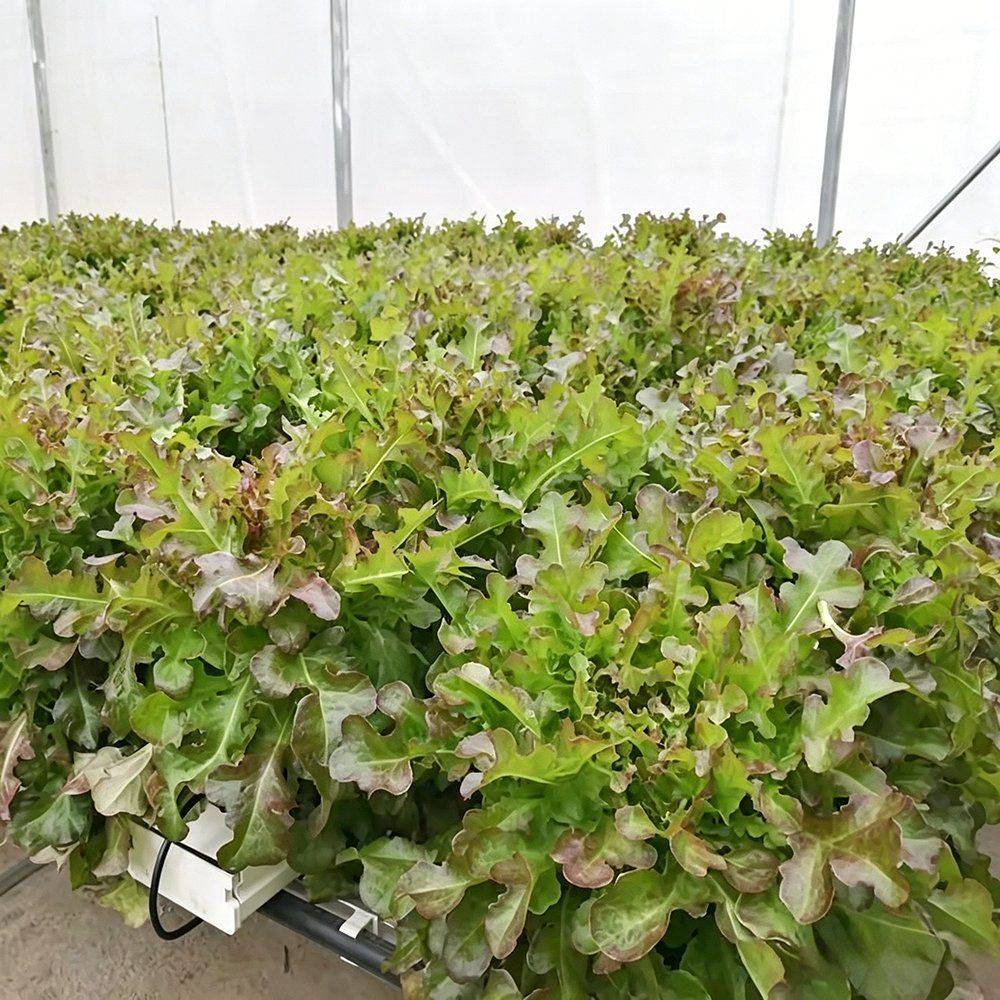
Pre calibrated dosing pumps with pH controllers, EC meters, anti clog drip stakes, inline filters, net pots, tubing cutters and the manifold with quick connect fittings. Bulk sets add spare gaskets, pressure gauges and mounting brackets, and the whole order ships flat packed on pallets.
Yes. The manifold is modular, so a run can be extended or split by adding sections rather than cutting the header, and a section can be isolated for service without taking the rest of the house out of production.
The galvanized support steel is rated for 15 to 20 years under normal growing conditions. The pumps, controllers, meters and filters run on their own service cycles and are replaced as they come due.
We provide a 10 year structural warranty and a 5 year anti-corrosion warranty on the galvanized steelwork. Details are set out in the contract for each project.
Send your site dimensions, the crop you plan to run and the growing layout you intend to use. We reply with a layout drawing and a full quotation.