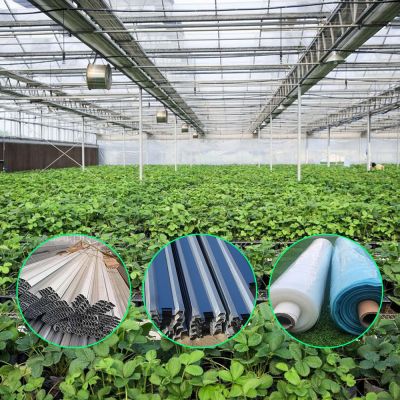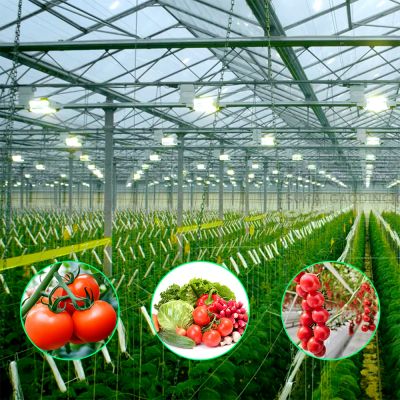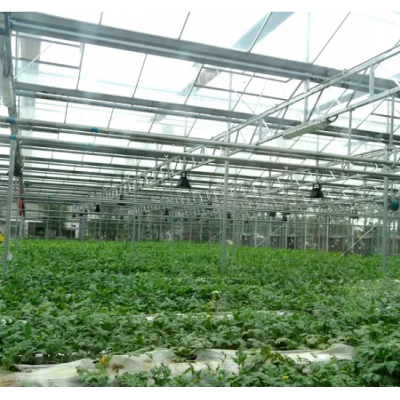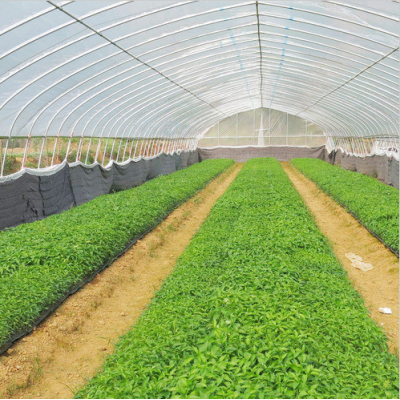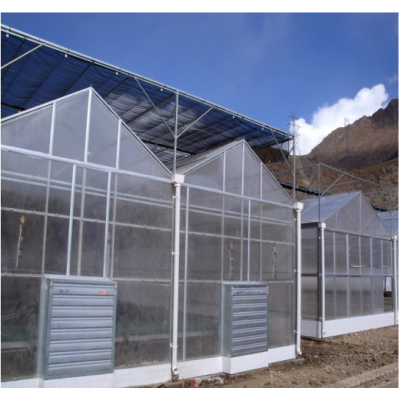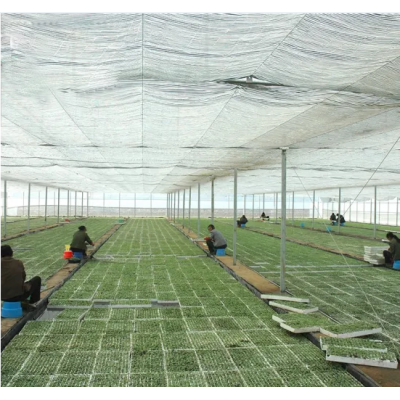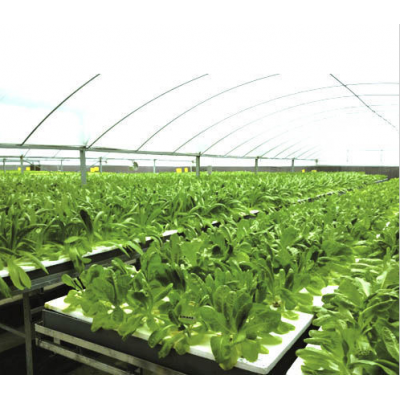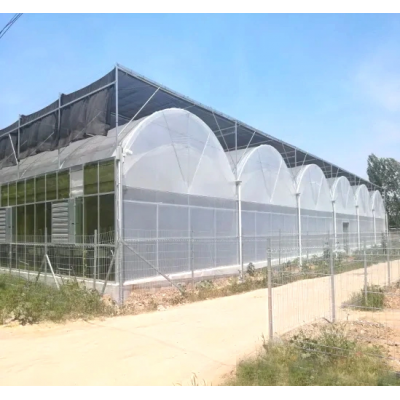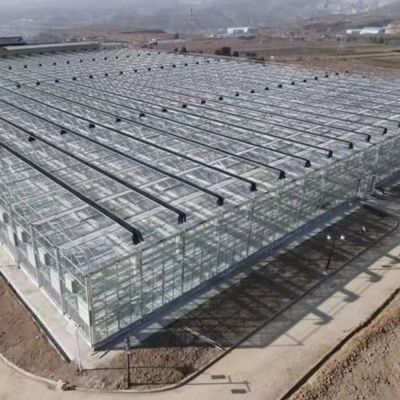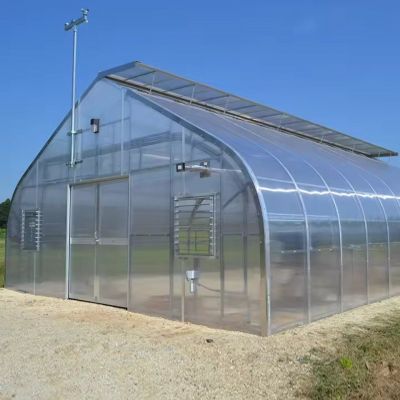


This house is put together around one crop and the two things that decide it. The frame is hot dip galvanized steel on an arched profile, and the side walls roll up so the humidity the fruit is working in can be moved instead of left to settle. Drip irrigation delivers water at the root rather than over the leaf, and a wire trellis above the row carries the crop as it climbs. Parts arrive pre drilled and flat packed, so the house goes up on bolts and the block can be extended along the same line.
A tomato house is judged on the fruit rather than on the house, and the two parts of the fruit that go wrong most often are the ones the structure can influence: the humidity around the truss and the water at the root. This build is arranged around both, with a galvanized frame carrying a film cover and the watering and ventilation brought into the same plan as the crop.
The structure is hot dip galvanized steel, drilled and formed before the coating goes on, so the cut ends and the bolt holes are protected to the same standard as the tubes themselves and the house does not need painting or secondary treatment on site. Spans run from 8 m to 12 m, house lengths from 10 m to 100 m or set to the site, and the working height from 3 m to 8 m.
The cover is a UV stabilised film on the standard build, with twin wall polycarbonate available where a rigid cover is wanted. Either way the point of the cover on a tomato house is not only light. It keeps rain off the foliage, which is what takes leaf disease out of the season, and it holds the night temperature above the point where fruit set stalls. Houses of this family are grouped on the film greenhouse range page on this site.

Blossom end rot is a calcium transport problem rather than a disease, and it shows up when the crop is drawing unevenly. Holding the humidity steady and watering at the root rather than overhead is what the crop responds to, so the drip line runs along the row and the cover keeps the leaf dry. The same arrangement limits the leaf disease that follows a wet canopy, which is the reason a covered tomato crop is picked for longer than an open one.
Because the water goes to the root, the volume is set rather than estimated, and a grower can adjust the cycle as the trusses fill rather than reacting to a wilted plant. That is what keeps the picking dates grouped instead of spread across a fortnight.

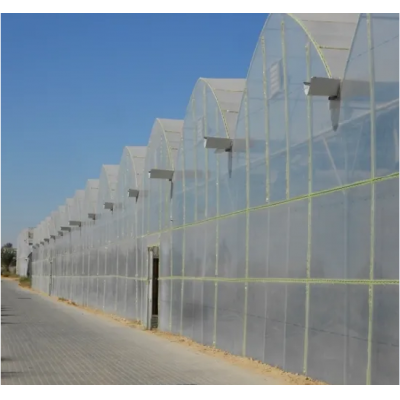
The side walls roll up rather than opening as windows, so the house is flushed along its length and the air change is even rather than concentrated where a few vents happen to be. Insect netting can be fitted to the opening where thrip or whitefly pressure makes it worthwhile. Roof vents are adjustable and are used for passive cooling, which is enough on a tomato house in most climates to take the top off the afternoon peak without running fans.
A wire trellis is carried above the rows. Tomatoes are trained up rather than left to sprawl, and the trellis is what holds the crop upright as the trusses load it, so the fruit stays off the ground and the rows stay walkable for picking.

The table below is the standard build. Span, length, height and the accessory list are set to the site and to the crop.
| Structure material | Hot dip galvanized steel |
| Span | 8 m, 9 m, 10 m, 11 m or 12 m |
| Length | 10 m to 100 m or set to the site |
| Working height | 3 m to 8 m |
| Cover | UV stabilised film, twin wall polycarbonate optional |
| Side walls | Roll up sidewalls with insect netting option |
| Ventilation | Adjustable roof vents for passive cooling |
| Irrigation | Drip irrigation at the root |
| Crop support | Wire trellis system above the rows |
| Bulk order extras | Cooling pads, trellis hooks and thermal screens |
| Assembly | Pre drilled parts on a bolted assembly |
| Packing | Flat packed for container shipping |
| Crops | Tomato, vegetables, fruit and flowers |
| Customisation | Span, length, height and accessories set to the site |
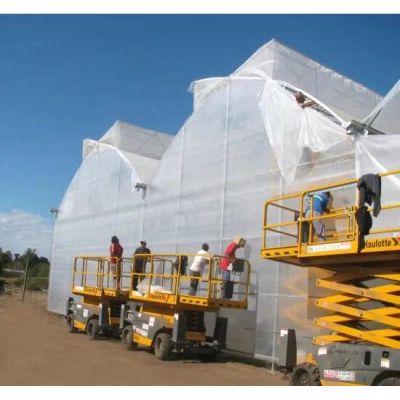
The order arrives pre drilled and flat packed, with the fixings and the cover in the same set. Ground posts or a base rail are set and levelled first, since the house carries its load down the two side lines. The arches go up bay by bay, the purlins and the bracing follow, the end walls are framed and the cover is fitted last. The drip line and the trellis wire are run once the house is closed, because both follow the row spacing and the row spacing follows the planting plan.
Upkeep on a tomato house is mostly the cover, the vents and the water. The film is checked at the fixing points and where it crosses the frame, because a rub mark becomes a tear in the first gale, and the roll up mechanism is cleared and checked at the start of each season. Drip filters are cleaned on a short cycle, since a half blocked filter changes the flow at the far end of a row before anything visible changes. Trellis wires are checked at the crop change and re tensioned where the crop has pulled them.

Houses of this type are used for beefsteak and cherry tomato production, for vegetable programmes that need the picking dates to hold together, and for fruit and cut flowers grown under a controlled cover. They suit wholesalers and large scale growers buying a block rather than a single house, operations extending an existing run of tunnels to the same span, and sites where the crop is irrigated from a borehole and the water has to be accounted for. A house of the same family built to roll up sides is described in the multi span film greenhouse with roll up sides page.
Research on protected horticulture and the growing environment is published by Wageningen University and Research. Production and technical reporting for commercial growers is published by GrowerTalks. A heavier film house built for the same crop is described in the heavy duty reinforced PE film greenhouse page.

By keeping the water and the humidity steady rather than by treating the fruit. Blossom end rot follows uneven calcium movement into the fruit, which shows up on a crop drawing unevenly, and drip irrigation at the root with a covered canopy is what holds that steady.
Because the opening runs the length of the house. A long curtain flushes the block evenly rather than dumping air in at a few points, so the humidity is the same at the far end of the row as at the door.
The galvanized steel frame is rated for 15 to 20 years under normal growing conditions. The film cover, the curtain mechanism and the drip set run on their own service cycles and are replaced as they come due.
We provide a 10 year structural warranty and a 5 year anti-corrosion warranty on the galvanized steelwork. Details are set out in the contract for each project.
Send your site dimensions, the crop you plan to run and the growing layout you intend to use. We reply with a layout drawing and a full quotation.