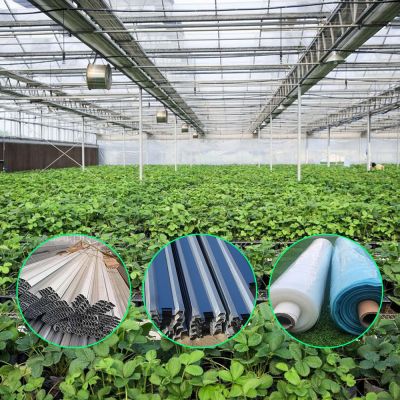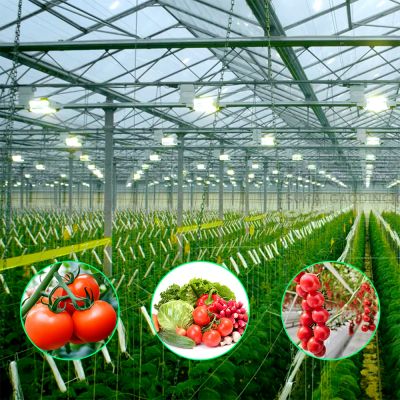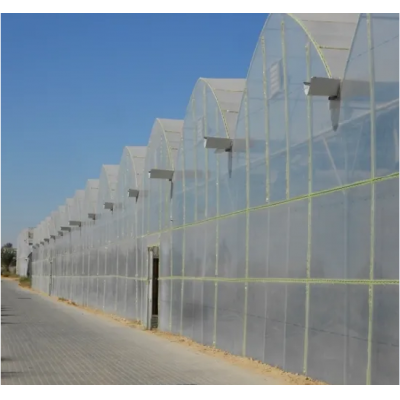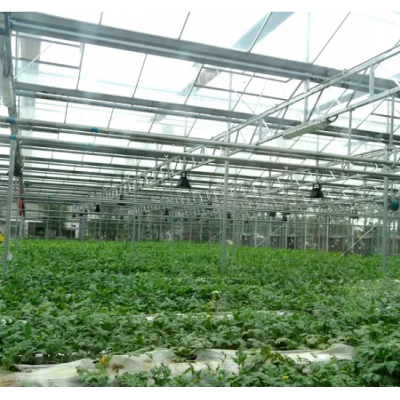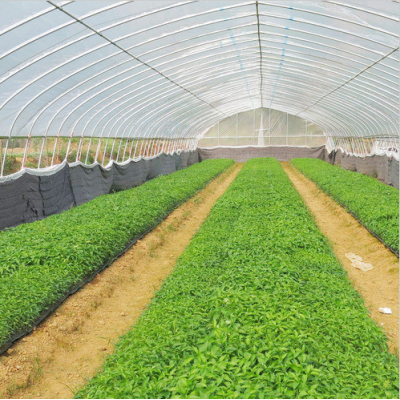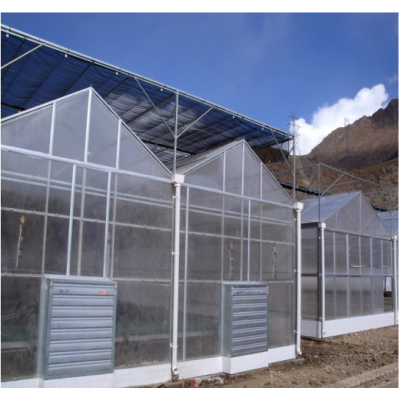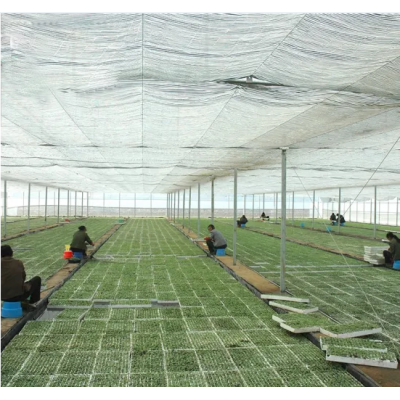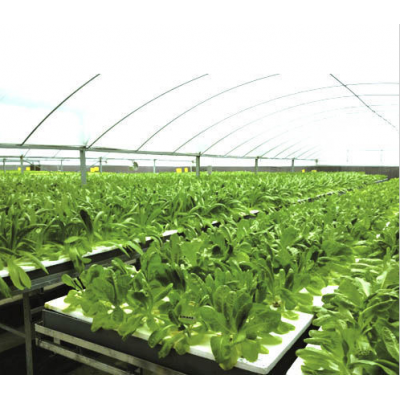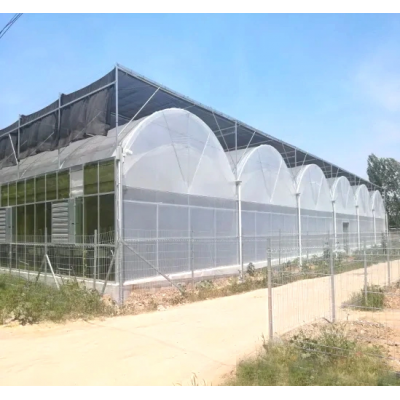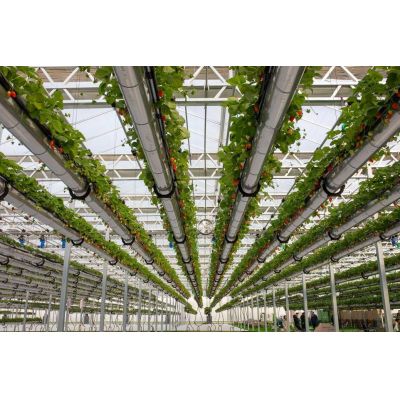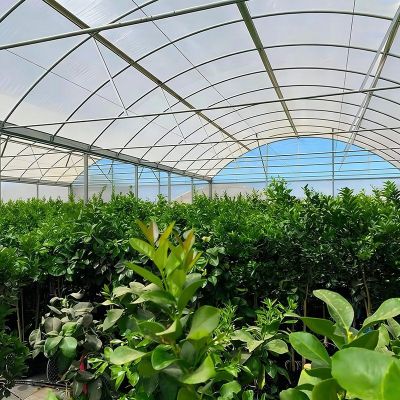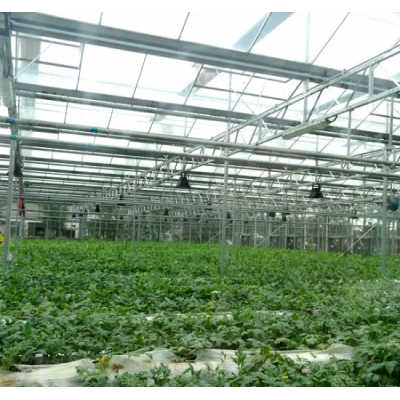


Glass and hydroponics are a sensible pairing because both are about control. The cover holds its light transmission over a long service life and does not move in wind, and the growing system inside delivers a measured solution to a root zone that is not soil. The glazing here is 4 mm tempered glass and the frames are hot dip galvanized steel with cross bracing, so the house is specified for the snow load it has to carry rather than for the crop alone.
A glass house is bought for the long run. The covering is the most expensive part of the structureto change and the part that decides how much light the crop gets, so on a house that is going to be runover many seasons the covering is where the specification is worth holding.
The glazing is 4 mm tempered glass, which passes about 91 per cent of the light. That figure holdsover the service life, which is the difference between glass and a film: a film starts at a similartransmission and loses it steadily, so the crop plan has to be written around a light level that keepsfalling between replacements.
Tempered glass also behaves differently under load. It is stronger than annealed glass of the samethickness and it fails into small pieces rather than into shards, which matters where the glazing isover a walkway or over stock. Houses of this type are grouped on the glass greenhouse range on this site.

Glass holds heat differently from film. It has more thermal mass than a sheet of plastic, so thehouse comes down in temperature more slowly after sunset, and the daytime gain is released into theevening rather than lost immediately. On a crop that is running to a season that is what buys theshoulder weeks at either end.
The frame is hot dip galvanized steel with cross bracing, and the arches are 1.5 mm section. Thebracing is what carries the glazing load across the bay rather than down a single arch, and the designsnow load is 30 kilograms per square metre. Bay widths run from 6 to 12 metres on the order.

Inside the house the crop sits on NFT channels 100 millimetres deep, fed from a 500 litrereservoir. The channels carry the solution as a shallow film over the root rather than filling them, sothe root has air between cycles, and the depth is what gives the film enough volume to move withoutthe roots drying out between doses.
The solution recirculates rather than draining away, which is what makes the water use a meteredquantity rather than an estimate: what leaves the system is what the crop holds plus what evaporates.It also means the tank has to be tested on a routine rather than simply topped up, because arecirculating solution concentrates as the crop takes water. A multi span glass house built over ahydroponic system is described in the hydroponic photovoltaic glass greenhouse page.

| House type | Glass greenhouse with a hydroponic growing system |
| Glazing | 4 mm tempered glass |
| Light transmission | About 91 per cent |
| Structure material | Hot dip galvanized steel arches, 1.5 mm section, with cross bracing |
| Snow load | 30 kg/m2 |
| Span | 8 m to 12 m |
| Growing system | NFT channels 100 mm deep |
| Reservoir | 500 litres, recirculating |
| Fabrication | Pre cut rafters and ridge connections |
| Crops | Tomato, lettuce, leafy vegetables, herbs and flowers |
| Customisation | Bay width, span, length and growing system set to the site |

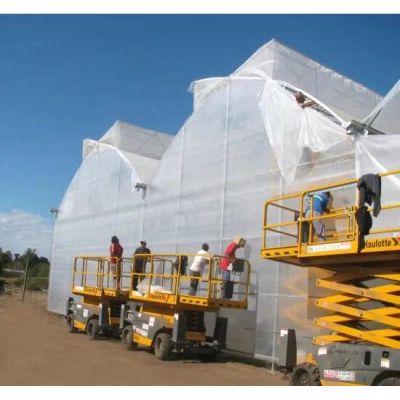
The base is set and levelled first, because the glazing depends on the frame being square and thegutters falling the right way. The arches and rafters are bolted, the ridge connections and crossbracing follow, and the glazing goes in after the frame is closed and checked. The channels and thereservoir are set out once the house is watertight, so the growing layout is laid against a finishedfloor.
Maintenance is the glazing, the frame and the water. Glass is cleaned on a cycle because a dirtypane loses the light the crop plan assumes, and the glazing seals and fixings are checked before thewindy season. On the growing side the filters and the pump are serviced on the crop cycle, the tank istested on a routine, and the channels are washed through between crops so root material does not carryover.

Houses of this type are used for commercial tomato, lettuce and leafy vegetable production, for herband flower crops on a controlled root zone, and for projects where the covering has to hold its lightlevel over a long service life. They suit a grower moving a crop onto a channelled system under glass,an operation extending a glass block, and buyers specifying the structure and the growing systemtogether. A glass house built over a hydroponic irrigation system is described in the steel frame glass greenhouse with hydroponic irrigation page.
Information and programmes on protected crop production are published by the Food and Agriculture Organization of the United Nations. Farming and horticulture reporting for growers is published by Krishijagran.
Because its light transmission holds over the service life. A film starts at a similar level andloses it steadily, so the crop is working in less light each season, whereas glass keeps the level thecrop plan was written around.
The root zone. The crop sits on channels with a shallow film of solution rather than in soil, so thewater and the nutrient are held to a figure, the solution recirculates, and the tank can be tested andcorrected rather than estimated.
The galvanized steel frame is rated for 15 to 20 years under normal growing conditions. The glazing,the glazing seals and the pump and dosing gear run on their own service cycles and are replaced as theycome due.
We provide a 10 year structural warranty and a 5 year anti-corrosion warranty on the galvanized steelwork. Details are set out in the contract for each project.
Send your site dimensions, the crop you plan to run and your local wind and snow data. We reply with a layout drawing and a full quotation.