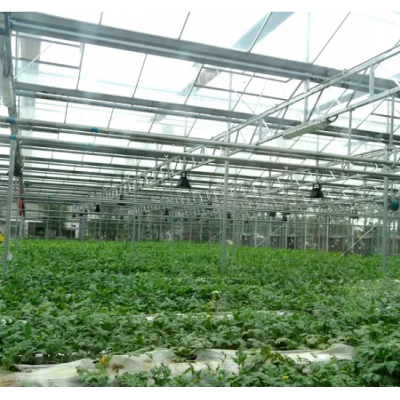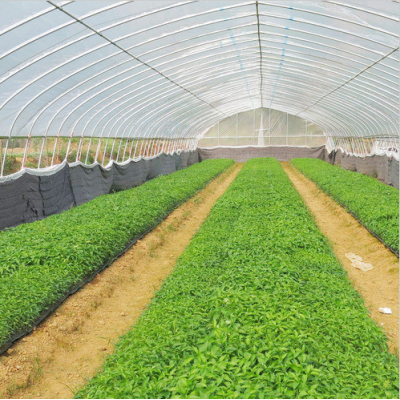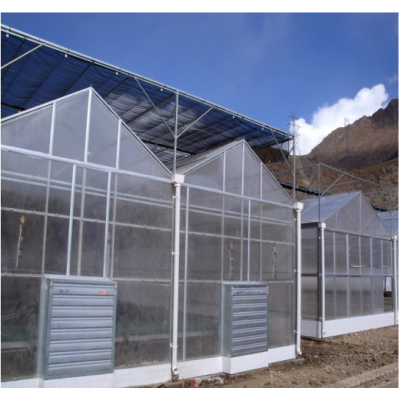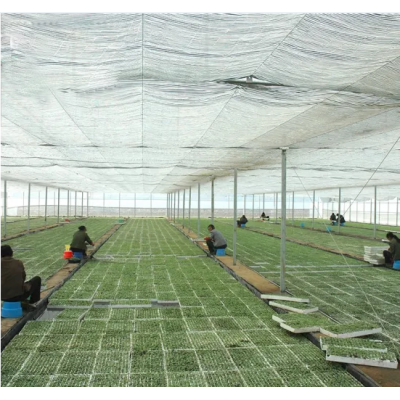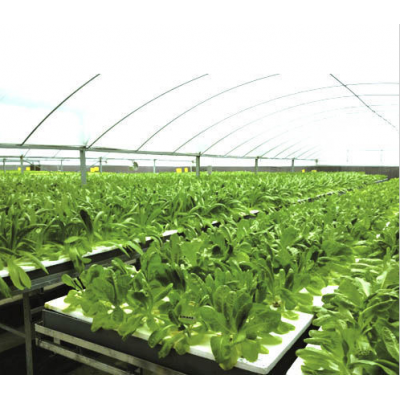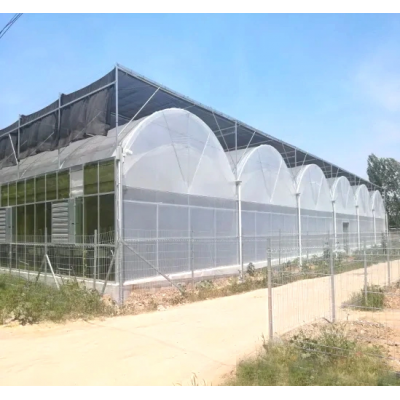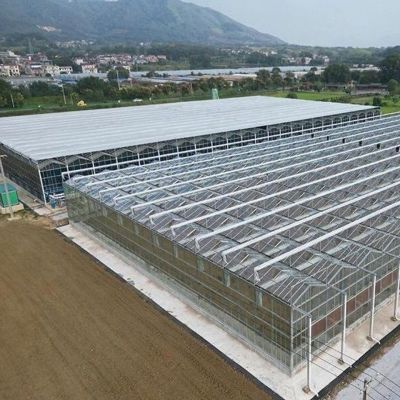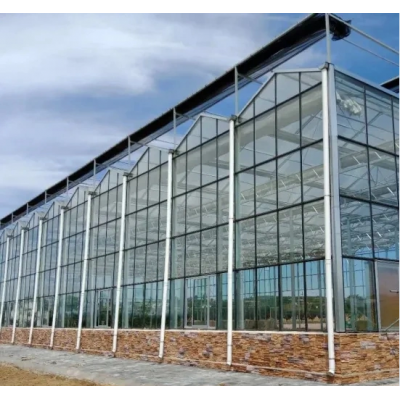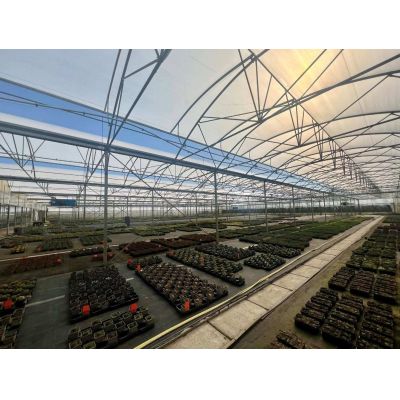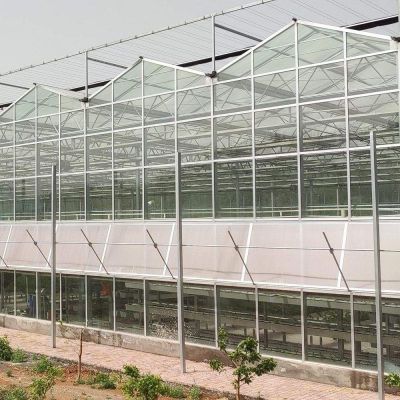


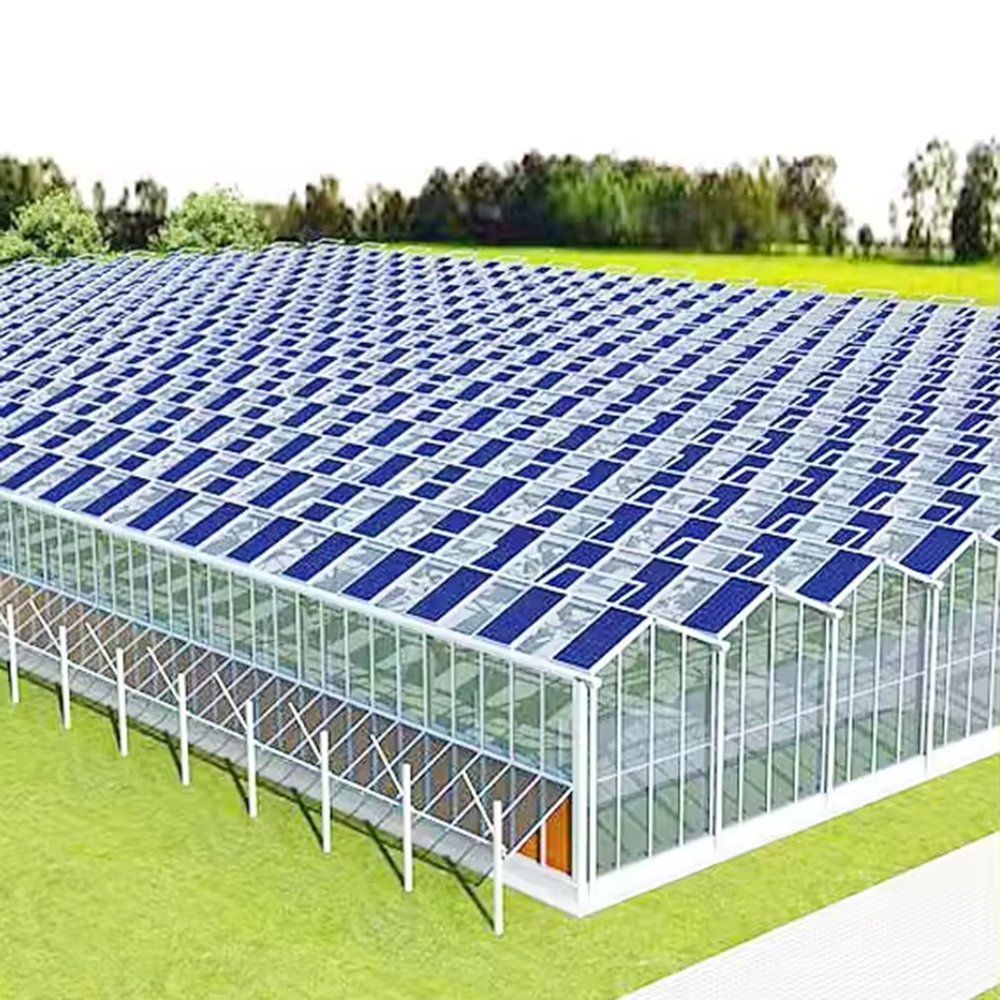
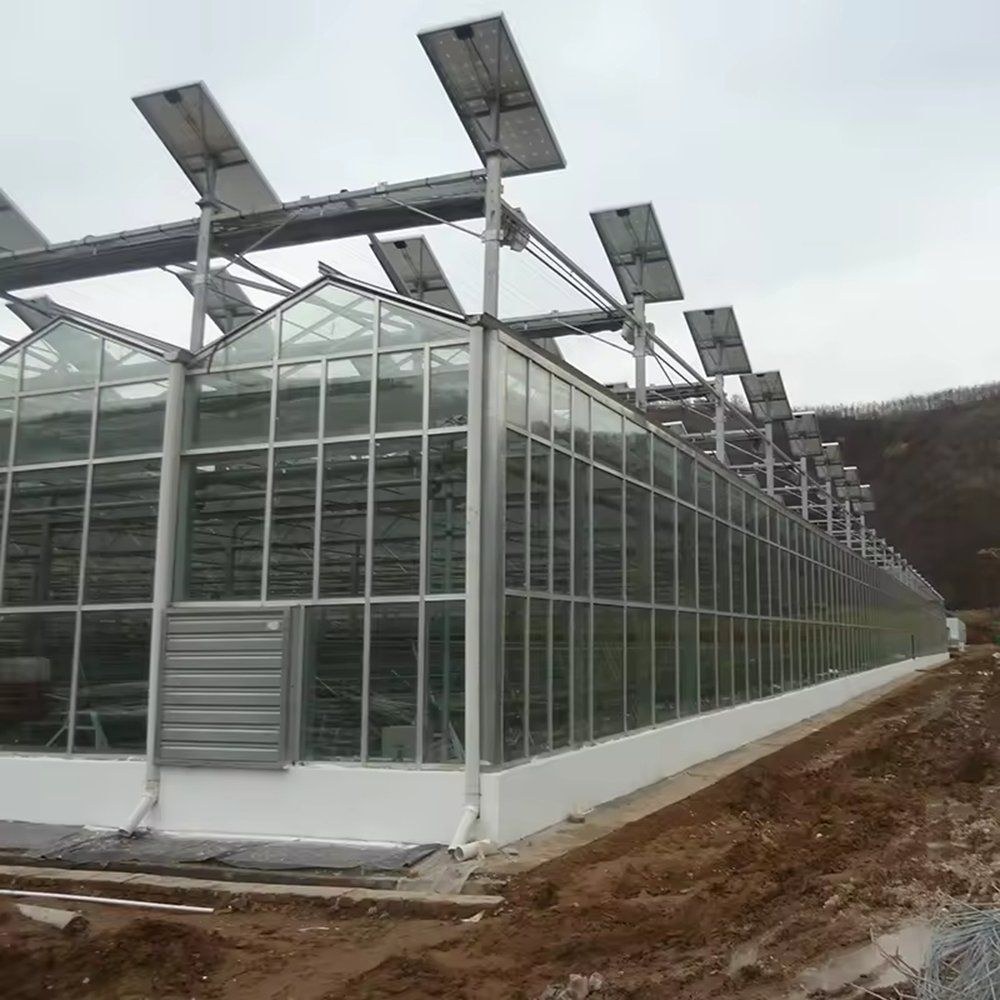
This house puts three systems on one structure: a glass cover, a hydroponic growing system inside it, and photovoltaic panels on the roof. The roof panels are transparent, so the house still lets light through while the same area that was doing nothing but covering the crop also generates part of the electricity the site uses. Inside, the crop is grown on NFT or DFT channels rather than in beds, and the tomato rows are carried on a wire hanging system. Spans, lengths and the panel coverage are set on the order.
A glass house covers a large area and, for most of the day, that area does nothing except let light through. Putting transparent photovoltaic panels on the roof is a way of using the same surface twice: the crop still grows under it, and the house also supplies part of the electricity it consumes.
The panels are the roof, not an array standing beside the house. That matters for two reasons. It avoids taking productive ground out of use for a ground mounted array, and it puts the generation at the point of consumption, so the power for the pumps, the fans and the control gear does not have to be brought in from a distance.
The panels are transparent rather than opaque, which is what makes the arrangement possible on a growing house at all. They cut some of the incoming light and diffuse what passes through, so the crop under them is working in slightly lower but more even light than under plain glass, and the panel coverage on the roof can be set to the crop rather than covering the whole house.
Glass is used because it holds its light transmission over a long service life and does not move in wind. On a house that is being run for high value crops over several seasons, the covering is one of the few parts of the structure that changes the yield rather than only the cost, and a cover that stays clear is what keeps the crop plan valid from one season to the next.
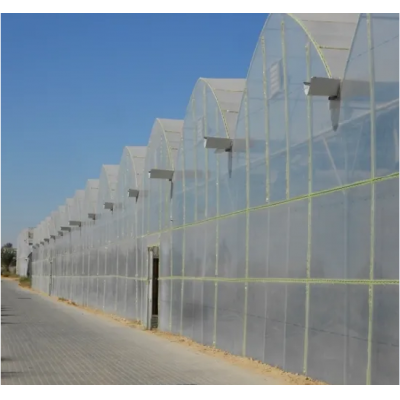
The house is a multi span layout with shared gutters and internal columns. Column spacing is set at 8 m on the standard build, which leaves room to turn a cart inside the house rather than only in the aisle.
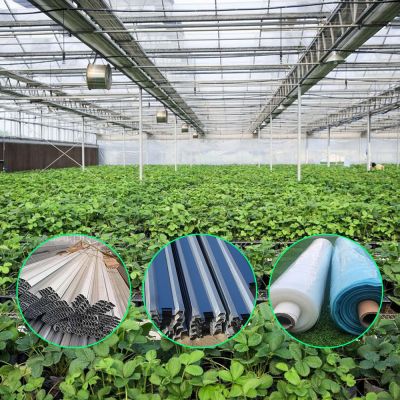
Inside the house the crop is grown without soil on NFT or DFT channels, which suits leafy greens and herbs on a short cycle and gives a root zone that can be held to a figure rather than estimated. The channels are carried on galvanized steel frames set to the row spacing, and the feed is delivered at the channel rather than over the leaf.
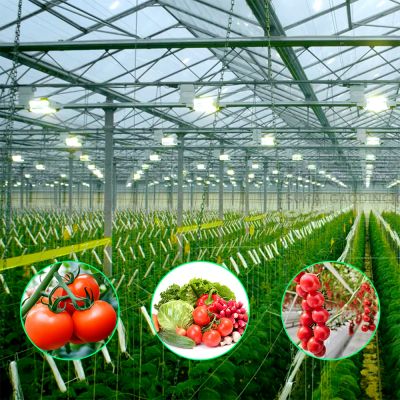
On a tomato house the crop is trained up a wire hanging system instead, with the wire run above the row and the plants wound on as they grow. Indeterminate varieties work up to about 3 m under this arrangement, and the side walls roll up so the humidity around the truss can be moved. Houses of this arrangement are grouped on the glass greenhouse range page on this site.
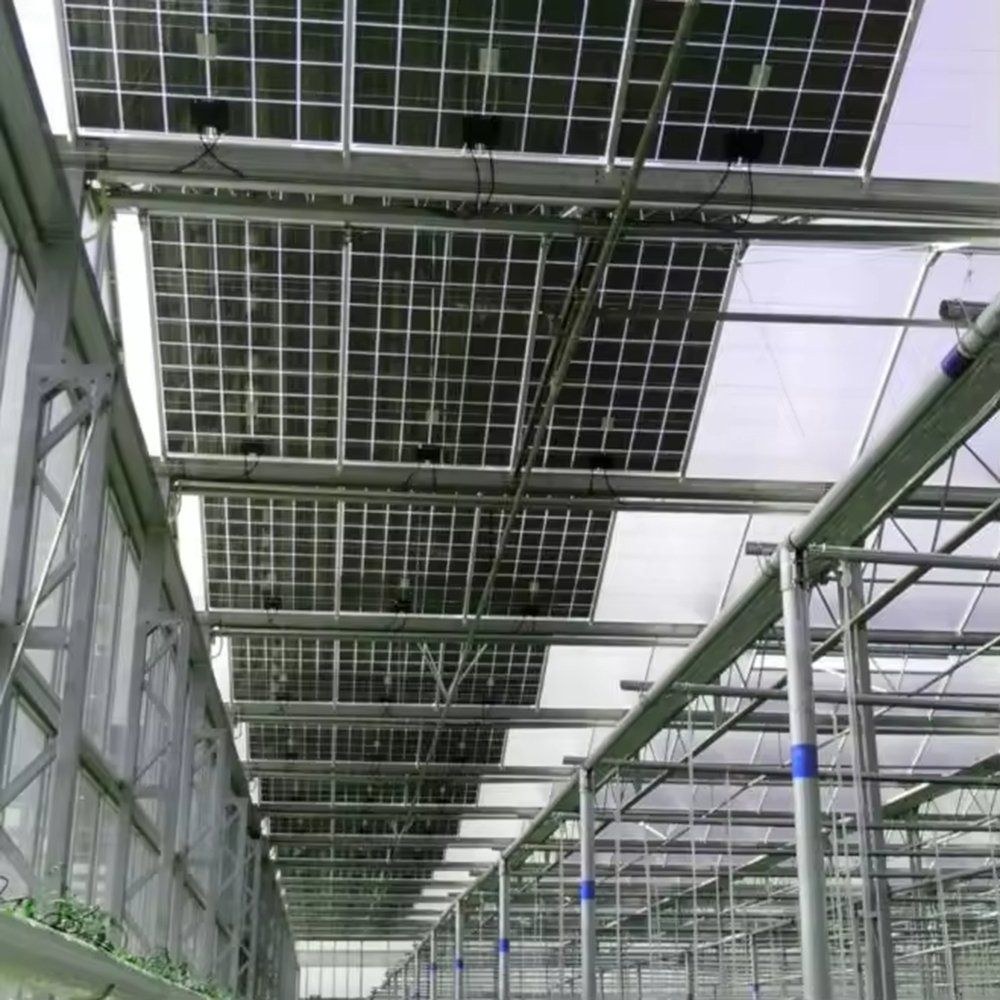
The table below is the standard build. Span, length, panel coverage and the growing system are set to the site and to the crop.
| House type | Multi span glass greenhouse with photovoltaic roof |
| Cover | Glass |
| Roof panels | Transparent photovoltaic panels, coverage set on the order |
| Electricity | Supplies part of the site demand for pumps, fans and controls |
| Span | 8 m, 9 m, 10 m, 11 m or 12 m |
| Length | 10 m to 100 m or set to the site |
| Working height | 3 m to 8 m |
| Structure material | Hot dip galvanized steel, pre drilled for bolt assembly |
| Column spacing | 8 m, with turning space for electric carts |
| Growing system | NFT or DFT hydroponic channels |
| Tomato support | Wire hanging system for indeterminate varieties |
| Ventilation | Side roll up vents, roof vents optional |
| Bulk order extras | Cooling pads, exhaust fans and control gear |
| Customisation | Span, length, panel coverage and growing system set to the site |
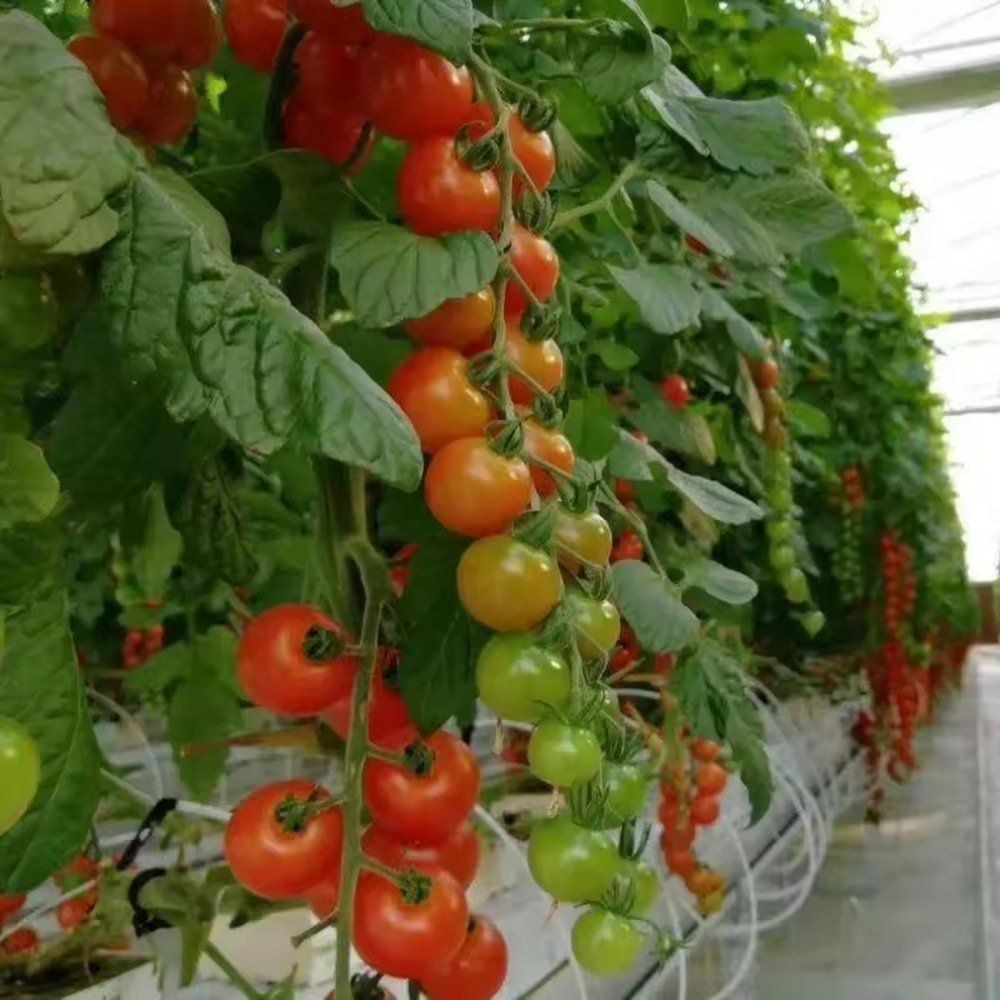
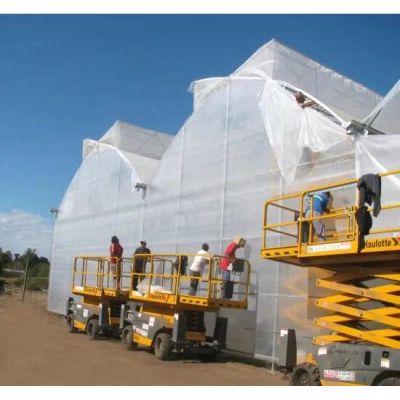
The house is built to a setting out drawing. Ground posts or a base rail are set and levelled first, the bays are raised one at a time, the gutter line and the bracing follow, and the glazing goes in after the frame is closed. The roof panels are a separate trade and go on once the glazing is complete, so the two are not worked around each other. Channels, the wire system and the feed are set out after the house is watertight.
Upkeep falls into structure, cover and generation. Fixings and glazing seals are checked before the windy season, glass is cleaned on a cycle to hold the light level the crop plan assumes, and the panels are cleaned on the same visits. The vent drives and the pump and damping gear run on their own service schedules, and the channels are washed through between crops so root material does not carry over.
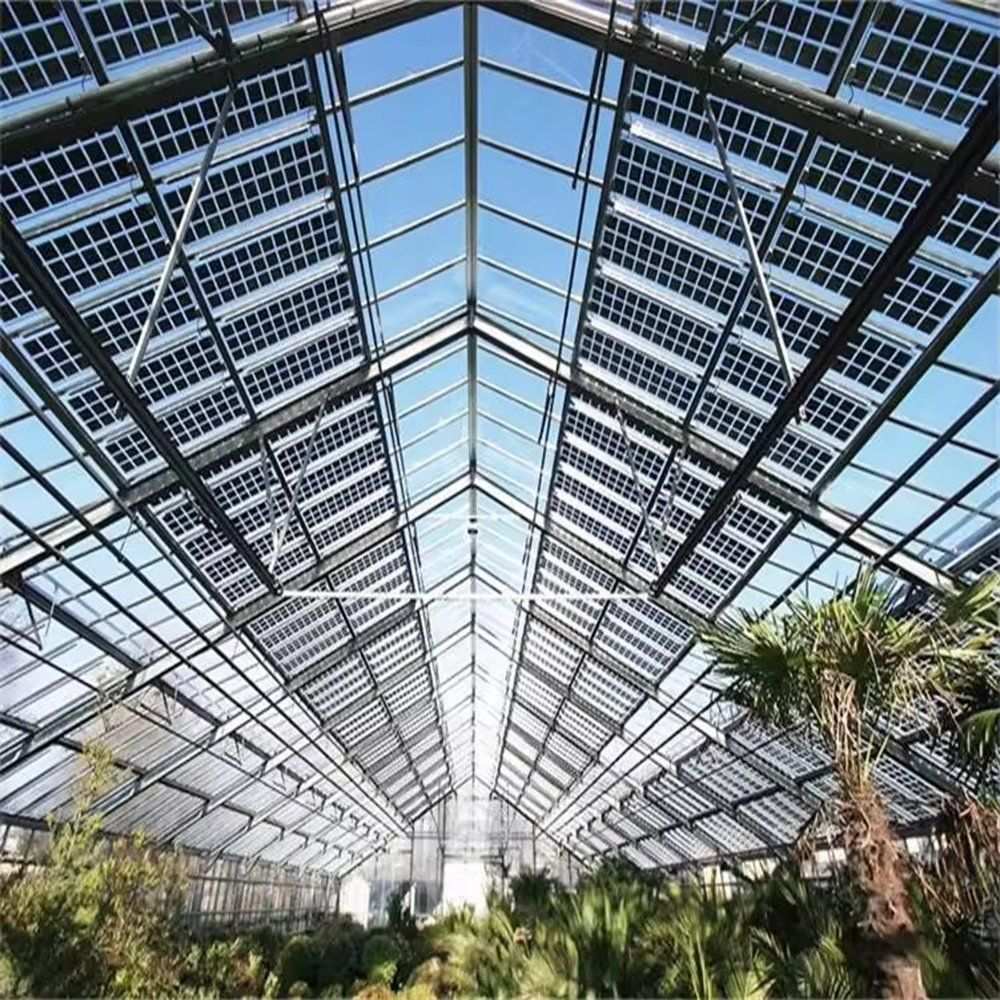
Houses of this type are used for tomato production where the crop is trained and picked over a long season, for leafy greens and herbs on channelled systems, and for sites where the cost of imported power is a material part of the growing cost. They suit commercial growers moving from beds to a channelled layout, operations that want the generation on the same footprint as the crop, and projects specifying the growing system and the house together. A glass house built around a control layer rather than a photovoltaic roof is described in the sensor driven glass greenhouse with app control page.
Information and programmes on protected crop production are published by the Food and Agriculture Organization of the United Nations. Production and technology reporting for commercial greenhouse growers is published by Greenhouse Grower. A glass house run on hydroponic irrigation is described in the steel frame glass greenhouse with hydroponic irrigation page.
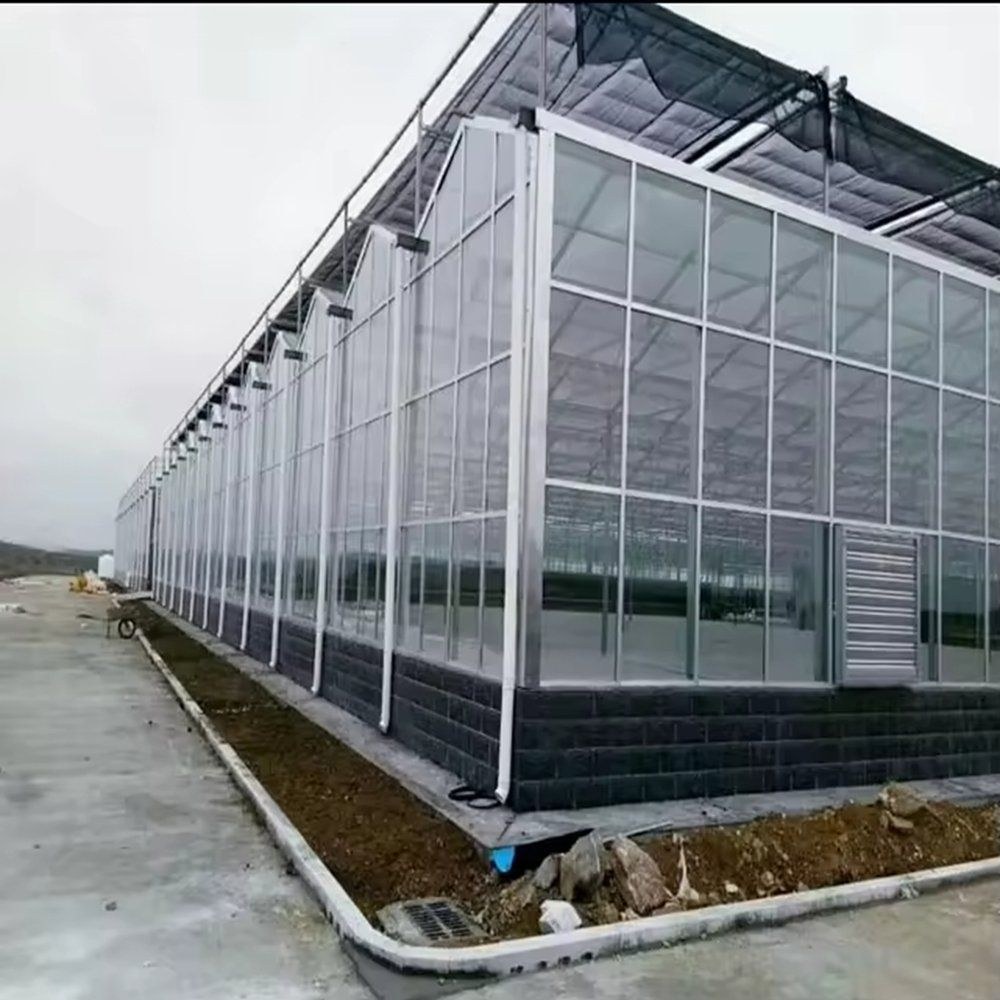
The panels are transparent rather than opaque, so they cut some light and diffuse what passes through. Panel coverage is set on the order, which means the proportion of the roof that is shaded is a choice made against the crop rather than a fixed figure.
Because the root zone can be held to a figure rather than estimated, and because the channels can be washed through between crops. Under glass the environment is already controlled, and a channelled root zone is the same idea applied to the water.
The galvanized steel frame is rated for 15 to 20 years under normal growing conditions. The glazing, the panel set, the vent drives and the pump and dosing gear run on their own service cycles and are replaced as they come due.
We provide a 10 year structural warranty and a 5 year anti-corrosion warranty on the galvanized steelwork. Details are set out in the contract for each project.
Send your site dimensions, the crop you plan to run and the growing layout you intend to use. We reply with a layout drawing and a full quotation.