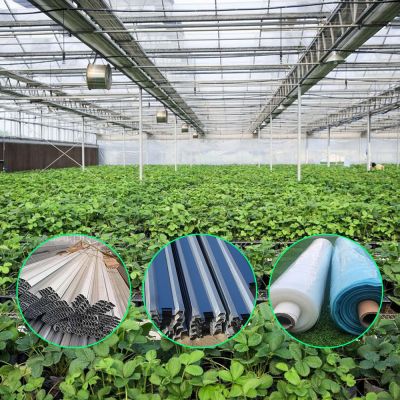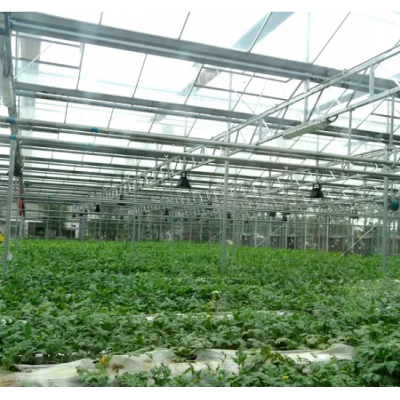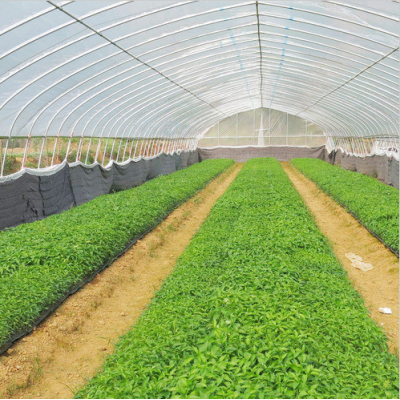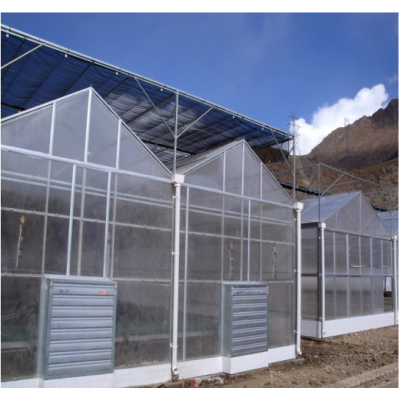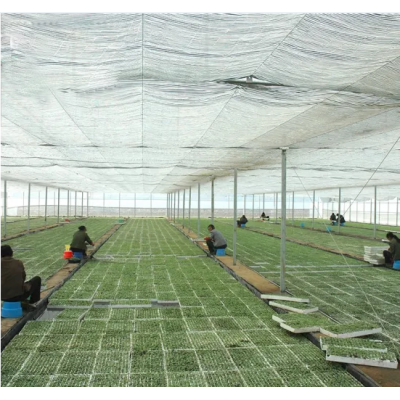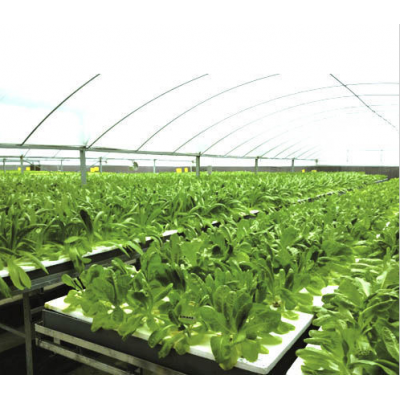


A kit is the shortest route into hydroponics, because the parts that have to agree with each other arrive together: the channels or baskets, the pump, the timer and the nutrient. What makes the difference between a kit that works and one that does not is the cycle, and the cycle here is set by the timer rather than by hand. The solution recirculates, so the water the system uses is the water the crop holds plus what evaporates. Layout, pump size and nutrient ratio are set on the order rather than left to the buyer to work out.
The reason a kit is worth buying as a set is that the parts have to agree. A pump that is too strong for the channels floods the root zone, a timer that runs too long leaves it saturated, and a nutrient that is mixed for a different crop is the wrong strength from the first day. Buying the parts together removes those decisions.
The set covers the growing surface, the reservoir, the pump, the timer and the nutrient. The pump moves the solution from the tank to the crop and back, the timer decides how often and for how long, and the nutrient is the A and B pair mixed into the tank. Everything that touches the solution is food grade, because the same water is being recirculated through the crop for the whole cycle.
Because it is a recirculating system rather than a drain to waste one, the solution returns to the tank after passing the root zone. That is what keeps the water use down to what the crop holds and what evaporates, and it is also why the solution has to be monitored rather than simply topped up. Kits of this family sit with the rest of the hydroponics system range on this site.

The timer runs a cycle of about fifteen minutes on every two hours. The interval is what mattersmost: a root zone that is fed and then drained is aerated between cycles, while one that is leftsubmerged is not. A short burst of feed followed by a longer period of drain is the pattern mostchannelled crops are run on, and it is why the timer is a specification rather than an accessory.
The pump is sized to the layout. On a short run the head loss is small and a modest pump is enough,and on a longer run the same pump has to work harder to deliver the same flow at the far end, which iswhy the run length is set at the layout stage rather than extended later. Filtration ahead of theemitters is part of the same decision.

The kit is supplied with A and B nutrient components, which are kept separate until they are mixedinto the tank. They are separate because the concentrated salts react with each other, and mixing thembefore dilution is what causes the precipitate that blocks emitters and starves the crop.
Once mixed, the strength of the solution is what the crop is actually growing in, and it changesthrough the cycle as the plants take water and nutrients at different rates. On a leafy crop the mix isrun lighter than on a fruiting one, and the A and B ratio is set against the crop rather than againstthe tank volume. Testing the tank on a routine is the part that keeps the crop on plan.

The table below is the standard kit. Layout, pump size, timer setting and nutrient ratio are set to the house and to the crop.
| Growing method | Recirculating hydroponics, soilless |
| Kit contents | Growing surface, reservoir, pump, timer and A/B nutrient |
| Feed cycle | About 15 minutes on every 2 hours, adjustable |
| Nutrient | A and B components, mixed into the tank |
| Water system | Recirculating; unused solution returns to the tank |
| Materials | Food grade PVC, galvanized steel support pipes |
| Colour | White |
| Packing | Flat packed for bulk shipment |
| Crops | Leafy greens, herbs, lettuce and microgreens |
| Customisation | Layout, pump size and nutrient ratio set to the site |

The frame and the growing surface are set out and levelled, the reservoir goes in at the low end ofthe layout, and the pump and the feed line are run from it. The system is filled and run beforeplanting, so the flow at the far end of the run can be checked while the channels are still empty, andthe timer is set once the flow is known rather than before.
Maintenance is the pump intake, the filters and the tank. The intake and the filter are cleaned on ashort cycle, because a partly blocked filter changes the flow at the far end of a run before anythingvisible changes. The tank is topped up and tested on a routine, since a recirculating systemconcentrates as the crop takes water, and the channels are washed through between crops so rootmaterial does not carry over.

Kits of this type are used for leafy green and herb production on a short cycle, for lettuce andsalad crops in a greenhouse, and for a first hydroponic block on a farm that has grown in soil. Theysuit a grower moving a crop onto a recirculating root zone, an operation standardising the layoutacross several houses, and projects where the growing system is specified before the house. A systembuilt around automatic sensing and dosing is described in the smart automated hydroponics system page.
Standards and guidance for equipment and installations are published by NEN. Production and technology reporting for commercial greenhouse growers is published by Greenhouse Grower. A system built around NFT channels and a pump tray is described in the complete hydroponic system with NFT channel and water pump tray page.

Because the root zone has to drain as well as fill. A short feed followed by a longer drain is whatkeeps the roots aerated between cycles, and the interval is set against the crop rather than left torun continuously.
Because the concentrated salts react with each other. A and B are kept apart until they are dilutedinto the tank, and mixing the concentrates first is what produces the precipitate that blocks emittersand starves the crop.
The galvanized support steel is rated for 15 to 20 years under normal growing conditions. The pump,timer, filters and the growing surface run on their own service cycles and are replaced as they comedue.
We provide a 10 year structural warranty and a 5 year anti-corrosion warranty on the galvanized steelwork. Details are set out in the contract for each project.
Send your house dimensions, the crop you plan to run and the layout you intend to use. We reply with a layout drawing and a full quotation.