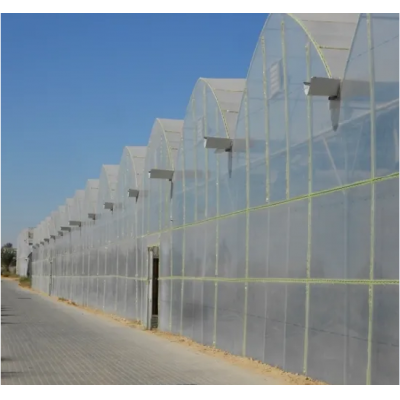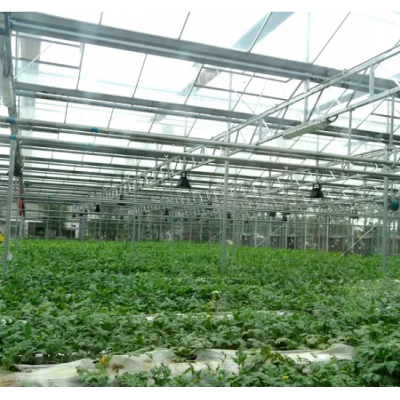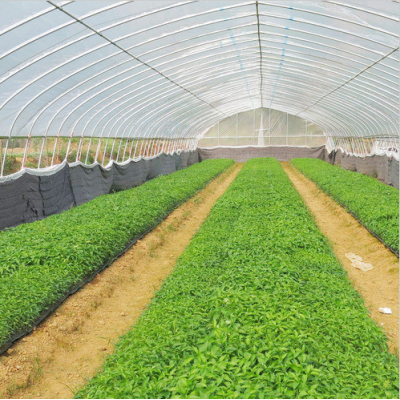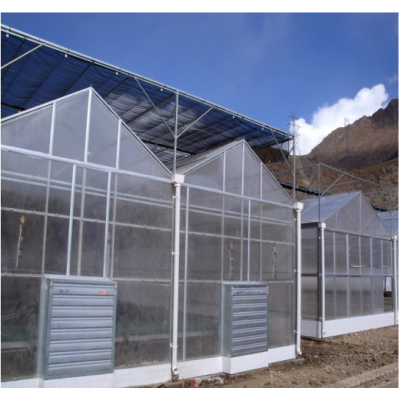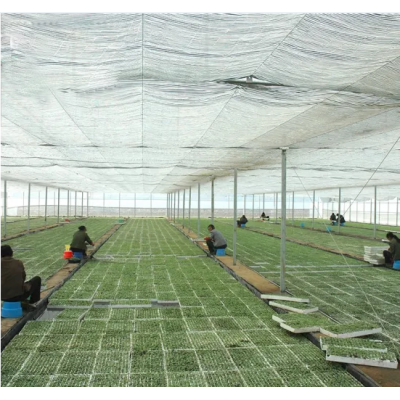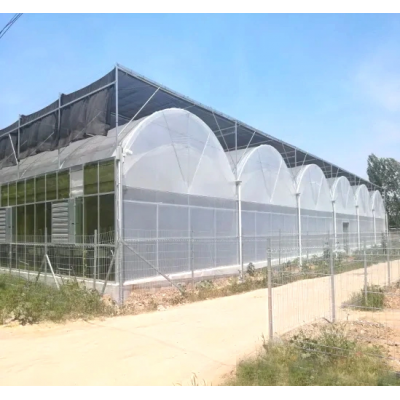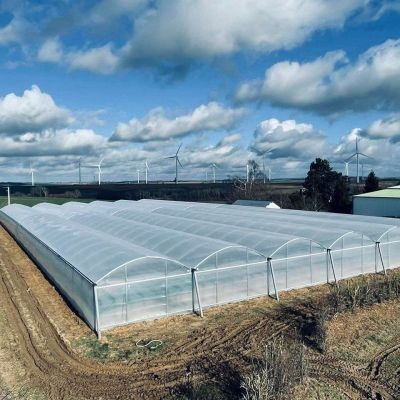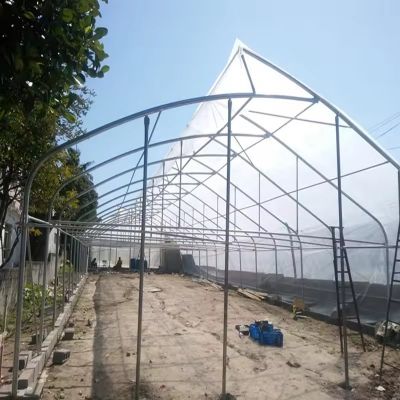


The house is a single span film tunnel sized around a 1000 square metre cropping block, built from hot galvanized steel pipe and covered with UV resistant PE film. A single span keeps the whole width clear of posts, so a tomato row can be strung and worked without walking around a column, and the arch sheds rain off the shoulders rather than holding it. Widths run 6 m to 10 m with 8 m as standard and lengths from 10 m to 100 m, with common blocks at 30x8, 40x8, 50x8, 60x8 and 100x8 m. Side ventilation with insect net is part of the build.
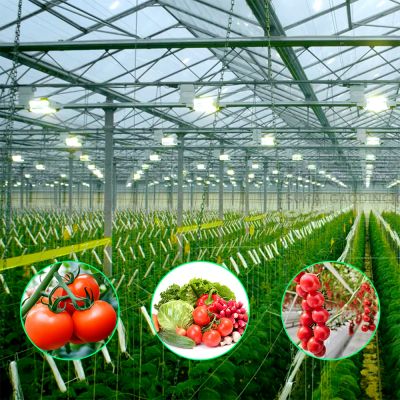
Tomato is the crop that pays for a tunnel but also the crop that exposes one. It is grown on a trellis, picked over a long season, and it wants dry leaves at dusk and air movement at canopy height. A film tunnel can do all three, but only if the span, the ventilation and the frame coating are specified together rather than in that order.
A block of roughly 1000 square metres is the size at which a tunnel stops being a trial and starts being a production unit. It is large enough to carry a full row programme and to justify a trolley, a drip line and a packing bench at the gable end, and small enough to be raised in one operation without a concrete contract. The plan sizes used most often are 30x8, 40x8, 50x8, 60x8 and 100x8 metres.
Because the house is a single span, the internal width is clear from wall to wall, so every row is reached directly. The wider tunnel family is listed on the tunnel greenhouse range page on this site.

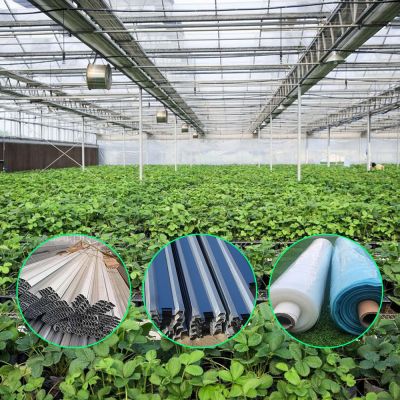
The skeleton is hot galvanized steel pipe, galvanized after forming so the zinc is bonded to the steel and reaches the bore, the cut ends and the wall of every drilled hole. On a tunnel the critical point is the base, where the hoop meets wet soil, and that is where a coating failure shows first. Sections are bolted rather than welded on site, so the coating is not burned back at a connection and a bent hoop is unbolted and replaced rather than cut out.
The cover is a UV resistant PE film, clipped to the hoops and the base rail. Film diffuses daylight across the beds instead of passing it as a beam down the centre of the run, and it is renewed as a roll over the bay rather than panel by panel, so the replacement is planned for the end of a season instead of done in a hurry after weather damage. PO film is available on the same clips where a project wants a different grade. A tunnel sized around tomato production is described in the greenhouse built for tomato growing.

Side ventilation runs along both walls and is opened by hand from a roll up curtain, with insect net available in the same openings. On a tomato crop the side opening matters more than the volume of air it passes, because the layer that has to be dried is the one the leaves sit in, not the air under the ridge. End vents in the gables complete the flow along the run.
Insect net is worth fitting on a fruiting crop for a second reason: excluding whitefly and thrips reduces the virus pressure, and a crop grown without them needs less intervention through the season. Cooling, shading and drip or micro irrigation can all be specified on the same order, and the drip line is normally run along the base rail. A tunnel supplied on factory terms for larger orders is described in the tunnel greenhouse supplied on factory terms.

The table below is the standard build. Width, length, height, cover and ventilation are set to the site and to the crop.
| Greenhouse span | 8 m / 9 m / 10 m / 11 m / 12 m |
| Available widths | 8 m standard; 6 m / 7 m / 9 m / 10 m, or custom |
| Greenhouse length | 10 m to 100 m, or built to client demand |
| Common block sizes | 30x8 m / 40x8 m / 50x8 m / 60x8 m / 100x8 m |
| Shoulder height | 1.3 m or 2 m, or custom |
| Roof height | 3.3 m or 3.5 m, or custom |
| Structure material | Hot galvanized steel pipe, bolted assembly |
| Cover material | PE or PO film, 120 / 150 / 180 / 200 micron; PC board 6 or 8 mm |
| Ventilation | Side ventilation and end vents; 40 mesh insect net optional |
| Options | Cooling, shading, drip and micro irrigation systems |
| Crops | Tomato, pepper, cucumber, leafy vegetables and cut flowers |

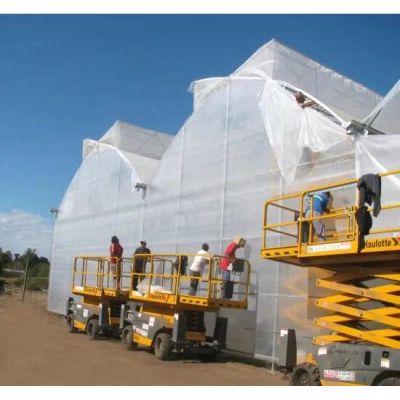
The kit arrives pre formed and drilled with the fittings, so the work on site is bolting and tensioning rather than fabrication, and no welding is done at any point. Ground posts or a base rail go in first and are set to the drawing, the hoops are raised and tied with purlins, and the film goes over last. A block of this size is normally standing within a few days of the posts going in, and no concrete base is required.
Maintenance is short and mostly visual. The base is the item to check every season, because that is where the hoop meets wet soil. After that: film tension along the base rail and the purlins, the side curtain gear before the season turns, the drainage outside the wall so water does not stand against the posts, and the drip line filters, because a partly blocked emitter in a tunnel has no soil to buffer the crop against it.

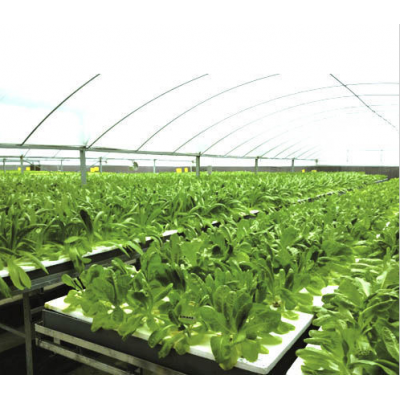
Blocks of this type are used for tomato and pepper production, for cucumber, for lettuce and leafy crops and for seedling work. They suit commercial growers bringing a field crop under cover for the first time, operations that want a production unit raised by their own team, and buyers proving a crop programme at 1000 square metres before extending the range.
Standards for the steel, the galvanized coating and the covering materials used in structures of this kind are published by DIN, the German Institute for Standardization. Commercial horticulture reporting, including how protected cropping projects are specified and operated, is published by HortWeek. The question that decides the specification is normally the crop the house will be running in ten years, not only at handover.

A single span keeps the whole width clear of posts and needs no gutter to detail or valley to seal, so it is the simplest structure a crop can go under. At around 1000 square metres it is also large enough to be a production unit while still being raised in one operation by the grower.
By opening the side curtains, not only the ridge. The humidity that causes leaf disease sits in the layer the leaves occupy, so the side opening is what dries it, and the end vents then complete the flow along the run. On a tomato crop the curtains are closed again before the outside temperature drops.
The galvanized steel frame is rated for 15 to 20 years under normal growing conditions. The film cover runs on a shorter cycle than the frame, typically 3 to 5 years depending on UV exposure at the site.
We provide a 10 year structural warranty and a 5 year anti-corrosion warranty on the galvanized frame. Details are set out in the contract for each project.
Send your site dimensions, the crops you plan to grow and your local wind and snow loads. We reply with a layout drawing and a full quotation.