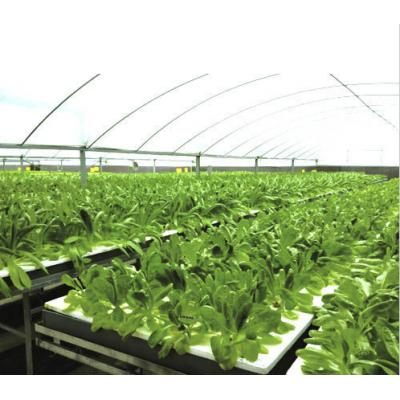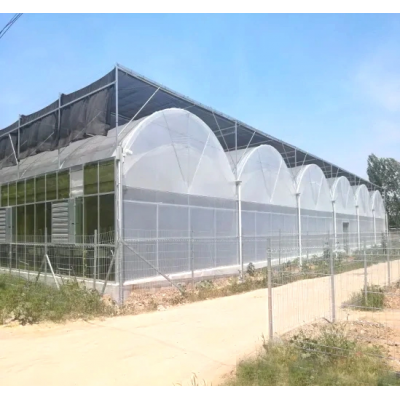


A grow light is measured by what the leaf absorbs, not by how bright it looks from the aisle, and that is the idea behind this full-spectrum unit. The chips deliver the red and blue ratios that drive vegetative growth and flowering rather than untuned white light, and the driver dims each unit to match the growth stage. Daisy-chain cabling lets a whole bay run from a single outlet instead of a nest of adapters, which shortens installation and removes clutter above the crop. The aluminium housing stays cool under load, so the light can be hung close for deeper penetration without scorching upper leaves. Linear bars suit under-shelf rows and flat boards suit overhead canopies, so the form follows the house.
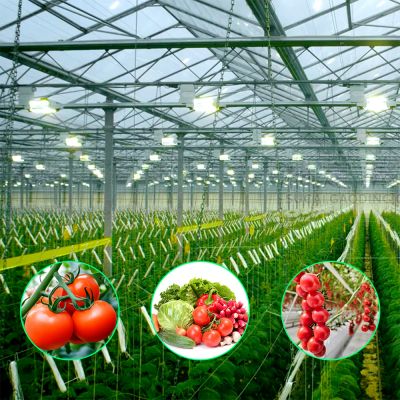
Plants stop growing when the light stops, and in a greenhouse that gap shows up as weak seedlings and slow fruit. A lit house does not wait for the season to turn: it keeps the canopy working through short days and grey weeks, which is the difference between a crop that finishes on schedule and one that finishes when the weather allows.
The output is tuned for photosynthesis rather than for a bright look to the eye. Red and blue are weighted where the plant actually uses them, which drives vegetative growth and flowering instead of throwing light the leaf reflects. The ratio can be shifted between leafy crops and flowering crops, so the same fitting serves a lettuce bay and a tomato line without being replaced in between.
The aluminium body stays cool under load, so the fixture can be hung close to the canopy for deeper penetration without scorching the upper leaves. Close mounting is what separates light that reaches the tips from light that reaches the whole plant, and it is the main reason a cool-running fitting is worth specifying over a discharge lamp of similar output. Where a fixed chip layout suits the bay better, the 120X3W LED grow light covers that format.
Each unit dims to match the growth stage and links to the next, so a full bay runs from one outlet rather than a nest of adapters. On a large house that is a wiring problem solved at the drawing stage instead of on site, and it is why we confirm bar count, spacing and hanging height against your bay before the containers load. The same mounting rails run across the lighting system range we supply.
Linear bars are supplied for under-shelf rows and flat boards for overhead canopies, so the fixture follows the house rather than the other way round. Both are specified as part of the fit-out, wired with the climate equipment and hung before the crop goes in. Lighting is one input among several, and it performs properly only when the others are already under control - which is why a lit house is usually planned together with its climate and water systems, such as a hydroponic growing system for soilless bays.
Compared with high-pressure sodium lamps, an LED draws less power for the same photon output and sheds almost no heat into the house, so there is less cooling load in summer. Lighting has to be hung before the planting window opens, so the loading date is confirmed in writing and production is scheduled around your season. The galvanized steel frame the lights hang in is rated for a 15-20 year service life and backed by a 10-year structural warranty, so the structure outlasts several lamp changes. The warranty term for the LED driver and panel is stated in writing with your quotation. Crop and lighting research is published by FAO, and commercial growing practice is covered by Greenhouse Grower.
A full-spectrum set weighted toward the red and blue bands plants use for photosynthesis, rather than untuned white output. The ratio can be shifted between leafy crops and flowering crops, and we confirm the spectrum for your crop at quotation.
Units use dimmable drivers and daisy-chain cabling, so one bay runs from a single outlet instead of one adapter per fitting. Bar or board format, bar count, spacing and hanging height are all agreed against your bay drawing before delivery.
The hot-dip galvanized steel frame is designed for a 15-20 year service life in normal agricultural environments, with a double-sided zinc coating of 200-275 g/m². Film covers are replaced every 3-5 years, while glass and PC panels carry their own manufacturer warranties.
The hot-dip galvanized steel frame carries a 10-year structural warranty covering structural safety, plus a 5-year warranty against corrosion perforation. It is designed for a 15-20 year service life. The warranty term for the LED driver and panel is confirmed in writing at quotation.
Send your bay dimensions, the crops and growth stages you plan to light, and the electrical supply available on site. With that we can set the format, the bar count, the spacing and the mounting heights, and return a quotation with a layout drawing and a bill of materials.