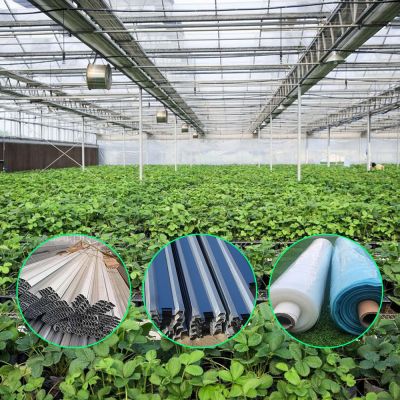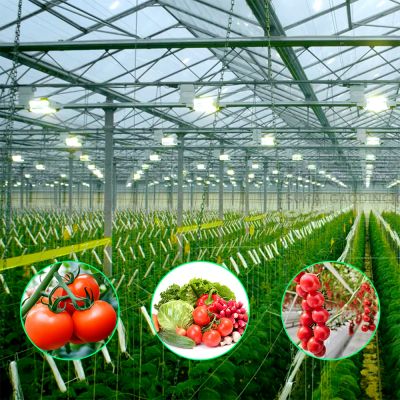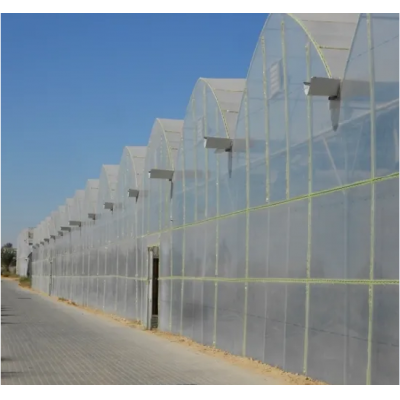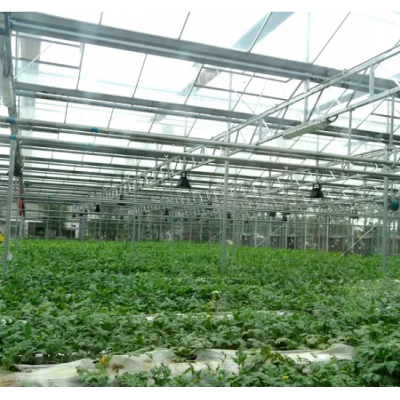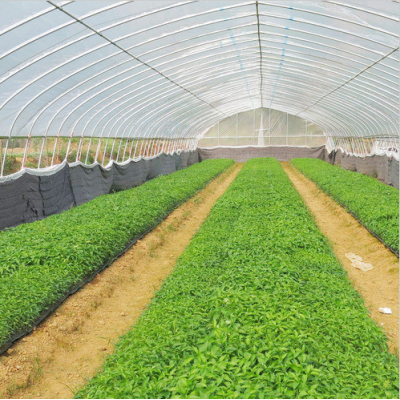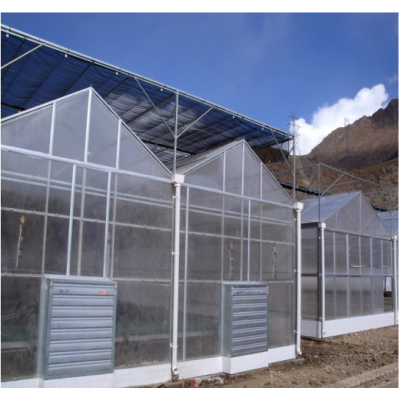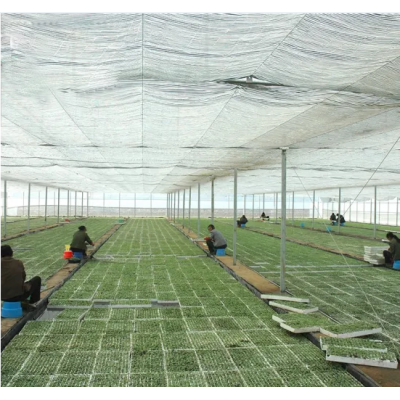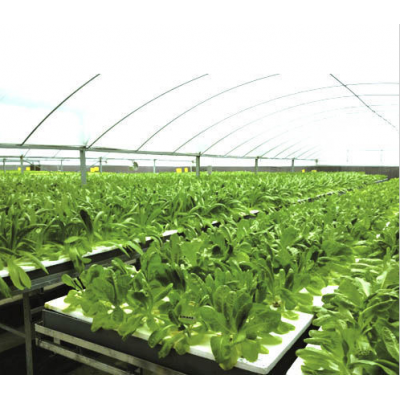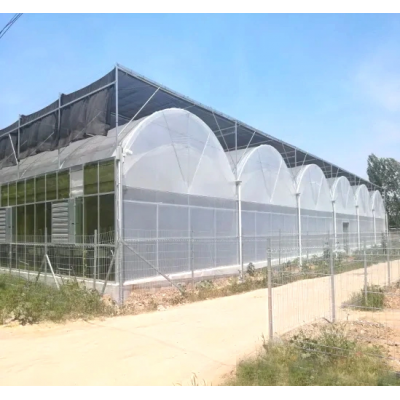
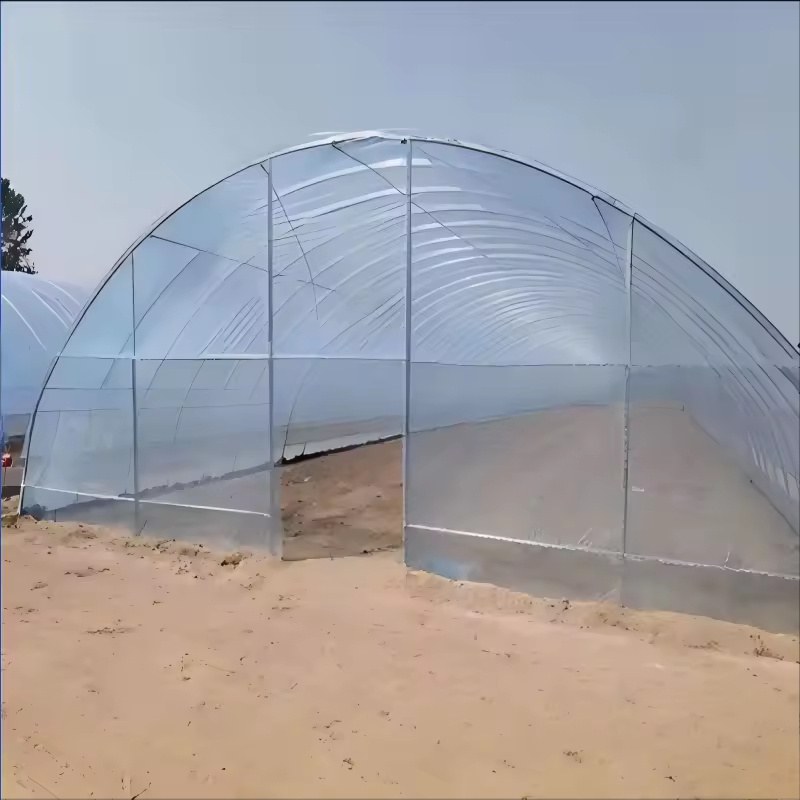
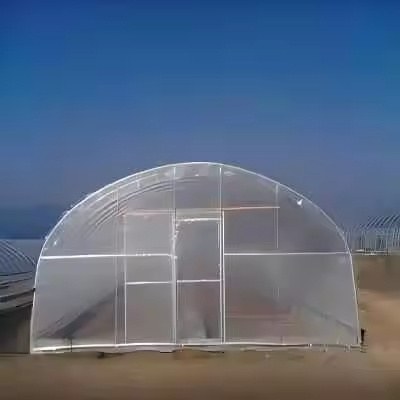
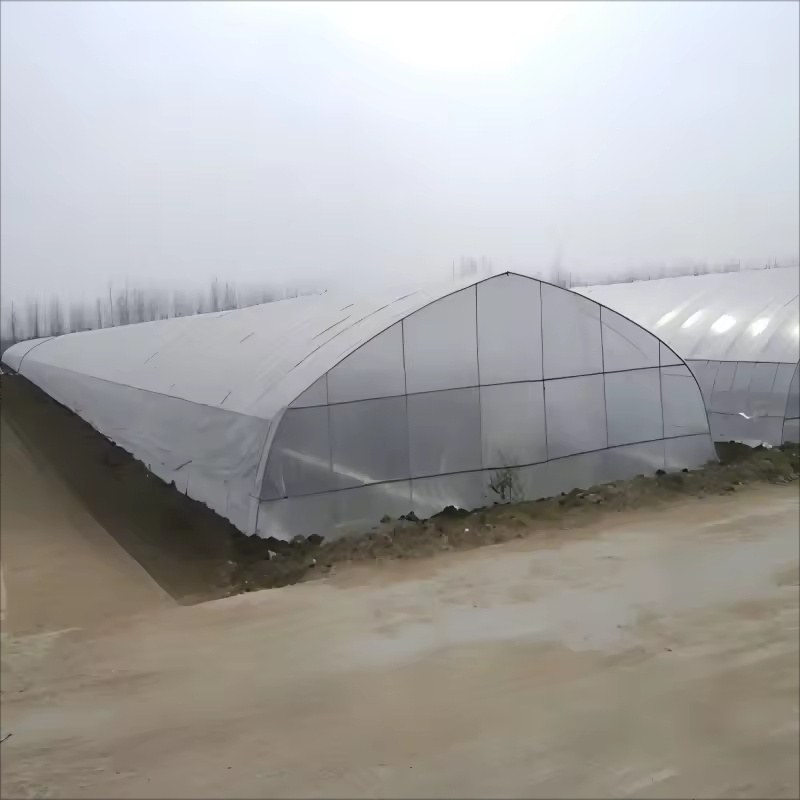
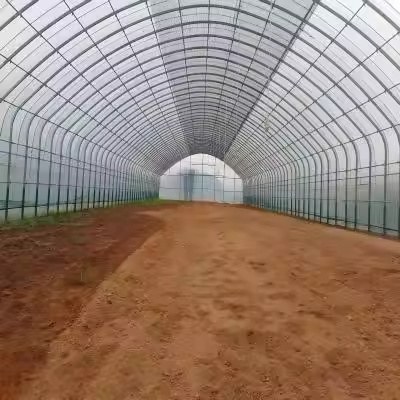
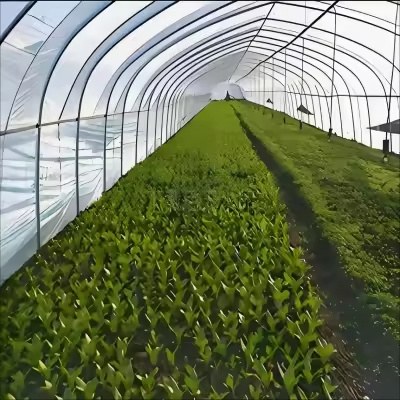
This farm tunnel greenhouse uses a plastic film cover over a galvanized arch frame to carry tomato and vegetable crops through frost periods in spring and autumn. Single span widths run 6 m to 12 m and heights 2.5 m to 5 m, both built to order. Together with insulation covers, roll up curtains, ventilation outlets and shade nets, the house holds the band each crop needs, which is roughly 15 to 25 C for warm loving crops and 5 to 15 C for cold resistant ones. Crop load is rated to 15 to 30 kg per square metre.
A tunnel house earns its place by closing the gaps in the market calendar. Even in winter cold, or through the frost periods of spring and autumn, a house with the right cover and ventilation keeps crops inside the temperature band they need, which turns a marginal month into a productive one. This farm tunnel greenhouse is built for exactly that job on tomato and vegetable crops.
The house works as a system rather than a cover alone. Plastic film over the arch frame does the basic work, and insulation covers, roll up curtains, ventilation outlets and shade nets are used together to hold the crop within its range. Warm loving crops such as tomato and cucumber want roughly 15 to 25 C, while cold resistant crops such as celery and lettuce are comfortable at 5 to 15 C, so the same structure serves both depending on how the vents and curtains are set. That flexibility is what allows off season cultivation: cucumbers and tomatoes through a northern winter, celery and lettuce through a southern summer, filling the gap periods when field supply drops. Growers planning off season vegetable cropping often follow extension guidance such as that published by Michigan State University horticulture, and trade reporting on FreshPlaza.
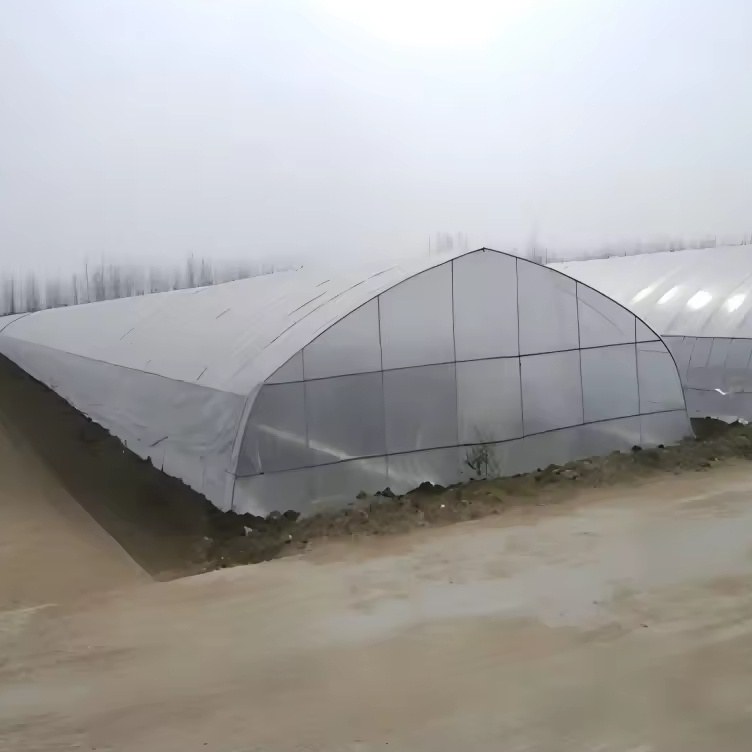
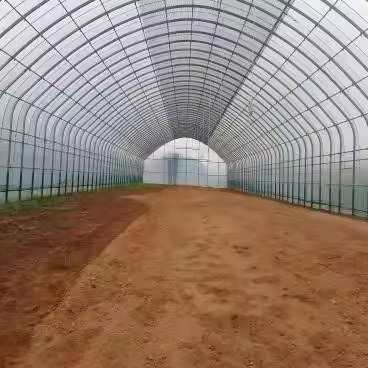
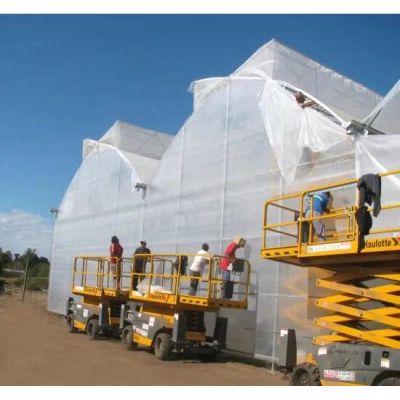
The frame arrives as pre drilled galvanized arches that bolt together on a prepared base, and the film is drawn over the structure once the frame is complete. Roll up curtains and ventilation outlets are fitted as part of the same build rather than retrofitted later, which keeps the working height and the openings coordinated. Film is the consumable element. It should be inspected at the start of each season for tension and for any split at the fixings, and replaced when transmission and strength drop. Check the curtain mechanism before winter, confirm vents close fully, and keep drainage clear around the base so water does not stand against the frame.
These houses suit tomato, cucumber, celery and lettuce production, and the same structure covers seedling raising and cut flowers. The range of widths from 6 m to 12 m means a single tunnel can be matched to the block it serves rather than forced to a standard size. Compare our tunnel greenhouse range and the greenhouse with plastic film, or review our agricultural plastic film greenhouse for a wider structure.
Yes, where the cover is combined with insulation covers and roll up curtains to hold heat. Warm loving crops need around 15 to 25 C and cold resistant crops 5 to 15 C, so the equipment setting depends on what you are growing.
Single span widths run 6 m to 12 m and are built to order. Narrow tunnels suit row by row coverage, while wider spans reduce the number of houses needed for a given block. Send us your plot and we will recommend a layout.
Wind drag is rated to 45 to 65 km per square metre, snow resistance to 30 to 55 kg per square metre, maximum rainfall to 140 mm per hour, and crop load to 15 to 30 kg per square metre. Tell us your local design loads and we will confirm the specification.
Film is the consumable part of the house and should be checked each season for tension and for any split at the fixings. It is replaced when transmission and strength drop, without disturbing the frame.
Send your required width, length and height, your crop, and your local wind and snow loads. We reply with a layout drawing and a full quotation covering frame, film, climate equipment and fittings.