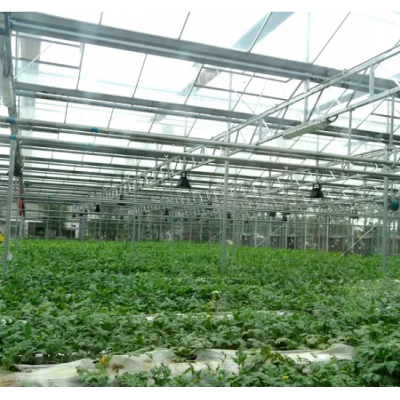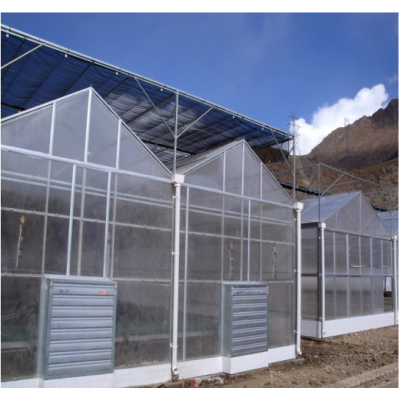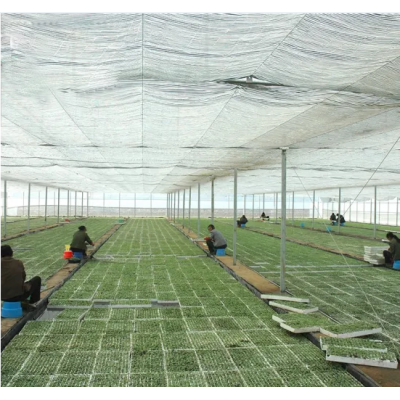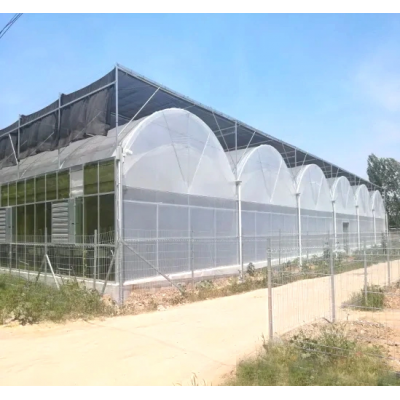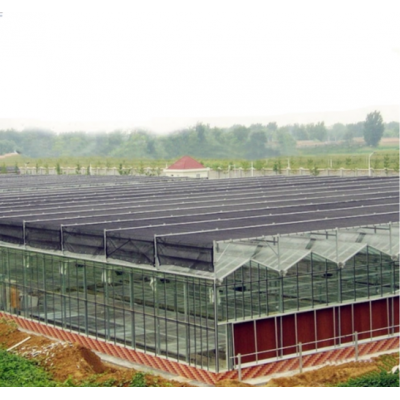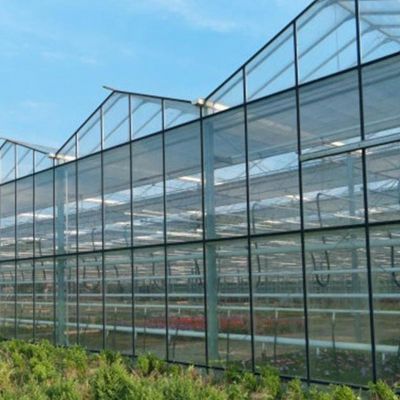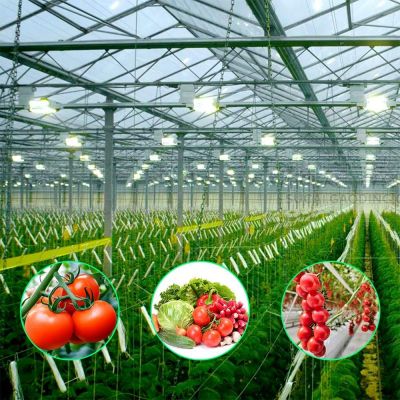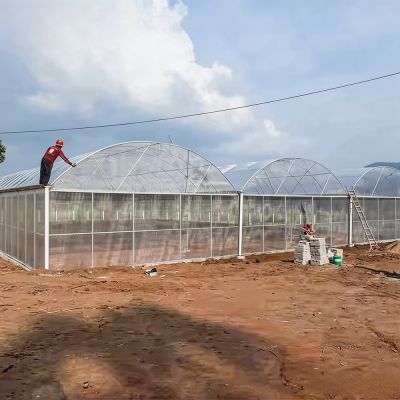
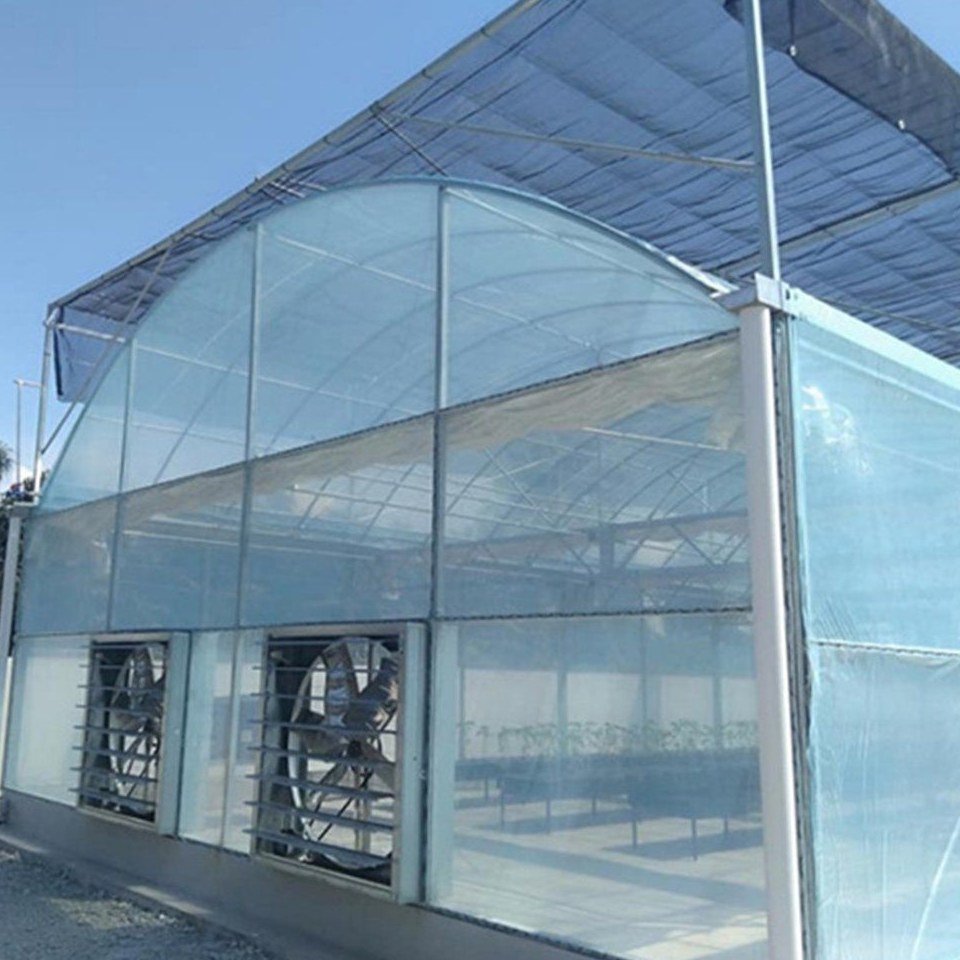
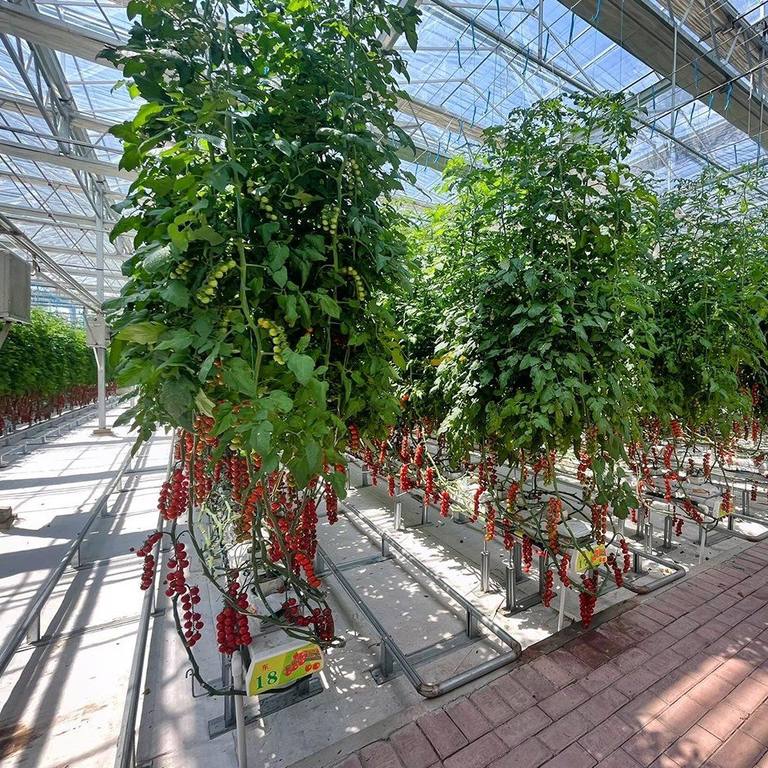
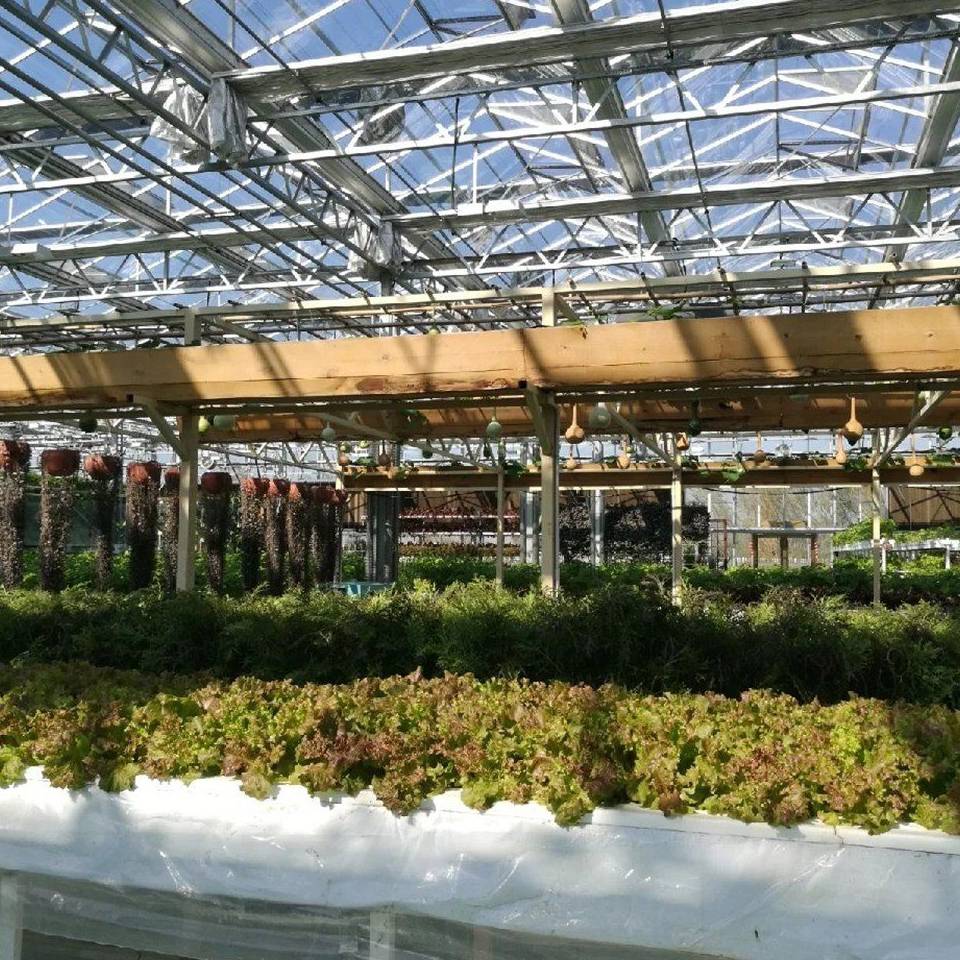
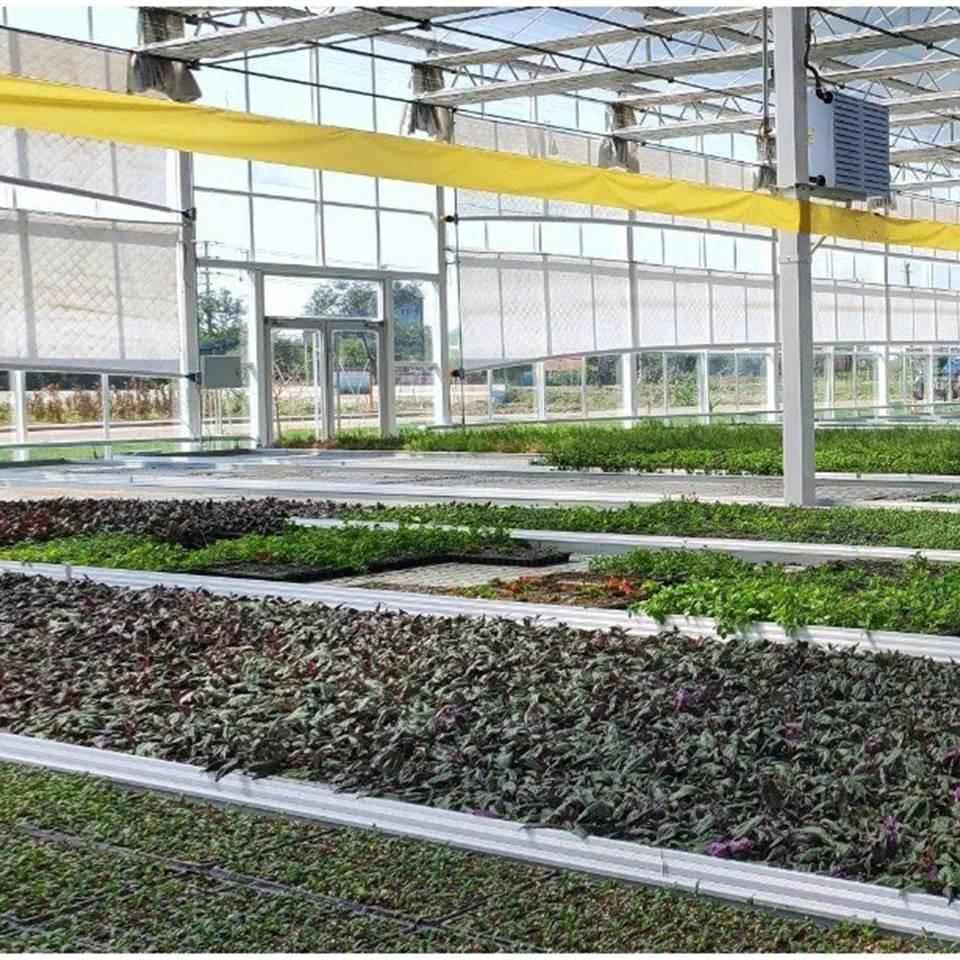
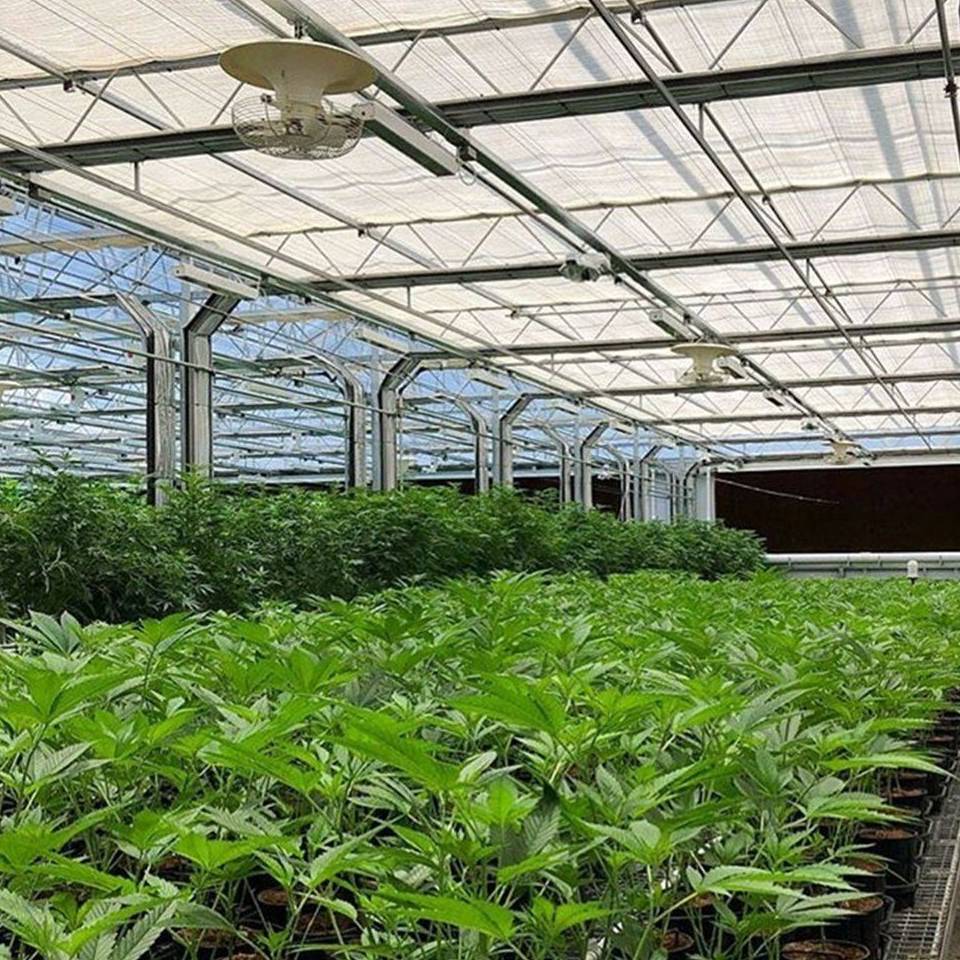
This compact glass greenhouse pairs a glazed house with an aluminium frame and a climate controller, which is what makes it work for vertical growing rather than only for a seasonal crop. Glazing holds light for longer than film and keeps its transmission as it ages, and the automation holds temperature and humidity inside a narrow band through the day. Spans run 8 m to 12 m, gutter height 3 m to 4.5 m and the house is built 10 m to 100 m long to suit the site. It suits growers running tiered benches, hydroponic gullies and year round leafy production.
Glass and film are chosen for different reasons, and the choice shows up over years rather than months. Film costs less to put up and less to replace, while glass holds its light transmission as it ages and does not sag or flap in wind. Where a house is run all year and the crop is grown on benches rather than in the ground, the glazed option earns its cost back. This compact glass greenhouse is built for that pattern of use, with the climate handled by a controller rather than by someone walking the range with a crank.
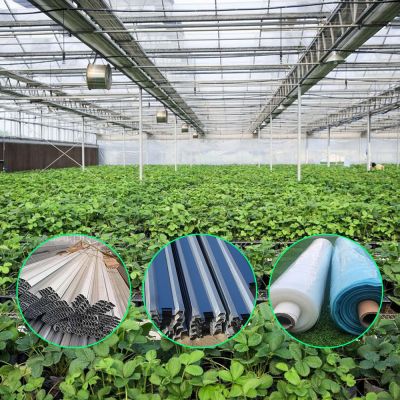
The structure is a hot dip galvanized steel frame carrying aluminium glazing bars, which is the usual pairing in a working glasshouse: steel takes the load and aluminium holds the panels without adding weight to the roof. The glazing keeps daylight coming through at a steady level across the day and across the years, which matters most for the crops that are grown more for quality than for bulk. The compact footprint suits a site that wants one well controlled house rather than a large range.
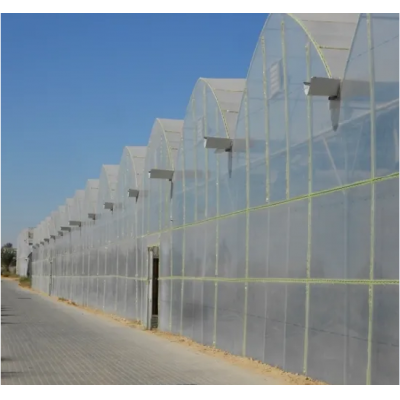
Spans run from 8 m to 12 m with a gutter height of 3 m to 4.5 m, and the ridge sits between 3 m and 8 m depending on the span chosen. Length is set from 10 m to 100 m, so the house can be built to the block and extended later without changing the section. The rest of the glazed family is listed on the glass greenhouse range page, which covers the same frame system in larger spans.
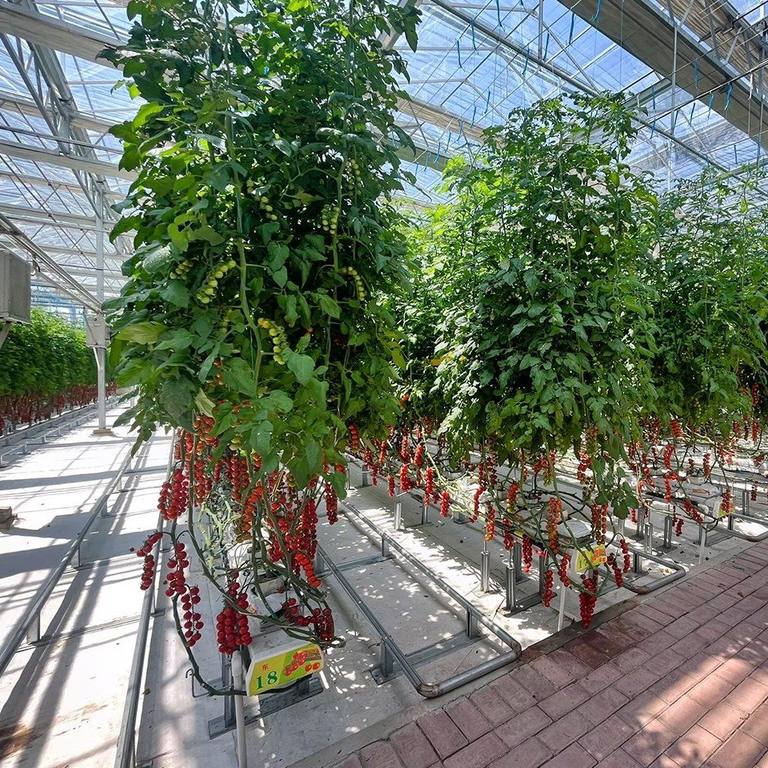
Automation is what separates a controlled house from a covered one. Roof vents, side openings and, where fitted, screens are driven by a controller reading temperature and humidity inside the house, so the openings respond to what the crop is feeling rather than to a schedule. That matters in two situations in particular: a still humid night when the house has to be vented without dropping the temperature too far, and a bright afternoon when a screen has to come over before the crop is stressed.
Holding a narrow band also changes what the house can be used for. A crop that needs a repeatable environment, such as leafy greens cut to a weekly order, depends on the house doing the same thing every day, and that is a control question rather than a covering question. The same frame system with a simplified covering is described on the farm glass greenhouse page, and the mixed glazing option in the glass and polycarbonate sheet greenhouse.
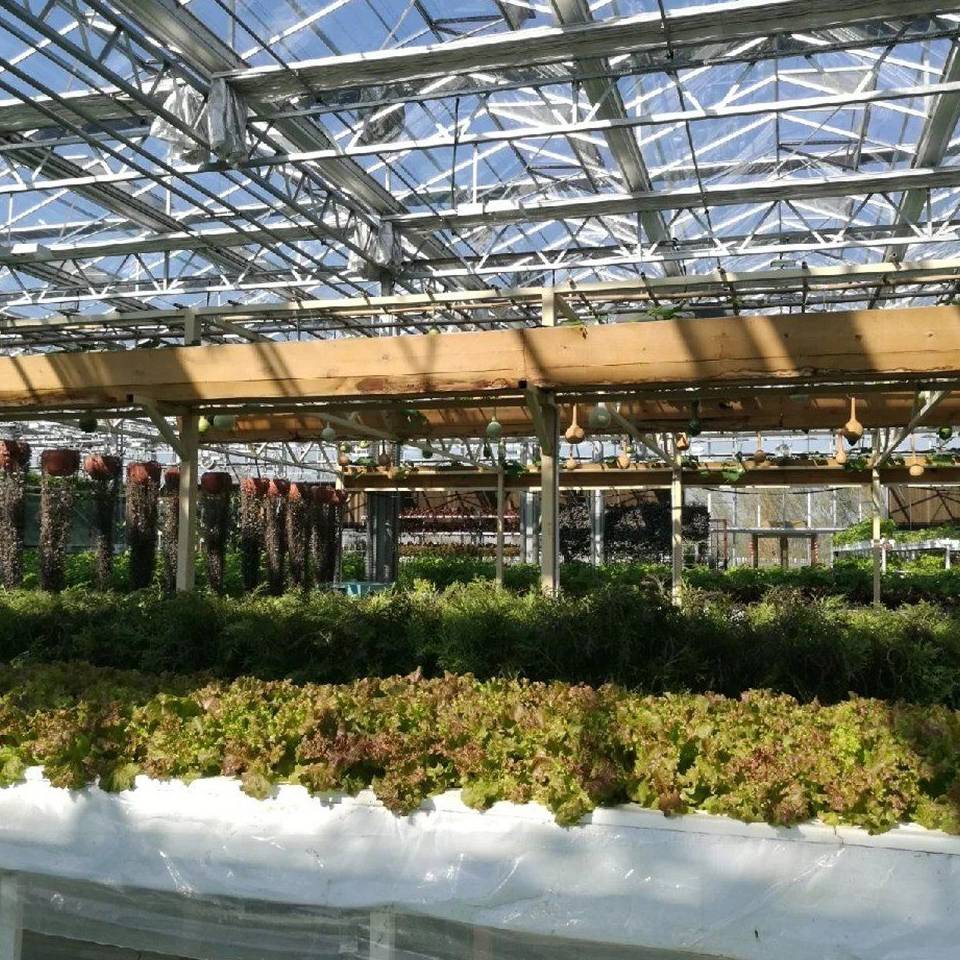
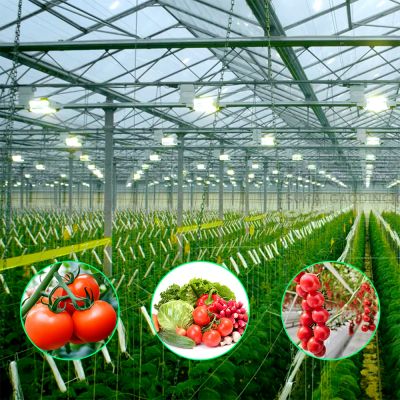
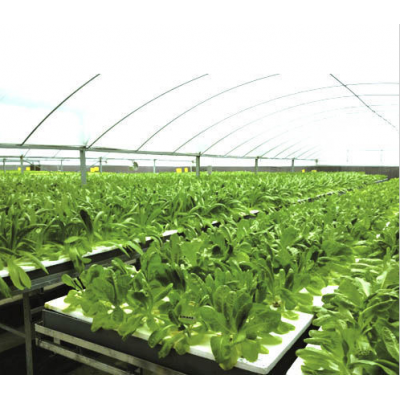
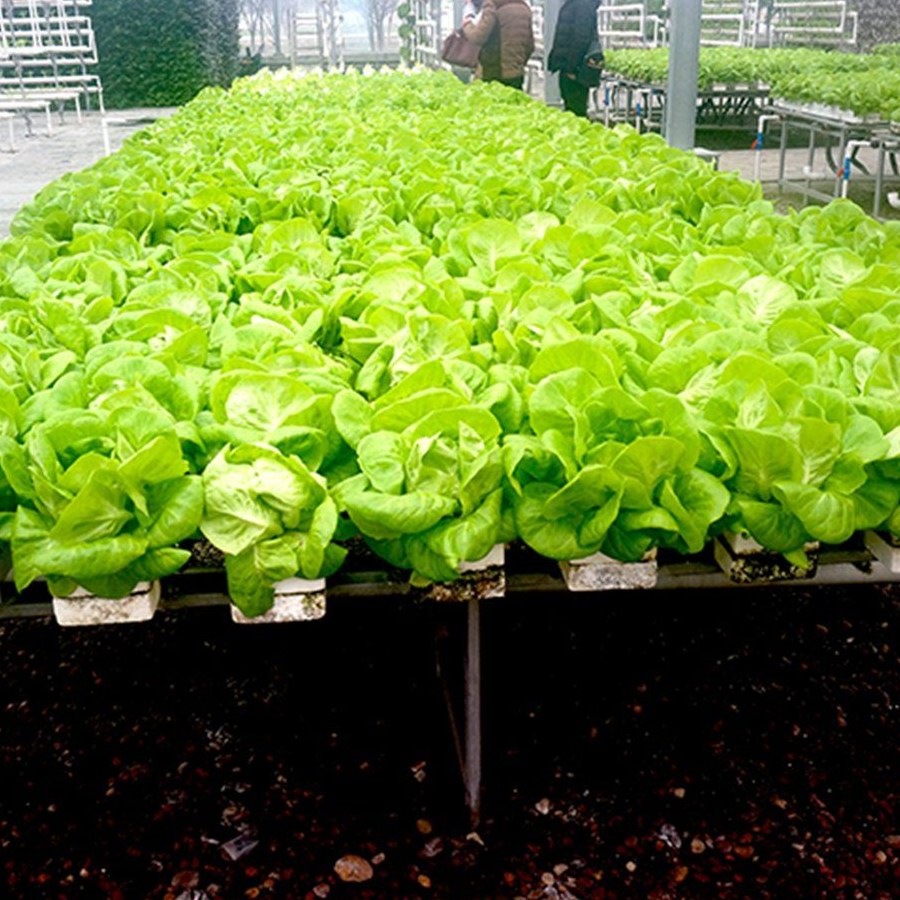
A glazed house suits vertical growing for a simple reason: the light reaching the lower tiers is better than it is under film, and the structure is stiff enough to carry the racks and the crop without extra bracing. Rolling benches and tiered gullies can be laid out to make the most of the height, and the aisles stay clear for trolleys and harvesting. Under a controlled roof, a grower can run lettuce, herbs and leafy greens on a short cycle through the year rather than in two or three windows.
The economics of protected cropping at this level are followed closely by the trade, and practical guidance on greenhouse production and its resource use is published by the FAO as part of its work on sustainable crop production. Grower facing coverage of the same subjects, including variety and production technique, is carried by Greenhouse Grower.
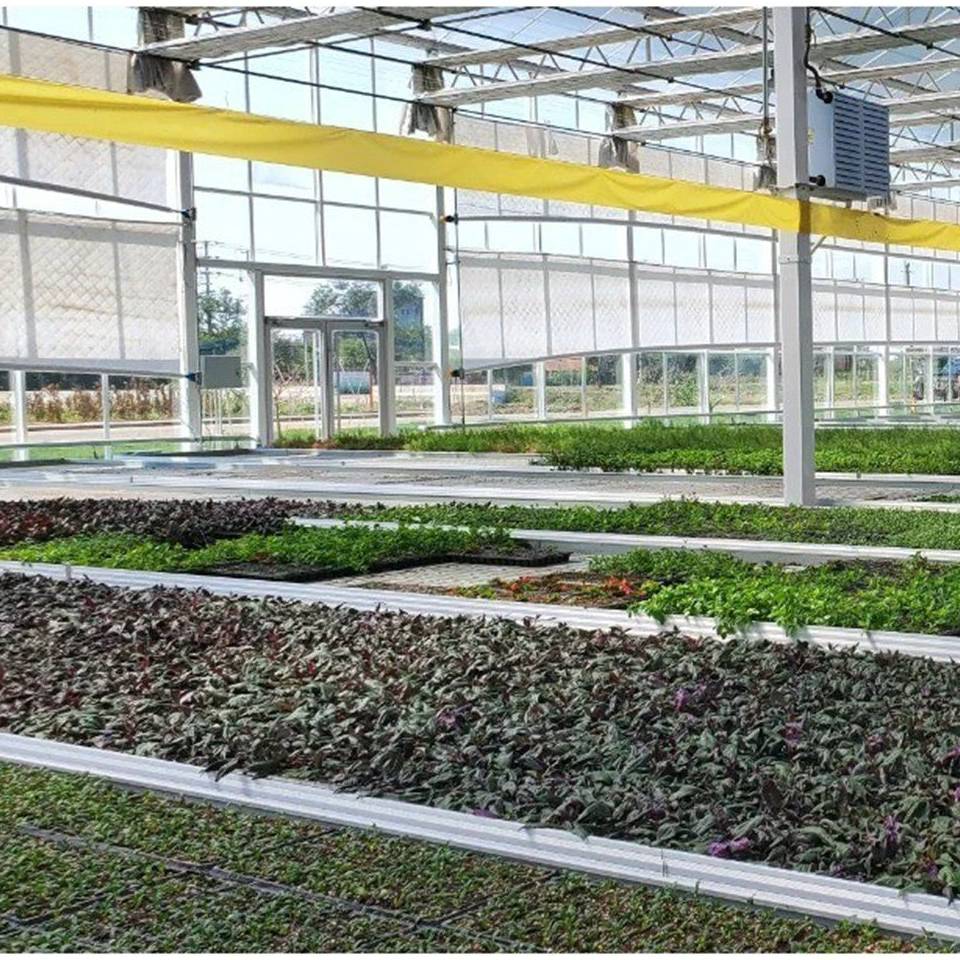
The table below lists the standard build. Span, length, glazing and controls are set to the site and to the crop.
| Greenhouse span | 8 m / 9 m / 10 m / 11 m / 12 m |
| Greenhouse length | 10 m to 100 m, or built to client demand |
| Gutter height | 3 m to 4.5 m |
| Ridge height | 3 m to 8 m |
| Structure | Hot dip galvanized steel tube, aluminium glazing bars |
| Cover | Tempered glass glazing |
| Control | Climate controller for vents and screens |
| Crops | Leafy greens, herbs, vegetables and young plants |
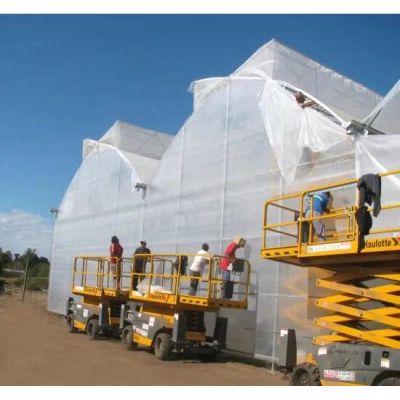
The house arrives as a bolted kit with the frame, glazing bars and panels cut to the drawing. Work starts on a level pad and a foundation that suits the frame, because glazing has no give in it and a structure that is out of square will not take the panels cleanly. The frame goes up first, then the glazing, and the vents, drives and controller are commissioned last so the openings can be set against a finished house. A house of this size is normally standing in three to five weeks on a prepared site.
Maintenance is more about systems than about materials. Glass does not need replacing on a cycle the way film does, but the glazing bars, seals and fixings should be checked each season, and the glass washed once or twice a year because dust and algae cut light transmission more than most growers expect. Vent drives, sensors and the controller are the parts that decide how well the house runs, and they are worth a check before each season rather than after a failure.
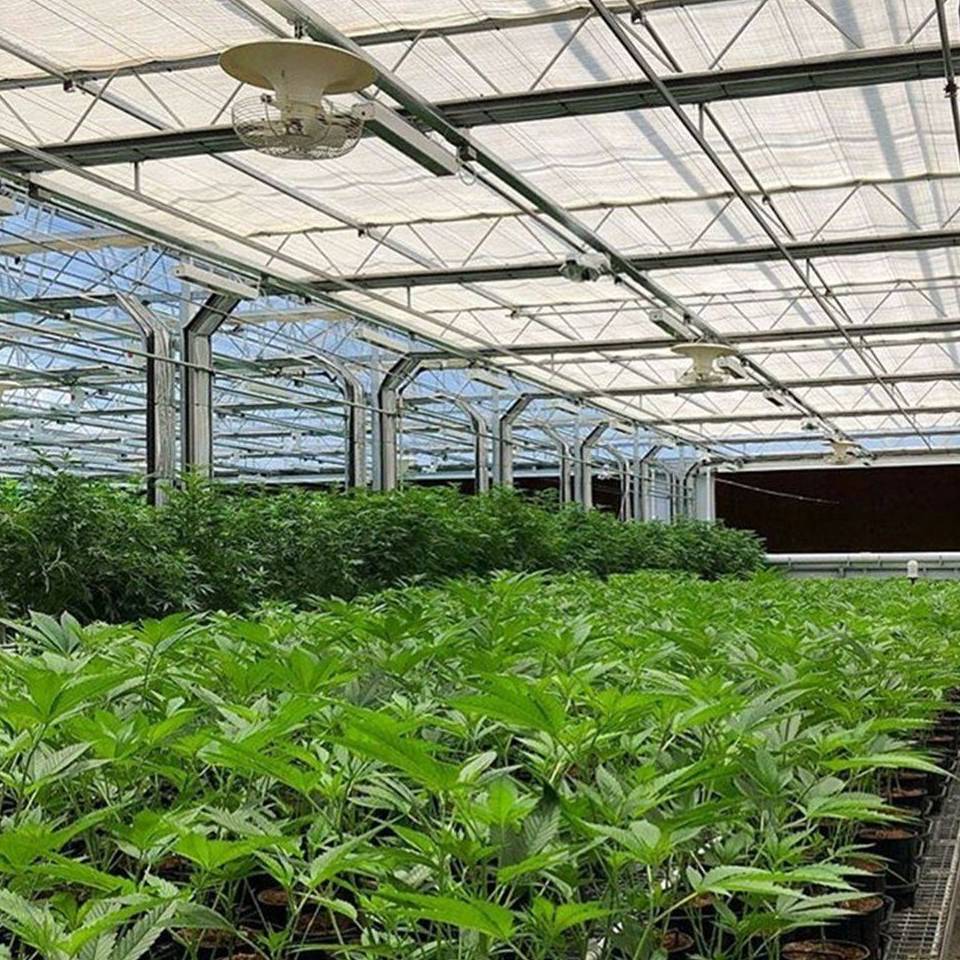
Houses of this type are used for leafy greens and herbs grown on a short cycle, for year round vegetable production, for young plant raising and for trial work where the environment has to be repeatable. The common factor is a crop where consistency is worth more than the lowest build cost, which is exactly where the glazing and the controller pay for themselves.
Growers planning a protected cropping business usually compare covering materials against the crop and the market window rather than on unit price alone. On the same site, a larger multi span house in the same glazed system is often specified where the growing area matters more than the level of control in any one house.
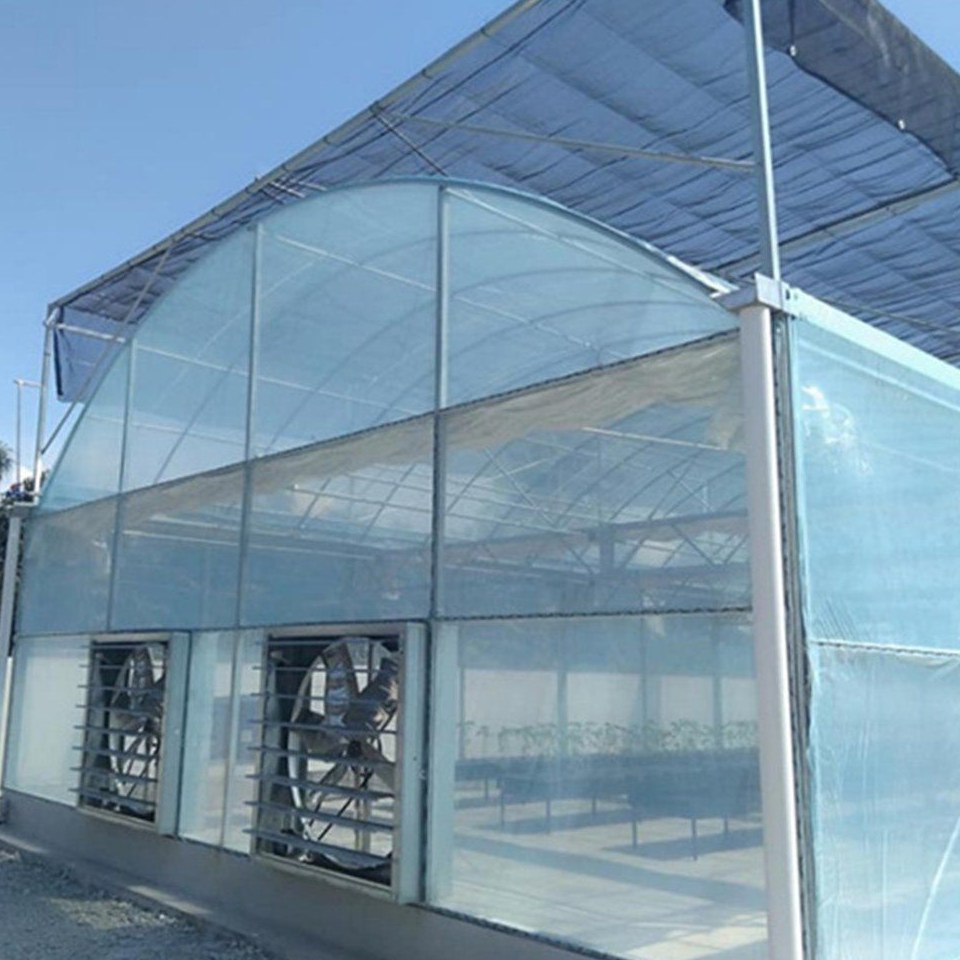
Glass holds its light transmission as it ages and does not sag or flap, so the crop sees a steady level of daylight across the years. Film costs less to build and less to replace, which is the better trade where a house is used for part of the year rather than all of it.
Roof vents, side openings and, where fitted, screens, driven by a controller reading temperature and humidity inside the house. That keeps the environment inside a narrow band through the day instead of responding only when someone walks the range.
The galvanized steel frame is rated for 15 to 20 years under normal growing conditions, and tempered glass glazing keeps its light transmission for 20 years or more when it is cleaned and left undamaged.
We provide a 10 year structural warranty and a 5 year anti-corrosion warranty on the galvanized frame. Details are set out in the contract for each project.
Send your site dimensions, the crops and bench layout you plan to use and your local wind and snow loads. We reply with a layout drawing and a full quotation.