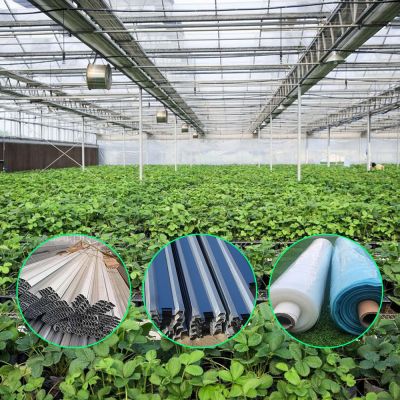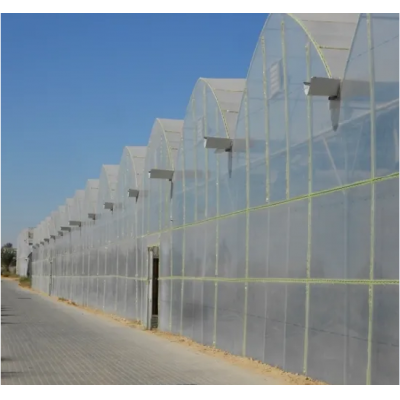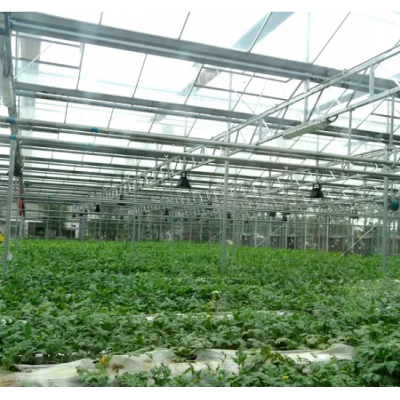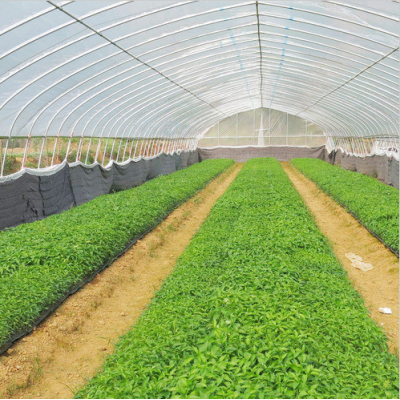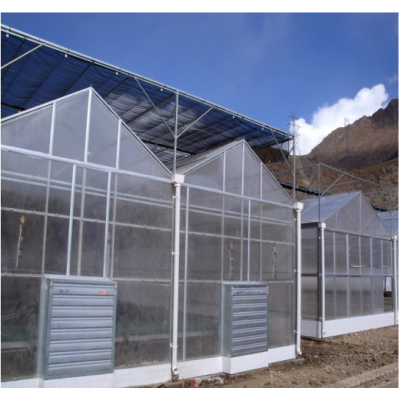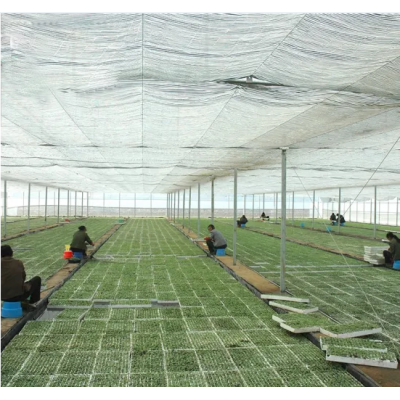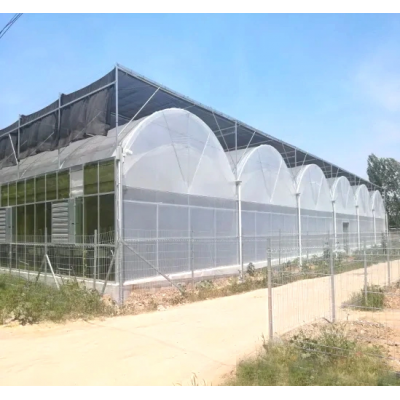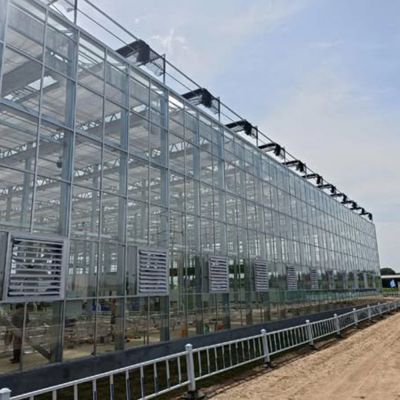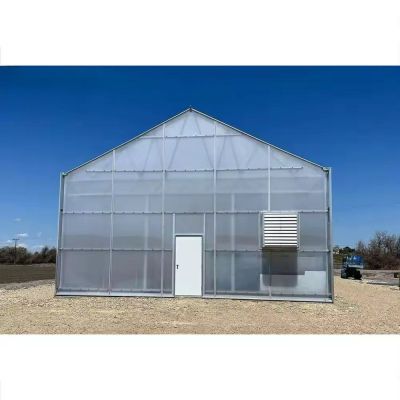
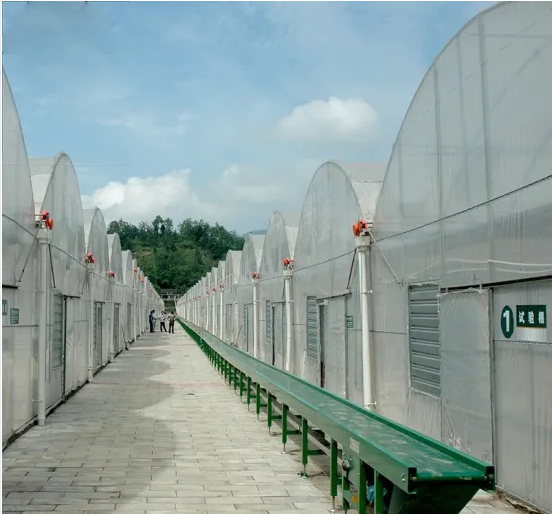
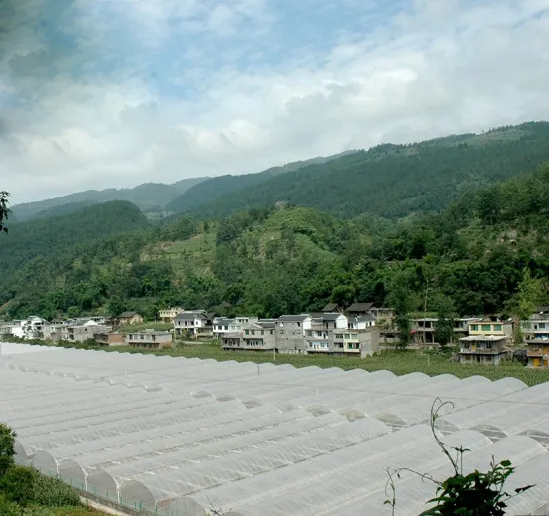
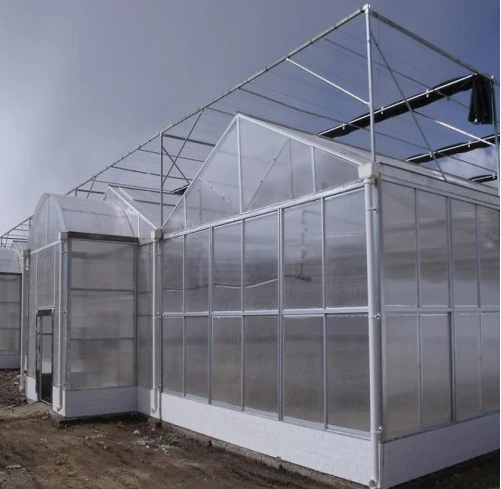
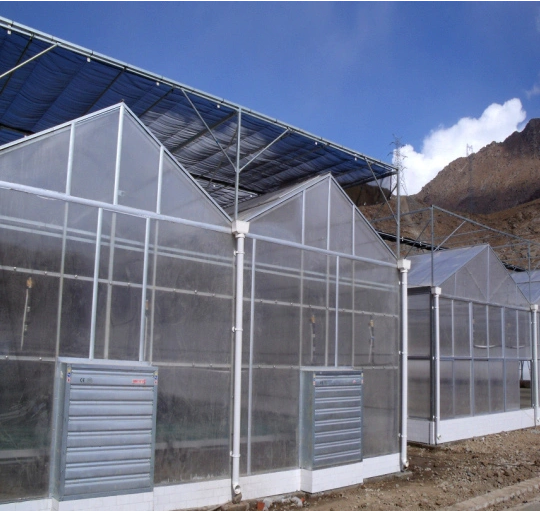
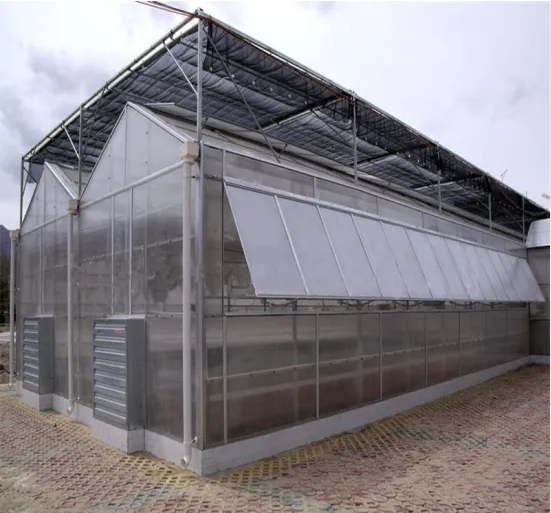
This polycarbonate greenhouse is a multi-span house covered with twin wall PC sheet instead of film or glass. The frame is hot-dip galvanized steel pipe with a double-sided zinc coating, so it resists rust in humid and coastal air. Covering is 8 mm or 12 mm polycarbonate hollow sheet, a double-wall panel with an air gap between the layers that gives PC sheet its insulation value and cuts heat loss against a single film cover. Spans of 6.4, 8, 9.6 and 10 metres are available, with heights from 4 to 7.5 metres. PC sheet resists impact far better than glass, which matters on hail-prone sites, and it holds its light transmission for years without the yellowing that film develops.
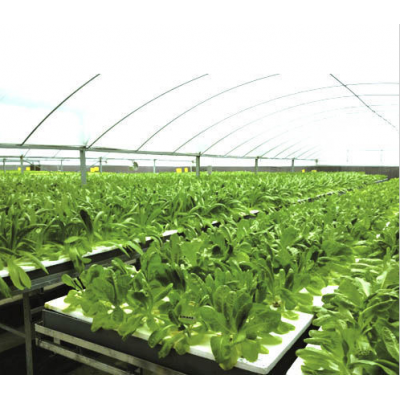
This polycarbonate greenhouse uses twin wall PC sheet as its covering material rather than film or glass. PC sheet is a rigid double-wall panel with an air gap between the two layers, and that gap gives the house insulation that a single film cover cannot match. It suits commercial flower production, vegetable growing, seedling operations and research or experimental bases, where a stable internal temperature matters through the year. The house can be built as a single span or as a multi-span block over a large area.
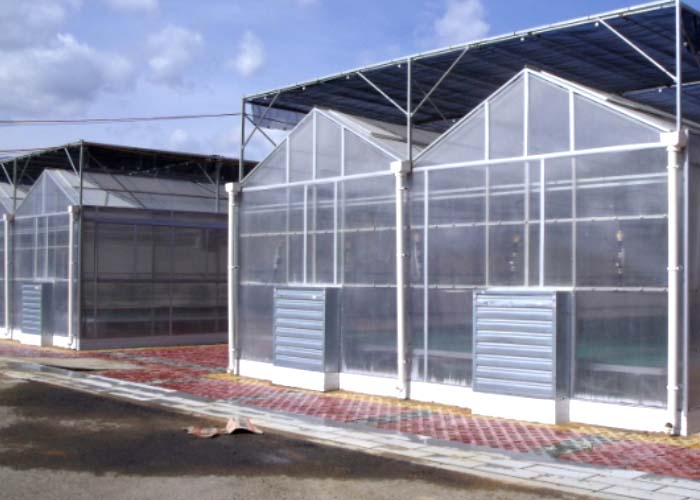
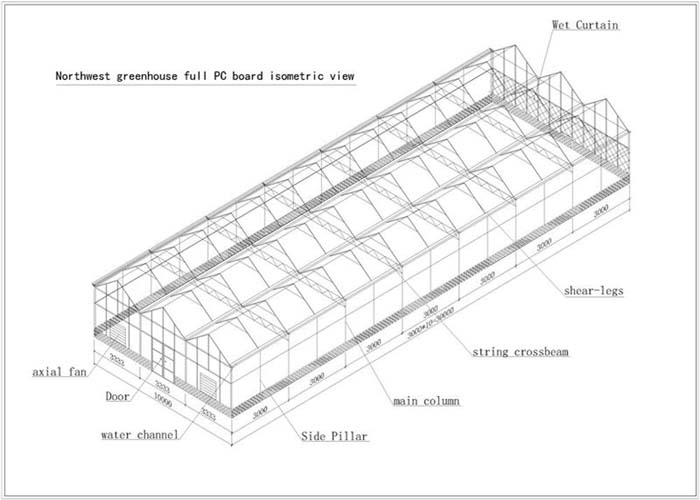
The frame is hot-dip galvanized steel pipe with a double-sided zinc coating, which is the part that decides how long the structure lasts in humid and coastal air. Covering is 8 mm or 12 mm polycarbonate hollow sheet, and the sheet is fixed into aluminium profiles along the frame so panels stay tight against wind. PC sheet has high impact strength, so it resists hail far better than glass, and it carries a good thermal insulation value because of the air gap between the walls. Light transmission is high and stays stable for years, unlike film, which yellows and needs replacing every few seasons. The gable roof sheds rain into gutters along each span.
| Cover material | 8 mm or 12 mm polycarbonate hollow sheet |
| Frame material | Hot-dip galvanized steel pipe |
| Span options | 6.4 m, 8 m, 9.6 m, 10 m |
| Structure height | 4 to 7.5 metres |
| Service life | Structure 15-20 years, structure warranty 10 years, anti-corrosion warranty 5 years |
| Sheet properties | Impact strength well above glass, good thermal insulation, high light transmission |
| Optional systems | Cooling, heating, irrigation, ventilation, shading, benching |
The case for PC sheet comes down to how the covering behaves over the life of the house. A film cover is replaced roughly every few seasons, so the cost and the labour come back around repeatedly, while PC sheet is installed once and holds. PC sheet carries a much better insulation value than a single film layer, so less heat escapes and heating costs fall in cold climates. On impact, PC sheet resists a hit that would shatter glass, and it does not become brittle in cold or soften in heat. It is also self-extinguishing in a fire rather than spreading flame, which matters where a film house would burn quickly. The trade-off is a higher up-front cost than film, which is why we build both and let the site and the crop decide.
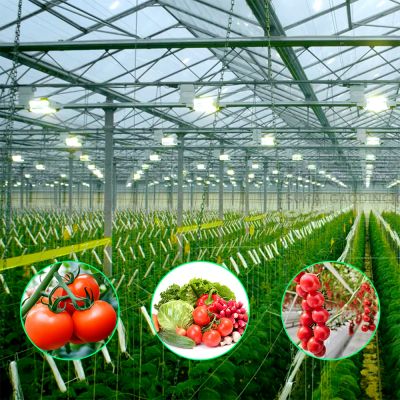
In flower production, PC sheet is chosen for its insulation and its stable light, because flower colour development and stem quality respond to light consistency across the season. In vegetable production, the insulation keeps night temperatures above the threshold where growth stalls, which extends the growing window at both ends of the year. Seedling and nursery operations use the house because a stable root-zone temperature gives more even germination. Research and experimental bases use it where conditions need to be repeatable from one cycle to the next.
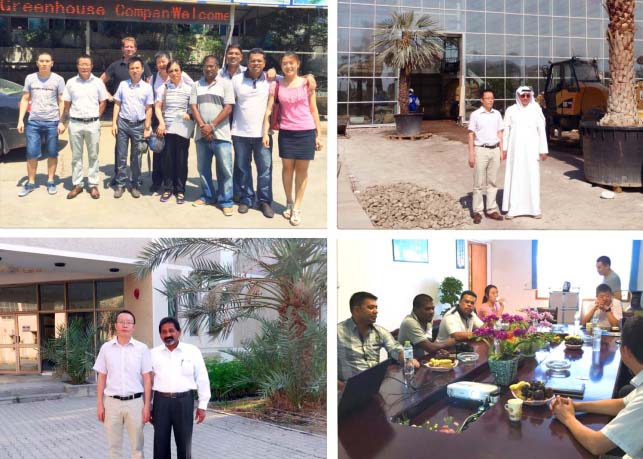
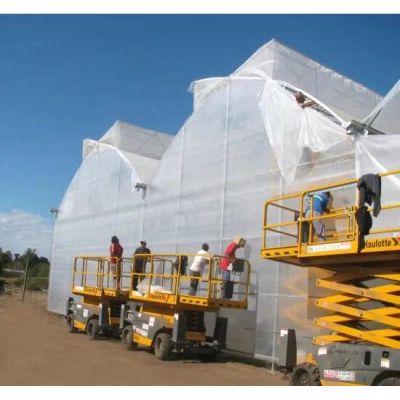
The house ships as a metal frame package with the PC sheet, fixing profiles and installation notes. Steel sections are bundled and the sheet is crated for container loading. Our engineering team supplies drawings and guidance through the build, and where a customer wants support on site we can send engineers to guide installation. Many buyers visit the factory before ordering, and we welcome that.
Standard covering is 8 mm or 12 mm polycarbonate hollow sheet. Thicker sheet raises the insulation value, so the choice follows the climate the house is going into.
PC sheet holds its light transmission for years and does not need the repeated replacement that film does. The galvanized frame is designed for a 15-20 year service life, with a 10 year structure warranty and a 5 year anti-corrosion warranty.
PC sheet insulates better, resists impact and lasts longer, but it costs more up front. Film costs less to buy but is replaced every few seasons, so the choice depends on climate and budget.
Yes. Cooling pads, exhaust fans, irrigation lines, heating and shading screens can all be fitted to the same frame, so the house can be equipped as the operation grows.
Standard spans are 6.4, 8, 9.6 and 10 metres, with structure heights from 4 to 7.5 metres. Send us the site layout and crop plan and we will size the house to fit.
Compare this house with our polycarbonate sheet greenhouse, the greenhouse with plastic film and our farm glass greenhouse for other covering options.
For commercial greenhouse standards and crop production references, see the National Greenhouse Manufacturers Association and Produce Grower magazine on protected cropping practice.