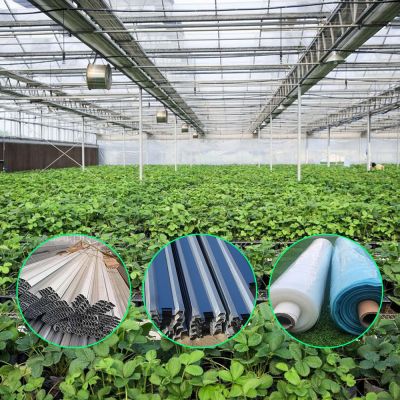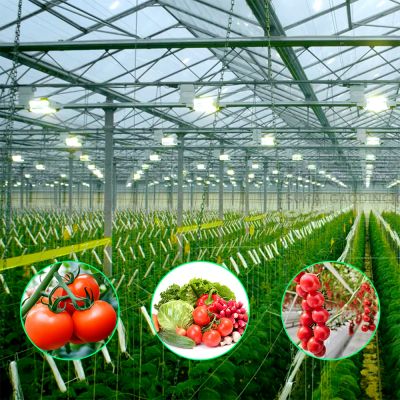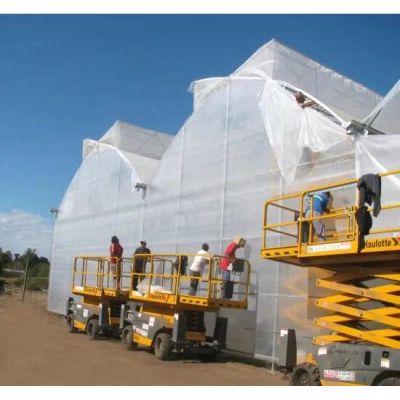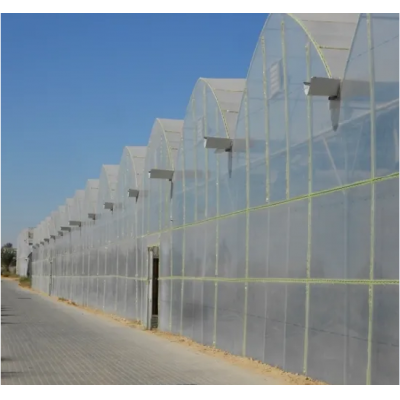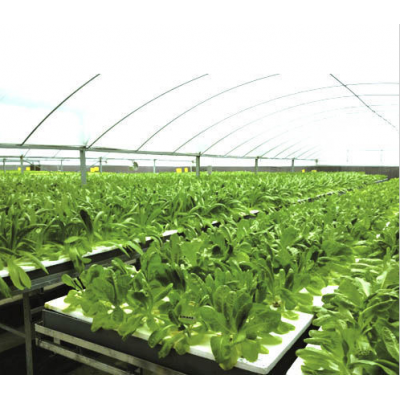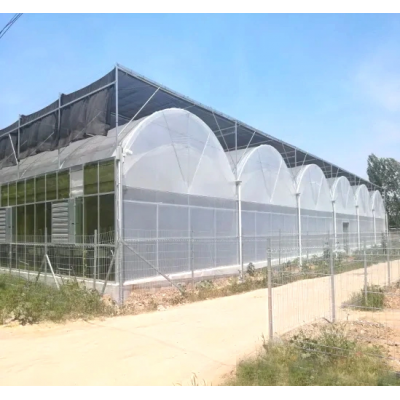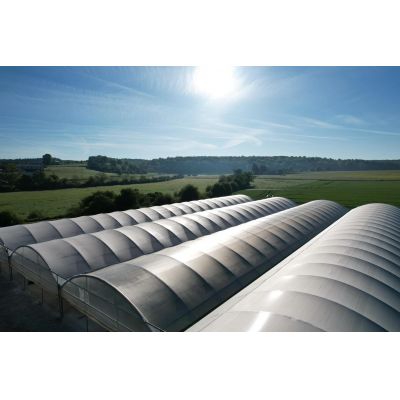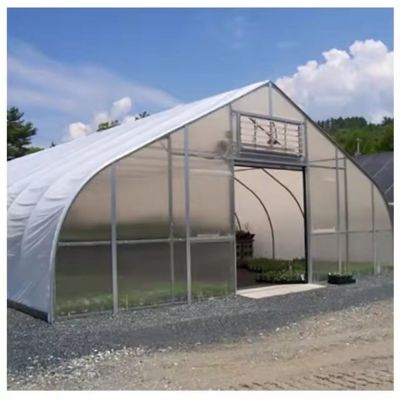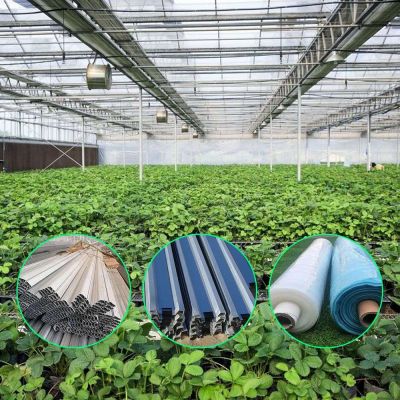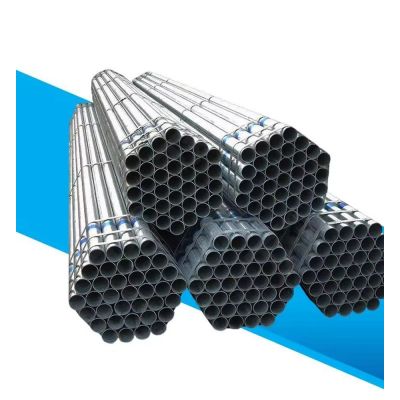


This pipe is heavy duty round stock for structural work, hot rolled to an ASTM grade and galvanized after forming so the coating covers the bore, the wall and the cut ends. It carries the members that take load from any direction, which is why round section appears in greenhouse hoops, shelter frames and scaffold legs, and the galvanizing is what lets those members stand in the open or sit at ground level without being rebuilt every few seasons. Diameter, wall thickness and length are set to the structure.
A structural member is judged by what it does under load and by what it looks like after a few seasons in the open. Round pipe is chosen for the members that have to take load from any direction, and galvanizing is what keeps those members doing the job once the structure is up and nobody is looking at it any more.
Round section bends evenly rather than flattening on one face, so a hoop formed from it keeps a smooth curve and a brace takes load whichever way the wind arrives. It also has no corner to hold water where the run-off collects, which matters on a member that stands outside for its whole service life. The same reasoning puts it in greenhouse hoops, shelter frames and scaffold legs.
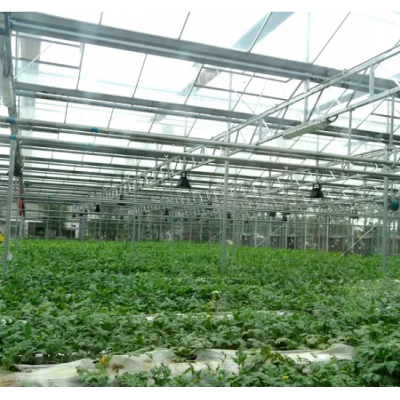
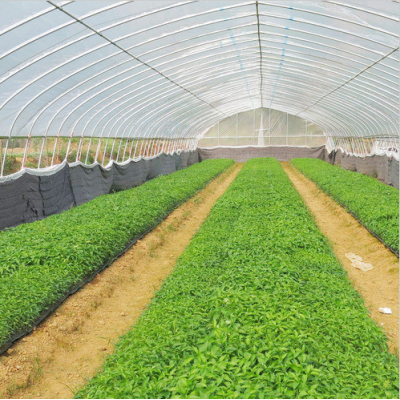
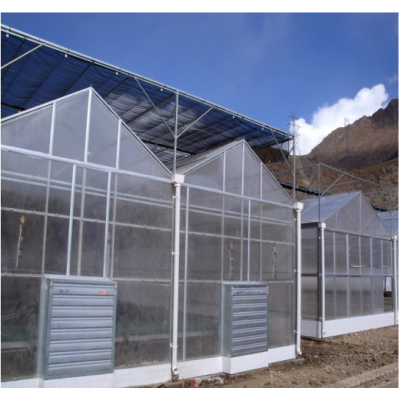
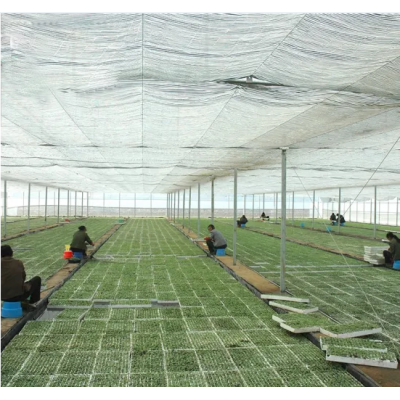
Stocking one grade across a site is the other half of the argument. A member that has been bent by machinery or by a falling limb is replaced with a section that matches, and the geometry of the structure does not have to be reworked around a tube that behaves differently. Frames built from this stock are shown on the film greenhouse range page on this site.

Hot dip galvanizing is done on the pipe rather than applied afterwards, so the zinc reaches the bore and the cut ends rather than sitting on the face that can be sprayed. On a structural member the ends are the surfaces that matter, because they are the ones that stand at ground level or sit inside a joint, and they are exactly where an uncoated tube starts to fail out of sight.
Handling matters as much as the specification. A cut end is bare steel and a nicked surface is the start of a rust patch, so both are treated where they happen rather than at the end of the build. The same discipline applies to a joint that is opened for a repair on a structure that is already in service.

The pipe is supplied to be worked on site. It can be cut to length, bent cold, threaded, welded or connected with a mechanical coupling, depending on the structure and on how much of it will ever need to come apart. On a farm frame the bolted and coupled joints are usually preferred, because a section can be replaced without cutting the member next to it.
Two points are worth holding to. Welding burns the coating back along the tube, so welded joints are the ones to inspect at the first season check. Bending is done cold for the radii used on a hoop, and it is worth setting the bender to the section rather than to the job, because a tube that is over-bent and straightened has already lost some of what it was bought for.

The table below is the standard stock. Diameter, wall thickness and length are set to the drawing.
| Type | Round |
| Standard | ASTM |
| Technique | Hot rolled |
| Surface treatment | Hot dip galvanized |
| Alloy or not | Non-alloy |
| Shape | Round bar stock |
| Jointing | Threaded, bolted or mechanical coupling |
| Uses | Greenhouse frames, shelter frames and structural steelwork |
| Delivery time | Set out in the quotation for each order |

Pipe is delivered in bundles, so unloading and stacking are part of the job. Bundles are lifted with slings rather than forks wherever possible, because a fork that slides under a bundle drags the coating off the bottom layer, and the coating is the reason the pipe was bought galvanized rather than painted.
On site the stock should be kept off the ground on bearers and covered, so water does not sit inside the tube ends through the wet season. That applies to the finished structure as much as to the stock: a member damaged during assembly is treated at that point, because it is where the rusting will start. A line that uses the same stock for water rather than structure is described in the irrigation hot dip galvanized steel pipe.

This pipe is used for greenhouse hoops, purlins and braces, for shelter frames and shade structures, and for scaffold standards on a farm or a construction site. It suits growers building or extending a frame from a drawing, contractors who need one grade of tube across a job, and operations that want a structure they can repair with a section rather than replace as a set.
Standards for steel products and for the coating systems applied to them are published by ASTM International. Agricultural news and market reporting for commercial growers is published by Farmer's Weekly SA. A heavier line on the same grade for water supply is described in the large diameter galvanized pipe for water supply.
It bends evenly rather than flattening on one face, so a hoop keeps its curve and a brace takes load whichever way the wind arrives. It also has no corner for water to sit in, which matters on a member that spends its life outside.
The bore and the cut ends. Galvanizing is applied to the pipe rather than sprayed on afterwards, and the ends are where a structural member sits at ground level or inside a joint, out of reach once the structure is up.
A galvanized steel frame is rated for 15 to 20 years under normal conditions, with fixings and any cut ends checked as part of the season service.
We provide a 10 year structural warranty and a 5 year anti-corrosion warranty on the galvanized steel. Details are set out in the contract for each project.
Send the diameters, wall thicknesses and quantities you need along with the application and the delivery port. We reply with a quotation and the delivery schedule.