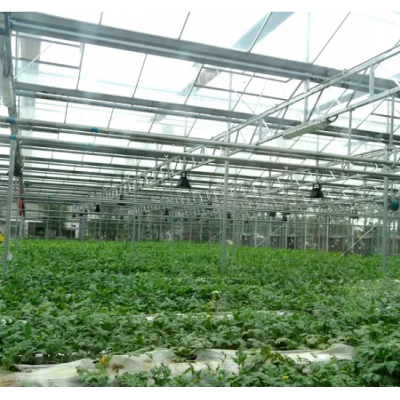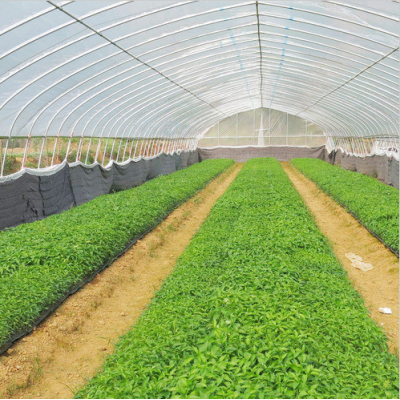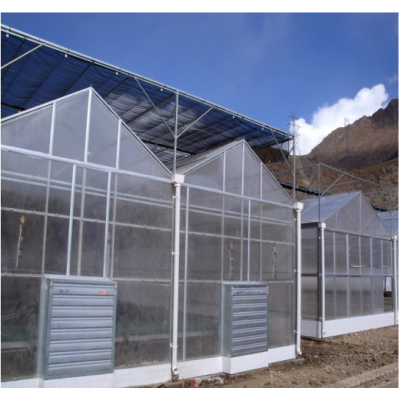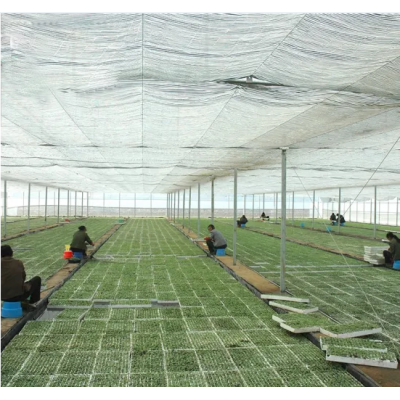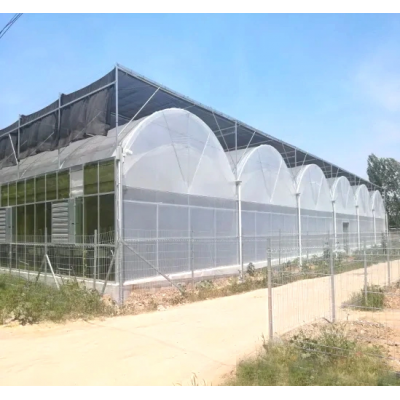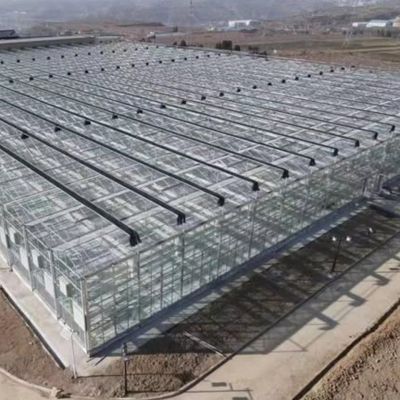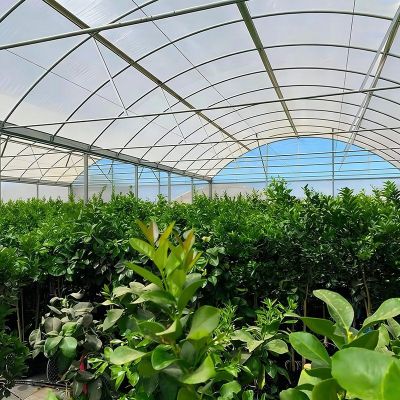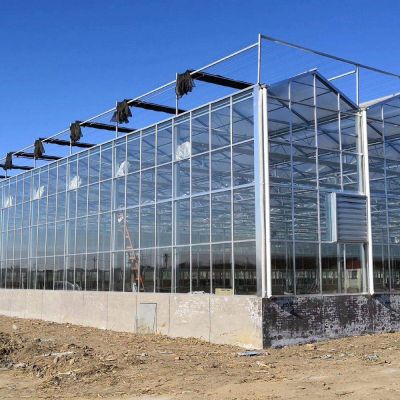


This commercial smart greenhouse is supplied as a kit, which means the structure, the glazing, the ventilation and the control system arrive together and are matched to each other rather than assembled from separate suppliers. Glass over a hot dip galvanized frame holds light steadily as it ages, and the app monitoring puts the readings from inside the house on a phone, so the grower sees what the crop is seeing without walking the range. Spans run 8 m to 12 m and the house is built 10 m to 100 m long. It suits vegetable growing, leafy crops and young plant raising.
A greenhouse project usually goes wrong at the joins, not at the steel. The frame comes from one supplier, the glazing from another, the vents from a third, and the controls arrive last with nobody responsible for how the three behave together on the first hot afternoon. Supplying the house as one kit removes that problem, because the loads, the openings and the controller are matched before anything is ordered.
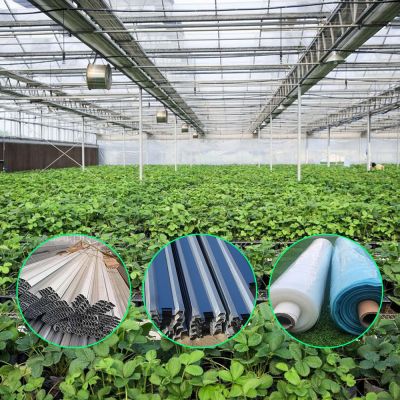
The kit is a complete house: hot dip galvanized steel frame, aluminium glazing bars, tempered glass, the ventilation openings and the control system that drives them. Galvanizing is applied by hot dipping, so the zinc layer is bonded to the steel at cut ends and bolt holes as well as on the tube faces, which is what keeps a working house standing through years of condensation running down the frame. Spans run from 8 m to 12 m with a gutter height of 3 m to 4.5 m, and the ridge reaches between 3 m and 8 m depending on the span.
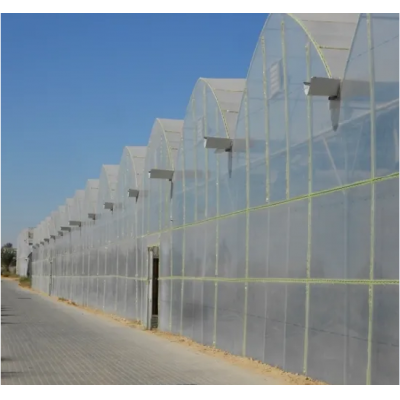
Length is set from 10 m to 100 m by adding bays, so the house can be built to the block and extended later without changing the section. Because the openings and the controller ship with the frame, the vent areas and the drive sizes are already matched to the house they are going on. The rest of the glazed family is listed on the glass greenhouse range page on this site.

Remote monitoring changes how a house is managed more than it changes how it is built. Sensors inside the house report temperature and humidity, and the readings reach a phone, so a grower running several houses knows which one has drifted before walking out to look. On a site where the houses are spread out, or where the person responsible is not always on site, that is the difference between reacting to a problem and reading about it afterwards.
The same connection usually carries control as well as readings, so vents and, where fitted, screens can be opened or overridden from the app instead of at the panel. The practical value is in the shoulder seasons, when the weather changes faster than a manual round can keep up with, and in the hours when nobody is on site. Control of the house still depends on the vents and drives being correctly sized and commissioned, which is why supplying them as part of the kit matters.

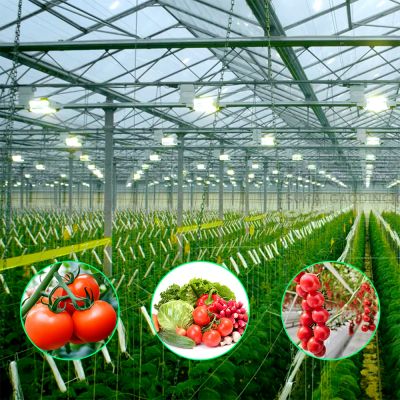
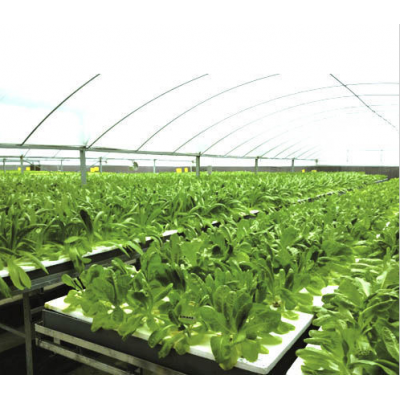
A glazed house suits vertical growing because the light reaching the lower tiers is better than it is under film, and the frame is stiff enough to carry racks and crop without extra bracing. Tiered gullies and A-frame towers can be laid out to use the height of the house while leaving the aisles clear for trolleys, and under a controlled roof a grower can run lettuce, herbs and leafy greens on a short cycle through the year rather than in two or three windows. The same principle applied to a simpler glazed house is described in the tempered glass greenhouse for commercial vegetable growing.
Growers weighing protected production as a business follow the sector as a whole, and the international growers association that represents ornamental and protected horticulture is AIPH, which publishes industry data through its production intelligence work. Coverage of indoor and greenhouse farming technology is carried by VerticalFarmDaily.

The table below lists the standard kit. Span, length, glazing and controls are set to the site and to the crop.
| Greenhouse span | 8 m / 9 m / 10 m / 11 m / 12 m |
| Greenhouse length | 10 m to 100 m, or built to client demand |
| Gutter height | 3 m to 4.5 m |
| Ridge height | 3 m to 8 m |
| Structure | Hot dip galvanized steel tube, aluminium glazing bars |
| Cover | Tempered glass glazing |
| Kit contents | Frame, glazing, vents and control system |
| Monitoring | Temperature and humidity readings on a phone app |
| Crops | Vegetables, leafy greens, herbs and young plants |

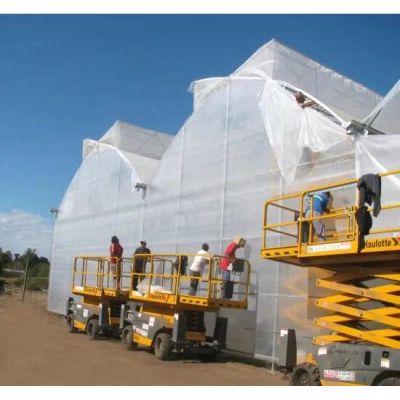
The kit ships as a bolted package with frame, glazing bars and glass cut to the drawing. Work starts on a level pad and a foundation that suits the frame, because glazing has no give in it and a structure that is out of square will not take the panes cleanly. The frame goes up and is squared, then the glazing, and the vents and controls are commissioned last against a finished house so the openings can be set to the crop it will run. A house of this size is standing in three to five weeks on a prepared site.
Maintenance is mostly about the systems. Glass does not need replacing on a cycle, but seals and fixings should be checked each season and the panes washed once or twice a year, because dust and algae cut light transmission more than growers expect. Sensors drift over time, so the readings behind the app are worth verifying against a reference before each season, and the vent drives should be exercised rather than left to prove themselves on the first hot day.

Kits of this type are used for year round vegetable production, for leafy greens and herbs grown on a short cycle, and for young plant raising where the environment has to be repeatable. They also suit a first protected cropping project, because the whole system arrives matched and the grower is not left to reconcile a frame from one supplier with controls from another.
A simpler house in the same glazed family is often used where the growing area matters more than remote monitoring, as in the greenhouse for vegetable growing. Whichever version is chosen, the practical question for a buyer is the same: how narrow a band the house can hold through a changeable week, and who is responsible for the whole system when something does not behave.

The frame, the glazing system, the ventilation openings and the control system that drives them, supplied together and matched. That means the vent areas and drive sizes are set for the house they are going on, rather than being selected separately.
It puts the temperature and humidity readings from inside the house on a phone, and on most systems it also allows the vents and screens to be opened or overridden remotely. On a site with several houses that shows which one has drifted before anyone walks out to look.
The galvanized steel frame is rated for 15 to 20 years under normal growing conditions, and tempered glass glazing keeps its light transmission for 20 years or more when it is cleaned and left undamaged.
We provide a 10 year structural warranty and a 5 year anti-corrosion warranty on the galvanized frame. Details are set out in the contract for each project.
Send your site dimensions, the crops and bench layout you plan to use and your local wind and snow loads. We reply with a layout drawing and a full quotation.